
 English
 Español
 русский
 Français

Materials & Manufacturing Yes, Aluminum Die Casting Parts are consistently lighter than Cast Iron Parts when engin...
READ MORE
Content
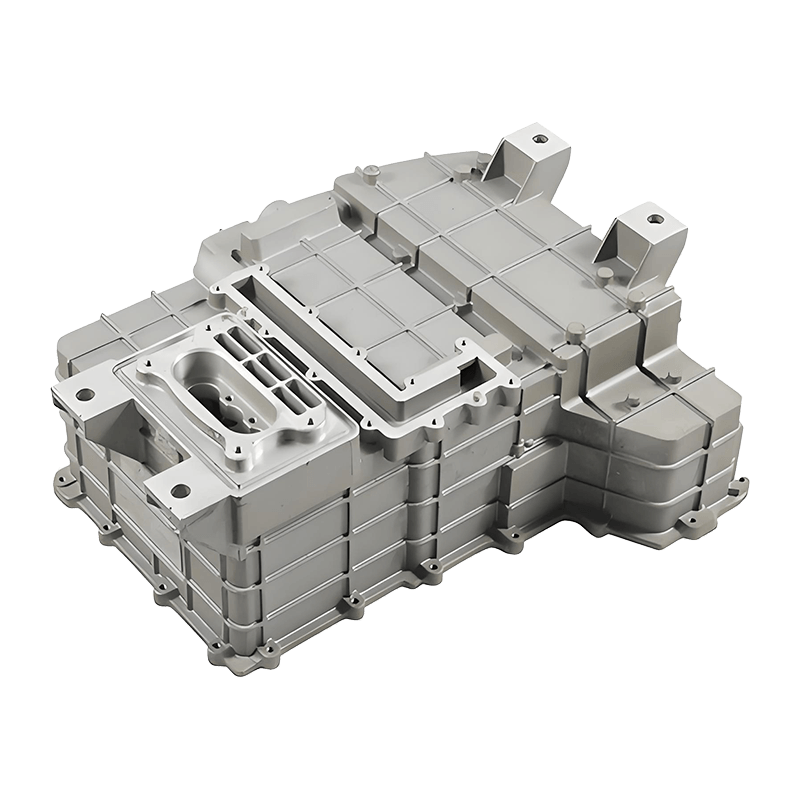
The AHC065-8215 and 8111 die-casting housing is an aluminum alloy housing developed for applications that require low weight, efficient flow performance, reliable mechanical integration, and cost-conscious mass production. Manufactured through a precision aluminum die-casting process, this housing provides an alternative to conventional cast-iron components while preserving the structural and functional characteristics expected from an industrial housing assembly.
In modern equipment design, the housing is no longer treated as a simple protective shell. It can influence total equipment weight, installation effort, pressure loss, operating efficiency, maintenance requirements, production cost, and service life. For this reason, selecting the correct housing material and manufacturing method is an important engineering decision. The AHC065-8215 and 8111 design addresses these priorities through a combination of aluminum alloy construction, optimized internal flow channels, precision mold engineering, and controlled die-casting production.
The housing is especially suitable for systems operating with vacuum or low-pressure air conditions. It can also be started under zero pressure differential, which gives system designers greater flexibility during commissioning and operation. Its maximum Cv value of 138, corresponding to a Kv value of 118, indicates a high-flow design with low pressure loss when used under the applicable operating conditions.
This article examines the product’s functional advantages, material benefits, flow characteristics, manufacturing process, quality-control approach, customization potential, and application value. It also explains how the manufacturing capabilities of Ningbo Dinghong Mould Co., Ltd. support the production of dependable aluminum alloy die-casting housings for demanding industrial sectors.
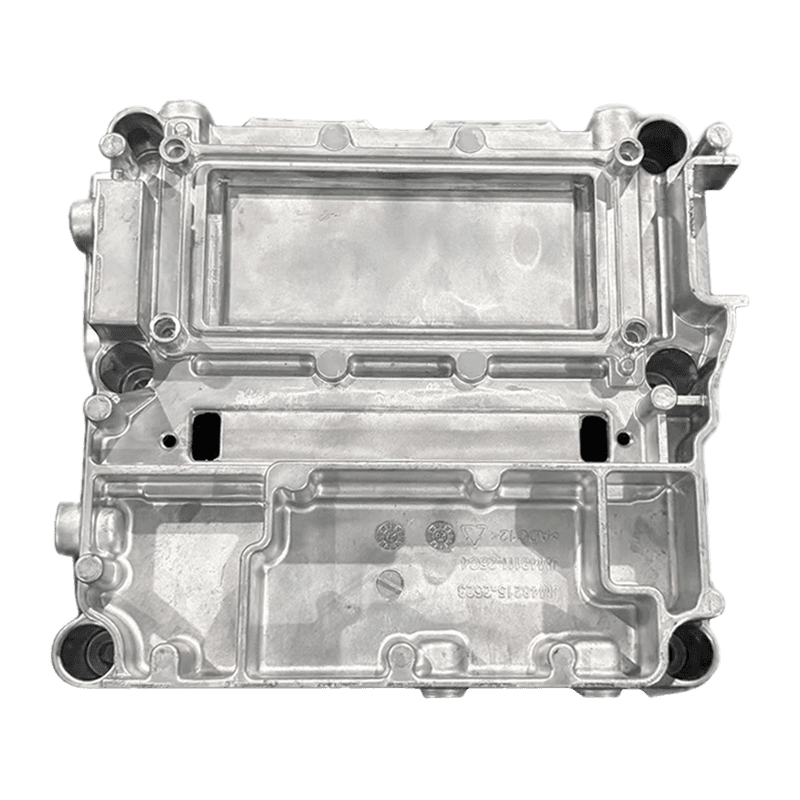
AHC065-8215 & 8111 Die casting Housing
The AHC065-8215 and 8111 die-casting housing is designed as a precision aluminum alloy component for equipment that must combine reliable enclosure performance with efficient internal flow. Its construction is based on pressure die casting, a manufacturing process in which molten aluminum alloy is injected into a specially engineered steel mold under controlled pressure. This process allows complex shapes, integrated features, consistent wall sections, and repeatable production quality.
A housing manufactured in this way may incorporate external mounting features, internal passages, connection areas, sealing surfaces, bosses, ribs, and other functional details within one principal casting. Consolidating these features can reduce the number of separately assembled components. It may also minimize secondary joining operations and simplify the final assembly process.
The product belongs to the die-casting new-energy parts category, but its design characteristics also make it relevant to industrial fluid-control equipment, air-handling assemblies, pneumatic systems, vacuum-related equipment, and other applications in which flow efficiency and low mass are valuable. Its suitability for a specific project depends on the complete system design, operating medium, pressure range, temperature, sealing arrangement, and applicable technical specifications.
The product reference includes the designations AHC065-8215 and 8111. These identifiers can be used during engineering communication, quotation, mold planning, drawing review, sample approval, and production coordination. As with other custom die-cast components, final production details should be confirmed against approved drawings, three-dimensional models, material requirements, dimensional tolerances, surface-finish expectations, and inspection standards.
The housing provides several important characteristics for equipment manufacturers and system integrators:
• Aluminum alloy die-casting construction for reduced component weight.
• Approximately 60 percent lower weight than a comparable cast-iron housing, based on the stated product comparison.
• Lower installation load, supporting easier handling and assembly.
• Optimized flow channels designed to support high throughput and reduced pressure loss.
• A maximum Cv value of 138 and a Kv value of 118 under the relevant test or operating conditions.
• Compatibility with vacuum and low-pressure air operating conditions.
• Ability to start under zero pressure differential.
• Potential for integrated casting features that reduce assembly complexity.
• Suitability for repeat production using dedicated precision molds.
These characteristics make the housing valuable not only as a replacement for a heavier material, but also as a way to improve the overall packaging and operating efficiency of a finished machine.
Material selection affects nearly every stage of a product’s life cycle. It influences mold design, casting behavior, machining requirements, transportation, installation, thermal response, corrosion management, and recycling considerations. Aluminum alloy is widely used in precision die-casting because it offers a favorable balance of low density, castability, strength, dimensional stability, and production efficiency.
The most visible advantage of the AHC065-8215 and 8111 housing is its reduced mass. According to the supplied product information, the aluminum alloy design reduces weight by approximately 60 percent compared with cast iron. This reduction can have a direct effect on transportation, handling, installation, and equipment structure.
A lighter housing can be easier for operators to position during assembly. It may also reduce the need for lifting equipment or additional support brackets. In mobile equipment, vehicles, energy systems, and compact industrial machinery, lower component weight can contribute to better packaging and improved overall energy efficiency.
Weight reduction can also enable more flexible equipment layout. Designers may have greater freedom to locate the housing closer to access panels, support structures, or other components without exceeding load limits. In equipment that uses multiple housings, the accumulated mass reduction can become particularly significant.
Reduced weight often leads to a lower installation load. This does not mean that structural support and fastening design can be ignored. Rather, it means that the surrounding equipment may be exposed to less static and handling stress when the housing is installed.
Lower installation load can simplify manual assembly, reduce operator fatigue, and help improve production-line ergonomics. It can also make service replacement more convenient because maintenance personnel may remove and reinstall the component with less effort. For equipment installed in restricted spaces, a lighter component can make alignment and positioning easier.
When the housing is combined with suitable fasteners, seals, brackets, and connection interfaces, the overall assembly can achieve a practical balance between rigidity, accessibility, and low weight.
Die casting allows aluminum alloy to be formed into a near-net-shape component with integrated ribs, bosses, mounting areas, and other geometric features. Compared with manufacturing every feature separately and joining multiple parts, an integrated casting can reduce material waste and limit the number of assembly interfaces.
Near-net-shape production does not eliminate all secondary operations. Machining may still be required for high-precision bores, sealing faces, threaded holes, or critical datum surfaces. However, the amount of material removed during machining can be reduced when the casting is designed correctly. This can improve production efficiency and help control manufacturing cost.
Aluminum alloy can provide useful corrosion-resistance characteristics in many industrial environments. The actual performance depends on alloy composition, surface condition, environmental exposure, contact with other metals, operating medium, and surface treatment. For this reason, the housing’s long-term corrosion performance should be evaluated against the complete application environment.
Where required, aluminum die-cast housings may receive suitable finishing processes, such as deburring, shot blasting, machining, coating, conversion treatment, painting, or other customer-approved surface treatments. The correct finish should be selected according to appearance, corrosion protection, electrical requirements, sealing needs, and service conditions.
The internal geometry of a housing can influence the efficiency of the complete fluid or air-control system. Abrupt transitions, unnecessary restrictions, sharp turns, and poorly aligned passages may increase turbulence and pressure loss. By contrast, optimized channels can help the system move air or another approved medium more efficiently.
The AHC065-8215 and 8111 housing is described as having optimized flow channels and a maximum Cv value of 138, with a corresponding Kv value of 118. Cv and Kv are flow-capacity indicators used in fluid-control engineering. Their interpretation depends on the test medium, pressure conditions, temperature, unit system, and applicable industry standard. They should therefore be considered together with the official technical documentation and system requirements.
A high flow coefficient generally indicates that the component can pass a substantial flow volume under a defined pressure differential. For equipment designers, this can create opportunities to reduce the size or energy demand of upstream and downstream components, although the complete system must be evaluated before any such conclusion is made.
In practical terms, an efficient flow path may help the equipment achieve required throughput without creating excessive resistance. This is important in air-handling assemblies, pneumatic systems, vacuum equipment, valves, actuators, and other machinery where pressure availability is limited or energy consumption must be controlled.
Pressure loss represents energy consumed as a fluid or gas moves through a component. Excessive pressure loss may require a larger pump, compressor, fan, or actuator to achieve the intended operating point. It can also reduce response speed or limit the performance of other parts of the system.
The optimized channel design of the housing is intended to support low pressure loss while maintaining the required housing structure. Achieving this balance requires careful consideration of passage cross-sections, inlet and outlet transitions, wall thickness, casting draft, local reinforcement, and machining allowances.
Flow performance should be verified under the actual application conditions. Factors such as flow medium, viscosity, temperature, pressure, connection design, downstream piping, seal arrangement, and valve position can all affect system behavior. The stated Cv and Kv values provide useful engineering reference points, but they should not replace application-specific validation.
The ability to start under zero pressure differential is another notable product feature. In systems that cannot rely on an existing pressure difference during start-up, this characteristic may simplify commissioning and operating control. It can be useful where the equipment must initialize from a balanced or unpressurized condition.
Zero differential pressure start-up can also reduce the need for additional start-up procedures. However, the complete system must still be assessed for electrical control, actuator behavior, sealing, safety interlocks, pressure stabilization, and any restrictions imposed by the operating medium.
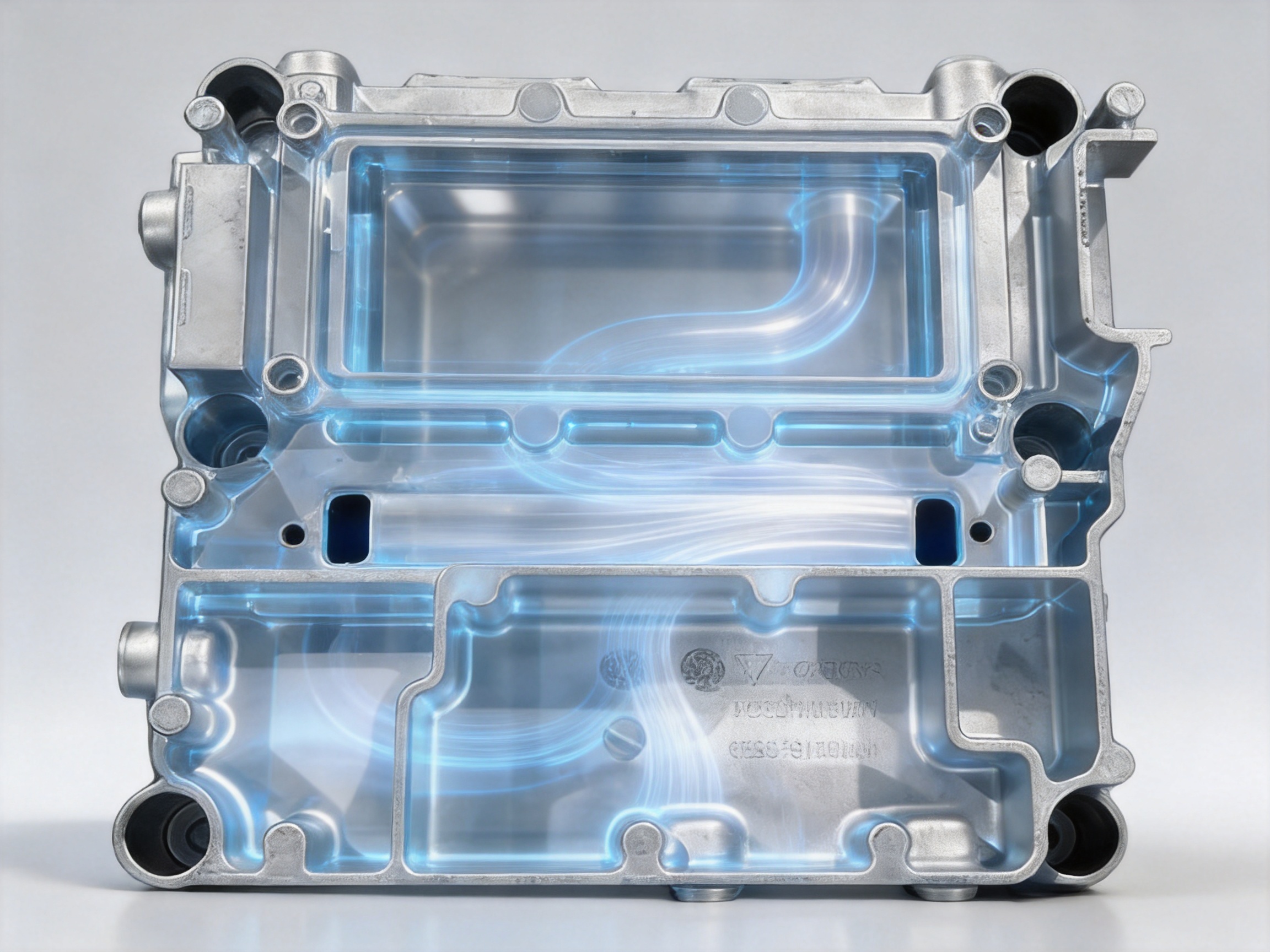
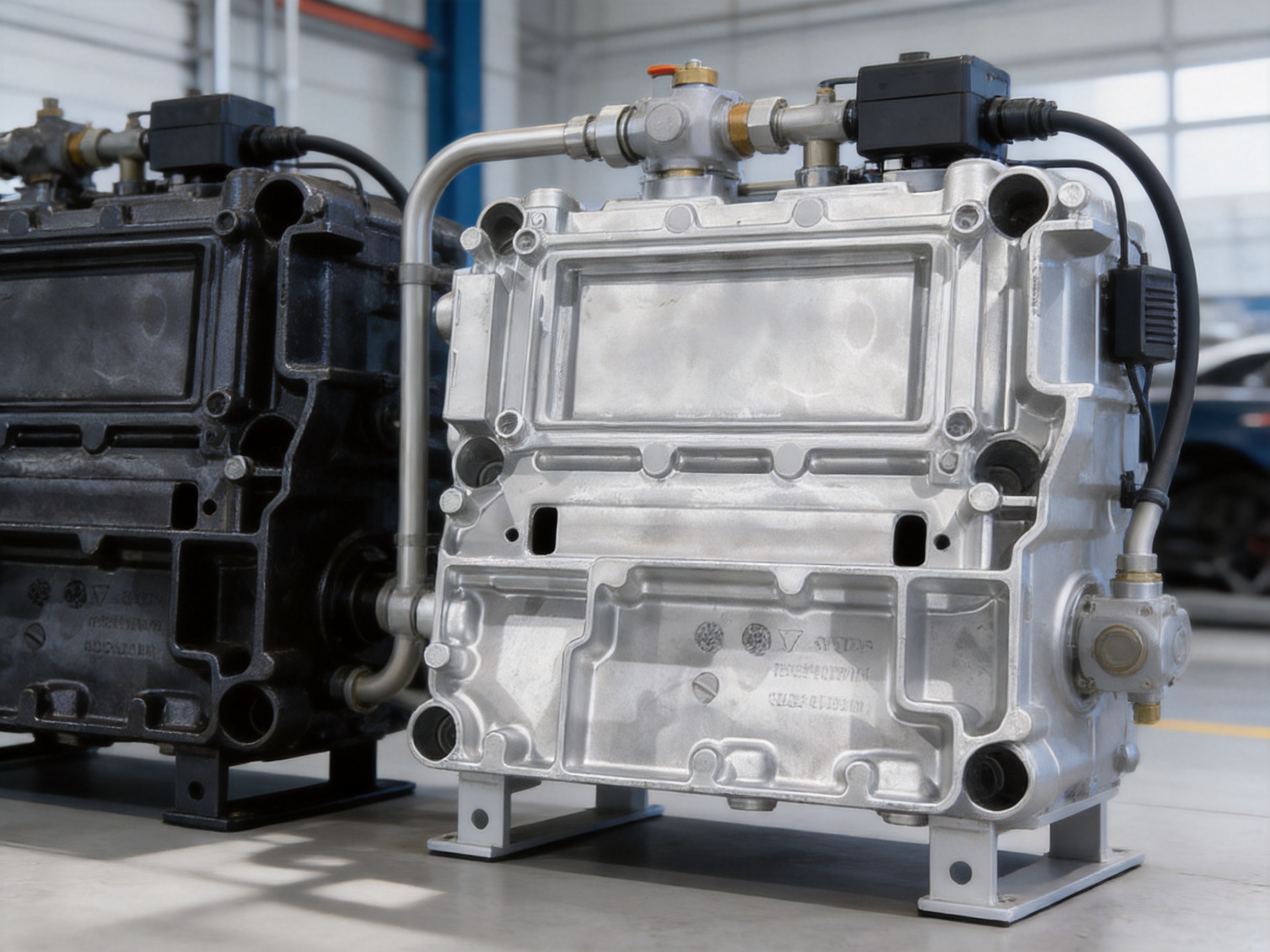
Cast iron has long been used for industrial housings because of its rigidity, vibration-damping capability, wear resistance, and established manufacturing methods. It remains appropriate for many applications. Nevertheless, cast iron can impose disadvantages when equipment designers are seeking lower weight, easier installation, compact packaging, and improved material efficiency.
The AHC065-8215 and 8111 aluminum alloy housing is positioned as a lightweight alternative. Its approximate 60 percent weight reduction compared with cast iron is a substantial difference that may affect the total equipment design. The comparison should be made using components with equivalent functional requirements and comparable structural safety margins.
| Evaluation Factor | Aluminum Alloy Die-Casting Housing | Typical Cast-Iron Housing | Design Significance |
|---|---|---|---|
| Material density | Lower | Higher | Supports lower component weight and easier handling |
| Product weight | Approximately 60 percent lower than the stated cast-iron comparison | Higher reference mass | May reduce installation load and support requirements |
| Manufacturing method | High-pressure die casting with secondary machining where needed | Commonly sand casting or other iron casting methods | Die casting can support repeatable geometry and integrated features |
| Flow-channel integration | Complex channels can be incorporated into the mold design | Channels may require different casting, machining, or assembly solutions | Supports design optimization for flow rate and pressure loss |
| Installation effort | Lower handling load in comparable designs | Greater handling load | May improve production ergonomics and serviceability |
| Dimensional repeatability | Suitable for controlled, repeat production using dedicated tooling | Depends strongly on casting method and finishing operations | Useful for consistent assembly and interchangeability |
| Surface treatment | Can accept application-specific finishing processes | May require different coating and corrosion-control methods | Finish should be selected for the operating environment |
The table provides a general engineering comparison rather than a universal material ranking. The best material depends on pressure, temperature, impact, vibration, chemical exposure, dimensional requirements, cost targets, and regulatory conditions. For applications where low weight and efficient airflow or fluid flow are important, the aluminum die-cast design offers clear advantages.
The product’s principal competitive advantage is the combination of low weight and high flow capability. Some lightweight housings may sacrifice rigidity or internal passage efficiency, while some high-flow housings may become unnecessarily heavy. The AHC065-8215 and 8111 design seeks to address both priorities within one engineered casting.
A second advantage is the possibility of feature integration. A well-designed die-cast housing can combine several functional details into a single component, potentially reducing the number of parts, fasteners, seals, and assembly operations. Fewer interfaces may reduce opportunities for misalignment or leakage, provided that the casting, machining, and sealing surfaces are properly controlled.
A third advantage is production consistency. Once the die-casting mold has been validated, repeated production can provide consistent part geometry and stable cycle performance. This is particularly important for OEM programs that require ongoing supply, controlled interchangeability, and predictable assembly behavior.
The quality of an aluminum alloy housing depends on more than the alloy itself. Mold design, flow simulation, machine parameters, metal preparation, trimming, machining, inspection, and process control all contribute to the final result. Ningbo Dinghong Mould Co., Ltd. provides an integrated manufacturing structure covering mold design, mold production, die casting, finishing, and trade support.
The process begins with review of the customer’s drawings, three-dimensional data, functional requirements, installation interfaces, and quality expectations. Engineers assess wall thickness, draft angles, ribs, bosses, holes, transitions, sealing areas, machining allowances, ejection strategy, and potential sources of casting defects.
Die-casting mold design must balance product geometry with manufacturability. A shape that is ideal from a functional perspective may require modification to ensure reliable filling, solidification, ejection, and tool life. Early engineering review can identify conflicts before steel is cut, reducing the risk of costly redesign later in the project.
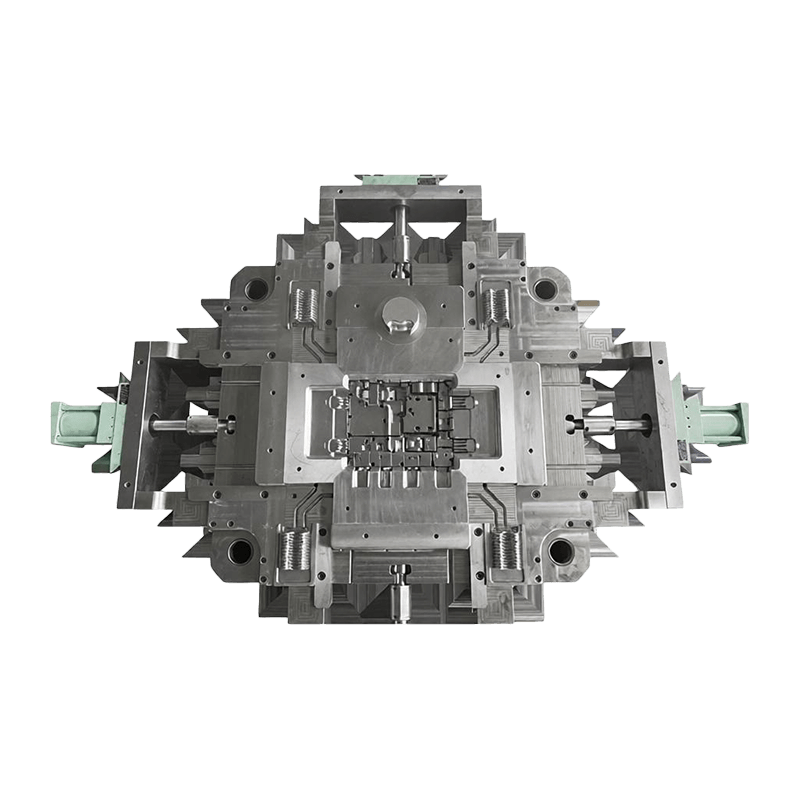
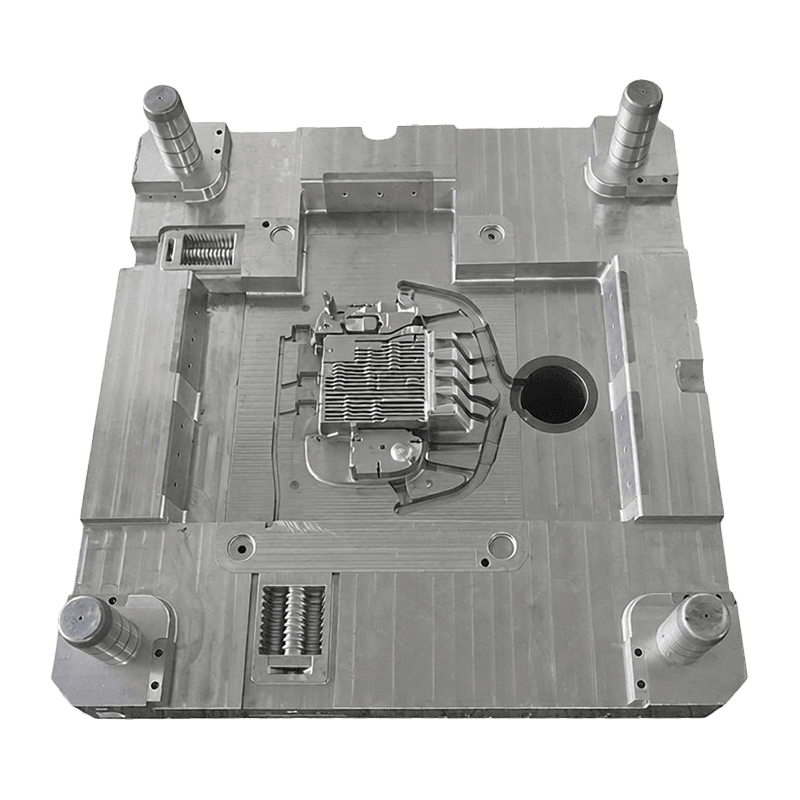
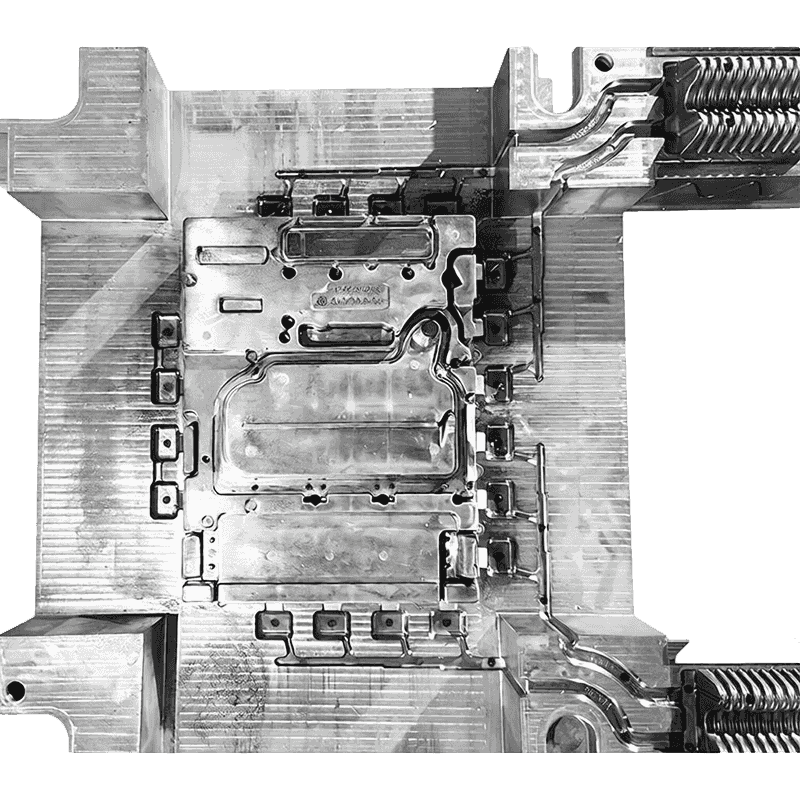
The mold must also be designed for repeatable production. Cooling channels, slides, ejector pins, inserts, runners, gates, overflows, and venting features should be positioned according to the part’s material flow and thermal behavior. Critical areas may require special attention to reduce porosity, cold shuts, flash, distortion, or incomplete filling.
Ningbo Dinghong Mould Co., Ltd. uses mold-flow analysis to visualize and optimize mold designs before manufacturing. This engineering step can help predict how molten aluminum will fill the cavity, where air may become trapped, how temperature changes during filling, and where solidification may create potential defects.
Simulation does not replace physical validation, but it provides useful information for comparing gate locations, runner layouts, overflow positions, venting concepts, cooling arrangements, and filling sequences. It can also help identify areas where wall thickness or geometry should be adjusted.
For a housing with internal flow channels, mold-flow analysis is especially valuable because the design must support both functional passage geometry and reliable casting. The engineering team must consider whether thin sections will fill correctly, whether complex areas can be ejected safely, and whether subsequent machining can achieve the required sealing and connection surfaces.
After design approval, the mold is manufactured using precision machining equipment and electrical-discharge machining where appropriate. High-precision CNC machining centers can produce cavity components, inserts, mold bases, and locating surfaces with controlled accuracy. EDM equipment can create detailed or difficult-to-machine features that support the final mold geometry.
Tool quality has a direct effect on product quality. Accurate cavity dimensions support repeatable casting dimensions. Proper surface preparation can improve the appearance and release behavior of the casting. Reliable cooling and ejection arrangements help stabilize production cycles and reduce the likelihood of distortion or sticking.
Before production release, the mold is typically checked through dimensional review, fitting, trial casting, and process adjustment. Sample castings may be evaluated for filling quality, flash, surface condition, dimensional performance, machining allowance, and compatibility with downstream operations.
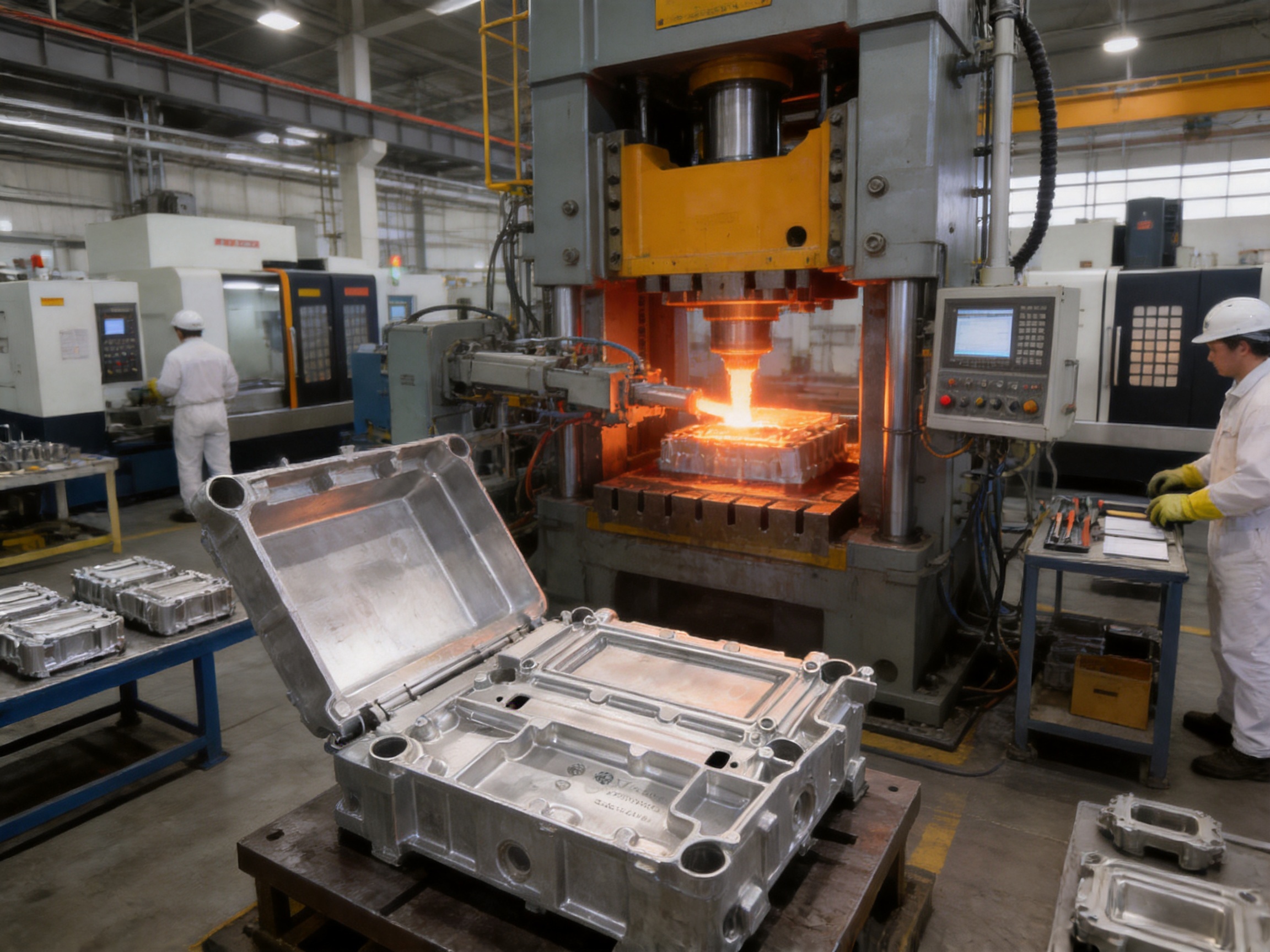
During die casting, aluminum alloy is prepared and injected into the closed mold under controlled pressure. The metal must enter the cavity quickly enough to fill the geometry while maintaining appropriate temperature and flow conditions. Machine settings, die temperature, injection speed, pressure, holding conditions, and cycle timing influence the quality of the casting.
Stable process control is important because variations can affect porosity, surface quality, dimensional consistency, mechanical properties, and subsequent machining behavior. Production personnel monitor the process and follow established operating procedures to maintain repeatability across batches.
For a housing component, casting quality is particularly important around mounting bosses, connection areas, sealing faces, internal passages, and locations exposed to load. The mold and process must be designed so that these areas receive sufficient material and are not unnecessarily weakened by defects or excessive flash.
After casting, excess material such as runners, gates, overflows, and flash must be removed. Dinghong operates automated trimming lines and finishing equipment to support efficient and consistent post-casting processing. Automated trimming can reduce variation and improve production efficiency, especially for parts manufactured in larger quantities.
Additional finishing may include deburring, surface cleaning, shot blasting, polishing, drilling, tapping, reaming, milling, or other operations specified by the customer. The exact sequence depends on the housing design and the precision required at each feature.
Machining is often used for critical interfaces. These may include mounting holes, threaded holes, bearing seats, sealing faces, connector locations, and datum surfaces. Machining allowances should be considered during mold design so that the final operation can achieve the required dimensions without exposing internal defects or removing excessive material.
Quality control begins with engineering review and continues through material preparation, mold production, casting, trimming, machining, inspection, and final packing. The company holds ISO 9001 and IATF 16949 quality management system certifications, reflecting a structured approach to process management and quality assurance.
Inspection methods should be selected according to product risk and customer requirements. Typical checks for a precision aluminum die-casting housing may include visual inspection, dimensional measurement, thread verification, surface inspection, leak or pressure testing where applicable, material confirmation, and functional assembly checks.
Advanced testing equipment helps support objective evaluation. Coordinate measurement and specialized gauges may be used for critical dimensions. Depending on the application, non-destructive testing or section analysis may be considered to assess internal casting quality. The final inspection plan should be agreed according to the approved technical specification.
Ningbo Dinghong Mould Co., Ltd. was established in 2013, following the establishment of Yuejin Mould in 1998. This background combines a modern company structure with experience accumulated through a longer history of mold-related manufacturing. The company is located in Daqi Street, Beilun District, Ningbo, Zhejiang Province, near Beilun Port.
The company operates approximately 15,000 square meters of plant space and occupies approximately 20 mu of land. Its location near a major port supports access to domestic and international logistics networks. This can be valuable for customers that require export supply, scheduled deliveries, sample shipments, or coordinated movement of molds and finished components.
Dinghong’s production scope includes mold design, mold manufacturing, die casting, finishing, and trade support. An integrated capability can simplify communication because product engineering, tooling, casting, machining, and quality discussions are coordinated within one manufacturing organization.
For customers developing a new housing, this structure can reduce the risk of information loss between separate suppliers. The same technical team can review the product design, propose mold modifications, interpret trial results, and coordinate production improvements. This is especially useful when the product includes complex internal channels, tight assembly interfaces, or application-specific sealing surfaces.
The facility includes high-precision CNC machining centers, EDM equipment, die-casting machines, automated trimming lines, and production and testing equipment. These resources support the complete manufacturing sequence from tooling to finished die-cast products.
CNC machining centers provide the accuracy and flexibility needed for mold components and secondary product machining. EDM equipment supports detailed mold features and difficult geometries. Die-casting machines provide the production platform for aluminum alloy housings, while automated trimming lines help process castings efficiently after ejection.
The combination of these resources is important for customers seeking more than a basic casting supplier. A housing must be produced with coordinated attention to tool accuracy, casting parameters, finishing, dimensions, and final application. Integrated equipment helps the manufacturer manage these relationships.
Dinghong primarily manufactures automotive parts, household appliance parts, telecommunication parts, and other aluminum alloy products. The company also provides products for new-energy, photovoltaic, electrical, motorcycle, pump and valve, fitness equipment, robotic, and related industries.
These sectors commonly demand repeatability, traceability, controlled tolerances, consistent surface quality, and reliable delivery. Experience across different industries can strengthen the company’s ability to adapt manufacturing methods to different product geometries and customer requirements.
The company’s sales network covers China, South America, Southeast Asia, and other international markets, with plans to expand further into Europe and other regions. International customers often require clear documentation, stable communication, export packaging, production updates, inspection records, and coordination across different time zones and technical standards.
A supplier with established export experience can help reduce uncertainty during project execution. However, all documentation, inspection criteria, packaging specifications, and shipping responsibilities should be confirmed during the commercial and technical review process.
Successful production begins with a design that is suitable for die casting. Product engineers should consider both functional performance and manufacturing feasibility from the earliest stage.
Uniform wall thickness helps reduce uneven cooling and solidification. Where additional strength is needed, ribs and bosses may be more effective than simply increasing the thickness of the entire housing. Local reinforcement should be positioned so that it supports the load without creating excessive thermal concentration or difficult filling conditions.
Final wall dimensions depend on the alloy, casting machine, mold design, product size, pressure requirements, and customer specification. Engineering review is required before establishing a production design.
Draft angles help the casting release from the mold without damage. Sufficient draft is particularly important on deep walls, internal passages, cores, and textured surfaces. Ejector pins must be positioned to remove the casting without distorting thin areas or marking critical surfaces.
When the housing contains undercuts or side openings, slides or inserts may be required. These features increase mold complexity and should be reviewed carefully to balance functional requirements, tool cost, maintenance, and production reliability.
Critical surfaces should be identified before mold construction. Machining allowances must be sufficient to clean up the surface and achieve the required dimension, but excessive allowance can increase cycle time, tool wear, and material removal.
Datums should be selected to reflect how the housing will be assembled and inspected. Consistent datum planning helps ensure that mounting holes, channels, sealing areas, and connection features maintain the required relationship to one another.
If the housing forms part of an air, vacuum, or fluid-control assembly, leakage performance may be a key acceptance criterion. Sealing surfaces should be designed with appropriate flatness, roughness, contact width, and fastener arrangement. The selected gasket or seal must be compatible with the operating medium, temperature range, pressure conditions, and surface finish.
Leak testing methods should be defined during product development. The test pressure, test medium, stabilization time, allowable leakage rate, test fixture, and recording method should be documented clearly. These requirements should be reflected in the production inspection plan.
The required appearance should be specified separately from the functional surface requirements. A decorative surface may require different treatment from a machined sealing surface. Areas hidden inside the equipment may not require the same finish as externally visible surfaces.
Die-cast surfaces can show normal characteristics such as parting lines, ejector marks, minor flow marks, or machining transitions. Acceptance criteria should distinguish between allowable casting features and defects that could affect function, assembly, corrosion performance, or appearance.
The AHC065-8215 and 8111 housing can serve equipment manufacturers that need a lightweight, flow-efficient, and repeatable aluminum alloy component. Its described operating characteristics support applications involving vacuum or low-pressure air, subject to confirmation of the complete system requirements.
New-energy equipment frequently requires compact packaging, low mass, thermal management, controlled airflow, and reliable electrical or mechanical integration. A lightweight die-cast housing can contribute to the overall design by reducing structural load and supporting efficient use of available space.
The housing may be considered for air-control assemblies, energy-system enclosures, auxiliary components, and other equipment where aluminum alloy construction and optimized passages are beneficial. Application engineering should confirm compatibility with temperature, vibration, pressure, and environmental exposure.
Automotive manufacturers continuously seek lower vehicle mass and efficient component integration. Aluminum die-casting can support these goals by consolidating features and reducing weight compared with iron components.
In automotive use, the housing must be evaluated for vibration, thermal cycling, corrosion, impact, sealing, dimensional stability, and production traceability. Dinghong’s IATF 16949 quality management certification is relevant to customers that require an automotive-oriented process framework.
The product’s optimized channels and stated Cv and Kv values make it relevant to pump, valve, and air-control equipment. High flow capacity and low pressure loss can help designers manage system efficiency, particularly where pressure availability and energy consumption are important.
The housing’s suitability should be verified with the specific operating medium and pressure range. A housing intended for low-pressure air is not automatically suitable for every liquid, gas, vacuum level, or pressure condition. Correct material, seal, testing, and safety review remain essential.
Telecommunication and electrical equipment may benefit from lightweight housings that offer integrated mounting and connection features. Aluminum alloy can also support heat dissipation in suitable designs, although thermal performance depends on geometry, surface treatment, heat sources, airflow, and the surrounding assembly.
Electrical isolation, grounding, electromagnetic requirements, and contact corrosion should be reviewed where the housing is installed near electrical components or conductive interfaces.
Robotic and fitness equipment often requires durable components with manageable weight. Lower housing mass can reduce the load on moving axes, support structures, hinges, or adjustment mechanisms. In robotic systems, reduced inertia may be valuable, although the final effect depends on the location and movement profile of the component.
For fitness equipment, the housing may support air, mechanical, or control functions while contributing to a robust but manageable overall structure. Impact, repeated loading, user safety, and surface protection should be included in the application review.
A successful housing program normally progresses through several stages: requirement definition, design review, mold-flow analysis, tooling, trial production, sample inspection, customer approval, process validation, and serial production. Each stage provides an opportunity to identify and control risk.
The project should begin with a complete set of technical information. This may include two-dimensional drawings, three-dimensional models, alloy requirements, surface-finish specifications, pressure and leakage criteria, dimensional tolerances, inspection standards, annual demand, packaging requirements, and delivery expectations.
Clear requirements help prevent misunderstandings about what is included in the quoted product. They also allow the manufacturer to evaluate tooling complexity, machining requirements, cycle time, inspection needs, and production capacity accurately.
After mold design and manufacturing, trial castings are produced and reviewed. The trial stage may identify areas requiring changes to gates, overflows, venting, cooling, ejection, machining allowances, or product geometry. Sample parts should be measured and tested against the approved requirements.
Customer sample approval establishes a common reference for later mass production. It is useful to document the approved material, appearance, dimensions, performance, inspection method, and packaging condition.
Before regular production, the manufacturer should confirm that the process can repeatedly produce conforming parts. Process validation may include capability studies, first-article inspection, measurement-system review, trial-run evaluation, and confirmation of inspection frequency.
For critical housings, production records may include casting-machine settings, batch information, operator records, inspection data, nonconformance reports, and corrective-action documentation. The level of traceability should be agreed with the customer according to application risk.
Continuous improvement can address cycle time, material utilization, tool life, dimensional variation, surface quality, trimming efficiency, machining stability, and packaging. Feedback from assembly and field performance can also help identify opportunities to improve the product or process.
Dinghong’s stated commitment to technological innovation, reliable manufacturing, and long-term customer relationships supports a development model in which production is refined over time rather than treated as a one-time transaction.
Reliable die-casting supply depends on technical communication as much as on machinery. Product developers, mold engineers, casting operators, machinists, inspectors, and customer representatives should share a clear understanding of the component’s purpose and acceptance criteria.
For the AHC065-8215 and 8111 housing, important discussion topics may include flow performance, zero differential pressure start-up, vacuum or low-pressure air compatibility, connection dimensions, sealing requirements, weight targets, surface treatment, inspection procedures, and packaging.
When the component is used in a safety-sensitive or high-value assembly, customers may also require additional documentation. This could include material certificates, dimensional reports, process-flow documents, control plans, inspection records, capability data, or conformity statements. The exact documentation package should be agreed before production.
Customer collaboration is also valuable during design changes. Even a small modification to a mounting boss, channel, wall thickness, or sealing face can affect mold construction, casting flow, machining, and inspection. A controlled engineering-change process helps ensure that revisions are reviewed and implemented correctly.
The cost of a housing should be evaluated over the entire production and service cycle rather than by piece price alone. A die-cast aluminum housing may provide economic value through lower weight, reduced assembly effort, integrated features, repeatable production, and lower downstream handling requirements.
Tooling is an important initial investment. However, when production volume is sufficient, the cost of the mold can be distributed across many parts. The resulting repeatability and cycle efficiency may make die casting more economical than machining a housing entirely from solid material or assembling multiple cast and fabricated components.
Feature integration can also influence cost. If the casting incorporates mounting areas, ribs, bosses, and connection details, it may reduce separate part procurement and assembly operations. The actual benefit depends on the product design, annual volume, tolerance requirements, machining content, and quality-control plan.
Lower mass may reduce logistics cost and make manual handling easier. In systems containing several housings, reduced mass can also influence the design of frames, brackets, lifting equipment, and packaging. These secondary effects should be considered during the product-selection process.
Companies considering the AHC065-8215 and 8111 housing should begin by matching the product characteristics to their application requirements. The first review should confirm the operating medium, pressure conditions, temperature range, flow requirement, start-up condition, installation orientation, connection interfaces, and environmental exposure.
The second review should examine mechanical and dimensional requirements. Engineers should confirm mounting loads, vibration, impact, fastener arrangement, sealing surfaces, allowable weight, service access, and tolerance relationships.
The third review should address manufacturing and supply requirements. This includes annual demand, expected production life, mold ownership, sample approval, inspection documentation, surface treatment, packaging, delivery schedule, and change-control procedures.
Testing should be performed under representative conditions. Flow testing can help confirm the expected Cv or Kv behavior. Leakage testing can verify sealing performance. Dimensional inspection can confirm compatibility with mating components. Environmental or endurance testing may be appropriate where the product faces vibration, temperature cycling, corrosion, or repeated operation.
Final approval should be based on the complete assembly rather than the housing alone. A well-manufactured housing can still underperform if the gasket, fastener torque, mating part, flow connection, control system, or operating conditions are unsuitable.
The housing is manufactured using aluminum alloy die casting. The specific alloy grade and any required heat treatment or surface treatment should be confirmed in the approved technical documentation for the project.
The supplied product information states that the aluminum alloy housing reduces weight by approximately 60 percent compared with cast iron. The exact reduction for a customer’s design should be confirmed using the final approved part geometry and comparison basis.
The housing is described as having a maximum Cv value of 138 and a Kv value of 118. These values must be interpreted according to the relevant test conditions, medium, pressure, temperature, and industry standard.
Yes. The product information states that it is compatible with vacuum and low-pressure air operating conditions. Application engineers should still verify the required vacuum level, pressure range, seal material, temperature, and leakage criteria.
The housing is described as capable of starting under zero pressure differential. The complete system, including the actuator, control method, seals, piping, and safety devices, should be evaluated to confirm the intended start-up behavior.
Yes. Aluminum pressure die casting is well suited to repeat production when the mold has been correctly designed and validated. Dinghong supports mold design, mold manufacturing, die casting, trimming, machining, inspection, and related production services.
Die-casting housings can generally be customized according to approved drawings, three-dimensional models, material requirements, mounting interfaces, surface treatment, machining specifications, and inspection standards. Customization should be reviewed before tooling begins.
Potential industries include new-energy equipment, automotive systems, pump and valve equipment, air-control assemblies, telecommunications, electrical equipment, robotics, fitness equipment, household appliances, and other industrial machinery. Suitability depends on the complete operating requirements.
Dinghong’s facility includes high-precision CNC machining centers, EDM equipment, die-casting machines, automated trimming lines, and production and testing equipment. These resources support the mold, casting, finishing, machining, and inspection stages.
Ningbo Dinghong Mould Co., Ltd. has obtained ISO 9001 and IATF 16949 quality management system certifications. Certification supports a structured quality-management approach, while product acceptance remains based on the agreed technical requirements and inspection results.
Useful information includes drawings, three-dimensional data, annual demand, target delivery schedule, alloy requirements, surface-finish expectations, critical dimensions, leakage or pressure requirements, packaging needs, and inspection standards. More complete information allows more accurate tooling and production evaluation.
Cv and Kv should be used as flow-capacity reference values within the correct engineering standard and test condition. They should be compared with the system’s required flow, pressure drop, temperature, operating medium, and control position. They should not be treated as universal values independent of application conditions.
No. Aluminum alloy can perform well in many environments, but corrosion behavior depends on the alloy, exposure, temperature, chemicals, galvanic contacts, surface treatment, and maintenance. The application should be reviewed and an appropriate finish selected where necessary.
Mold-flow analysis helps engineers visualize filling, temperature distribution, air entrapment, solidification, and potential defect locations before mold construction. It supports better decisions about gates, runners, overflows, vents, cooling, and product geometry.
The AHC065-8215 and 8111 die-casting housing offers a practical combination of lightweight aluminum alloy construction, high flow capability, low pressure loss, and flexible operating performance. Its approximate 60 percent weight reduction compared with cast iron can reduce installation load and support more efficient equipment packaging. Its optimized internal channels, stated maximum Cv value of 138, Kv value of 118, vacuum and low-pressure air compatibility, and zero differential pressure start-up capability provide additional value for suitable fluid-control and air-handling applications.
The product’s advantages are strengthened by Ningbo Dinghong Mould Co., Ltd.’s integrated manufacturing capabilities. The company combines mold design, mold-flow analysis, precision tool manufacturing, die casting, automated trimming, machining, inspection, and quality management. Its experience in automotive, appliance, telecommunications, new-energy, photovoltaic, electrical, robotic, pump and valve, and other sectors supports the production of application-specific aluminum alloy components.
For equipment manufacturers, the most important benefit is the ability to develop a housing around both performance and manufacturability. Careful design review can ensure that the flow channels, mounting interfaces, sealing surfaces, wall sections, machining features, and inspection requirements work together. With proper validation and controlled production, the AHC065-8215 and 8111 housing can support reliable, lightweight, and cost-effective equipment development.
1. Product technical information for the AHC065-8215 and 8111 aluminum alloy die-casting housing, supplied for product documentation.
2. ISO 9001, Quality Management Systems: Requirements.
3. IATF 16949, Quality Management System Requirements for Automotive Production and Relevant Service Parts Organizations.
4. General engineering principles for aluminum pressure die casting, mold design, trimming, machining, and dimensional inspection.
5. General fluid-control engineering references concerning flow coefficients, including Cv and Kv evaluation methods.
6. General materials-engineering references concerning aluminum alloys, cast iron, density, corrosion behavior, and surface treatment.

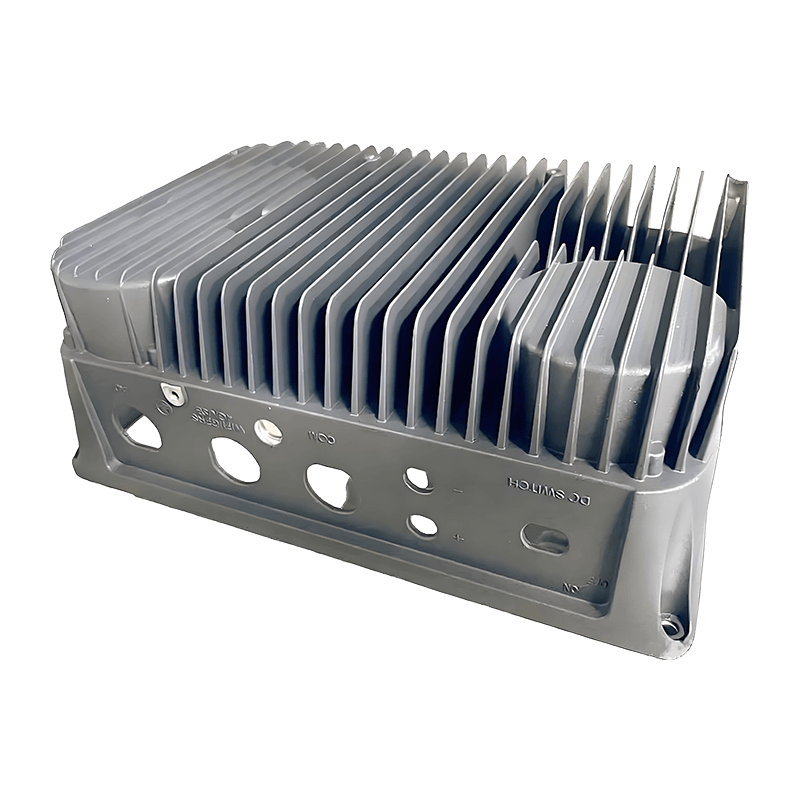
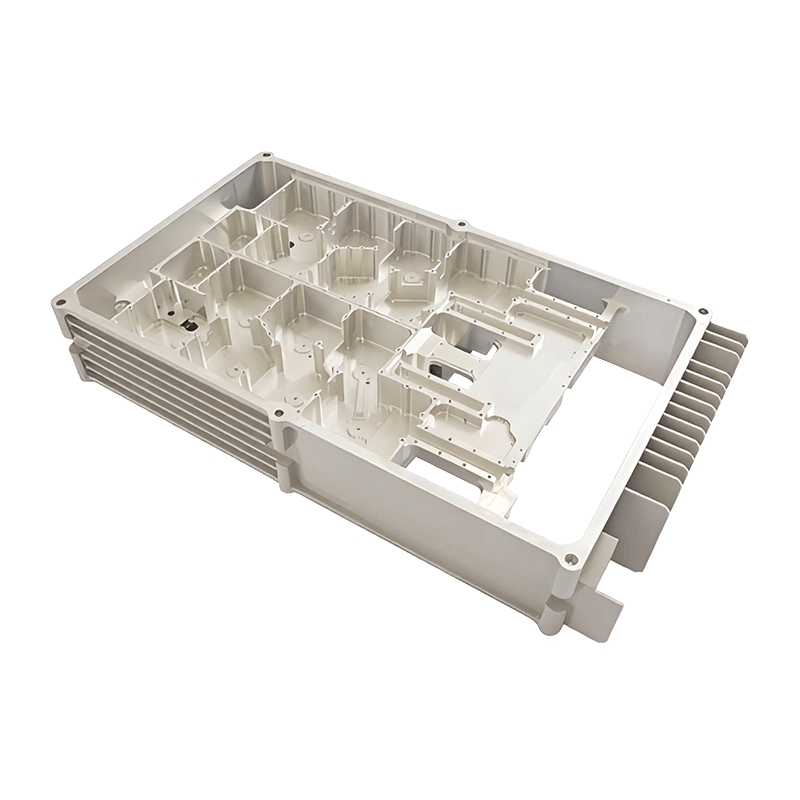
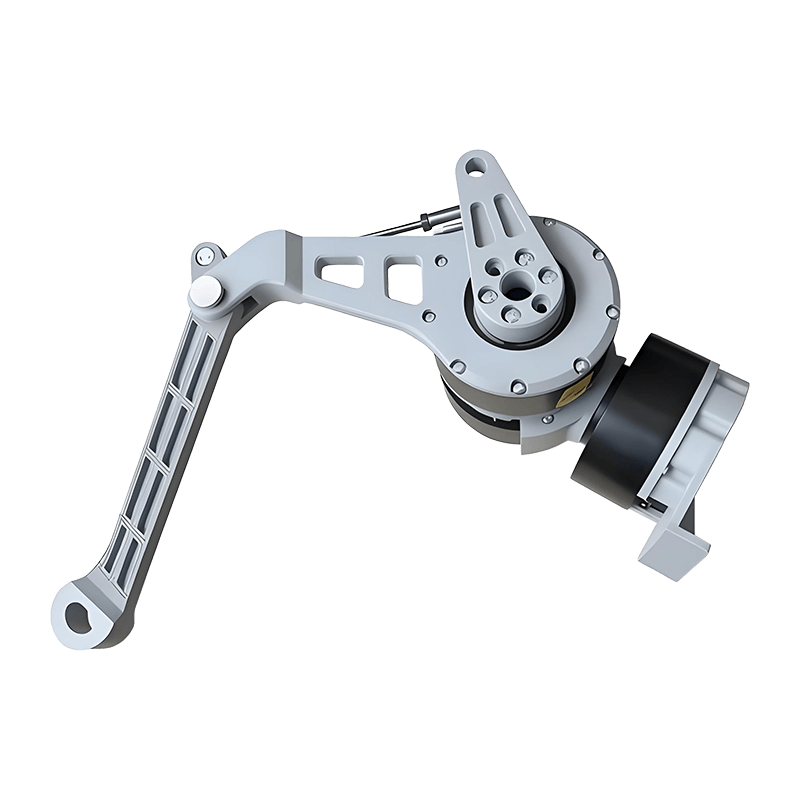

Materials & Manufacturing Yes, Aluminum Die Casting Parts are consistently lighter than Cast Iron Parts when engin...
READ MOREA mold quote for an aluminum die casting mold can swing by 30–50% for the same nominal part. The difference is rarely t...
READ MOREBefore a part ever reaches production, every buyer eventually asks the same question: should this component be injectio...
READ MORETwo quotations for the same aluminum controller housing can differ by 20% or more, even when both suppliers list the sa...
READ MORE

Sun Yuejun: +86-13806631860
Wang Shiyong: +86-15958891460 / 15058297768
Dove Yao: +86-18625086675


Copyright © Ningbo Dinghong Mould Co., Ltd. Rights Reserved. Custom Precision Die Casting Aluminum Alloy Parts Manufacturers
