
 English
 Español
 русский
 Français

Die casting automotive parts are made by forcing molten metal into a steel mold under high pressure, where it fills t...
READ MORE
Content
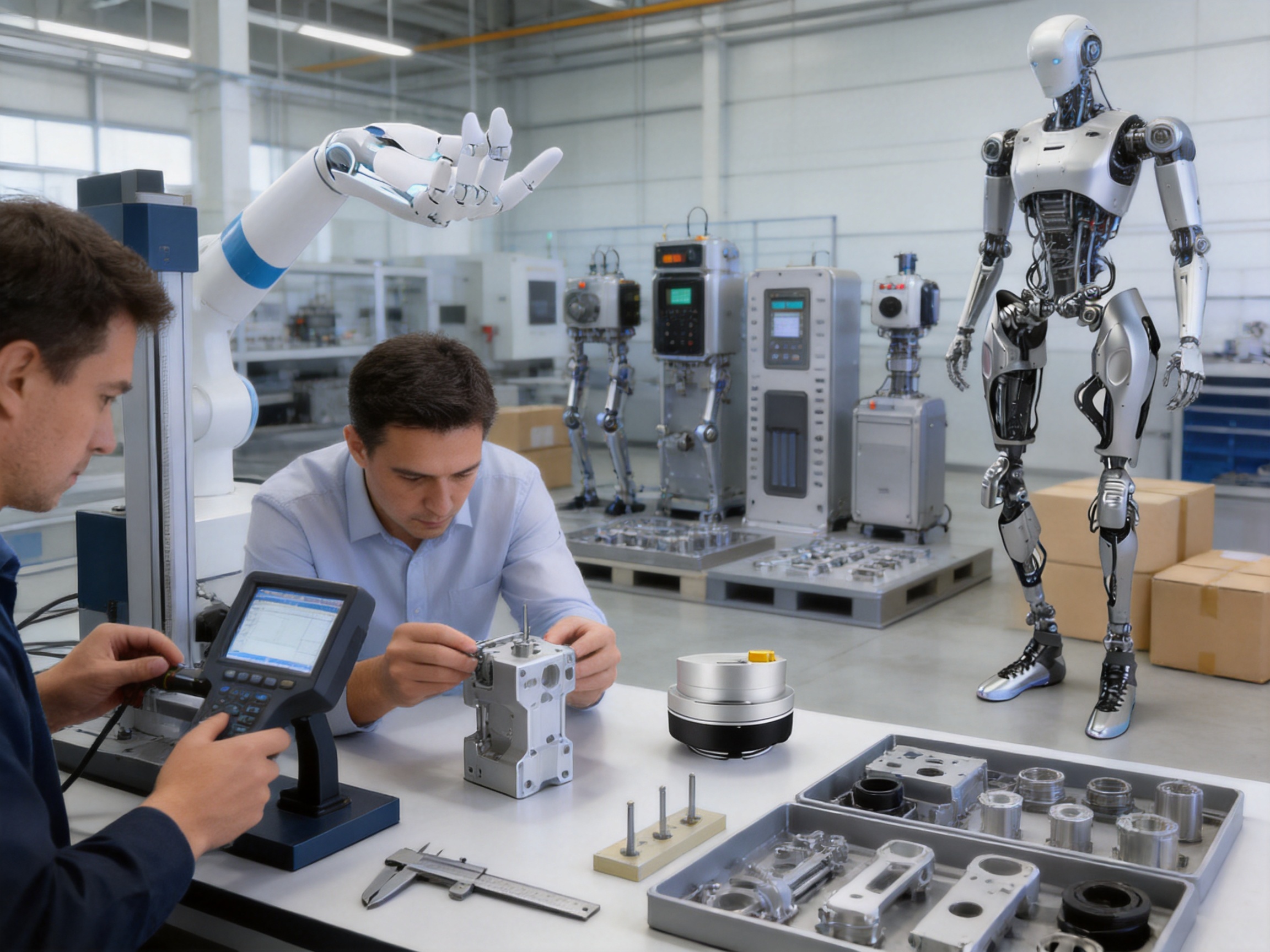
As robotics continues to develop from industrial automation toward intelligent, flexible, and human-oriented machines, the demand for reliable robot components is increasing rapidly. Humanoid robots, collaborative robots, service robots, mobile robots, and specialized automation systems all require structural parts that combine low weight, high strength, dimensional accuracy, durability, and efficient production. Die casting is one of the most effective manufacturing technologies for producing these components, particularly when aluminum alloy parts are required in medium- and high-volume applications.
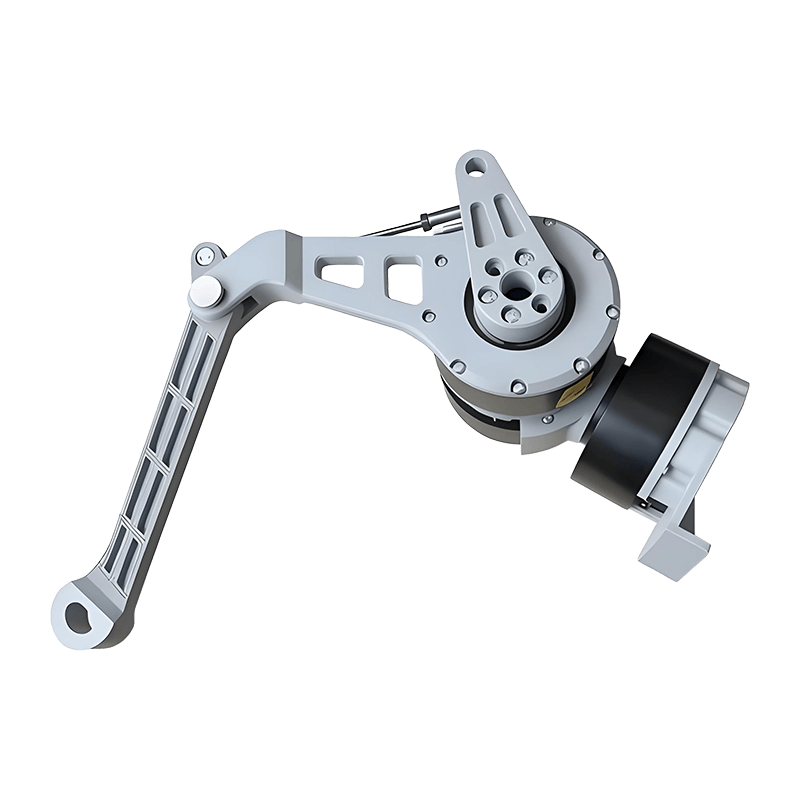
Die casting robot parts are used in many areas of a robotic system. They may form part of a joint housing, motor cover, reducer enclosure, sensor support, control-system casing, arm structure, base assembly, or protective component. Although these parts may appear simple from the outside, their internal geometry, mounting interfaces, wall thickness, tolerances, heat dissipation requirements, and surface-finish expectations can be highly demanding. A successful component must integrate smoothly with motors, reducers, lead screws, sensors, bearings, wiring, fasteners, and other precision elements.
Ningbo Dinghong Mould Co., Ltd. provides die casting molds and aluminum alloy die-cast products for robotic, automotive, telecommunications, electrical, new-energy, photovoltaic, household appliance, motorcycle, pump and valve, and fitness-equipment applications. With experience in mold design, mold manufacturing, die casting, finishing, and quality control, the company supports customers seeking OEM and ODM die casting robot parts.
Robotic equipment places special demands on its structural components. Parts must often be compact while supporting moving loads, vibration, repeated impact, heat generated by motors and control devices, and continuous operating cycles. At the same time, manufacturers must control the overall weight of each assembly because excessive mass can reduce energy efficiency, slow movement, and increase the load on motors and reducers.
Die casting offers a practical balance between mechanical performance, design flexibility, production efficiency, and repeatability. Molten aluminum alloy is injected into a precision mold under controlled pressure, allowing complex shapes and detailed features to be produced in a single manufacturing operation. This process can reduce the number of separate components, minimize secondary machining, and improve consistency between production batches.
For robot manufacturers, the value of die casting extends beyond the individual part. A properly designed die-cast component can simplify assembly, provide accurate interfaces for bearings and motors, improve heat dissipation, protect internal electronics, and create a clean external appearance. It can also reduce the number of joints and fasteners required in a robotic module, contributing to better structural stability.
Compared with fabricating a robot housing from multiple sheet-metal pieces, die casting can provide a more integrated structure with fewer seams and overlapping sections. Compared with machining a complete component from a solid billet, die casting can reduce material waste and production time, particularly when many parts are required. Compared with plastic injection molding, aluminum die casting can offer greater rigidity, higher thermal conductivity, improved resistance to mechanical stress, and stronger protection for precision mechanisms.
Humanoid and intelligent robots generally contain three interconnected functional systems: an execution system, a perception system, and a control system. Die-cast components can support all three systems by providing lightweight, accurate, and durable structural foundations.
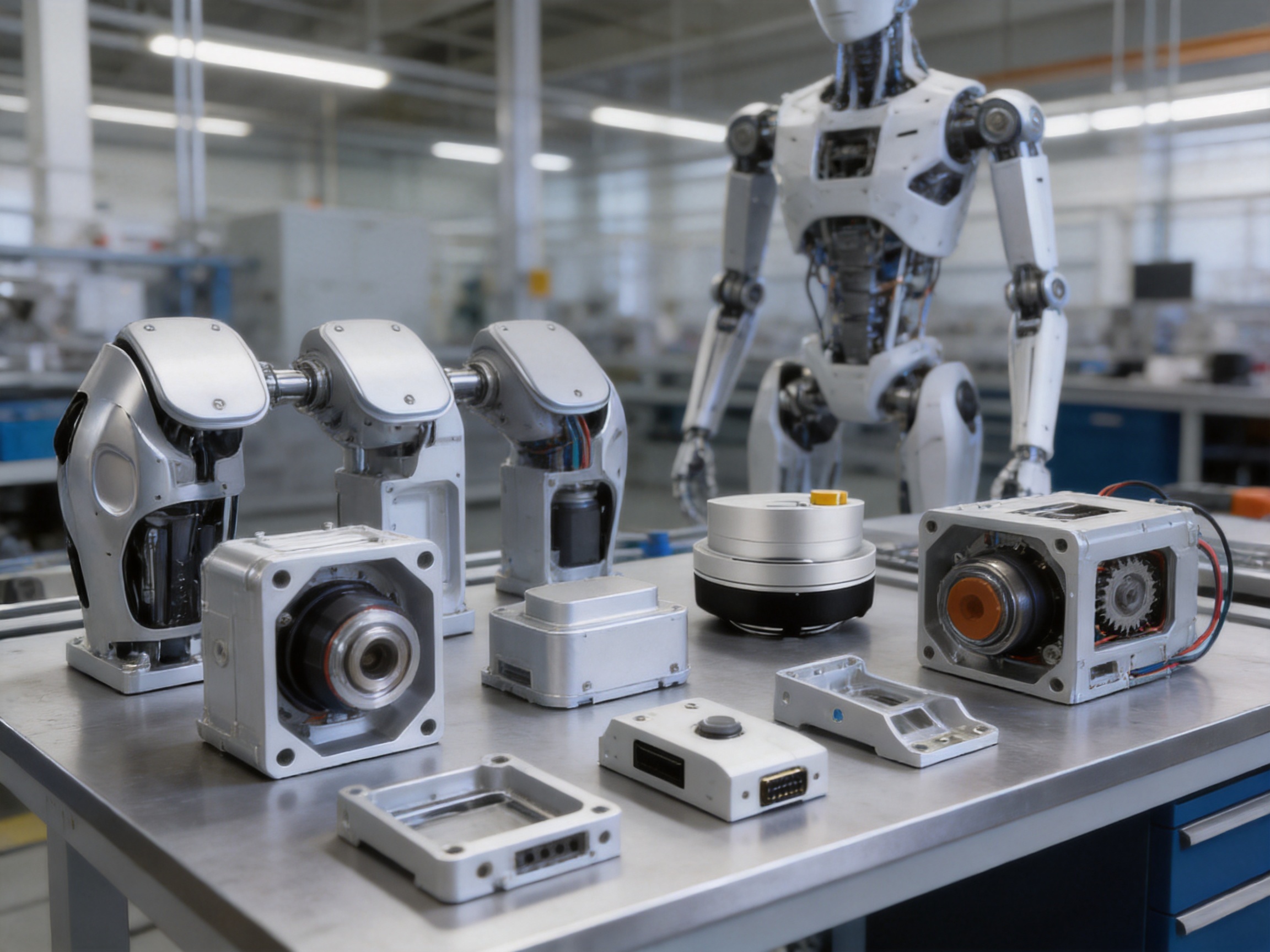
Joint housings protect motors, reducers, bearings, encoders, and other motion components. They must maintain precise alignment while resisting vibration and repeated torque. A die-cast housing can integrate bearing seats, mounting bosses, cable channels, inspection openings, and reinforcement ribs into one component.
In humanoid robots, joint housings may be used in the shoulders, elbows, wrists, hips, knees, and ankles. These locations experience different force directions and operating conditions. Mold-flow analysis and engineering review help determine suitable wall thickness, rib arrangement, gate location, and ejection strategy for each design.
Reducers transfer motor power and control the speed and torque of a robotic joint. Their enclosures must protect internal gears and bearings while maintaining dimensional stability. Aluminum alloy die casting is well suited to reducer covers and gearbox casings because the material is lightweight, rigid, and capable of dissipating heat.
Accurate machining after casting may be applied to bearing bores, locating surfaces, threaded holes, and sealing areas. The combination of a near-net-shape casting and targeted precision machining allows manufacturers to achieve functional accuracy without machining every surface from a solid block.
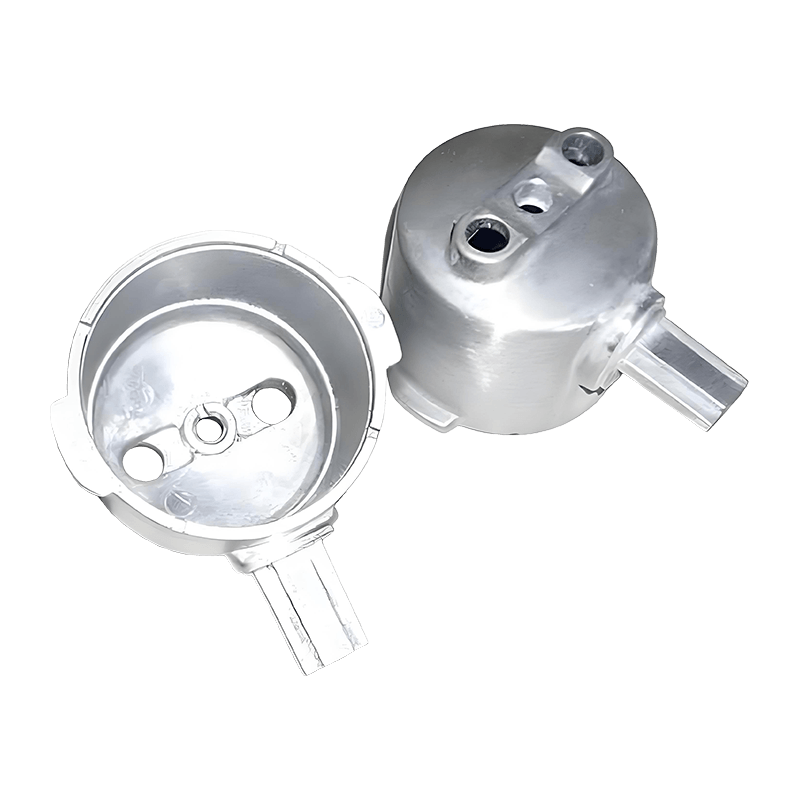
Motor covers and brackets support the motor while protecting it from external impact, dust, and contamination. These components may include ventilation features, mounting flanges, fastening bosses, cable-routing passages, and alignment points. Die casting enables such features to be integrated into the original mold design.
A well-designed aluminum motor housing can also assist with heat transfer. This is particularly important for compact robotic joints in which motors operate continuously or under high loads. Better thermal management can help improve service life and operating stability.
Robots rely on cameras, force sensors, position sensors, proximity sensors, inertial measurement units, and other devices to understand their environment. Sensor brackets and protective covers must hold these devices in a stable position and maintain accurate alignment. Even small dimensional deviations can affect sensor calibration or the accuracy of the robot's perception system.
Die-cast sensor supports can combine mounting features, protective walls, cable passages, and lightweight reinforcement structures. Secondary machining can be used where close tolerances are required for sensor installation.
Control-system housings protect circuit boards, connectors, power modules, and communication components. The enclosure must provide structural protection while allowing suitable cable access, heat dissipation, and maintenance access. Aluminum alloy is beneficial in these applications because it provides mechanical protection and can help transfer heat away from internal electronic components.
Larger robotic assemblies may require die-cast arm connectors, limb housings, torso frames, end covers, and base structures. These parts often need a balance between rigidity and weight. Carefully arranged ribs, bosses, pockets, and curved sections can increase stiffness without adding unnecessary material.
For high-volume production, the ability to consolidate several smaller pieces into one die-cast component may reduce assembly labor and improve the overall reliability of the robot. Fewer interfaces can mean fewer opportunities for looseness, misalignment, or fastening failure.
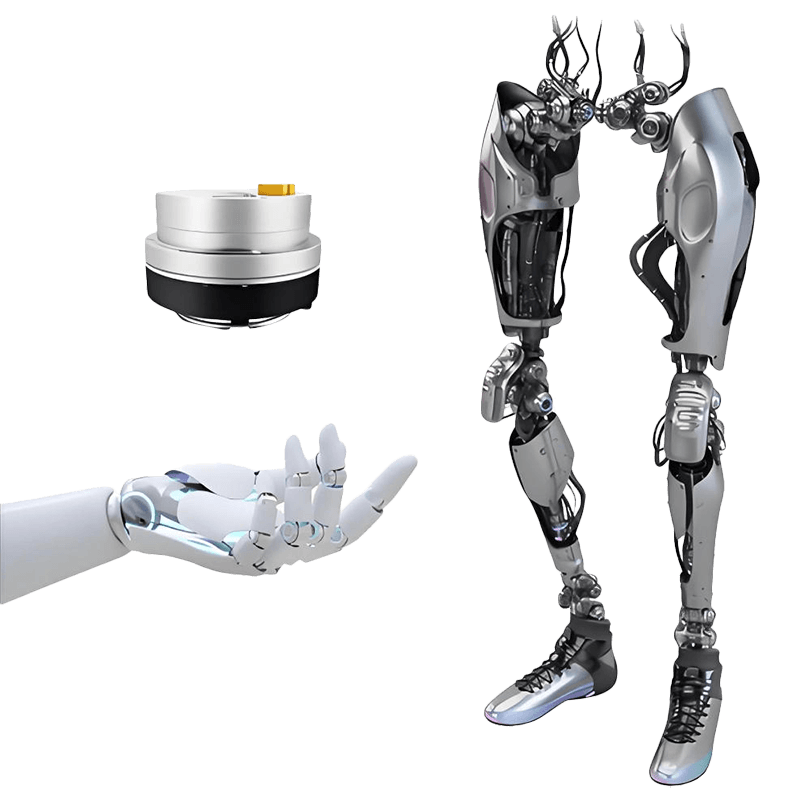
Die Casting Robot Parts
Weight is a critical consideration in robotic engineering. A lighter arm or leg component can reduce the required motor torque and improve the robot's movement efficiency. It can also reduce the size and cost of related components, including motors, reducers, bearings, and support structures.
Aluminum alloy die casting provides a favorable strength-to-weight ratio. Engineers can use ribs, curved walls, and integrated reinforcement features to achieve the required stiffness while avoiding excessive mass. This design freedom is especially valuable for humanoid robots, where moving components are repeatedly accelerated and decelerated.
Robot parts must withstand static loads, dynamic loads, vibration, impact, and repeated movement. Die-cast aluminum alloy components can provide a strong structural base for these conditions when the alloy, wall thickness, mold design, and heat-treatment or finishing requirements are properly selected.
Strength is not determined by material choice alone. The geometry of the component plays an equally important role. Properly placed ribs can reinforce large flat surfaces, while rounded transitions can reduce stress concentration. Dinghong's mold-flow analysis and engineering review help optimize these design details before tooling is manufactured.
Robot assemblies often contain many mating parts. The accuracy of a housing or bracket affects bearing alignment, motor positioning, sensor orientation, sealing, and cable clearance. Inconsistent dimensions can lead to difficult assembly, excessive adjustment, vibration, or premature wear.
Precision die-casting molds are designed to reproduce critical features consistently. After casting, selected surfaces can be CNC machined to achieve tighter dimensional requirements. This combination allows customers to identify critical dimensions and apply the appropriate production method to each feature.
Robot components frequently require complicated forms because they must fit around motors, gears, wiring, sensors, and structural members. Die casting can produce curved housings, thin-wall sections, mounting bosses, ribs, holes, and other integrated details in a single part.
Design integration can reduce part count and simplify assembly. It may also improve the external appearance of a robot by reducing visible seams and creating smooth, consistent surfaces. For consumer-facing service robots and humanoid robots, appearance can be as important as mechanical function.
Once the mold has been developed and approved, die casting supports repeatable production at a scale suitable for commercial robotics programs. Automated trimming lines and organized production procedures can improve cycle consistency and reduce manual variation.
For customers moving from prototype production to volume manufacturing, the die-casting process offers a path toward stable production costs and reliable delivery. Tooling investment is an important consideration, but it can be justified when the same part will be produced in substantial quantities.
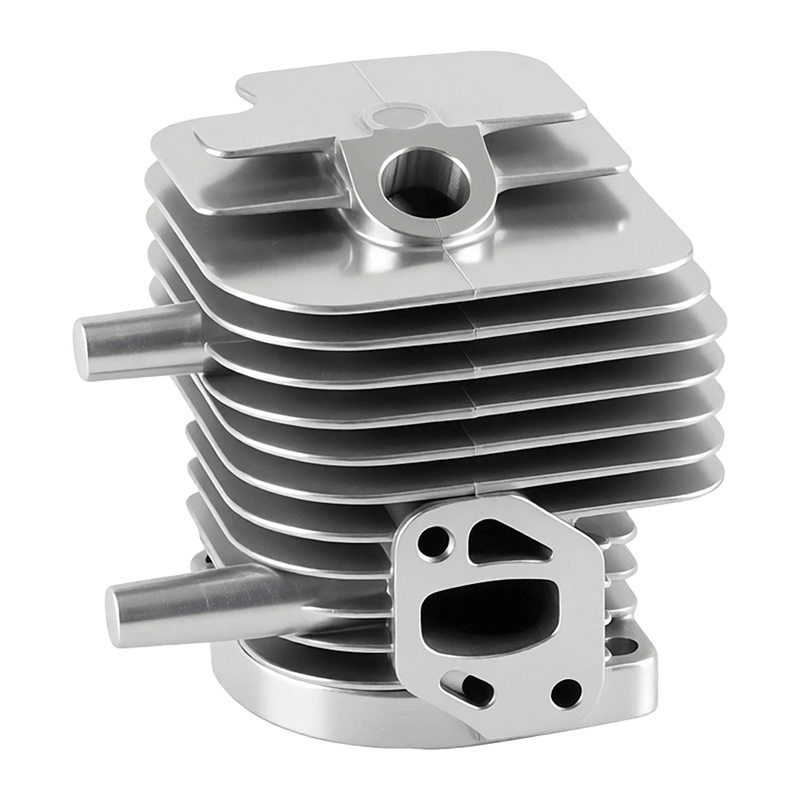
Motors, reducers, power modules, and control electronics generate heat during operation. Aluminum alloy has useful thermal conductivity, allowing die-cast housings and covers to participate in heat transfer. Designers can also incorporate external fins, internal support structures, and contact surfaces into the casting.
Thermal performance depends on the complete system design, including the internal heat source, contact conditions, airflow, surface treatment, and operating environment. Nevertheless, a properly designed die-cast enclosure can provide a stronger thermal foundation than many alternative lightweight materials.
Machining a complete robot housing from a solid block may remove a large amount of material. Die casting produces a shape closer to the final geometry, reducing the quantity of material removed during secondary machining. This can support more efficient material use and lower processing requirements.
Material efficiency is also connected to design integration. When several small parts are replaced by one optimized casting, fewer fasteners, joining surfaces, and separate machining operations may be required.
| Manufacturing method | Main advantages | Common limitations for robot parts | Suitable applications |
|---|---|---|---|
| Aluminum alloy die casting | High repeatability, complex geometry, lightweight construction, integrated features, efficient volume production | Requires tooling investment and careful control of casting parameters | Joint housings, motor covers, reducer cases, structural brackets, control enclosures |
| CNC machining from billet | High precision, flexible design changes, suitable for prototypes and low volumes | Longer production time, higher material waste, higher unit cost for complex high-volume parts | Prototype parts, critical inserts, low-volume precision components |
| Sheet-metal fabrication | Fast for simple structures, low initial tooling cost, flexible for early development | More seams and fasteners, lower integration, possible deformation and assembly variation | Frames, covers, prototypes, large simple enclosures |
| Plastic injection molding | Low weight, efficient high-volume production, good appearance options | Lower rigidity and thermal conductivity in many applications, greater sensitivity to temperature and mechanical load | Exterior covers, cosmetic panels, lightweight non-load-bearing components |
| Gravity casting | Lower tooling pressure and useful for selected shapes | Lower productivity and potentially different filling characteristics compared with pressure die casting | Selected low- to medium-volume metal parts |
The best process depends on the robot's design, expected production volume, required tolerances, operating environment, material specification, and cost target. Die casting is particularly competitive when the component must be lightweight, rigid, complex, repeatable, and suitable for medium- or high-volume production.
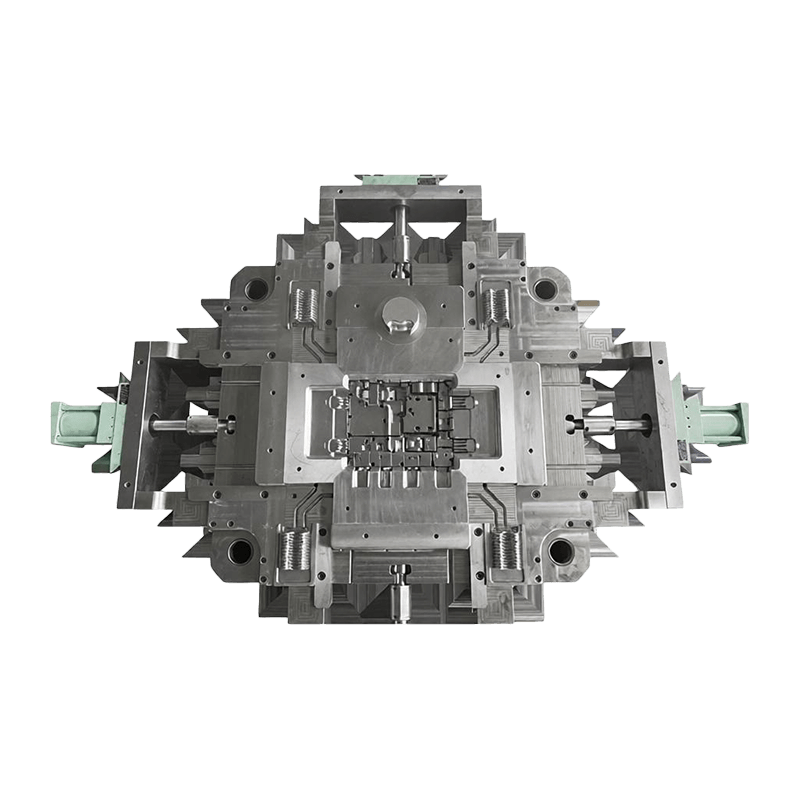
The mold is the foundation of die-casting quality. A well-designed mold must fill the cavity effectively, control solidification, support accurate dimensions, release the casting without damage, and withstand repeated production cycles. Robot components often have irregular shapes and a large number of functional features, so mold design requires careful engineering from the beginning.
Before mold construction, the product drawing should be reviewed for wall thickness, draft angles, fillets, ribs, bosses, parting lines, ejector locations, machining allowances, and potential distortion. Early review can identify design details that might cause incomplete filling, air entrapment, shrinkage, difficult ejection, or excessive machining.
For OEM and ODM projects, this stage also provides an opportunity to discuss assembly requirements. The casting should not be evaluated as an isolated component. Its interfaces with motors, bearings, fasteners, seals, sensors, cables, and neighboring parts must be considered together.
Dinghong uses mold-flow analysis to visualize and optimize mold designs before production. This engineering method can help predict how molten alloy fills the cavity and where potential problems may occur. Engineers can study filling patterns, air entrapment, weld lines, thermal behavior, solidification, and other factors.
The objective is to improve the mold design before steel is cut. Changes to gate locations, overflow positions, venting, runner layout, cooling channels, or wall transitions may reduce later production problems. For complex robot parts, digital analysis can be especially valuable because many features are difficult to modify after mold completion.
The gate and runner system controls how molten aluminum enters the cavity. An unsuitable filling pattern can cause turbulence, cold shuts, porosity, or uneven solidification. Venting is also essential because trapped air can affect the internal quality and appearance of the casting.
Robot parts with thin walls, deep pockets, and multiple branches may require carefully balanced filling. The engineering team must consider the position of functional surfaces and determine where any unavoidable casting marks can be located without interfering with assembly or appearance.
Cooling channels influence cycle time, mold life, and casting consistency. Uneven cooling can contribute to distortion or dimensional variation. By analyzing the thermal behavior of the mold, engineers can develop a cooling strategy that supports stable production.
Consistent thermal control is particularly important for housings with large flat areas, uneven wall thickness, or concentrated bosses. These features may otherwise cool at different rates and create internal stress or deformation.
Die-casting molds operate under high thermal and mechanical stress. Mold materials and heat-treatment conditions must be selected according to the part design, alloy, expected production quantity, and operating parameters. Proper maintenance planning is also important for extending mold life and maintaining part quality over time.
Dinghong's mold manufacturing capabilities include high-precision CNC machining centers and EDM equipment. These resources support the production of detailed cavities, inserts, sliders, and other mold features required for complex robot components.
The process begins with the customer's drawings, three-dimensional data, samples, or functional requirements. Engineers review the part's application, loading conditions, operating temperature, surface requirements, assembly interfaces, expected production volume, and quality standards.
At this stage, customers can receive feedback on manufacturability, mold structure, material selection, machining requirements, and possible cost-saving opportunities. Clear communication at the beginning helps prevent redesign and delays later in the project.
Design for manufacturability evaluation identifies features that may affect filling, ejection, machining, or assembly. Mold-flow analysis is then used where appropriate to assess the proposed gating, venting, overflow, and cooling arrangements.
The result is a more reliable tooling plan. The purpose is not simply to make a mold that produces a shape, but to develop a production system capable of producing stable and functional parts.
After the design is approved, mold components are manufactured using CNC machining, EDM, precision fitting, and related operations. Critical dimensions are checked during the process. The mold is assembled and tested to verify movement, alignment, ejection, cooling, and other functions.
For a complex robot part, mold manufacturing may include fixed inserts, moving sliders, lifters, replaceable wear components, and multiple machining references. A well-organized tooling structure can also make future maintenance and modification more efficient.
The selected aluminum alloy is prepared according to the approved technical requirements. The alloy is melted and injected into the mold under controlled pressure. Process parameters such as injection speed, pressure, temperature, holding time, and cycle timing influence the final quality.
Stable process control helps reduce defects and supports repeatability. Operators and production personnel monitor the equipment and casting condition to ensure that the process remains within the required range.
After the casting is removed from the mold, runners, gates, overflows, and flash are trimmed. Dinghong operates automated trimming lines as part of its production capability. Automated trimming can improve consistency and reduce variation compared with uncontrolled manual removal.
Care must be taken around thin walls, decorative surfaces, sealing areas, and precision interfaces. The trimming process should remove excess material without damaging the functional geometry of the part.
Although die casting can produce near-net-shape parts, some features may require CNC machining. Typical examples include bearing bores, threaded holes, locating surfaces, sealing grooves, mounting faces, and critical alignment features.
Selective machining is more efficient than machining the entire component from solid material. It also allows engineers to balance dimensional precision with production efficiency. Additional operations may include drilling, tapping, deburring, polishing, shot blasting, cleaning, coating, or other finishing processes according to the customer's requirements.
Quality control is performed throughout the manufacturing process. Inspection may include dimensional measurement, visual inspection, surface evaluation, hardness testing, leak testing, thread checking, assembly verification, and other examinations suitable for the part.
For critical robot components, inspection plans should identify key characteristics such as bearing alignment, mounting-hole position, flatness, wall condition, and interface dimensions. Traceability and documentation help customers manage production approval and future quality analysis.
Ningbo Dinghong Mould Co., Ltd. was established in 2013 following the establishment of Yuejin Mould in 1998. This background provides experience in mold production and die-casting manufacturing. The company is located in Daqi Street, Beilun District, Ningbo, Zhejiang Province, near Beilun Port, supporting convenient access to transportation and international shipping.
The company occupies approximately 15,000 square meters of plant space and operates across mold design, mold manufacturing, die casting, finishing, and trade. Its equipment includes high-precision CNC machining centers, EDM equipment, die-casting machines, automated trimming lines, and testing equipment.
Dinghong has obtained ISO 9001 and IATF 16949 quality management system certifications. ISO 9001 supports systematic quality management, documented processes, corrective action, and continuous improvement. IATF 16949 is particularly relevant to automotive-quality requirements and reflects an emphasis on process control, risk management, traceability, and customer satisfaction.
Although robotic products may have different application requirements from automotive components, the discipline developed through automotive-quality systems can be valuable for robot-part production. Robotics customers also need consistent dimensions, stable processes, controlled changes, reliable documentation, and repeatable delivery.
The company's sales network covers China, South America, Southeast Asia, and other international markets. Its proximity to Beilun Port supports export-oriented business and communication with overseas customers. Dinghong provides OEM and ODM services, allowing customers to submit their own drawings or work with the engineering team to develop a suitable design.
One important advantage is the integration of mold design, mold manufacturing, die casting, finishing, and quality control within one manufacturing organization. When these functions are closely connected, engineering information can move more efficiently from product development to tooling and production.
Integrated manufacturing can also improve responsibility management. Instead of dividing mold development and part production among unrelated suppliers, customers can coordinate with one primary partner for a broader portion of the project. This may simplify technical communication, quality feedback, production scheduling, and problem resolution.
Dinghong manufactures automotive parts, household appliance parts, telecommunication parts, and other aluminum alloy products. It also serves new-energy, photovoltaic, electrical, motorcycle, pump and valve, fitness-equipment, and robotic industries.
Experience across several industries can contribute to broader engineering knowledge. Automotive work may strengthen process discipline and dimensional control. Telecommunications and electrical products may require attention to compact design and heat dissipation. New-energy applications may emphasize lightweight construction and reliability. These capabilities can be applied to the development of robotic components.
The company has an experienced design team supported by advanced software, equipment, and systems. Mold-flow analysis provides a way to review the proposed manufacturing process before physical tooling is completed. This digital approach can help reduce development risk and improve tooling efficiency.
For customers developing new humanoid or intelligent robot products, early engineering collaboration is especially valuable. Robot designs may change quickly as the overall system develops. A responsive mold and die-casting partner can help assess changes and identify practical production solutions.
Uniform wall thickness generally supports more stable filling and cooling. Sudden changes in thickness can increase the risk of shrinkage, distortion, or internal defects. Where a thicker area is necessary for strength or machining, transitions should be designed gradually whenever possible.
Ribs can increase stiffness without requiring a solid thick wall. However, ribs must be designed with appropriate proportions and draft to support mold filling and ejection. Excessive or poorly positioned ribs may create local thermal differences or interfere with other components.
Draft allows the casting to be removed from the mold. Adequate draft reduces the risk of sticking, scratches, deformation, and mold damage. The necessary draft depends on the surface condition, depth, texture, alloy, and part geometry.
Sharp internal corners can create stress concentration and make metal flow more difficult. Fillets help improve the transition between surfaces and may support better structural performance. They also make mold manufacturing and finishing more practical.
Features requiring close tolerances should be identified before mold design. Machining allowances must be sufficient for the required operation without creating unnecessary material or affecting casting quality. Clear separation between as-cast and machined dimensions helps control cost and production expectations.
A robot component should be designed for assembly, inspection, maintenance, and possible repair. Access openings, fastening locations, cable routes, connector clearances, and replaceable covers should be considered early. A well-designed die-cast part can simplify the service process by integrating mounting points and access features.
Surface finishing depends on the intended appearance, corrosion-resistance requirements, friction conditions, and assembly environment. Common options may include deburring, shot blasting, polishing, powder coating, painting, anodizing, or other treatments compatible with the selected aluminum alloy and application.
Functional areas such as bearing seats, sealing surfaces, grounding points, and threaded holes may require special protection during finishing. Cosmetic areas may require a more uniform appearance and controlled surface texture. The finish specification should define acceptable marks, color variation, roughness, coating thickness, and inspection method.
For robotic products used in clean indoor environments, appearance and tactile quality may be important. For industrial or outdoor robots, resistance to moisture, dust, chemicals, and mechanical wear may have greater priority. Dinghong can coordinate finishing requirements as part of the overall die-casting and secondary-processing program.
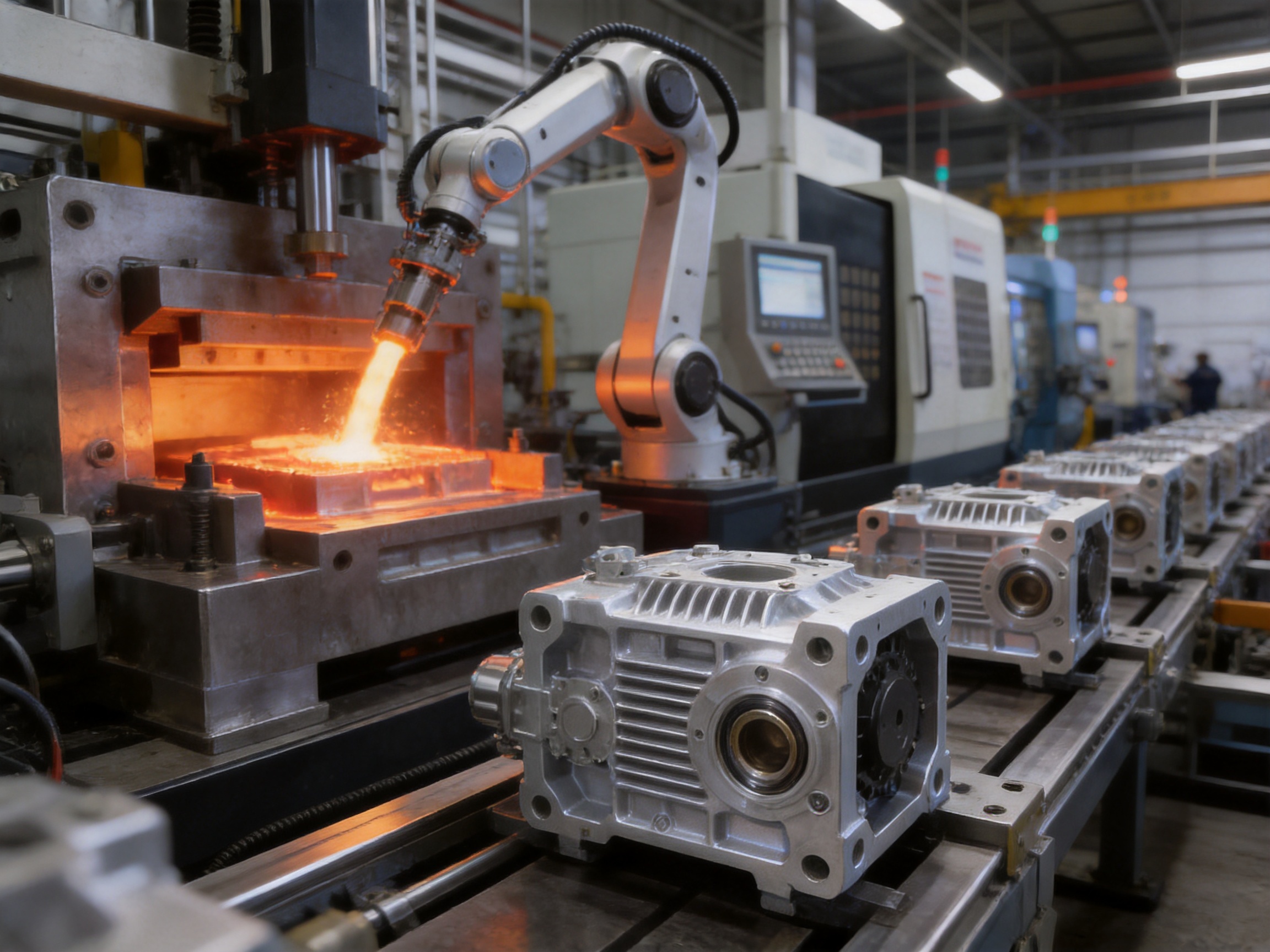
Robot manufacturers often require components that are not available as standard catalog products. Each robot platform may have unique motor dimensions, joint angles, sensor locations, cable paths, and structural requirements. OEM and ODM support allows the supplier to produce parts according to customer drawings or participate in design development.
For OEM production, the customer's approved design is converted into tooling and manufacturing processes. Engineering reviews focus on producing the specified geometry with stable quality. For ODM development, the supplier may support concept refinement, mold-flow analysis, material recommendations, tooling design, prototype evaluation, and production optimization.
A collaborative approach can be helpful when a customer is moving from a prototype made by 3D printing or CNC machining to a production-ready die-cast component. Prototype geometry may need modification before tooling. Certain thin sections, undercuts, sharp corners, or inaccessible features may be adjusted to improve castability and reduce production risk.
Customers can also request different levels of supply-chain support. Dinghong's capabilities cover mold development, die casting, trimming, machining, finishing, and testing. This makes it possible to discuss a complete component rather than only an unfinished casting.
The performance of a robot depends on the interaction of many components. A housing that is slightly misaligned can affect a bearing. A flexible bracket can reduce sensor accuracy. A heavy arm section can increase motor demand. A poorly cooled enclosure can shorten electronic-component life. Die-cast robot parts can contribute to system performance by addressing these factors through integrated design.
Accurate bearing and motor interfaces support smooth motion and reduce vibration. Lightweight structures reduce the inertia of moving assemblies. Rigid housings help preserve alignment under load. Integrated cable channels protect wiring and make assembly cleaner. Heat-conductive enclosures assist in managing thermal conditions. Together, these features can improve reliability and energy efficiency.
Die casting also supports product consistency. When the same mold and controlled process are used for each production batch, robotic manufacturers can reduce variation between machines. Consistency is important for calibration, software parameter setting, assembly time, replacement-part compatibility, and field service.
A competitive die-casting supplier should offer more than basic casting capacity. Robot-part production requires engineering understanding, tooling expertise, process control, machining ability, quality management, and responsive communication. The supplier's value is measured by the complete process, from initial design review to final delivery.
Dinghong's advantages include experience in die-casting mold design, dedicated mold-manufacturing capabilities, aluminum alloy product production, automated trimming, CNC machining, EDM processing, mold-flow analysis, and certified quality-management systems. These capabilities allow the company to address both tooling and component-production requirements.
Another advantage is the ability to serve multiple industries while developing specific experience in robotic applications. Knowledge gained from automotive, telecommunications, electrical, new-energy, and household-appliance components can support the design of robust and practical robot parts.
International market experience also helps the company communicate with customers across different regions. Its location near Beilun Port supports export logistics, while its sales network includes China, South America, Southeast Asia, and other markets.
For customers comparing suppliers, the most meaningful criteria should include mold-development quality, engineering response, inspection capability, production stability, communication efficiency, total project cost, and the ability to support future modifications. A low initial quotation may not provide the best result if the tooling requires repeated changes or if production variation causes assembly problems.
A successful die-casting robot-part project normally begins with a detailed technical package. The customer should provide three-dimensional data or drawings, material expectations, annual volume, critical dimensions, surface requirements, operating environment, assembly details, and inspection standards.
The supplier then evaluates manufacturability and prepares recommendations. Potential changes should be discussed before mold construction. Once the design is approved, the mold is manufactured and tested. Initial samples are inspected and, where needed, assembled with related components.
After sample approval, production parameters are established and documented. The supplier should monitor critical process conditions and maintain inspection records. If the design changes later, the impact on the mold, machining program, inspection plan, and delivery schedule should be reviewed before implementation.
This structured workflow reduces uncertainty and supports a smooth transition from design to production. It is suitable for both individual parts and complete families of robot components.
Die casting robot parts are metal components produced by injecting molten alloy into a precision mold under controlled pressure. They may include joint housings, reducer covers, motor brackets, sensor supports, control-system enclosures, arm connectors, and other structural components used in robotic systems.
Aluminum alloy provides a useful combination of low weight, structural rigidity, corrosion resistance, and thermal conductivity. These properties can help reduce robot mass, support accurate movement, and assist with heat dissipation from motors and electronics.
Yes. Die casting can produce curved housings, ribs, bosses, pockets, cable passages, mounting structures, and other integrated features. The design must be reviewed for filling, draft, ejection, wall thickness, and machining requirements before the mold is built.
Some parts may require only trimming and finishing, while others require CNC machining for bearing bores, threaded holes, sealing surfaces, or precise mounting interfaces. The required secondary operations depend on the part's function and tolerance specifications.
Yes. Ningbo Dinghong Mould Co., Ltd. provides OEM and ODM services. Customers can submit drawings, three-dimensional files, samples, or technical requirements for engineering review and production planning.
Mold-flow analysis helps engineers evaluate filling behavior, potential air entrapment, weld lines, solidification, and other factors before tooling is completed. It can support decisions regarding gates, runners, vents, overflows, cooling, and wall transitions.
The company has obtained ISO 9001 and IATF 16949 quality management system certifications. These systems support controlled manufacturing procedures, quality planning, process monitoring, corrective action, and continuous improvement.
It can. Aluminum alloy is lightweight, and die-cast geometry can use ribs, curved walls, and integrated reinforcement to achieve stiffness without unnecessary material. Part consolidation may also reduce the number of brackets, fasteners, and overlapping structures.
Die casting is generally most economical when production volume is sufficient to justify mold investment. CNC machining, additive manufacturing, or other methods may be more suitable for very early prototypes. However, die-casting development can begin during the transition from prototype to mass production.
Useful information includes three-dimensional files or drawings, material requirements, estimated annual quantity, surface finish, critical tolerances, machining needs, inspection requirements, application conditions, and delivery expectations. More complete information enables a more accurate technical and commercial evaluation.
Die casting robot parts provide a strong manufacturing solution for the rapidly expanding robotics industry. The process supports lightweight construction, high structural strength, dimensional repeatability, complex geometry, thermal management, and efficient volume production. These advantages make die casting suitable for joint housings, reducer enclosures, motor covers, sensor supports, control-system housings, and other humanoid and intelligent robot components.
The quality of a die-cast robot part depends on more than the casting machine. Product design, mold-flow analysis, tooling accuracy, alloy control, injection parameters, trimming, machining, surface finishing, inspection, and quality management all influence the final result. An integrated manufacturing partner can help coordinate these stages and reduce the risks associated with fragmented production.
Ningbo Dinghong Mould Co., Ltd. combines mold design, mold manufacturing, die casting, finishing, CNC machining, EDM processing, automated trimming, mold-flow analysis, and quality control. Supported by ISO 9001 and IATF 16949 certifications, modern plant facilities, experienced engineers, and international market service capabilities, the company provides OEM and ODM solutions for aluminum alloy die casting robot parts.
For robot manufacturers seeking reliable components, the most effective approach is to involve the die-casting supplier early in the product-development process. Early collaboration can improve manufacturability, reduce tooling risk, simplify assembly, control cost, and create a stable foundation for future production. With suitable design and process planning, precision die casting can help robotic products become lighter, stronger, more consistent, and more commercially competitive.
1. International Organization for Standardization. ISO 9001 Quality Management Systems: Requirements.
2. International Automotive Task Force. IATF 16949 Quality Management System Requirements for Automotive Production and Relevant Service Parts Organizations.
3. American Foundry Society. Die Casting Design and Manufacturing Principles.
4. European Aluminium. Aluminum Applications in Lightweight Engineering and Thermal Management.
5. ASM International. Aluminum Alloy Processing, Casting Technology, and Materials Engineering.
6. Product development and manufacturing information supplied by Ningbo Dinghong Mould Co., Ltd.

Die casting automotive parts are made by forcing molten metal into a steel mold under high pressure, where it fills t...
READ MORETwo quotations for the same aluminum controller housing can differ by 20% or more, even when both suppliers list the sa...
READ MORETwo aluminum housings reach the same leak-test bench on the same afternoon. Both meet the drawing, both weigh close to ...
READ MOREA 12-week die casting mold build can look competitive on quote and still become the expensive option if the first trial...
READ MORE

Sun Yuejun: +86-13806631860
Wang Shiyong: +86-15958891460 / 15058297768
Dove Yao: +86-18625086675


Copyright © Ningbo Dinghong Mould Co., Ltd. Rights Reserved. Custom Precision Die Casting Aluminum Alloy Parts Manufacturers
