
 English
 Español
 русский
 Français

Die casting automotive parts are made by forcing molten metal into a steel mold under high pressure, where it fills t...
READ MORE
Content
A coffee machine filter handle is a small component with an important role in the daily operation, safety, and appearance of a coffee machine. It connects the filter basket or filter assembly to the user’s hand, supports repeated insertion and removal, and helps the operator control the brewing process with confidence. Although the component may appear simple, its performance depends on accurate dimensions, stable mechanical strength, comfortable handling, reliable surface quality, and compatibility with the complete coffee machine assembly.
The die-casting coffee machine filter handle supplied by Ningbo Dinghong Mould Co., Ltd. is developed for applications requiring a combination of precision, durability, production efficiency, and attractive appearance. The component is manufactured through a controlled die-casting process and can be supported by mold design, mold manufacturing, trimming, finishing, inspection, and customized production services. These capabilities allow the filter handle to meet the practical requirements of coffee machines used in homes, offices, restaurants, cafés, hotels, and commercial food-service environments.
The coffee machine filter mainly includes a powder residue filter, which separates coffee powder from the brewed coffee liquid. The filter handle works together with this filtering structure and allows the user to position, lock, remove, and clean the filter assembly. Because the handle is touched frequently and often exposed to heat, moisture, coffee residue, detergent, and mechanical loading, the manufacturing quality of the handle directly influences the user experience and the service life of the machine.
Compared with ordinary low-precision cast or poorly finished alternatives, a precision die-cast filter handle can provide better dimensional consistency, more stable assembly, improved structural integrity, and a more professional appearance. When supported by suitable tooling and effective quality control, die casting is also well suited to repeat production because it can produce complex shapes efficiently while reducing material waste and minimizing secondary machining.
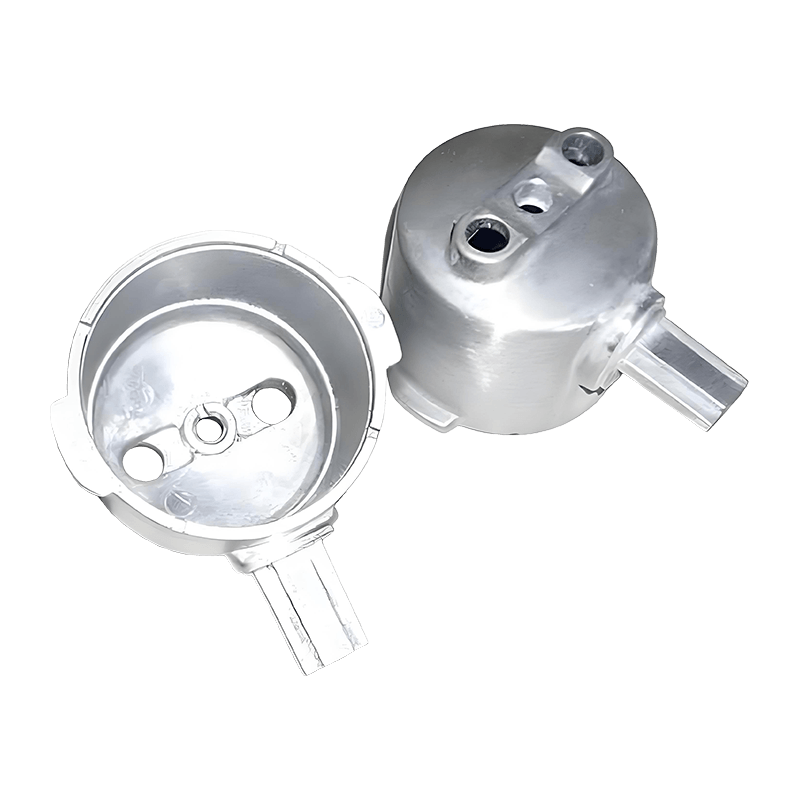
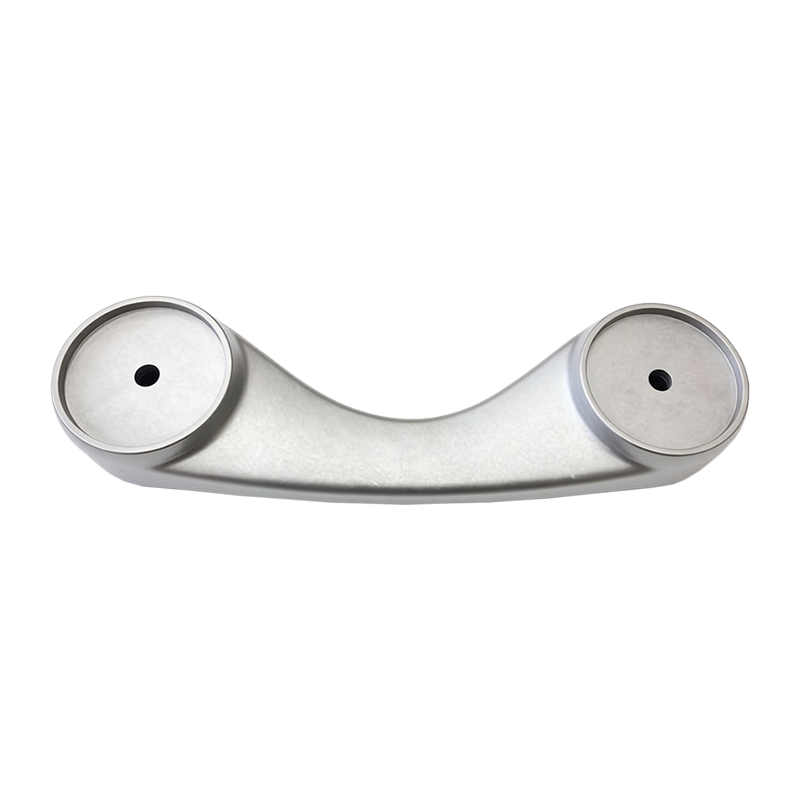
Die Casting Coffee Machine Filter Handle
The die-casting coffee machine filter handle is a functional structural component designed to support and control a coffee filter assembly. It may be integrated with a filter basket, filter holder, portafilter-style component, or another brewing filter structure according to the customer’s design. The handle may include mounting interfaces, fastening areas, reinforcing ribs, locating features, and transition sections that connect the grip to the metallic filter body.
Its main function is to give the operator a stable gripping point. During use, the operator may need to rotate the filter assembly into a brewing head, hold it under pressure, remove it after brewing, or carry it to a cleaning area. A suitable handle must therefore resist bending, loosening, cracking, and excessive deformation. It must also remain comfortable when the surrounding components become warm during normal coffee preparation.
Die-cast aluminum alloy is a practical material option for this type of product because it combines low density with useful strength, corrosion resistance, thermal performance, and good castability. The exact alloy, wall thickness, surface treatment, and mechanical requirements should be selected according to the coffee machine structure and the customer’s technical specifications. Where the handle includes a separate grip, insert, coating, or decorative element, the die-cast component can be designed to accommodate that secondary part.
The product is listed under die-casting electrical parts, while its application is related to coffee-making equipment. This classification reflects the broad manufacturing categories served by the supplier rather than limiting the part to one narrow application. The same design and production capabilities used for electrical, household appliance, automotive, communication, and other aluminum alloy components can also be applied to coffee machine filter handles.
A coffee machine filter handle should maintain a secure connection with the filter body or filter basket. The connection may use screws, pins, threaded elements, press-fit features, or a customer-specific mounting arrangement. The die-cast structure must provide sufficient support around these areas so that repeated torque and handling do not cause premature failure.
The handle should also provide controlled dimensional accuracy. Even a small dimensional variation at the connection point can affect assembly alignment, rotation, locking force, or the position of the filter inside the brewing system. Accurate tooling and stable process parameters help ensure that every batch remains consistent with the approved sample and engineering drawings.
Surface quality is another important requirement. A handle may be visible on the exterior of a coffee machine, so it should have a clean surface with controlled flash, minimal visible defects, and a uniform finish. Depending on the product design, the surface may be polished, shot-blasted, painted, powder-coated, anodized, plated, or treated through another approved finishing process.
Ergonomics are equally important. The grip should be comfortable to hold and should avoid sharp edges, excessive corners, or abrupt transitions that could cause discomfort. A properly designed die-cast handle can combine curved profiles, ribs, mounting bosses, and reinforcing structures in one integrated shape, reducing the need for multiple separate pieces.
Precision die casting uses a reusable metal mold and controlled injection of molten alloy into the mold cavity. The process is especially suitable for components with repeated production requirements, complex external profiles, integrated bosses, ribs, and stable dimensional requirements. For coffee machine filter handles, it can provide a balanced combination of performance and production efficiency.
Die-casting molds are manufactured from durable tool steels and are designed to reproduce the required geometry repeatedly. When the mold, machine, alloy temperature, injection parameters, and cooling conditions are properly controlled, the process can deliver consistent parts across large production runs. This consistency is important for the filter handle because the part must fit with the filter basket, fastening hardware, machine body, and other connected components.
Compared with manually formed or less controlled casting methods, precision die casting can reduce variation in mounting holes, external profiles, wall thickness, locating points, and interface dimensions. Reduced variation helps simplify assembly and lowers the risk of rejection caused by inconsistent fit. It also supports more predictable performance during downstream processes such as trimming, machining, coating, and final assembly.
A well-designed die-cast handle can incorporate ribs, curved transitions, bosses, and reinforcement zones without requiring multiple welded or separately machined pieces. Integrated geometry improves the continuity of the structure and can reduce the number of joints where looseness, corrosion, or fatigue might develop.
The design can place material where it is needed most, including around the filter connection, screw points, or high-load transition areas. At the same time, unnecessary material can be removed from low-stress areas. This approach helps reduce weight while maintaining the required stiffness and strength. For coffee machines, lower component weight can support easier handling and more efficient product assembly.
Once the mold has been completed and approved, die casting can produce large quantities of similar parts with short cycle times. This is valuable for appliance manufacturers and coffee equipment brands that require stable supply over an extended product life cycle. The process supports both standard production and customized orders, subject to the size, complexity, and technical requirements of the product.
High production efficiency may reduce the unit cost compared with a component made entirely by CNC machining from solid material. Die casting also reduces the amount of material removed during machining. Secondary machining remains available for critical holes, threads, sealing faces, or close-tolerance mounting surfaces, but the initial casting can already contain most of the final shape.
Die-casting technology allows designers to develop more than a simple flat or cylindrical handle. Curved grips, decorative contours, raised markings, functional ribs, recessed surfaces, mounting bosses, and other features can be incorporated into the mold. This design flexibility allows the handle to match the visual language of the coffee machine while retaining practical mechanical functions.
With engineering review and mold-flow analysis, potential filling, shrinkage, air entrapment, cooling, and ejection issues can be evaluated before production. Early analysis helps improve the design and reduces the risk of extensive mold modification after tooling has started. It also gives the customer an opportunity to balance appearance, strength, manufacturability, and cost.
Aluminum alloy die-cast surfaces can be prepared for several finishing methods. The selected treatment depends on the required appearance, wear resistance, corrosion protection, environmental conditions, and cost target. A smooth coated surface may be appropriate for a modern household coffee machine, while a textured or metallic finish may be preferred for a commercial machine.
Finishing operations can also improve the user’s perception of quality. Consistent trimming, edge treatment, cleaning, blasting, polishing, and coating help create a component that looks professional and integrates naturally with the rest of the machine. The finishing specification should identify acceptable surface zones, cosmetic inspection standards, coating thickness, color tolerance, adhesion expectations, and permitted minor marks.

The most effective filter handle design begins with a clear understanding of the complete coffee machine assembly. The handle should not be designed as an isolated object. Its connection to the filter, the movement required during installation, the available space around the brewing head, the temperature environment, and the user’s grip all influence the correct geometry.
The connection between the handle and the filter assembly is usually the most mechanically important area. It may experience torque when the user locks the filter into place and reverse torque when the filter is removed. It may also experience impact when the filter is placed on a work surface or washed after use.
Mounting areas should have sufficient material around holes, threads, pins, or inserts. Sharp internal corners should generally be avoided because they can concentrate stress. Fillets, smooth transitions, and correctly positioned reinforcing features can improve durability while maintaining a compact shape. If separate fasteners are used, the design should also allow access for assembly tools and provide adequate clearance for the fastener head.
The grip should support comfortable use by a wide range of operators. A rounded or gently contoured profile is often more comfortable than a completely sharp-edged rectangular shape. The length and diameter of the grip should reflect the required torque, the available space, and the intended method of operation.
Texture can be introduced through the mold, secondary finishing, coating, or an additional grip material. A suitable texture may help prevent slipping when the user’s hands are wet or exposed to coffee oils. However, excessive texture can make cleaning more difficult. The best solution depends on whether the product is intended for a home environment, a café, a restaurant, or a high-volume commercial operation.
The filter assembly may become warm during brewing, and heat can travel through metallic connections toward the handle. The product design should therefore consider thermal transfer and the distance between the hot filter body and the operator’s hand. In some designs, the aluminum die-cast structure may be combined with a polymer grip or insulating component. In others, the geometry itself may create a suitable separation from the hottest area.
All edges that may be touched should be properly finished. Flash, burrs, sharp parting-line projections, and rough machining marks should be controlled. A clear cosmetic and safety standard should be agreed upon during product development, especially for components that are repeatedly handled by consumers.
Coffee equipment is regularly exposed to water, coffee oils, fine powder, detergents, and cleaning cycles. The filter handle should not contain unnecessary pockets that trap residue and create cleaning difficulties. Drainage and cleaning access should be considered during design review.
Where the handle is joined to a filter body, the interface should be designed to reduce areas where coffee residue can accumulate. If a separate grip or cover is installed, its contact surfaces should be compatible with the expected cleaning process. A cleanable design can improve hygiene, appearance, and long-term user satisfaction.
The quality of a die-cast filter handle is strongly influenced by the quality of the mold. Ningbo Dinghong Mould Co., Ltd. has developed its manufacturing activities around mold design, mold manufacturing, die casting, finishing, and related production services. This integrated capability allows the mold and casting process to be considered together rather than treating them as completely separate stages.
Before mold manufacturing begins, the product drawing or three-dimensional model should be reviewed for wall thickness, draft angles, parting-line location, ejector access, machining allowances, gate location, overflow arrangement, and potential deformation. This review helps identify features that may be difficult to cast or that could increase the cost of tooling and secondary processing.
The engineering team can also examine how the filter handle will be inspected. Critical dimensions should be identified early so that inspection fixtures, gauges, coordinate measuring procedures, or other measurement methods can be planned in parallel with the mold. Designing for inspection helps make quality requirements measurable and repeatable.
Mold-flow analysis is a valuable tool for evaluating how molten aluminum alloy is likely to fill the cavity. It can help visualize the filling sequence, identify possible air entrapment, locate areas of incomplete filling, examine cooling behavior, and anticipate potential shrinkage or distortion.
For a filter handle, analysis may be particularly useful when the design contains long thin sections, thick mounting bosses, curved external surfaces, or multiple reinforcing ribs. By reviewing the predicted filling behavior in advance, the gate system, overflow areas, venting strategy, wall thickness, and cooling layout can be improved before the mold is fully manufactured.
Early simulation does not replace practical testing, but it can reduce development risk. It helps the engineering team make informed decisions and may reduce the number of trial-and-error modifications required during sampling. This is especially beneficial for customized products where the customer expects a specific appearance or where the available installation space is limited.
The mold must maintain accurate cavity geometry and stable operation over repeated cycles. High-precision CNC machining centers can produce mold components and inserts with controlled dimensions. Electrical discharge machining can be used for complex details, narrow slots, or geometries that are difficult to produce through conventional cutting.
Proper mold construction also considers cooling channels, ejector systems, sliders, inserts, parting surfaces, and maintenance access. A mold designed only for the first sample may not provide the same value as a mold designed for stable long-term production. Durable components, replaceable inserts, and practical maintenance features can improve reliability during the product life cycle.
Tooling quality influences more than dimensional accuracy. It also affects the parting line, flash level, surface appearance, cycle stability, ejection marks, and the amount of secondary work required. A well-built mold can therefore improve both the technical performance and the commercial efficiency of the finished filter handle.
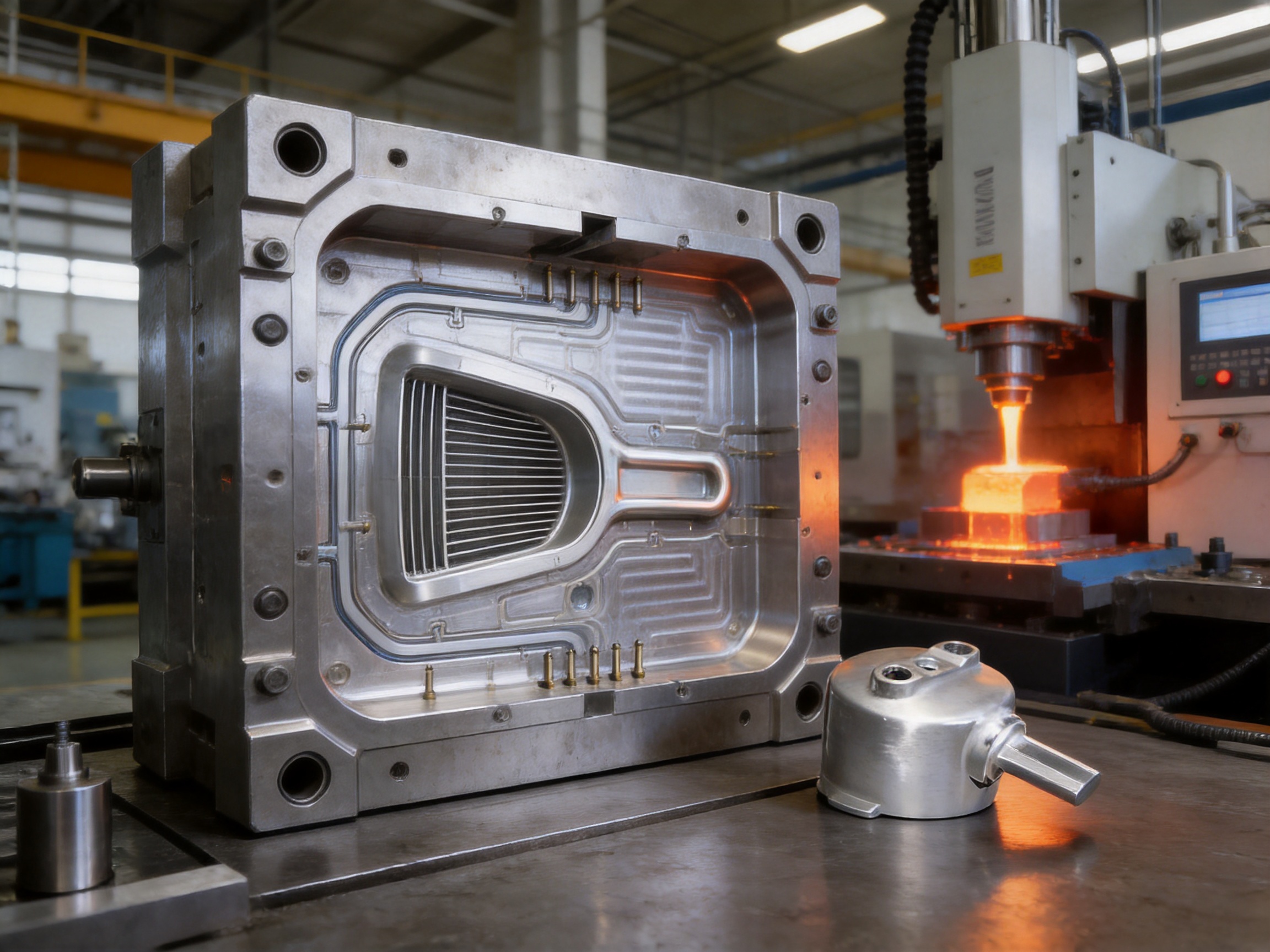
After mold approval, the die-casting process must be managed as a complete production system. Material preparation, die temperature, injection speed, pressure, holding conditions, cooling, ejection, and trimming all influence the final part. Stable equipment and standardized operating procedures help reduce variation between batches.
The selected aluminum alloy should meet the mechanical, casting, finishing, and environmental requirements of the filter handle. Alloy documentation and material control procedures help ensure that the correct material is used for production. The alloy should be prepared and handled in a manner that limits contamination and supports stable casting performance.
Material selection should consider the required strength, fluidity, corrosion behavior, machinability, surface finish, and compatibility with any coating or treatment. The final specification should be confirmed with the customer because the ideal alloy may vary depending on the design and use conditions.
During die casting, molten alloy is injected into the mold cavity at high speed and pressure. The filling process must be fast enough to complete the cavity before premature solidification but controlled enough to limit turbulence and air entrapment. Injection parameters should be developed according to the mold design, part geometry, alloy, and machine capability.
Stable process settings help control the consistency of the external surface and internal structure. Operators and quality personnel should monitor relevant parameters and respond to abnormal conditions according to documented procedures. When process data is recorded and reviewed, potential trends can be identified before they result in a large quantity of nonconforming parts.
Cooling must be sufficient for the casting to retain its shape during ejection without creating unnecessary cycle time or thermal stress. Uneven cooling can contribute to distortion, sink-related appearance issues, or dimensional variation. Mold cooling channels and production parameters should therefore be evaluated during mold development and trial production.
The ejection system should remove the part without damaging functional or cosmetic surfaces. Ejector locations need to be selected carefully, particularly when the handle has visible exterior surfaces. Marks that are acceptable in hidden areas may not be acceptable on customer-facing surfaces, so the product drawing should identify cosmetic zones.
Castings normally require removal of gates, overflows, runners, and flash. Dinghong operates automated trimming lines and related equipment to support consistent post-casting processing. Automated or standardized trimming can improve repeatability and reduce dependence on manual judgment.
After trimming, edges may receive additional deburring or finishing. The objective is to remove unwanted material while preserving the intended geometry. Excessive trimming can damage the part or alter an important dimension, while insufficient trimming can affect assembly, safety, or appearance. Inspection after trimming is therefore an important process step.
The surface finish of a coffee machine filter handle affects both its appearance and practical use. A customer may require a metallic industrial appearance, a smooth painted surface, a dark protective coating, or a finish that visually matches other machine components. The finishing method should be selected after considering the substrate, use environment, cleaning chemicals, temperature, abrasion, and color requirements.
Before coating or other treatment, the part may require cleaning, degreasing, blasting, polishing, or other preparation. Surface preparation removes residues and creates a suitable foundation for the selected finish. It also helps expose surface imperfections that should be corrected before the final appearance is applied.
Visible areas and functional areas may need different treatment standards. For example, a mounting interface may require dimensional control rather than a heavy decorative coating, while the external grip may require a uniform appearance and tactile quality. Masking or selective finishing can protect critical areas when necessary.
A suitable coating can improve resistance to moisture, handling, staining, and environmental exposure. It may also provide color consistency and make the handle easier to integrate into the overall coffee machine design. Coating requirements should define film thickness, color tolerance, adhesion, surface uniformity, and acceptable cosmetic limits.
Because the product may be cleaned frequently, the selected finish should be evaluated for resistance to the expected detergents and handling conditions. The supplier and customer should establish test methods that reflect real use. A finish that looks attractive initially but deteriorates quickly during cleaning would not provide satisfactory long-term value.
Cosmetic inspection may cover flow marks, discoloration, scratches, dents, pinholes, coating defects, visible parting lines, flash, and uneven texture. Acceptance criteria should be based on viewing distance, lighting conditions, product zone, and the intended market position of the coffee machine.
Consistent cosmetic quality is one area where a specialized die-casting supplier can distinguish its products from lower-cost alternatives. Appearance problems are often difficult to correct after mass production begins. Early approval samples, documented standards, controlled processing, and final inspection help reduce disputes and support a more stable supply relationship.
Ningbo Dinghong Mould Co., Ltd. has obtained ISO 9001 and IATF 16949 quality management system certifications. These certifications reflect the company’s focus on standardized management, documented processes, traceability, continuous improvement, and customer-oriented quality control. IATF 16949 is particularly relevant to suppliers serving demanding automotive applications, where process discipline and risk management are important.
Although a coffee machine filter handle is an appliance-related component, the quality practices used for automotive and other high-requirement products can provide useful advantages. A disciplined quality system helps ensure that product requirements are translated into process controls and inspection activities rather than relying only on final visual checking.
Material and outsourced process inputs should be checked against the approved requirements. Documentation may include alloy information, coating information, fastener specifications, or other records required by the customer. Proper control at the beginning of production helps prevent incorrect materials from entering the process.
In-process inspection can monitor dimensions, appearance, trimming condition, surface preparation, and other characteristics at defined stages. Checking the part before it reaches the next operation helps identify problems quickly and reduces the chance that a defect will continue through several costly processes.
Final inspection may include dimensional measurement, visual examination, functional fit testing, surface evaluation, and packaging verification. Depending on the customer’s requirements, additional testing may be conducted for mechanical strength, coating adhesion, corrosion resistance, or assembly performance.
Inspection equipment and procedures should be selected according to the critical features of the filter handle. A dimension that affects filter alignment may require a gauge or coordinate measurement, while a cosmetic surface may require controlled visual inspection. Clear records support traceability and make it easier to analyze any quality issue reported after delivery.
Quality management should not end when the first production order is completed. Feedback from production, inspection, assembly, logistics, and customers can be used to improve the mold, process, packaging, or documentation. Corrective and preventive actions help address root causes rather than simply sorting defective parts.
Manufacturers selecting a supplier for filter handles typically evaluate more than the initial quotation. They also consider engineering support, mold quality, production stability, surface finish, delivery reliability, communication, and the supplier’s ability to support future revisions. A supplier with integrated capabilities can reduce coordination work and shorten the path from concept to production.
Dinghong provides mold design, mold manufacturing, die casting, finishing, and related services. This integrated structure makes it easier to coordinate tooling decisions with production requirements. The customer can work with one manufacturing partner for the development of the mold and the production of the die-cast handle, reducing the risk of conflicting responsibilities between separate companies.
Integrated manufacturing can also simplify engineering changes. If a mounting feature, grip profile, or surface requirement must be modified, the same team can evaluate the impact on the mold, casting cycle, trimming process, and inspection plan. This can support faster and more practical decision-making.
The company manufactures automotive parts, household appliance parts, telecommunication parts, and other aluminum alloy products. It also supports products for new-energy, photovoltaic, electrical, motorcycle, pump and valve, fitness equipment, robotic, and related industries. Experience across these fields exposes the engineering and production teams to different requirements for strength, precision, appearance, durability, and cost.
This broad experience can benefit coffee equipment projects because a filter handle may combine appliance appearance requirements with mechanical and production requirements found in other industries. Lessons learned from one product category can often improve mold design, process control, inspection planning, and problem-solving for another.
The company operates approximately 15,000 square meters of plant space and has high-precision CNC machining centers, EDM equipment, die-casting machines, automated trimming lines, and testing equipment. These resources support the development and production of molds and aluminum alloy castings.
Equipment alone does not guarantee product quality, but suitable equipment combined with experienced personnel and standardized procedures creates a stronger manufacturing foundation. High-precision machining supports tooling accuracy, EDM supports complex mold details, die-casting machines support repeat production, and automated trimming can improve consistency in post-casting operations.
Dinghong’s sales network covers China, South America, Southeast Asia, and other international markets, with plans to expand into Europe and additional regions. International experience can help a supplier understand the importance of technical documentation, packaging protection, communication across time zones, export coordination, and consistent quality expectations.
For coffee machine manufacturers purchasing internationally, clear communication is essential. Drawings, three-dimensional models, quality standards, approved samples, packaging requirements, and delivery schedules should be confirmed in writing. A supplier accustomed to international cooperation is better positioned to support these requirements.
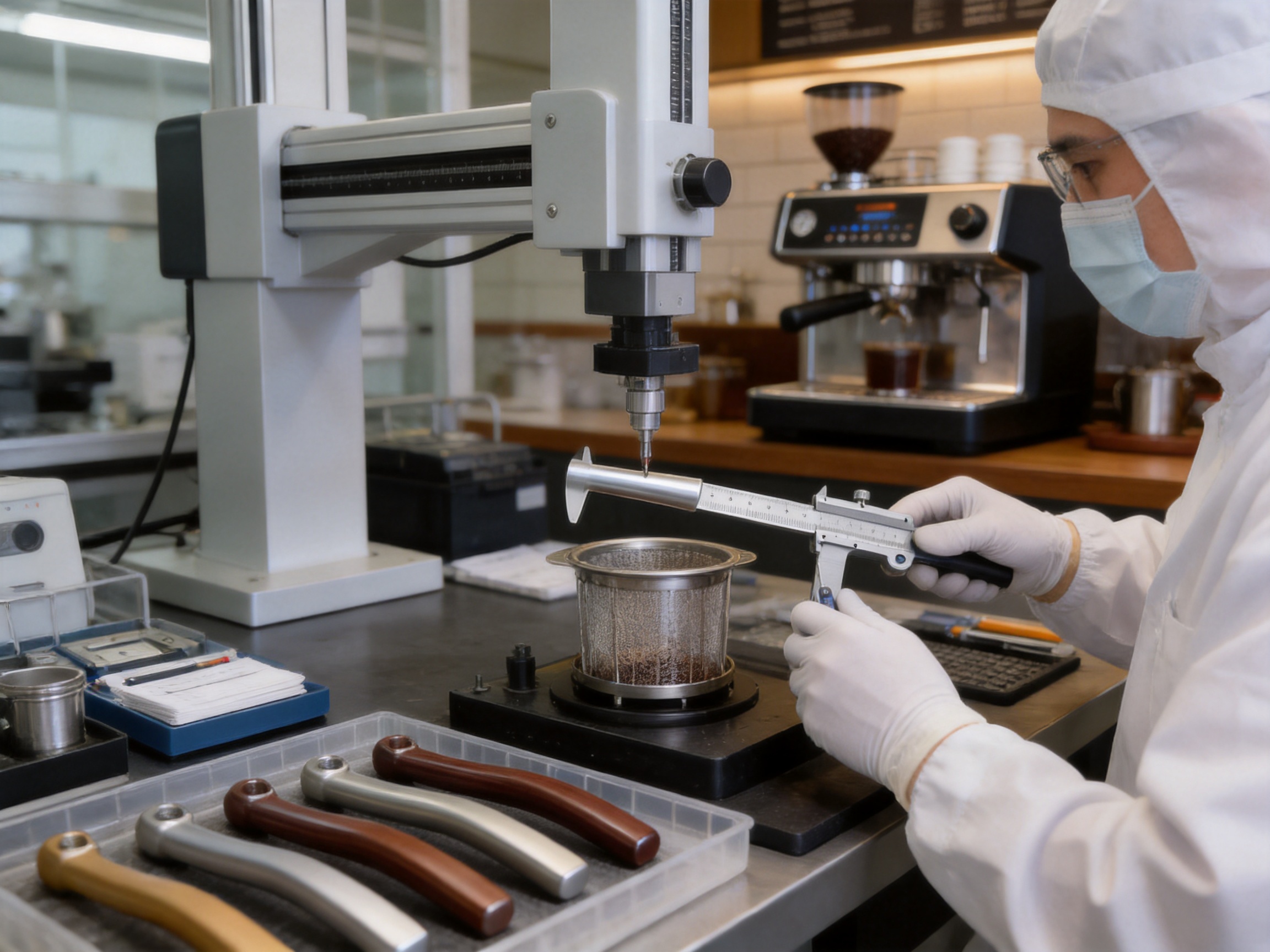
The project should begin with a complete product brief. This may include the three-dimensional model, two-dimensional drawing, material preference, expected annual volume, target service life, surface finish, color, assembly method, packaging requirements, and applicable testing standards.
The customer should also identify critical dimensions and cosmetic zones. If the filter handle is part of a larger filter assembly, information about the filter basket, fasteners, brewing head, and surrounding clearances should be provided. Accurate input at this stage helps prevent redesign later.
The engineering team reviews the design for draft, wall thickness, parting line, ribs, bosses, fillets, machining allowance, ejection, gate placement, venting, and overflow. Any feature that may cause filling or ejection difficulties should be discussed with the customer.
Design changes at this stage are normally less expensive than changes made after the mold has been completed. The objective is not simply to make the product easy to cast, but to achieve the best balance among functional performance, appearance, tooling cost, production efficiency, and long-term reliability.
Mold-flow analysis can be used to verify the proposed filling strategy and identify potential risks. After the design is approved, the mold is manufactured using precision machining, EDM, and related operations. Tooling dimensions and component quality should be checked before the first production trial.
Initial samples should be evaluated for dimensions, assembly fit, surface appearance, handling comfort, and other customer-defined requirements. If the filter handle connects to an existing filter body, practical assembly testing should be performed rather than relying only on isolated part measurement.
Any changes identified during sampling should be documented and verified through another sample or an approved corrective action. The final approved sample becomes an important reference for future production and inspection.
Once the product and process are approved, production can proceed according to the agreed schedule. The mold, material, machine parameters, trimming method, finishing process, and inspection plan should remain controlled. Process records and traceability information help support stable supply.
Finished handles should be packaged to prevent scratches, deformation, contamination, and mixing of different versions. Packaging should reflect the surface finish and the customer’s logistics requirements. After delivery, feedback concerning assembly, appearance, field performance, or future changes should be reviewed by the supplier’s technical and quality teams.
The following table summarizes common manufacturing considerations for a coffee machine filter handle. The actual choice depends on design complexity, quantity, performance requirements, and budget.
| Manufacturing Method | Dimensional Consistency | Complex Geometry | Production Efficiency | Typical Considerations |
|---|---|---|---|---|
| Precision aluminum die casting | High when tooling and process are controlled | Good for ribs, bosses, curves, and integrated features | High for repeated production | Requires initial mold investment and design review |
| CNC machining from solid material | Very high for selected features | Good, but limited by tool access and material removal | Lower for high-volume production | Useful for prototypes, low volume, and close-tolerance areas |
| Gravity casting | Moderate, depending on tooling and process | Moderate | Moderate | May require more machining and finishing |
| Fabricated or assembled parts | Dependent on assembly and joining accuracy | Flexible but may involve multiple components | Variable | May create additional joints, labor, and quality-control points |
| Plastic injection molding | High for suitable designs | Good for complex shapes | High | Material and temperature performance differ from aluminum alloy |
For an aluminum alloy filter handle requiring a combination of strength, appearance, integrated geometry, and repeated production, precision die casting is often an effective solution. CNC machining can remain valuable for prototypes or critical secondary features, while plastic molding may be appropriate for a separate insulating grip rather than the primary structural component.
The filter handle can be developed for a range of coffee equipment. In household machines, the focus may be on appearance, ease of cleaning, comfortable grip, and compatibility with compact product designs. In office machines, repeated daily use may place greater emphasis on durability and easy maintenance.
Café and restaurant equipment may require more frequent operation, stronger connection features, faster cleaning, and resistance to intensive handling. Commercial machines may also have larger filter assemblies and higher operating temperatures, requiring the handle design to be reviewed for torque, heat transfer, and long-term fatigue.
Hotel and catering applications often combine repeated use with strict appearance expectations. A visible handle should remain presentable despite frequent contact, washing, and transportation. Appropriate surface finishing and packaging can help maintain the product’s appearance throughout its service life.
Customized handles may also be developed for private-label coffee machines, specialty brewing equipment, capsule systems, espresso machines, and other beverage appliances. The final design should always be validated against the specific filter system and operating conditions rather than assuming that one universal handle will suit every machine.
A well-manufactured filter handle can support long-term use, but service life also depends on how the coffee machine is operated and maintained. Users should avoid applying excessive force beyond the intended locking and removal movement. If the filter becomes difficult to remove, the cause should be investigated rather than solved by applying uncontrolled torque to the handle.
Regular cleaning helps prevent coffee residue and oils from accumulating around the filter connection. Cleaning chemicals should be compatible with the selected surface finish. Abrasive tools may scratch coatings or polished surfaces, while unsuitable chemicals may discolor or weaken protective finishes.
Manufacturers can support serviceability by designing the handle and filter assembly so that fasteners, inserts, or replaceable grip sections can be accessed when necessary. Clear assembly instructions and spare-part planning may be useful for commercial machines and equipment intended for long service intervals.
A specialized die-casting supplier contributes more than casting capacity. The supplier can help translate a product concept into a manufacturable design, develop appropriate tooling, control the casting process, complete secondary operations, and establish inspection procedures. This broader support reduces the risk that a technically attractive design will become difficult or expensive to produce.
Ningbo Dinghong Mould Co., Ltd. was established in 2013, following the establishment of Yuejin Mould in 1998. Its location in Daqi Street, Beilun District, Ningbo, Zhejiang Province, places the company near Beilun Port and provides access to an important manufacturing and logistics region.
The company occupies approximately 20 mu of land and has developed from a small factory into a modern manufacturing enterprise with approximately 15,000 square meters of plant space. Its capabilities cover mold design, mold manufacturing, die casting, finishing, and trade. This development reflects an emphasis on expanding both production resources and technical support.
The company’s product range includes automotive parts, household appliance parts, telecommunication components, and other aluminum alloy products. It also provides molds and die-cast products for new-energy, photovoltaic, electrical, motorcycle, pump and valve, fitness equipment, robotic, and related sectors.
For coffee machine manufacturers, this background offers access to a supplier familiar with both appearance-sensitive appliance components and more demanding mechanical applications. The result can be a filter handle that is not only visually suitable but also designed and produced with attention to structural performance, repeatability, and long-term manufacturing stability.
Before requesting a quotation or placing an order, the customer should confirm the product drawing, three-dimensional data, alloy requirements, surface treatment, color, critical dimensions, annual volume, packaging, and delivery schedule. If no final design exists, the supplier may be able to support the development of a manufacturable concept based on the customer’s application requirements.
The customer should explain whether the handle is intended for a standard filter basket, a proprietary filter, a commercial portafilter, or another coffee machine mechanism. Information about the locking angle, required rotation, connection method, maximum operating temperature, cleaning procedure, and expected number of operating cycles can improve the engineering review.
It is also useful to define the inspection standard before mass production. A clear standard may identify acceptable limits for flash, parting lines, casting marks, scratches, color differences, coating defects, dimensional tolerances, and assembly force. Early agreement helps both sides evaluate samples using the same expectations.
It is a handle produced primarily through aluminum alloy die casting and designed to connect with or support a coffee machine filter assembly. It allows the operator to install, lock, remove, and clean the filter while providing structural support and a comfortable gripping surface.
The powder residue filter separates coffee powder from the brewed coffee liquid. It is a common filtering structure in coffee machines. The handle supports the filter assembly so that the user can position and remove it during brewing and cleaning.
Aluminum alloy die casting can provide a useful combination of low weight, structural strength, dimensional consistency, design flexibility, and production efficiency. It is suitable for integrated ribs, bosses, curved surfaces, and other features that may be difficult or expensive to produce from several separate parts.
Yes. The handle can be customized according to the customer’s drawings, three-dimensional model, assembly method, dimensions, surface finish, color, material requirements, and expected production volume. Customization should be reviewed for die-casting feasibility before mold construction begins.
Secondary machining can be used for close-tolerance holes, threaded areas, mounting faces, or other features that require tighter control than the casting process alone can provide. The machining allowance and inspection method should be included in the product design.
Possible treatments may include cleaning, deburring, shot blasting, polishing, painting, powder coating, anodizing, plating, or other customer-approved finishes. The appropriate treatment depends on appearance, corrosion resistance, cleaning conditions, wear requirements, and the compatibility of the finish with the coffee machine design.
Mold-flow analysis helps evaluate filling behavior, air entrapment, cooling, shrinkage, and potential deformation before the mold is completed. It can support improvements to the gate system, venting, wall thickness, overflow design, and cooling layout.
Ningbo Dinghong Mould Co., Ltd. has obtained ISO 9001 and IATF 16949 quality management system certifications. These systems support standardized production, process control, traceability, corrective action, and continuous improvement.
The company serves automotive, household appliance, telecommunication, electrical, new-energy, photovoltaic, motorcycle, pump and valve, fitness equipment, robotic, and other industries that use molds and aluminum alloy die-cast products.
A quotation normally requires product drawings or three-dimensional data, material requirements, surface treatment, estimated quantity, packaging expectations, inspection standards, and delivery requirements. If the product is still at the concept stage, a description of the application and operating conditions can help begin the engineering discussion.
It can be developed for commercial applications when the design is properly validated for repeated operation, torque, heat exposure, cleaning, and connection strength. Commercial requirements should be identified at the beginning so that the material, geometry, surface finish, and testing plan are suitable for the intended environment.
Comparison should include more than unit price. Buyers should evaluate dimensional consistency, mold life, surface quality, defect rate, secondary processing, inspection capability, delivery stability, technical support, and total cost over the product life cycle. A lower initial price may not provide the best value if it leads to assembly problems, frequent rejection, or premature replacement.
The die-casting coffee machine filter handle is a compact but important component that combines user comfort, mechanical support, appearance, and assembly precision. Its connection with the powder residue filter means that it contributes directly to the practical operation of the coffee machine. A reliable handle should withstand repeated insertion and removal, remain comfortable to hold, resist common environmental exposure, and maintain stable dimensions throughout production.
Precision aluminum alloy die casting provides a strong foundation for this type of product. It enables integrated structural features, efficient repeated production, controlled weight, flexible design, and compatibility with a variety of finishing processes. When the casting process is supported by high-quality mold design, mold-flow analysis, precision machining, EDM, automated trimming, and systematic inspection, the result can offer clear advantages over less controlled manufacturing alternatives.
Ningbo Dinghong Mould Co., Ltd. combines mold design, mold manufacturing, die casting, finishing, testing, and international supply experience. Its ISO 9001 and IATF 16949 certifications, broad industry background, modern equipment, and technical resources support the production of customized aluminum alloy components for household appliances and other industries.
For coffee machine manufacturers seeking a dependable filter handle supplier, the most effective approach is to involve the manufacturing partner early. Clear product requirements, engineering review, mold-flow analysis, approved samples, defined cosmetic standards, and controlled mass production can help create a component that performs reliably and supports the quality image of the finished coffee machine.
1. Aluminum Die Casting Design and Manufacturing Principles, technical manufacturing reference.
2. ISO 9001, Quality Management Systems — Requirements.
3. IATF 16949, Quality Management System Requirements for Automotive Production and Relevant Service Parts Organizations.
4. General Guidance on Die-Casting Mold Design, Gating, Venting, Cooling, and Ejection.
5. Engineering References for Aluminum Alloy Selection, Surface Finishing, and Corrosion Protection.
6. Coffee Machine Filter Assembly and Powder Residue Separation, appliance component design reference.
7. Industrial Quality-Control Practices for Dimensional Inspection, Cosmetic Inspection, and Process Traceability.

Die casting automotive parts are made by forcing molten metal into a steel mold under high pressure, where it fills t...
READ MOREBefore a part ever reaches production, every buyer eventually asks the same question: should this component be injectio...
READ MORETwo quotations for the same aluminum controller housing can differ by 20% or more, even when both suppliers list the sa...
READ MOREMetal Injection Molding vs Die Casting: Start With the Part A buyer often arrives at this comparison with two very diff...
READ MORE

Sun Yuejun: +86-13806631860
Wang Shiyong: +86-15958891460 / 15058297768
Dove Yao: +86-18625086675


Copyright © Ningbo Dinghong Mould Co., Ltd. Rights Reserved. Custom Precision Die Casting Aluminum Alloy Parts Manufacturers
