
 English
 Español
 русский
 Français

Die casting automotive parts are made by forcing molten metal into a steel mold under high pressure, where it fills t...
READ MORE
Content
Inductance is one of the fundamental properties used to control current, store magnetic energy, filter signals, and study transient behavior in electrical circuits. In laboratories, classrooms, calibration facilities, and engineering development departments, an inductance box provides a practical way to select different inductance values without repeatedly replacing individual coils. A well-designed unit combines several precise self-inductance coils within a protective enclosure and allows users to change the effective inductance through a conversion switch.
The die casting inductance box is designed around this functional concept. It integrates a robust precision enclosure with an organized internal arrangement of inductive elements and switching components. The enclosure is especially important because it protects the internal coils, supports the switching mechanism, improves handling safety, and contributes to stable operation during repeated experiments. By using precision die casting technology for the relevant aluminum alloy housing and structural parts, manufacturers can achieve a balance of mechanical strength, dimensional consistency, heat dissipation, appearance, and production efficiency.
This product is suitable for circuit experiments, educational demonstrations, laboratory calibration, electrical testing, and technical training. It belongs to the category of active functional instruments because its operating value comes from the ability to change electrical parameters through a user-controlled switching arrangement. Unlike a simple passive enclosure, an inductance box must support repeatable electrical selection while maintaining mechanical protection and convenient operation.
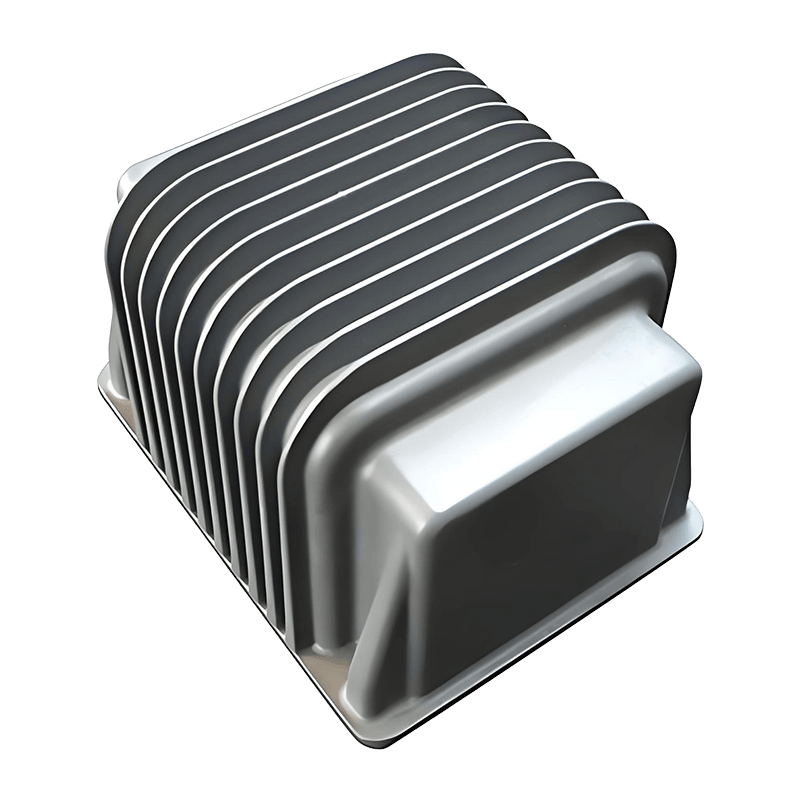
Die Casting Inductance Box
A die casting inductance box is a compact electrical instrument containing multiple self-inductance coils or inductive elements. Each coil is manufactured for a defined inductance value, and the user can select one value or a combination of values using a conversion switch. Depending on the internal circuit design, the selectable values may be arranged individually, sequentially, or in a combination network that provides a broader range of operating conditions.
The box normally consists of several major elements: a die cast aluminum alloy enclosure, internal coil supports, inductance coils, a switching assembly, electrical terminals or connectors, fasteners, an identification panel, and, where required, insulating or shielding components. The enclosure is not merely decorative. It establishes the mechanical reference for the switch, protects the internal circuit from impact and contamination, and helps maintain the alignment of the operating interface.
In a teaching laboratory, the instrument can help students observe the relationship between inductance, frequency, current, impedance, and phase angle. In a calibration environment, it can provide a convenient reference instrument for checking measurement equipment or demonstrating circuit response. In product development, engineers can use it to evaluate filters, resonant circuits, power conversion stages, control systems, and other applications in which inductive behavior must be adjusted quickly.
The die cast structure also helps create a professional, repeatable product platform. Compared with a housing made from thin sheet metal or a basic plastic shell, a properly designed aluminum alloy die casting can offer improved rigidity, better resistance to localized deformation, and a more stable mounting base for the switching mechanism. These characteristics are valuable when the product is operated frequently or transported between laboratories and classrooms.
Although the electrical characteristics of an inductance box depend primarily on the coils and circuit design, the enclosure has a direct effect on the overall usability and reliability of the instrument. A housing that flexes under hand pressure can transmit unwanted movement to the switch. A poorly controlled mounting surface can cause misalignment between the switch shaft, panel, and internal contacts. Inadequate protection can expose the coils to dust, moisture, accidental impact, and assembly damage.
Precision die casting addresses several of these issues at the structural level. Molten aluminum alloy is injected into a steel mold under controlled pressure, allowing the manufacturer to form complex external shapes, mounting bosses, ribs, recesses, openings, and reinforced sections in a single production cycle. When the mold is correctly designed and maintained, the resulting parts have consistent dimensions and a repeatable appearance.
Aluminum alloys are also useful for instrument housings because they combine low density with useful mechanical strength. The material can help reduce the weight of the finished box while maintaining a substantial feel. Its thermal conductivity can assist in spreading heat generated by internal components or nearby equipment. In addition, aluminum alloy surfaces can receive finishing treatments that improve appearance, corrosion resistance, and customer recognition.
For an inductance box, dimensional stability is especially important around the switch opening, terminal positions, cover interface, fastening points, and internal support locations. These features must remain aligned during assembly. Precision machining after casting can be used on critical surfaces where the as-cast condition alone cannot provide the required tolerance, flatness, or fit.
The main advantage of the product is the ability to select different inductance values through a conversion switch. This eliminates the need to disconnect and reconnect separate coils whenever an experiment changes. A user can move between test conditions quickly, reducing setup time and improving the consistency of demonstrations and measurements.
Selectable values also make the instrument useful across a wider range of applications. A student can compare low and high inductance conditions in the same circuit. A technician can check the response of a measurement system at multiple settings. An engineer can examine how a filter or converter behaves when the inductive parameter changes. The same enclosure can therefore support several laboratory activities instead of serving only one fixed test condition.
Combining multiple coils and a switch in a single box produces a more organized solution than using numerous loose inductors. Loose components can be misplaced, connected incorrectly, or damaged during repeated handling. A dedicated instrument presents the selected values in one controlled assembly, with the internal wiring protected from accidental contact and mechanical stress.
The integrated format is also advantageous in educational environments. Instructors can prepare a demonstration more efficiently, and students can focus on circuit principles instead of spending unnecessary time identifying individual components. A clearly marked switch and terminal arrangement can make the learning process more intuitive.
A die cast enclosure provides a protective barrier around the coils and switching assembly. The rigid housing can reduce the possibility of damage caused by impact, compression, or repeated handling. It can also protect the internal arrangement from common laboratory contaminants, subject to the actual sealing and finishing design of the product.
Protection is particularly valuable when the instrument is used by many operators. Teaching equipment may be moved frequently between workstations, while calibration equipment may be transported to different test areas. A robust housing helps preserve the alignment and physical integrity of the product over repeated use.
The conversion switch is a key operating component. It must be supported firmly so that rotation or actuation produces a predictable result. A die cast housing can incorporate a reinforced panel area, internal boss, or machined mounting feature that provides a stable foundation for the switch.
Stable mounting improves the user experience and can reduce stress on the switch body, shaft, terminals, and internal wiring. It also supports a more consistent relationship between the visible position marking and the selected electrical value. This is an important detail in laboratory instruments, where the displayed setting must correspond clearly to the actual circuit condition.
Inductive components and associated electrical contacts may generate heat depending on current, frequency, duty cycle, and operating conditions. Aluminum alloy has higher thermal conductivity than many common engineering plastics, allowing heat to spread through the enclosure more effectively. The actual thermal performance depends on the internal layout, surface area, ventilation, operating limits, and contact between components and the housing.
Better heat distribution can help reduce localized temperature accumulation. It may also support more stable operation during longer experiments, provided that the coils, switch, terminals, and enclosure are correctly rated for the intended application. The die casting design can include ribs or external contours that improve rigidity while also increasing available surface area.
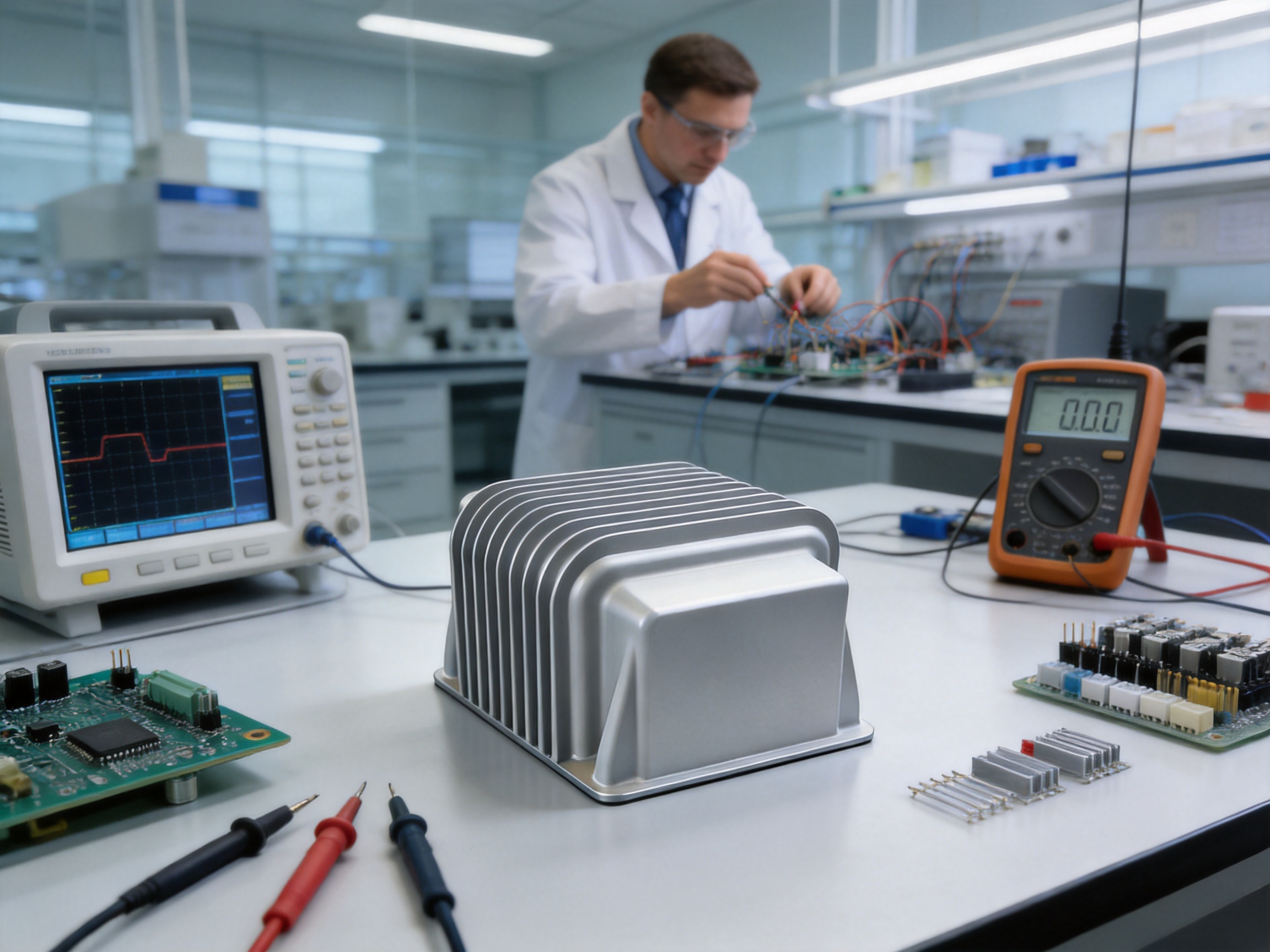
When selecting an inductance box, customers may compare die cast aluminum alloy construction with sheet metal fabrication, injection-molded plastic, machined blocks, or simple assembled cases. Each method has appropriate uses, but precision die casting offers a combination of features that is well suited to repeatable laboratory instruments.
| Design consideration | Precision die cast aluminum alloy housing | Sheet metal housing | Injection-molded plastic housing | Fully machined metal housing |
|---|---|---|---|---|
| Structural rigidity | High potential with integrated ribs and bosses | Depends on thickness, folds, and reinforcement | Depends on material and wall design | Very high, but may add weight and cost |
| Complex integrated geometry | Good for repeated shapes and internal features | More parts and secondary forming may be needed | Good after mold investment | Good, but machining time can be substantial |
| Thermal conductivity | Good for aluminum alloy designs | Good if metal thickness and contact are suitable | Generally lower than metal | Good, depending on the selected alloy |
| Weight | Moderate and efficient for strength | Low to moderate | Low | May be high, especially with thick walls |
| Repeatability in mass production | High after mold validation | Moderate, with more forming and assembly variables | High after mold validation | High, but cycle time may be longer |
| Finishing options | Machining, powder coating, painting, or other treatments | Painting, plating, or coating | Color molding, painting, or coating | Wide range of machining and finishing options |
| Suitability for integrated bosses and ribs | Very suitable | Usually requires additional parts or forming operations | Suitable, subject to wall and shrinkage design | Suitable, with higher machining effort |
Sheet metal can be effective for prototypes or low-volume equipment, but it may require several bending, welding, riveting, and finishing operations. These steps can introduce variation in alignment and increase the number of components. Plastic can reduce weight and cost, but its thermal performance, rigidity, impact resistance, and long-term dimensional stability must be assessed for the intended environment. Fully machined housings can deliver excellent precision, but material waste, machining time, and total production cost may be higher.
Die casting is particularly attractive when a product requires a repeatable shape in medium or high quantities. Once the mold is developed and process conditions are stabilized, each casting can reproduce the same basic geometry. This supports consistent assembly and gives customers a practical path from product development to regular production.
The quality of an inductance box begins before metal is melted. Product engineers must consider the enclosure dimensions, wall thickness, switch interface, coil clearance, fastener locations, cable or terminal openings, cover arrangement, surface finish, and post-machining requirements. A design that looks acceptable in a three-dimensional model may still present filling, shrinkage, porosity, ejection, or distortion risks during production.
Mold-flow analysis helps identify these risks before the mold is manufactured. Engineers can study how molten alloy fills the cavity, where air may be trapped, how temperature changes through the flow path, and where solidification may produce defects. Gate locations, overflow pockets, vents, runners, cooling channels, and ejection points can then be optimized. This predictive approach reduces the need for repeated trial-and-error modifications.
The mold must also account for alloy shrinkage and thermal changes. Critical surfaces may be intentionally adjusted in the tool design so that the final casting reaches the intended dimensions after cooling. The design team must balance the need for thin, lightweight walls with the need for adequate filling and structural strength.
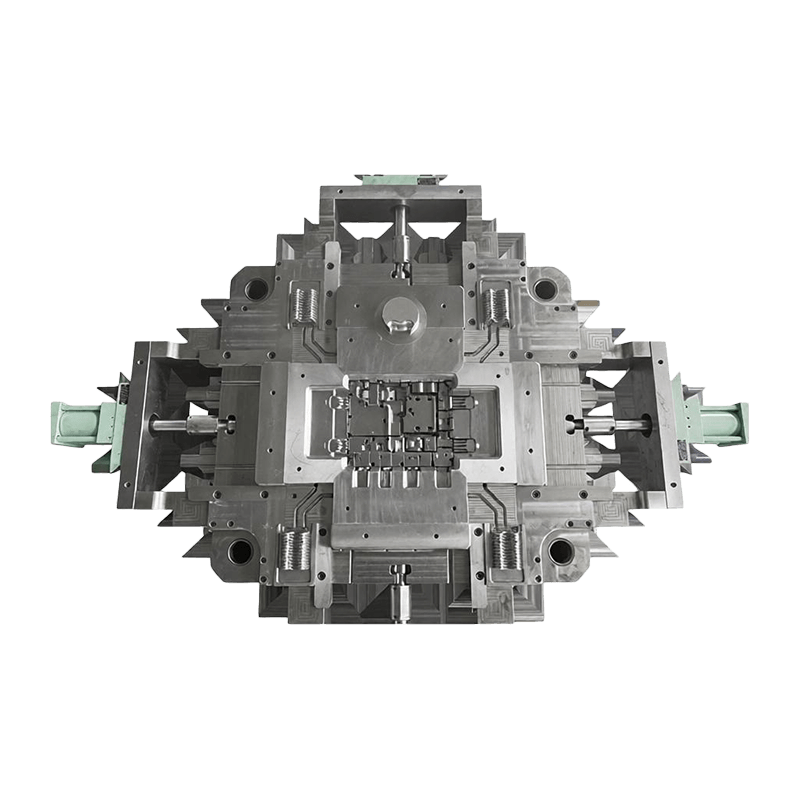
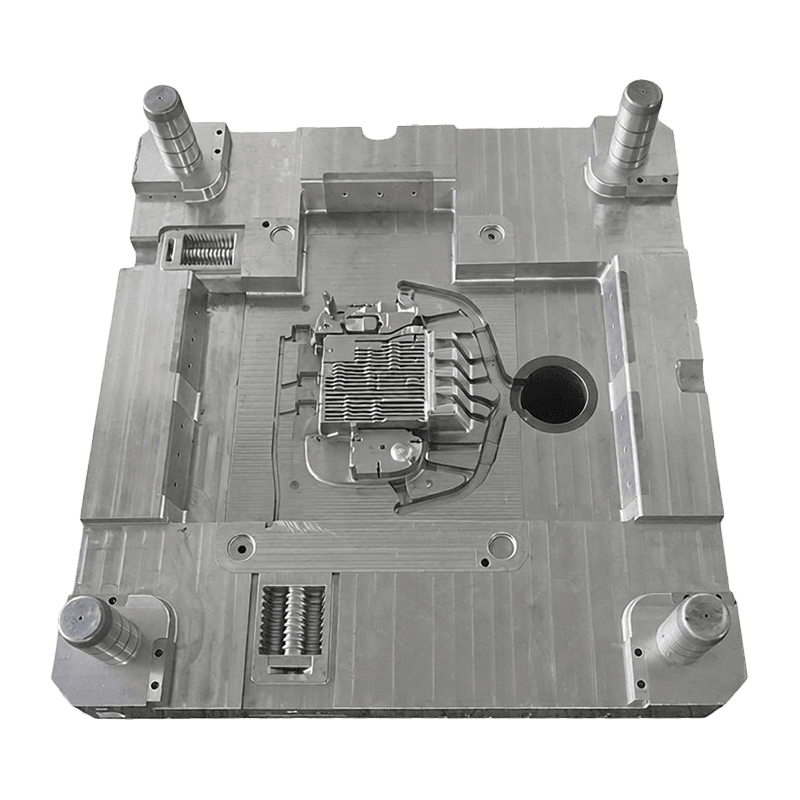
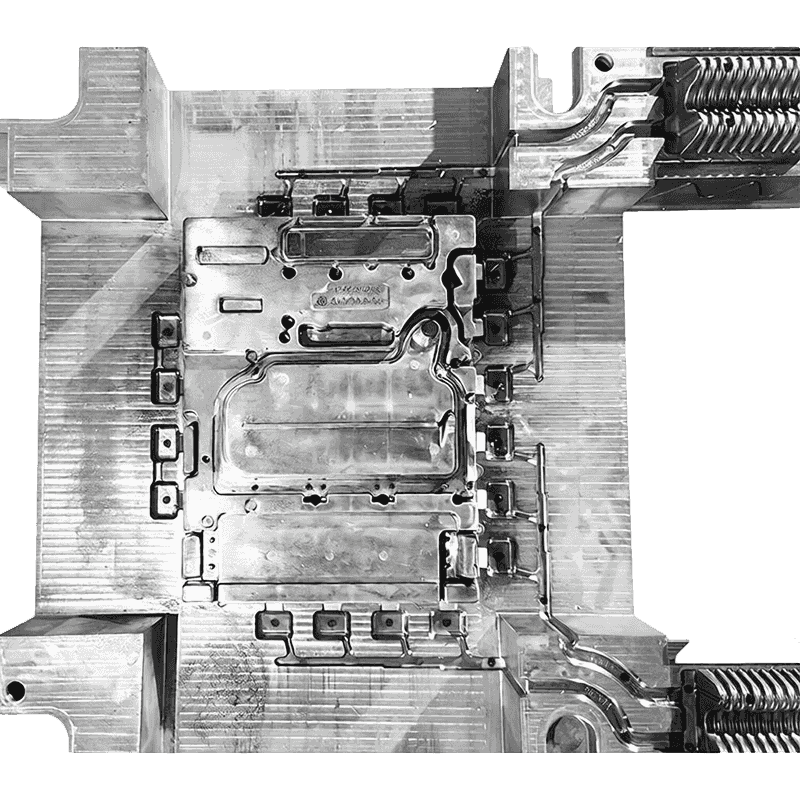
Die casting molds are manufactured from heat-resistant tool steels selected for their ability to withstand thermal cycling, pressure, erosion, and repeated production. High-precision CNC machining centers can produce the cavity, core, inserts, slides, and other mold components. Electrical discharge machining is useful for complex details, sharp internal features, narrow slots, and geometries that are difficult to produce through conventional cutting.
Mold manufacturing also includes fitting, polishing, inspection, assembly, and trial production. The final mold must open and close accurately, release the casting without damaging delicate features, and maintain proper alignment over many cycles. Cooling and venting systems must be checked because temperature control has a significant influence on casting quality and cycle stability.
Aluminum alloy ingots or approved recycled material are prepared according to the required material specification. The alloy is melted under controlled conditions, and process personnel monitor temperature, cleanliness, and melt handling. The molten metal is then injected into the die casting machine at high speed and pressure.
High-pressure injection allows the alloy to fill thin sections and detailed features quickly. The machine holds pressure while the metal solidifies, helping reproduce the mold geometry and reduce certain types of shrinkage. Process parameters such as injection speed, intensification pressure, die temperature, holding time, and cooling time must be managed carefully.
Stable casting conditions are essential for an instrument enclosure. Surface defects, incomplete filling, excessive flash, deformation, and internal porosity can affect appearance, machining, assembly, and long-term reliability. Automated or standardized production procedures help reduce differences between batches.
After casting, excess material from runners, gates, overflows, and flash must be removed. Automated trimming lines can improve consistency and productivity, particularly when the product has a repeatable geometry. Manual finishing may still be used for specific areas or for production stages that require close visual judgment.
Deburring is important around switch openings, mounting faces, terminal apertures, and cover interfaces. Remaining sharp edges could interfere with assembly, damage insulation, or create a handling hazard. The finishing process must remove unwanted material without altering critical dimensions or damaging the appearance of the housing.
Some surfaces can be produced directly in the die casting mold, while others require secondary machining. CNC machining may be used for threaded holes, precision mounting faces, bearing or bushing seats, switch openings, connector features, and reference surfaces. Machining fixtures must hold the casting securely while avoiding distortion.
Effective machining depends on accurate datums. The manufacturer may use selected casting surfaces or specially designed locating features to establish a repeatable reference system. Inspection after machining confirms that the finished part meets the required dimensional tolerances and that the switch, cover, terminals, and internal supports will align correctly.
After cleaning and machining, the enclosure may receive a surface treatment selected for the application. Options can include powder coating, painting, anodizing, shot blasting, polishing, or other treatments compatible with the alloy and customer requirements. Surface preparation is essential because contamination, residual release agent, or machining debris can reduce coating adhesion.
A controlled finish improves the visual quality of the product and can provide additional resistance to handling marks, oxidation, and environmental exposure. For an educational or laboratory instrument, a clear, durable finish also supports professional presentation and makes it easier to maintain a clean appearance over time.
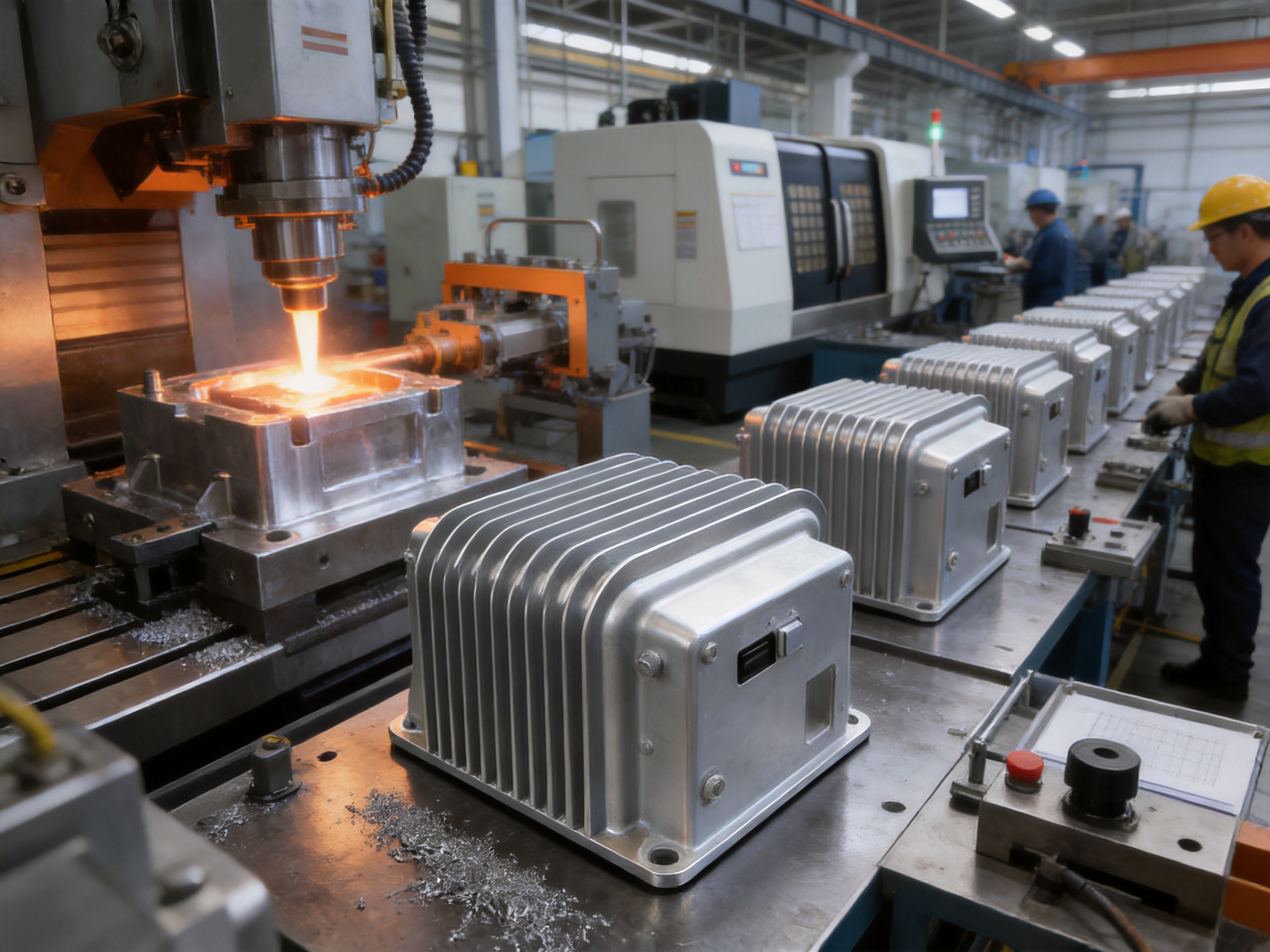
Quality control must cover both the die cast mechanical parts and the complete functional assembly. A visually attractive enclosure is not sufficient if the switch is incorrectly wired, the selected inductance values are inconsistent, or the internal coil supports are not secure. Conversely, a correctly functioning electrical assembly may still cause problems if the housing is warped, poorly finished, or difficult to service.
Material control begins with the verification of aluminum alloy, coil materials, switching components, terminals, fasteners, insulation, and finishing supplies. Documentation and traceability help ensure that production uses approved materials. For critical components, dimensional or electrical checks may be performed before release to the assembly line.
Calipers, micrometers, gauges, coordinate measuring equipment, and dedicated inspection fixtures can be used to evaluate critical dimensions. Typical inspection points may include overall enclosure dimensions, wall or flange locations, switch hole diameter, mounting hole position, cover fit, terminal spacing, and machined reference surfaces.
Inspection frequency can be adjusted according to the feature’s importance, process capability, and customer requirements. First-article inspection is especially important after a new mold, mold modification, or major process change. Statistical process control can then help monitor recurring production.
Operators inspect castings for flash, cracks, incomplete filling, dents, excessive porosity indications, coating defects, and other visible abnormalities. Surface inspection standards should define acceptable limits because appearance requirements can vary by product application and customer expectation.
Edges and openings receive special attention. Any remaining burr that could affect assembly or user safety must be removed. Coating adhesion, color consistency, texture, and coverage can also be evaluated according to the selected finishing specification.
The assembled inductance box should be tested to confirm that each switch position corresponds to the intended electrical path. Depending on the product specification, tests may include continuity, resistance, insulation resistance, dielectric strength, inductance measurement, switching repeatability, and visual verification of labels.
Inductance measurements can vary with test frequency, temperature, measurement method, coil construction, and nearby conductive materials. Therefore, test conditions should be defined clearly and applied consistently. A controlled test procedure improves comparability between production batches and supports reliable documentation.
Assembly personnel must confirm that coils are secured, wires are routed safely, terminals are tightened, insulation is undamaged, and the switch is correctly positioned. Fasteners should be tightened according to an appropriate procedure. If thread-locking compounds, gaskets, spacers, or insulating washers are used, their presence and orientation should be verified.
A final inspection should confirm that the product operates smoothly and that the selected value is clearly identified. The enclosure should close correctly without compressing wires or interfering with internal components. Packaging should protect the switch, terminals, coating, and enclosure corners during storage and transport.
A capable die casting supplier contributes much more than a casting machine. The product requires coordinated engineering, mold manufacturing, casting, machining, finishing, assembly, inspection, and customer service. An integrated manufacturing structure can shorten communication paths and make it easier to resolve issues that cross departmental boundaries.
The manufacturer described in the supplied company information was established in 2013, following the establishment of Yuejin Mould in 1998. This background combines a modern operating organization with long-term experience in mold development and die casting. The company is located in Beilun District, Ningbo, Zhejiang Province, near Beilun Port, an area recognized for industrial manufacturing and export logistics.
The facility covers approximately 15,000 square meters of plant space on around 20 mu of land. Its capabilities include mold design, mold manufacturing, die casting, finishing, and trade. This combination is valuable for customers seeking a complete supply chain rather than a supplier that performs only one production stage.
Available equipment includes high-precision CNC machining centers, EDM equipment, die casting machines, automated trimming lines, and testing equipment. These resources support the production of molds and aluminum alloy die castings with repeatable geometry. They also provide a foundation for manufacturing other components used in automotive, appliance, telecommunication, electrical, photovoltaic, energy storage, charging, robotics, and industrial applications.
The company reports ISO 9001 and IATF 16949 quality management system certifications. ISO 9001 provides a framework for controlled quality processes, documentation, corrective action, and customer-focused management. IATF 16949 is associated with the automotive supply chain and emphasizes process control, risk management, defect prevention, traceability, and continual improvement. While a specific inductance box project must still be validated against its own requirements, these systems indicate an established approach to manufacturing discipline.
Advanced software and experienced designers support the development of new molds. Mold-flow analysis can help visualize filling behavior and optimize the design before steel is cut. This is particularly useful for enclosures with thin walls, multiple openings, internal bosses, decorative surfaces, or tight assembly interfaces.
Customers developing a customized inductance box should provide more than a finished exterior drawing. The internal coils, switch, terminals, electrical clearances, service requirements, operating environment, and expected production quantity all influence the best enclosure design.
The internal electrical layout should define the relationship between each coil and each switch position. The design team should identify the intended inductance range, tolerance, test frequency, maximum current, insulation requirements, and any restrictions on series or parallel connection. These parameters influence the physical spacing, wire routing, terminal selection, and thermal requirements.
The enclosure must accommodate the selected switch and provide adequate clearance for mounting hardware. The switch shaft, panel thickness, knob, label, and internal contact arrangement should be considered together. If external connectors or binding posts are used, their mounting method and access requirements should be included in the design review.
Operating temperature, storage temperature, humidity, dust, vibration, and transportation conditions should be identified early. A classroom instrument may experience frequent handling, while a calibration instrument may remain in a controlled laboratory. Outdoor or industrial applications may require additional protection, surface treatment, sealing, or environmental testing.
A well-designed box should allow inspection or repair when appropriate. The cover may need removable fasteners, controlled cable routing, and sufficient clearance for testing. At the same time, unnecessary openings should be avoided if they reduce protection or create an assembly weakness. Serviceability must be balanced with compactness and production efficiency.
The switch positions and corresponding inductance values should be easy to read. Labels must remain aligned with the actual electrical setting. The knob should provide an appropriate tactile response, and the enclosure should be stable on a workbench. High-contrast markings, clear terminals, and logical controls reduce the likelihood of operating errors during experiments.
| Customer requirement | Recommended design information | Manufacturing impact |
|---|---|---|
| Inductance selection | Values, tolerance, connection method, test frequency | Determines internal circuit, switch arrangement, and test procedure |
| Mechanical size | Overall dimensions, mounting points, access direction | Influences mold layout, wall design, and machining fixtures |
| Operating environment | Temperature, humidity, dust, vibration, handling frequency | Influences material, coating, sealing, and validation testing |
| Surface appearance | Color, texture, gloss, marking, visible quality standard | Determines finishing and inspection requirements |
| Annual volume | Prototype quantity, monthly demand, forecast, product life | Supports mold investment and production planning decisions |
| Service requirements | Access, replaceable parts, inspection points | Influences cover design, fasteners, and internal layout |
In technical education, an inductance box can make abstract electromagnetic concepts more visible. Students can change the selected inductance and observe variations in circuit behavior. They can study the effect of inductance in alternating-current circuits, investigate resonance, compare time constants, and examine the response of filters and transformers in appropriate experimental arrangements.
The instrument can also support demonstrations of energy storage in magnetic fields. When current flows through an inductor, energy is stored in its magnetic field. The amount of stored energy depends on inductance and current. By changing the inductance value while holding other variables constant, students can explore the effect of component selection on circuit response.
In calibration and measurement work, a selectable instrument can provide a convenient reference condition. The test engineer can compare a measuring instrument’s displayed result with known settings or use the box to verify wiring and circuit response. The accuracy of such work depends on the specified tolerance, calibration method, measurement frequency, environmental stability, and maintenance condition of the inductance elements.
In engineering development, the box can serve as a flexible evaluation tool before a fixed component is selected for a final circuit. Engineers may test several inductance values in a filter, switching power supply, control circuit, or signal-conditioning network. This can accelerate early design decisions and reduce the need to prepare many separate test fixtures.
From a procurement perspective, a customized die casting inductance box can reduce the number of separate suppliers involved in a project. A manufacturer with mold design, casting, machining, finishing, and inspection capabilities can coordinate the mechanical housing more efficiently. This may simplify communication regarding drawings, revisions, quality standards, packaging, and delivery schedules.
Integrated manufacturing also improves engineering feedback. If a mold designer identifies a draft problem, an assembly engineer discovers inadequate clearance, or a quality inspector observes a recurring casting defect, the relevant teams can work together more quickly. Early feedback is especially important for products with both mechanical and electrical requirements.
For repeat production, a validated die casting mold can support stable unit costs and consistent appearance. The initial tooling investment must be evaluated against the expected quantity, product life, and required complexity. For higher-volume programs, the repeatability of die casting can provide advantages over processes that require extensive manual fabrication for every unit.
Export-oriented customers may also benefit from the manufacturer’s experience with international markets. The supplied company information indicates sales coverage in China, South America, Southeast Asia, and other regions, with plans to expand into Europe and additional markets. Experience with international customers can support clearer documentation, packaging coordination, quality reporting, and shipment planning.
Reliability is influenced by the interaction of material selection, mold quality, casting parameters, finishing, assembly, electrical design, and operating conditions. A strong enclosure alone cannot compensate for an underrated switch or an improperly secured coil. For this reason, the product should be developed as a complete system rather than as an isolated casting.
The die cast housing can contribute to reliability by maintaining structural alignment and protecting internal parts. Reinforced mounting areas can reduce movement around the switch. Correctly designed ribs can increase stiffness without adding excessive weight. Smooth, well-finished edges can reduce damage to wires and insulation during assembly.
Coil mounting must also be considered carefully. Inductive components should not be allowed to move freely inside the box, especially if the product is transported or repeatedly handled. Supports, spacers, adhesive systems, or fasteners must be selected for compatibility with temperature, vibration, insulation, and service requirements.
Switch reliability depends on contact quality, current rating, actuation frequency, mechanical support, and correct wiring. The product should not be used beyond its specified electrical limits. If a customer requires frequent switching under load, the switch and circuit should be evaluated specifically for that duty rather than assuming that a standard selector is suitable.
Regular inspection can extend service life. Users should check for loose terminals, damaged insulation, cracked housings, worn labels, abnormal switch operation, and changes in measured inductance. Any repair or internal modification should be performed by qualified personnel using suitable test equipment.
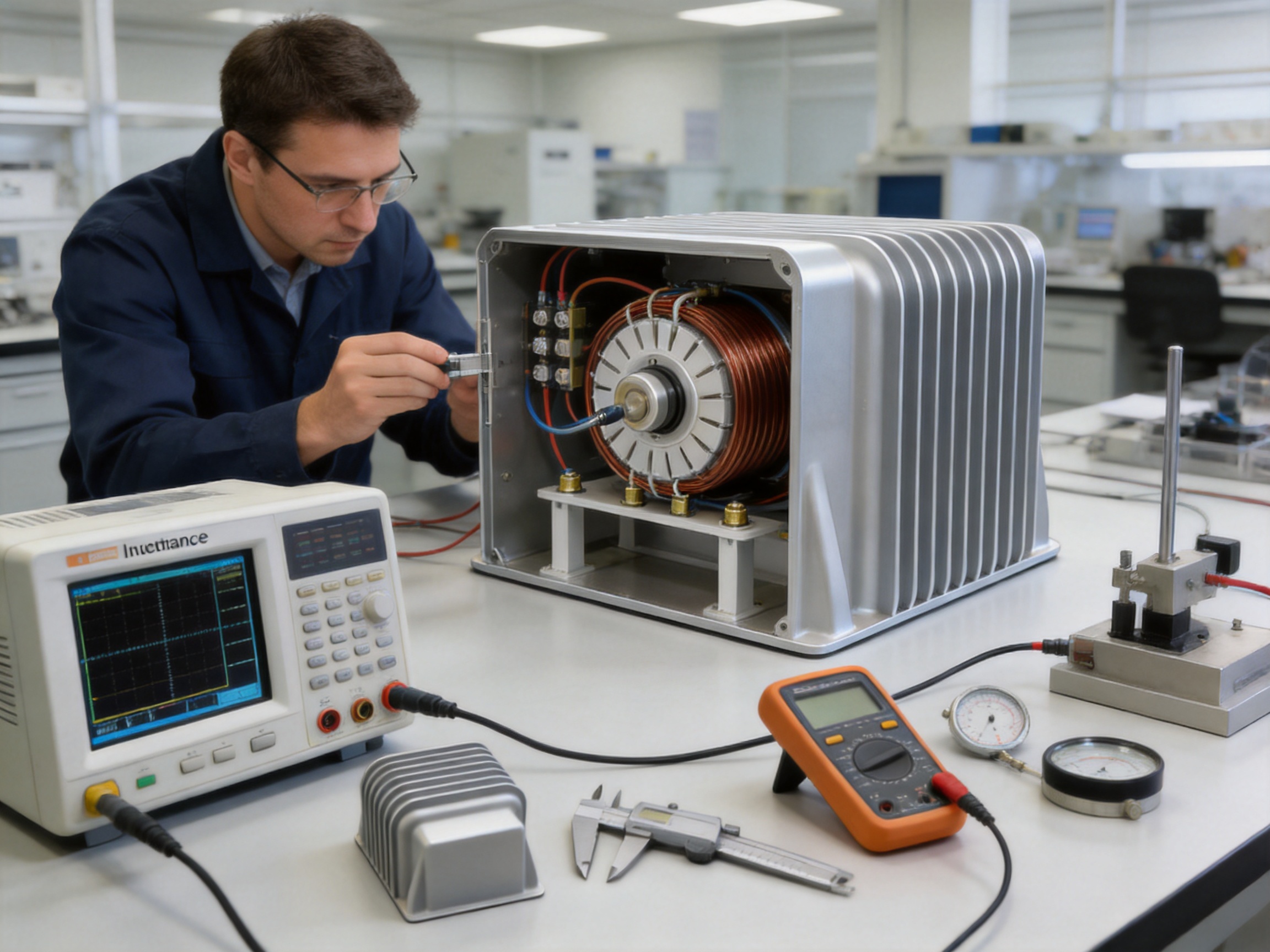
Customers can evaluate a proposed inductance box through a staged process. First, confirm the intended application and define the electrical range. The required inductance values, tolerances, test conditions, maximum current, and switching method should be written clearly. This prevents mechanical design decisions from being made before the electrical requirements are understood.
Second, review the enclosure concept. The review should cover dimensions, mounting, switch access, terminal arrangement, cover removal, surface finish, labels, and expected environmental conditions. A three-dimensional model can help identify interference between coils, wires, fasteners, and the enclosure.
Third, conduct mold-flow analysis and design-for-manufacturing review. The manufacturer should identify draft angles, wall thickness transitions, potential porosity areas, gate and overflow positions, machining allowances, and ejection risks. The aim is to create a mold that can produce a stable casting rather than simply reproducing an unverified drawing.
Fourth, inspect prototypes or first articles. Dimensional inspection should be combined with assembly trials and electrical tests. The switch should operate smoothly, the cover should fit correctly, and each setting should be verified under the defined measurement conditions.
Finally, establish production controls. These may include approved drawings, inspection plans, material records, process parameters, sample retention, electrical test records, packaging standards, and procedures for handling engineering changes. A controlled transition from prototype to production reduces the risk of unexpected variation.
The main function is to provide selectable inductance values in one instrument. Multiple self-inductance coils are arranged inside the box, and a conversion switch allows the user to select different electrical conditions for experiments, calibration, teaching, or engineering evaluation.
A die cast aluminum alloy enclosure can provide a useful combination of rigidity, low weight, thermal conductivity, dimensional repeatability, and integrated geometric features. It can support the switch securely, protect internal coils, and provide a durable surface for finishing and identification.
The inductance value is primarily determined by the coil design, materials, circuit arrangement, measurement conditions, and switching contacts. However, the enclosure supports accuracy indirectly by maintaining mechanical alignment, protecting the internal assembly, and helping preserve stable operating conditions.
Customization is generally possible if the coil specifications, switching method, electrical range, tolerance, and physical constraints are defined in advance. The final available range depends on the internal circuit design and the selected components.
The product is suitable for education, laboratories, electrical testing, calibration, research, and engineering development. The related die casting and mold capabilities also support products used in automotive, household appliance, telecommunication, photovoltaic, energy storage, charging, electrical, robotic, and other industrial sectors.
Customers should confirm the inductance values, tolerances, test frequency, maximum current, switch type, operating environment, enclosure dimensions, terminals, surface finish, markings, annual quantity, packaging, and inspection requirements. Clear information at the quotation stage helps prevent later redesign.
Mold-flow analysis helps engineers evaluate filling behavior, air entrapment, solidification, temperature distribution, and potential shrinkage before manufacturing the mold. It supports better gate, vent, overflow, cooling, and wall-thickness decisions and can reduce development risk.
The supplied company information states that the manufacturer has ISO 9001 and IATF 16949 quality management system certifications. These systems support documented processes, risk control, traceability, corrective action, and continuous improvement. Specific product requirements should still be confirmed through project documentation and testing.
Depending on the alloy, design, and application, finishing options may include powder coating, painting, anodizing, shot blasting, polishing, or other compatible treatments. The required color, texture, gloss, corrosion resistance, and marking method should be agreed during product development.
Users should keep the instrument clean and dry, avoid exceeding its electrical ratings, protect it from impact, and periodically check terminals, switch operation, insulation, and measured values. Internal repairs and electrical modifications should be performed by qualified personnel.
The die casting inductance box is a practical instrument for laboratories, classrooms, calibration facilities, and engineering departments that need convenient access to multiple inductance values. Its integrated coil arrangement and conversion switch simplify circuit experiments, while the precision die cast enclosure provides mechanical protection, stable switch mounting, useful thermal performance, and a professional appearance.
Its advantages over loosely assembled components or less rigid housing solutions include compact integration, repeatable operation, improved handling, and efficient production of consistent aluminum alloy structures. These benefits become more valuable when the product is manufactured through a controlled process that includes mold-flow analysis, precision mold construction, CNC machining, EDM, automated trimming, surface finishing, assembly, and electrical testing.
The manufacturing capabilities described for Ningbo Dinghong Mould Co., Ltd. support this type of product from initial mold design through die casting and finishing. The company’s experience in automotive, appliance, telecommunication, electrical, new-energy, photovoltaic, energy-storage, and other aluminum alloy applications provides a broad technical foundation for customized parts and enclosures. Its reported ISO 9001 and IATF 16949 certifications, advanced equipment, experienced design team, and quality-control procedures further support reliable project execution.
For customers seeking a customized solution, the best results come from early cooperation between electrical designers, mechanical engineers, mold specialists, casting technicians, and quality personnel. When the coil arrangement, switch interface, enclosure geometry, production quantity, and test requirements are defined together, the final inductance box can achieve a strong balance of function, durability, manufacturability, and cost.
1. American Die Casting Association, Die Casting Design and Engineering Principles.
2. International Organization for Standardization, Quality Management Systems: ISO 9001 Requirements.
3. International Automotive Task Force, Quality Management System Requirements for Automotive Production and Relevant Service Parts.
4. Joseph, A. M., Fundamentals of Electrical Circuits and Inductance Applications.
5. ASM International, Aluminum Alloy Selection and Die Casting Technology.
6. Society of Manufacturing Engineers, Practical Guidelines for Mold Design and High-Pressure Die Casting.
7. IEC technical guidance concerning inductors, electrical measurement, insulation, and laboratory equipment safety.


Die casting automotive parts are made by forcing molten metal into a steel mold under high pressure, where it fills t...
READ MOREBefore a part ever reaches production, every buyer eventually asks the same question: should this component be injectio...
READ MORETwo quotations for the same aluminum controller housing can differ by 20% or more, even when both suppliers list the sa...
READ MOREMetal Injection Molding vs Die Casting: Start With the Part A buyer often arrives at this comparison with two very diff...
READ MORE

Sun Yuejun: +86-13806631860
Wang Shiyong: +86-15958891460 / 15058297768
Dove Yao: +86-18625086675


Copyright © Ningbo Dinghong Mould Co., Ltd. Rights Reserved. Custom Precision Die Casting Aluminum Alloy Parts Manufacturers
