
 English
 Español
 русский
 Français

One large aluminum die casting can now replace what used to be 70 to 130 separately stamped and welded steel parts in a...
READ MORE
Content
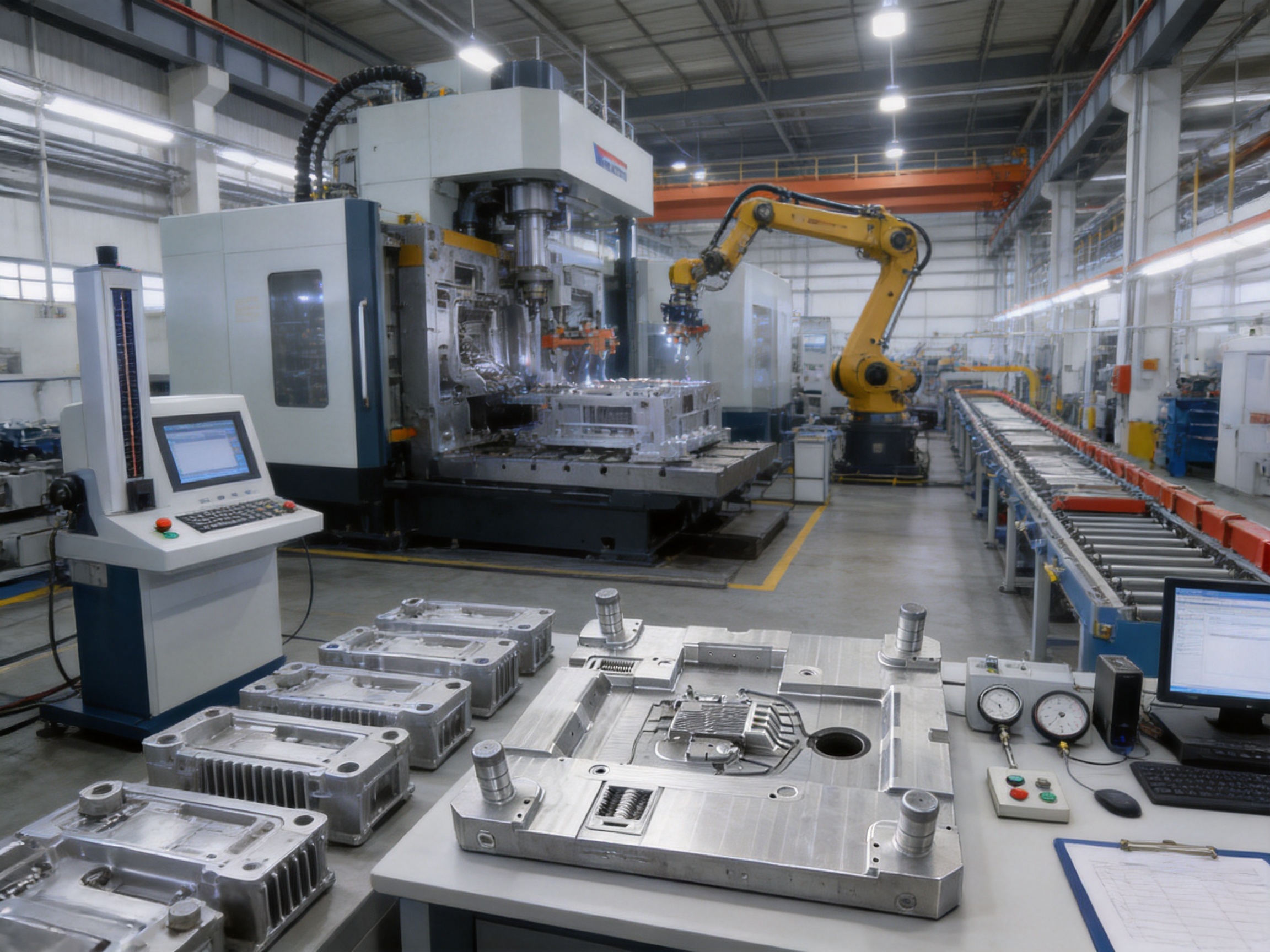
New energy vehicles depend on compact, reliable, and well-protected electronic control systems. Behind every motor controller, vehicle control unit, battery-related control module, and power-management assembly is a housing that must protect sensitive electronics from moisture, dust, vibration, heat, electromagnetic interference, and mechanical impact. The die casting mold used to produce that housing is therefore much more than a basic forming tool. It is a precision manufacturing system that determines dimensional accuracy, wall consistency, sealing performance, cooling efficiency, assembly stability, and long-term production reliability.
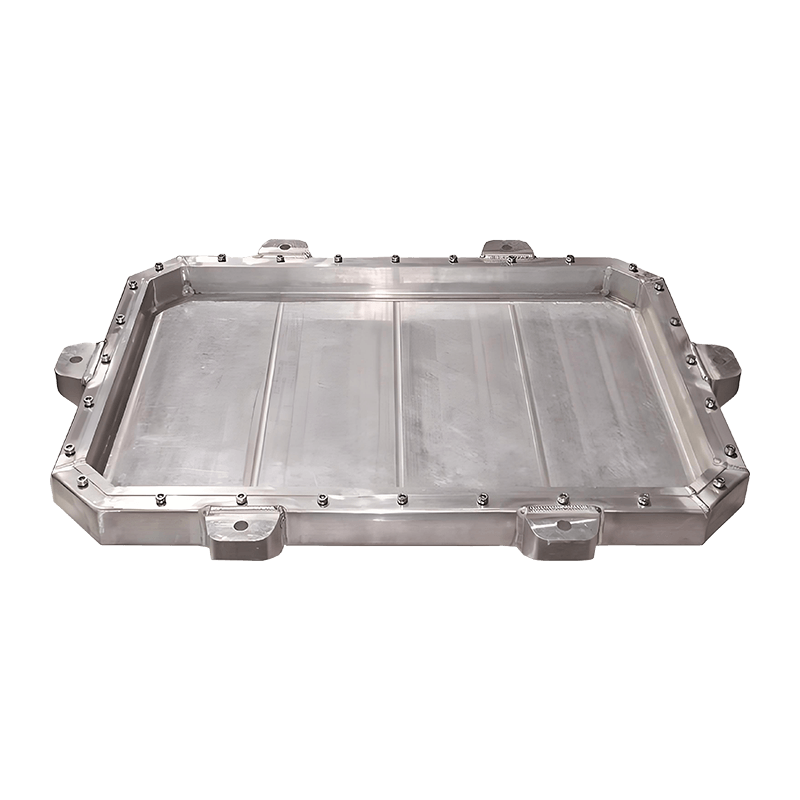
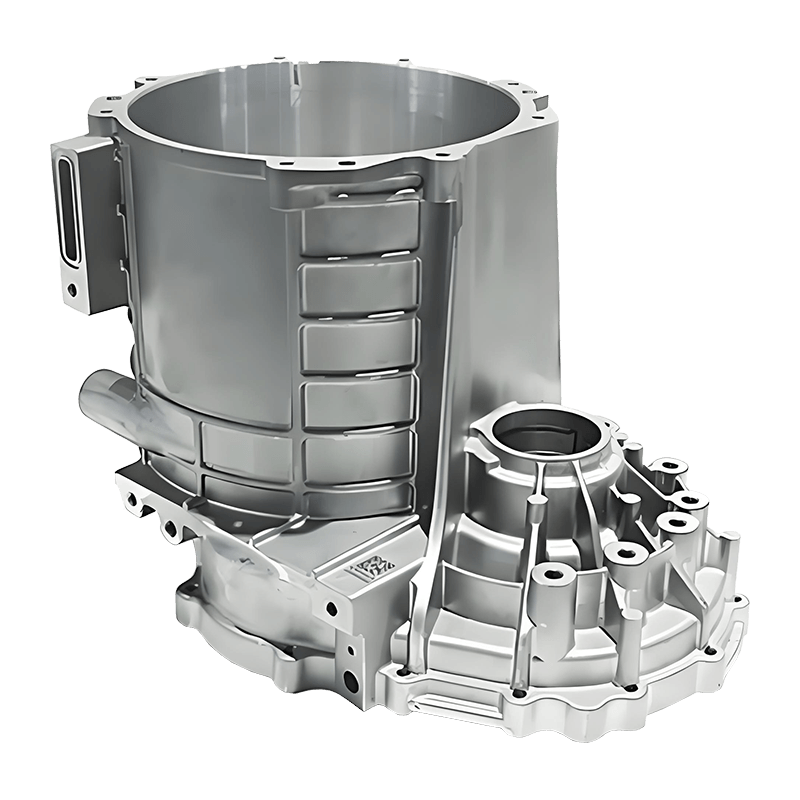
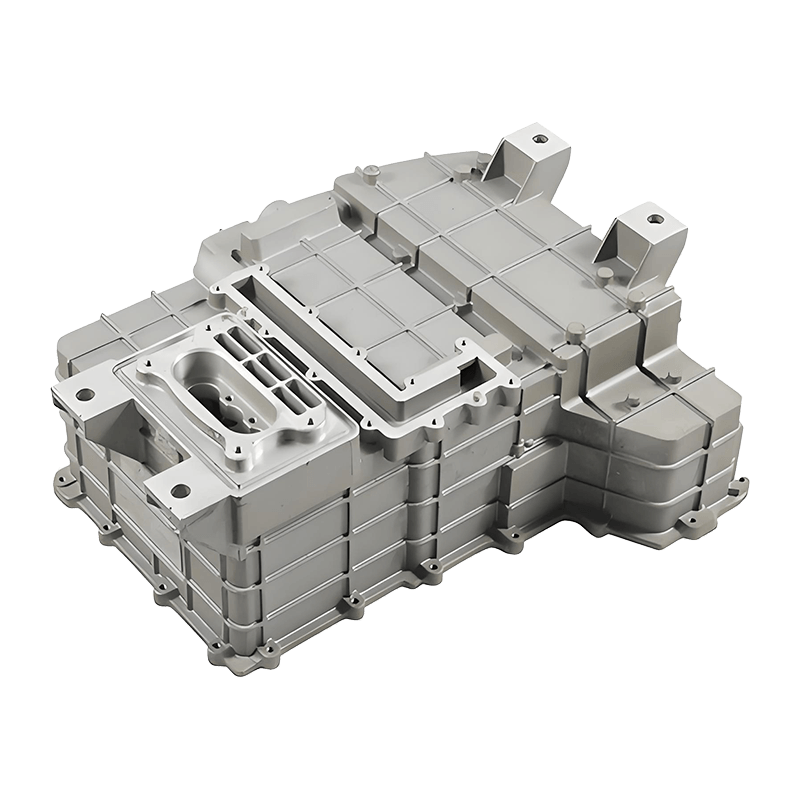
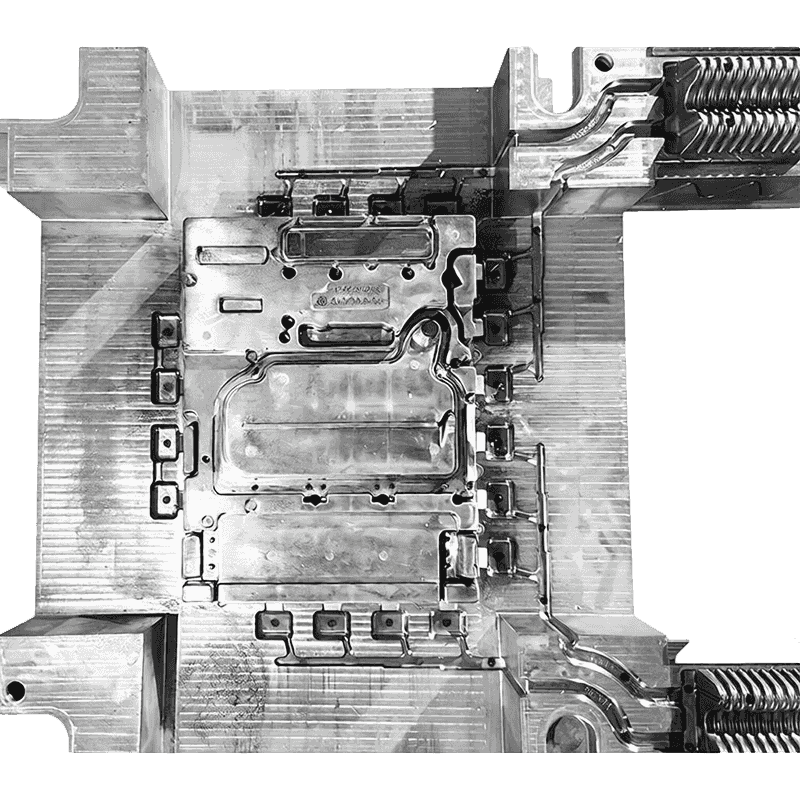
The Die Casting NIO Controller Housing Mold is designed for the production of aluminum alloy housings used in new energy vehicle electronic control applications. It supports the efficient manufacturing of housings for systems such as motor control units and vehicle control units. The mold is developed around the specific requirements of automotive electronic components, including complex internal structures, mounting bosses, sealing grooves, connector openings, heat-dissipation features, and stable interfaces for installation.
As electric and hybrid vehicles continue to integrate more electronic functions, the demand for lightweight, durable, and accurately manufactured controller housings is increasing. A suitable mold must deliver consistent results across large production volumes while maintaining the precision required by modern vehicle platforms. It must also support efficient die casting, reliable ejection, controlled filling, fast cycle times, and post-casting processes such as trimming, machining, leak testing, and surface treatment.
This product is manufactured by Ningbo Dinghong Mould Co., Ltd., a China-based manufacturer specializing in mold design, mold manufacturing, aluminum alloy die casting, finishing, and related production services. With experience in automotive, household appliance, telecommunications, electrical, photovoltaic, robotic, pump and valve, motorcycle, and other industries, the company combines mold engineering with die-casting production knowledge. This integrated capability helps connect the design of the tool with the practical requirements of the final component.
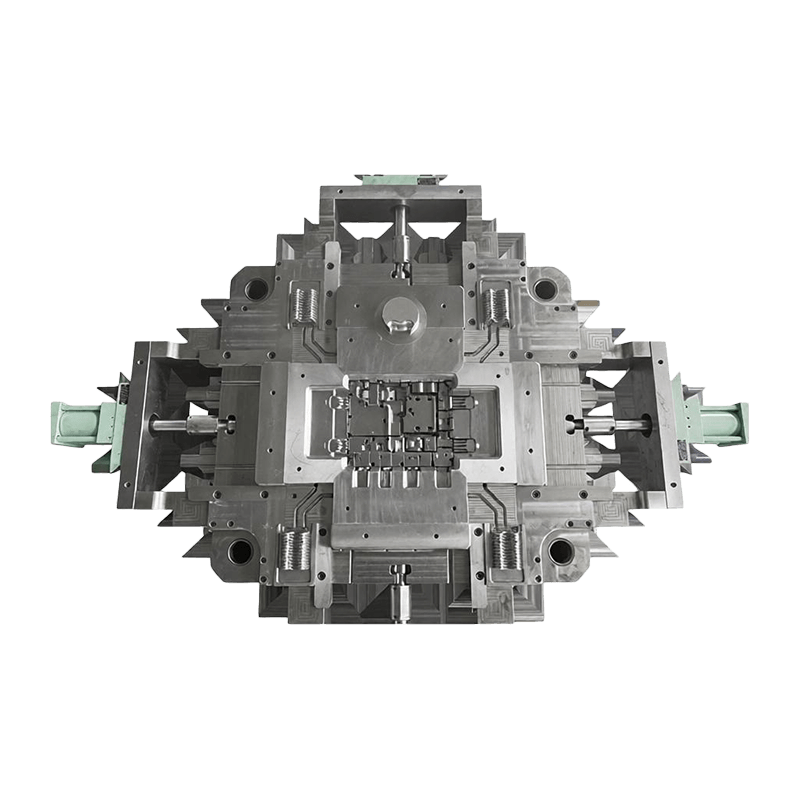
The controller housing mold is a precision die casting mold used to shape aluminum alloy housings for electronic control units in new energy vehicles. These housings are typically designed to contain circuit boards, power electronics, sensors, connectors, busbars, and other electrical components. Depending on the vehicle architecture, the housing may be installed in the engine compartment, near the electric drive system, under the vehicle body, or in another area exposed to heat, vibration, moisture, and road contaminants.
The mold creates the external and internal geometry of the housing through high-pressure die casting. Molten aluminum alloy is injected into the mold cavity at high speed and pressure. The alloy fills the cavity, reproduces the designed shape, and solidifies against the mold surfaces. After solidification, the mold opens, the casting is ejected, and the component proceeds to trimming, machining, inspection, cleaning, and other required operations.
A controller housing commonly includes a broad cover area, reinforced walls, mounting points, ribs, connector locations, sealing channels, cooling structures, and interfaces for fasteners. These features must be formed accurately and consistently. The mold must also manage the flow of molten metal so that the casting has minimal porosity, good surface quality, and suitable mechanical performance.
The product is suitable for applications involving new energy vehicle controller housings, including housings for motor control units, vehicle control units, power electronic modules, and related electrical control assemblies. The exact mold configuration can be developed according to the customer’s three-dimensional product data, alloy selection, die-casting machine parameters, annual production volume, tolerance requirements, and downstream machining plan.
The mold is not limited to producing a visually accurate casting. It is engineered to support a complete production process. This includes mold-flow evaluation, cavity and core design, gating and overflow planning, cooling-channel design, ejection-system development, CNC machining, electrical discharge machining, trial casting, dimensional verification, and process optimization.
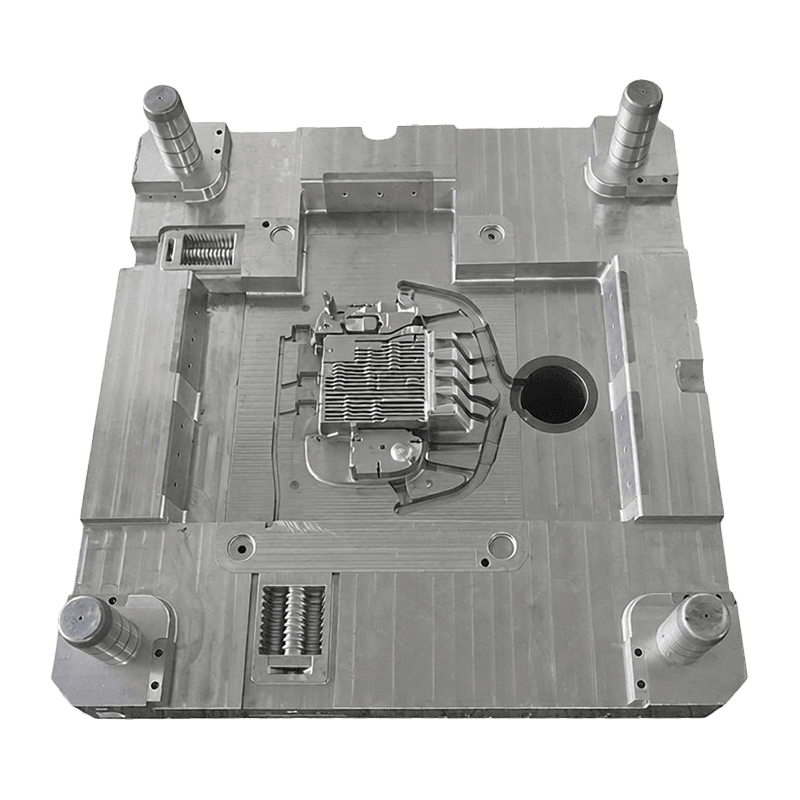
Die Casting NIO Controller Housing Mold
Electronic control units are central to the operation of new energy vehicles. They regulate motor torque, coordinate energy flow, monitor vehicle conditions, communicate with other electronic systems, and support safety-related functions. The housing surrounding these components must maintain a stable internal environment even when the vehicle is exposed to temperature changes, vibration, water spray, dust, mechanical loads, and repeated operating cycles.
The housing also contributes to thermal management. Power semiconductors and other electronic components generate heat during operation. If that heat cannot be transferred effectively, the electronics may experience reduced performance, shortened service life, or thermal protection events. Aluminum alloy is widely used because it combines relatively low density, good castability, useful thermal conductivity, and adequate structural strength for many automotive applications.
A die casting mold allows complex aluminum alloy shapes to be manufactured efficiently. Instead of producing numerous separate brackets and covers through multiple processes, the housing can integrate mounting points, reinforcement ribs, cable interfaces, and other functions into a single or limited number of castings. This integration can reduce assembly complexity, minimize the number of fasteners, lower component count, and support a more compact vehicle architecture.
However, the benefits of an integrated housing depend heavily on mold quality. Thin walls, deep ribs, narrow passages, large flat surfaces, and close-tolerance interfaces can make filling and solidification difficult. Poor mold design may produce incomplete filling, cold shuts, trapped air, shrinkage, distortion, flash, or premature tool wear. A precision mold must therefore be developed with a clear understanding of both the product geometry and the die-casting process.
The cavity and core form the principal surfaces of the controller housing. Their dimensions must correspond accurately to the customer’s product drawings and three-dimensional data. Particular attention is required for sealing surfaces, connector openings, mounting bosses, bearing or bracket interfaces, and locations that will receive additional machining.
Precision cavity and core machining helps maintain stable dimensions from the first trial through repeated production cycles. The mold design can also account for aluminum alloy shrinkage, thermal expansion, draft angles, machining allowances, and other factors that influence the final casting. By considering these elements during the design stage, the tool is better prepared to produce components that meet assembly requirements.
Controller housings often need to accommodate several functions in a limited space. The mold may include structures for fastening, positioning, sealing, cable routing, heat transfer, and electronic component protection. Integrated ribs and bosses can improve rigidity without requiring excessive wall thickness. Properly designed reinforcement can help reduce deformation while preserving the lightweight advantages of aluminum alloy.
Complex geometry also creates challenges for mold opening, core movement, ejection, and machining access. The mold design must ensure that the casting can be removed without damaging undercuts or delicate features. Where necessary, slides, lifters, inserts, or other movable components may be incorporated into the tool. These mechanisms must be accurately synchronized and sufficiently robust for the expected production cycle.
Electronic control housings commonly use gaskets, sealants, or carefully controlled joint surfaces to protect the internal electronics. The mold can form sealing grooves, flange surfaces, locating steps, and fastener bosses that support the final sealing system. Dimensional consistency in these areas is especially important because even small variations can affect gasket compression or cover alignment.
Good mold design helps reduce flash and dimensional variation around the sealing interface. It also supports stable machining allowances where a cast surface must be finished after casting. The result is a housing with a more dependable installation interface and a stronger foundation for water, dust, and environmental protection.
Depending on the application, the housing may include external fins, internal contact surfaces, mounting pads, or other features intended to assist heat transfer. These features must be balanced with filling capability and mold manufacturability. Very narrow fins or deep channels can be difficult to fill and may increase the risk of premature solidification.
Through appropriate alloy selection, wall-thickness planning, gate positioning, overflow design, and cooling-channel layout, the mold can support repeatable formation of thermal-management features. The final heat-dissipation performance depends on the complete product design and operating environment, but the mold is essential to producing those features accurately.
A high-volume automotive component requires a dependable ejection system. Ejector pins, sleeves, plates, return mechanisms, and guide components must be arranged so that the casting can be released without distortion or visible damage. Ejection force should be distributed across suitable areas of the casting, avoiding excessive pressure on thin walls, sealing surfaces, or cosmetic zones.
The mold can also be designed to support automated trimming, robotic handling, spraying, and other production operations. Consistent part positioning is important when the casting moves from the die-casting machine to trimming equipment, CNC machining centers, leak-testing stations, and inspection systems. Stable automation compatibility can improve productivity and reduce variation caused by manual handling.
The main advantage of a specialized controller housing mold is that it is developed around the functional requirements of an automotive electronic enclosure rather than treated as a general-purpose casting tool. The mold must account for sealing, thermal management, electronic component protection, assembly accuracy, and long-term production stability at the same time.
General molds may be capable of producing simple aluminum parts, but controller housings require more detailed engineering. The tool must be adapted to the product’s wall thickness distribution, mounting design, connector arrangement, internal clearances, and finishing requirements. Product-specific engineering reduces the risk of designing a cavity that appears acceptable in a computer model but performs poorly during actual casting.
The housing mold is developed using the customer’s product information and production objectives. Engineers can evaluate parting lines, draft angles, slide directions, ejection locations, gate positions, overflow areas, machining references, and inspection datums before steel is cut. This front-loaded analysis helps identify potential issues earlier, when changes are less expensive and less disruptive.
Controller housings may contain broad surfaces and varying wall thicknesses. If molten metal enters the cavity unevenly, some areas can solidify before the cavity is completely filled. This may cause cold shuts, incomplete filling, or inconsistent surface quality. A carefully planned runner and gate system promotes more balanced flow and helps direct the metal into difficult areas.
Overflow wells and venting features can assist with the removal of air and the collection of the initial or colder metal front. Cooling channels help control the thermal condition of the mold, while local inserts or targeted cooling can address areas prone to overheating. These design measures do not eliminate every casting challenge, but they create a stronger foundation for stable process development.
Dimensional stability is influenced by steel quality, heat treatment, machining accuracy, mold temperature, alloy behavior, cooling balance, ejection timing, and process control. A precision mold addresses these factors as part of an integrated system. Accurate machining and reliable guiding components help the two mold halves close repeatedly in the same position. Balanced cooling helps reduce local thermal distortion. Proper ejection reduces the risk of deformation after solidification.
Stable dimensions are particularly valuable for controller housings because many interfaces are assembled with covers, gaskets, connectors, circuit boards, brackets, and vehicle structures. When the casting remains within the required dimensional range, downstream operations can be more predictable and assembly adjustments can be reduced.
Vehicle manufacturers continue to seek weight reduction without sacrificing stiffness, safety, or thermal performance. Die casting allows designers to create thin-walled structures with integrated ribs and functional features. A well-designed mold helps reproduce these structures while minimizing unnecessary material.
Lightweight design must remain compatible with filling, solidification, machining, and service requirements. The objective is not simply to make every wall as thin as possible. Instead, the mold should support an optimized design in which material is placed where it contributes most effectively to strength, heat transfer, fastening, or protection.
A mold supplier with die-casting and finishing capability can evaluate how the casting will be trimmed, machined, inspected, and prepared for delivery. This perspective is valuable because the best mold design is not determined only by the cavity shape. It must also support parting-line cleanup, removal of gates and overflows, CNC reference selection, drilling, tapping, sealing-surface finishing, leak testing, and final inspection.
When mold and part production are considered together, potential problems can be identified earlier. For example, an ejector location that is acceptable from a molding perspective may interfere with a future machining feature. A gate position that fills the part effectively may create additional trimming work. Integrated manufacturing knowledge helps balance these requirements.
The process begins with a review of the customer’s product drawings, three-dimensional data, material requirements, expected production volume, machine information, tolerance standards, and quality expectations. Engineers examine the housing from the perspectives of casting, mold construction, machining, assembly, and service performance.
Important review points include minimum wall thickness, transitions between thick and thin sections, draft angles, undercuts, deep cavities, sealing grooves, screw bosses, connector apertures, heat-dissipation structures, and critical inspection dimensions. The review also considers whether surfaces are as-cast, machined, polished, coated, or used as functional reference areas.
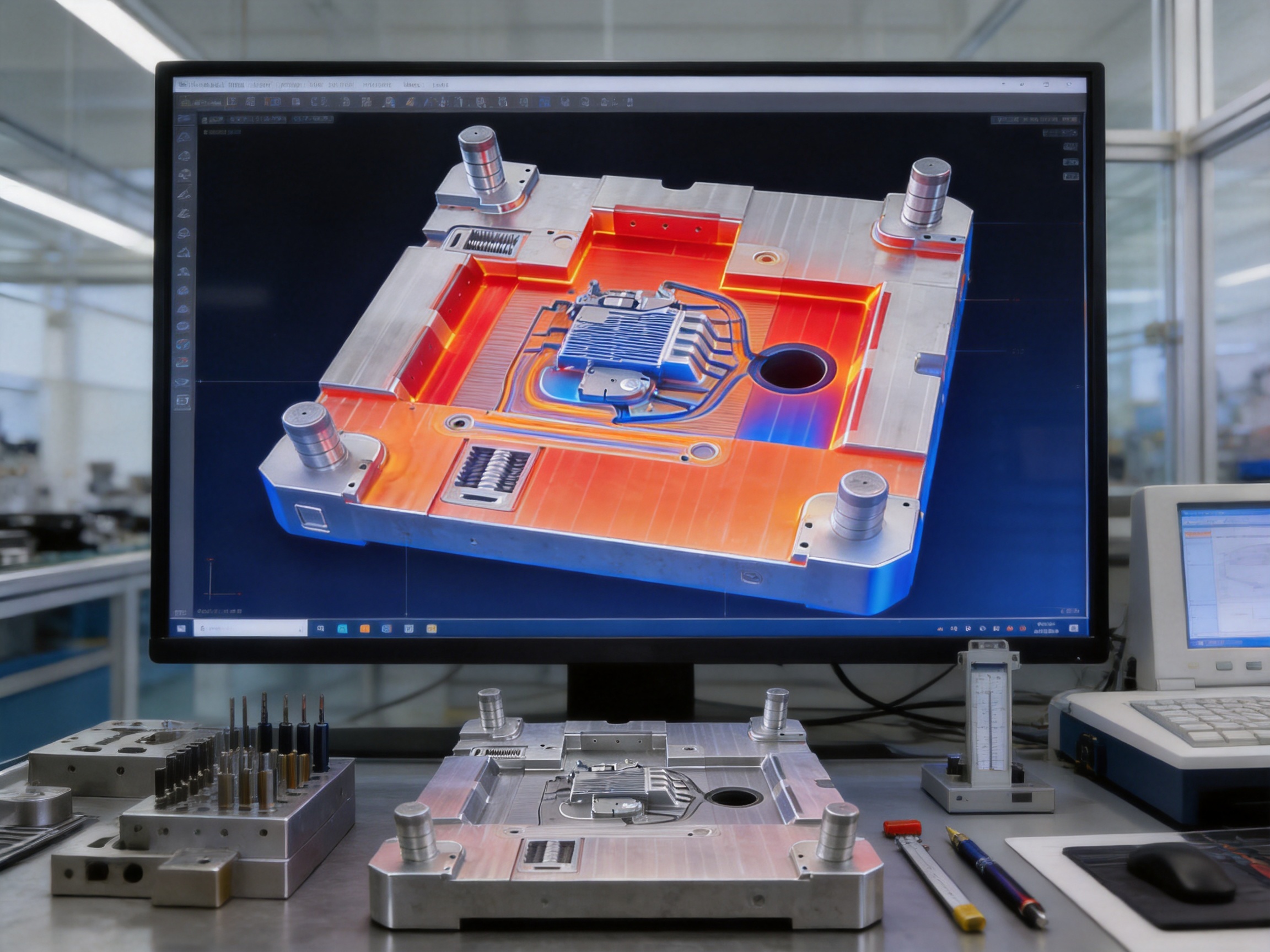
Mold-flow analysis is used to visualize how molten aluminum may move through the cavity. The analysis can help assess filling time, temperature distribution, air entrapment risk, pressure behavior, solidification sequence, and potential defect locations. Engineers can compare alternative gate, runner, overflow, and venting concepts before manufacturing begins.
This predictive approach is an important advantage over relying solely on repeated physical trial and error. Simulation does not replace practical testing, but it allows the design team to evaluate more options in advance. It can help determine whether a gate should be moved, whether an overflow should be enlarged, whether a local cooling feature is necessary, or whether a wall transition should be revised.
The parting line affects the appearance, dimensional accuracy, trimming workload, and mold complexity of the finished casting. A carefully selected parting line can simplify ejection and reduce flash on important surfaces. At the same time, it must accommodate the geometry of the housing and the direction in which the casting will be removed.
When the housing includes undercuts, lateral openings, or complex connector interfaces, slides or inserts may be required. These components must be designed for adequate strength, alignment, lubrication, cooling, and maintenance access. Their movement must be coordinated with the mold opening and ejection sequence so that the casting is not damaged.
The gating system controls how molten aluminum enters the cavity. Its geometry and location influence filling speed, flow direction, surface quality, internal porosity, and the final position of gate remnants. The design must provide sufficient metal flow while reducing turbulence and avoiding unnecessary stress on thin features.
Overflow wells can receive excess material, colder metal, and air displaced during filling. Venting features help release air from the cavity. The effectiveness of these elements depends on their location, size, and relationship to the actual flow pattern. Mold-flow analysis and trial casting can be used together to refine the system.
Thermal management inside the mold is essential for cycle stability and mold life. Cooling channels are arranged to remove heat from high-temperature areas while maintaining a suitable temperature balance across the cavity. If one region remains too hot, the casting may experience local shrinkage, sticking, soldering, or dimensional instability. If another area is cooled too aggressively, premature solidification may interfere with filling.
A balanced cooling design helps maintain consistent casting conditions over repeated cycles. It can also reduce thermal fatigue in the mold steel. The final cooling layout depends on the housing geometry, alloy, machine parameters, expected cycle time, and production strategy.
After the design is finalized, mold components are manufactured using precision equipment. CNC machining centers are used for many cavity, core, plate, insert, and structural components. Electrical discharge machining is used where deep ribs, narrow slots, sharp internal details, or geometries difficult to cut conventionally must be produced.
Machining accuracy depends on equipment condition, programming quality, workholding, tool selection, inspection practice, and operator experience. High-precision machining is especially important for sealing surfaces, alignment features, slide interfaces, and areas that control the final dimensional accuracy of the housing.
After machining, the mold components are assembled and fitted. Engineers verify the movement of slides, the action of ejectors, the alignment of guide systems, the fit of inserts, and the operation of cooling and lubrication passages. The tool is then installed for trial casting under suitable process conditions.
Trial castings are examined for filling, flash, surface quality, distortion, gate removal, ejection marks, and dimensional performance. If required, engineers adjust process parameters or modify selected mold features. This iterative stage is important because actual casting behavior may reveal details that are difficult to predict fully through design and simulation alone.
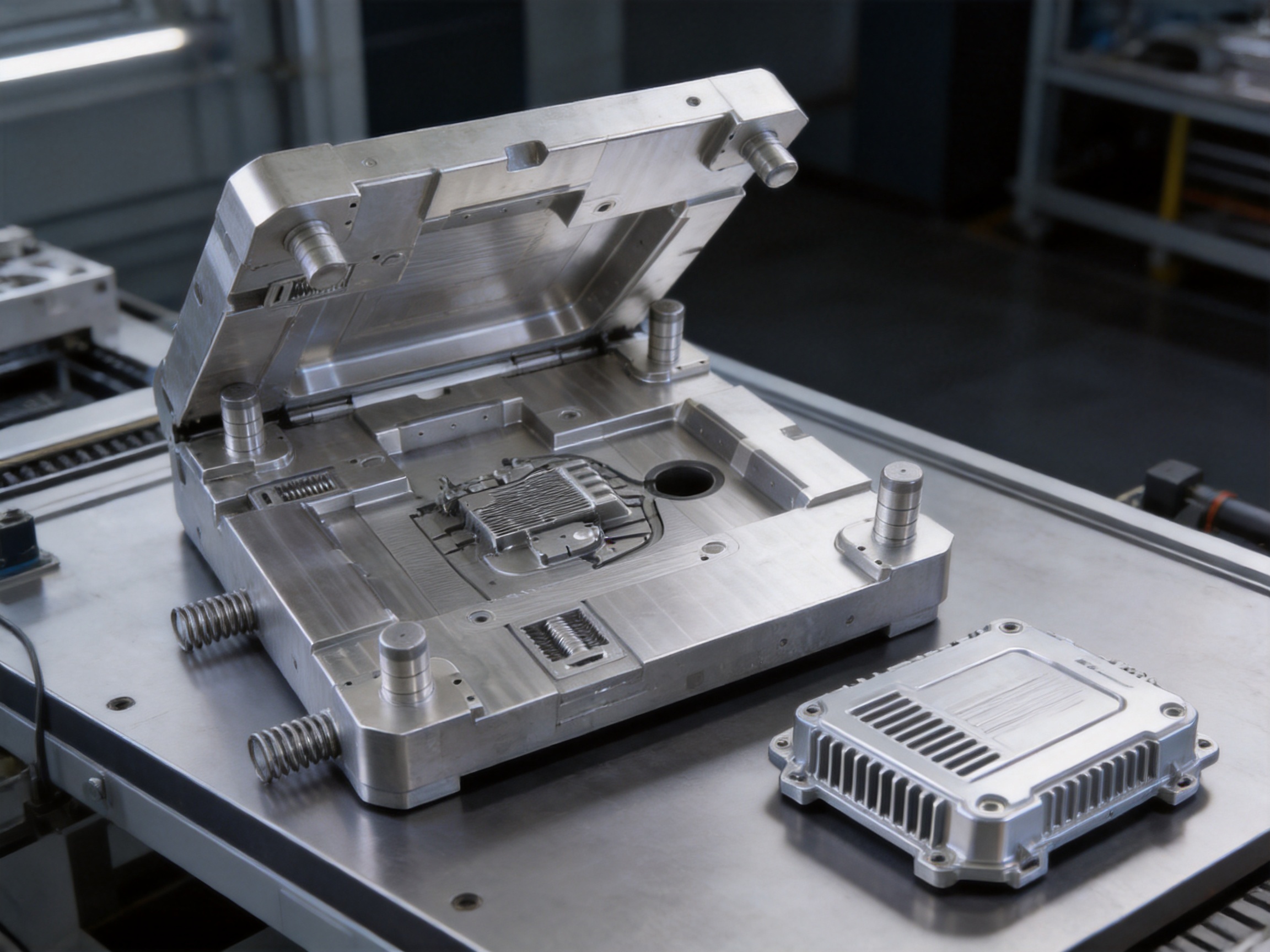
Ningbo Dinghong Mould Co., Ltd. was established in 2013, following the establishment of Yuejin Mould in 1998. The company is located in Daqi Street, Beilun District, Ningbo, Zhejiang Province, near Beilun Port. Its location provides access to a strong manufacturing supply chain, transportation infrastructure, skilled technical personnel, and international logistics services.
The company occupies approximately 20 mu of land and has developed into a modern manufacturing enterprise with approximately 15,000 square meters of plant space. Its operations cover mold design, mold manufacturing, die casting, finishing, and trade. This combination allows the company to support customers from early engineering discussion through tooling production and aluminum alloy component manufacturing.
The company manufactures molds and die-cast aluminum alloy products for automotive, new-energy, photovoltaic, telecommunications, electrical, motorcycle, pump and valve, fitness equipment, robotic, and household appliance applications. This broad experience exposes the engineering team to different requirements involving strength, sealing, thermal performance, electrical protection, dimensional accuracy, appearance, and production volume.
Experience across industries can be valuable when developing a complex controller housing mold. Automotive electronic housings may require the dimensional discipline of vehicle components, the heat-management knowledge of electrical products, and the surface and sealing considerations found in appliance or telecommunications enclosures. A diversified technical background helps the company approach the product from multiple manufacturing perspectives.
The facility includes high-precision CNC machining centers, EDM equipment, die-casting machines, automated trimming lines, and testing equipment. CNC equipment supports accurate production of mold components and selected casting features. EDM equipment provides flexibility for intricate details and difficult-to-machine areas. Die-casting machines enable the company to evaluate mold performance under production-related conditions.
Automated trimming lines can improve consistency when removing gates, overflow material, and flash from castings. Automation also helps reduce manual variation and supports higher production efficiency. Testing equipment is used to verify dimensions, appearance, process results, and other quality characteristics according to project requirements.
The company has obtained ISO 9001 and IATF 16949 quality management system certifications. ISO 9001 provides a structured framework for quality planning, process control, documentation, corrective action, and customer-focused management. IATF 16949 is specifically associated with automotive quality management and emphasizes risk prevention, process consistency, traceability, and continual improvement.
Certification alone does not guarantee the performance of every individual mold, but a functioning quality system provides an organized framework for managing projects. For a controller housing mold, this may include design review records, material documentation, machining inspection, assembly checks, trial reports, process records, nonconformance handling, and final acceptance documentation.
An experienced design team and advanced software support the company’s mold development activities. Three-dimensional modeling, engineering analysis, and mold-flow visualization allow the team to study the proposed tool before manufacturing. Digital tools also support communication between product designers, mold engineers, casting technicians, machining personnel, and quality teams.
Clear digital information management reduces the possibility of errors caused by outdated drawings or inconsistent revisions. It also allows manufacturing and quality personnel to work from coordinated product and mold data. For customers operating multiple projects or vehicle platforms, disciplined data management can improve the reliability of the development process.
Quality control begins before the mold enters production. Material selection, steel certification, heat-treatment records, component dimensions, machining accuracy, and assembly conditions should all be controlled. Critical mold components require special attention because their accuracy directly influences the housing’s final geometry.
Mold steel, inserts, guide components, hydraulic or mechanical slide parts, ejector components, and cooling-related fittings should be checked against project specifications. Material certificates and heat-treatment information help confirm that the selected steel has the required hardness, toughness, and wear resistance for the intended service conditions.
Inspection is performed on cavity and core dimensions, parting surfaces, inserts, slide interfaces, ejector positions, guide systems, and other critical components. Measurement methods may include coordinate measuring equipment, height gauges, micrometers, gauges, and visual inspection, depending on the feature and required accuracy.
For the casting, dimensional inspection focuses on important interfaces such as mounting holes, sealing surfaces, connector openings, wall locations, cover interfaces, and machining references. Inspection results can be compared with product drawings and three-dimensional data to confirm that the casting is suitable for downstream processing.
Visual inspection identifies flash, cold shuts, flow marks, cracks, deformation, ejection damage, and other visible conditions. Depending on the application, additional testing may be required for internal porosity, leakage, or structural integrity. The inspection plan should be established according to the housing’s function and the customer’s quality standards.
Because controller housings protect electronic components, surface conditions around sealing areas and connector interfaces are especially important. Even when a casting meets general appearance requirements, a defect located on a sealing land or mounting interface may affect final performance. Quality inspection should therefore prioritize functional areas, not only cosmetic surfaces.
Trial results, corrective actions, mold modifications, process parameters, and final acceptance information should be documented. This creates a useful technical history for future maintenance, repeat orders, engineering changes, and process improvement. Documentation also helps identify recurring issues and supports structured problem solving.
A precision mold is an important capital asset. Its value depends not only on the initial casting result but also on its ability to support stable production over time. A well-designed tool simplifies routine maintenance, reduces unexpected downtime, and helps preserve casting quality.
High-cycle die casting exposes mold components to thermal shock, mechanical loading, molten metal erosion, lubrication conditions, and repeated movement. Appropriate mold steel, heat treatment, surface finishing, and insert design can improve resistance to wear and thermal fatigue. Replaceable inserts may be used in locations that are likely to experience higher wear or damage.
Cooling passages, ejector systems, slides, inserts, and wear components should be accessible for inspection and servicing. A maintenance-friendly design can shorten repair time and reduce the disruption caused by routine cleaning or replacement. Clear component identification and maintenance records further support efficient tool management.
Automotive and new energy vehicle programs often require repeated production over an extended period. The mold must maintain its alignment, cavity geometry, cooling performance, and ejection function across many cycles. Stable construction and planned maintenance help minimize variation and support predictable production output.
The controller housing production process normally includes several linked stages. First, the mold is installed on a suitable die-casting machine and prepared according to the approved process plan. The selected aluminum alloy is melted and maintained within the required temperature range. The alloy is then injected into the mold cavity at controlled speed and pressure.
After the casting solidifies, the mold opens and the ejection system removes the part. The casting is transferred to trimming equipment, where gates, overflows, and flash are removed. Additional operations may include shot blasting, deburring, CNC machining, drilling, tapping, sealing-surface finishing, washing, leak testing, dimensional inspection, and surface treatment.
The precise sequence depends on the product design and customer requirements. Some housings may receive protective coatings, painting, powder coating, or other treatments. Others may require assembly with covers, gaskets, heat-transfer materials, electronic components, or brackets. A mold that has been designed with these downstream stages in mind can help improve the overall manufacturing flow.
Motor control units regulate the operation of electric drive motors and may contain power electronics that generate substantial heat. Their housings require accurate mounting interfaces, effective thermal paths, robust structural support, and protection against environmental exposure. The die casting mold can form the integrated geometry needed for these requirements.
Vehicle control units coordinate information from sensors and other electronic modules. Their housings may prioritize compact packaging, connector organization, sealing, and secure installation. A precision mold supports repeatable formation of these features and helps maintain the dimensional relationships required for assembly.
Other new energy vehicle modules may also use aluminum alloy housings. Examples can include charging-related control equipment, power distribution assemblies, inverter-related structures, and electrical protection units. Each application has its own design requirements, but the underlying mold-engineering principles remain similar: controlled filling, stable dimensions, heat management, reliable ejection, and compatibility with finishing operations.
Customers selecting a specialized controller housing mold can benefit from a more coordinated development process. Product geometry, casting behavior, mold construction, and finishing requirements are evaluated together. This can reduce the risk of late-stage design changes and improve the transition from prototype development to regular production.
The company’s integrated capabilities also provide a practical communication advantage. Customers can discuss mold design and casting production with teams familiar with both tooling and die casting. Issues such as difficult filling areas, machining allowances, trimming access, and inspection references can be addressed through a common manufacturing perspective.
Another benefit is flexibility across different industries and product scales. The same supplier can support automotive electronic housings as well as components for appliances, telecommunications, electrical systems, and other applications. This can be useful for customers seeking a long-term mold and die-casting partner with broader technical capacity.
International customers may also benefit from the company’s location near Beilun Port and its sales network covering China, South America, Southeast Asia, and other markets. The company has plans to expand further into Europe and other regions. International cooperation still requires clear specifications, packaging standards, inspection plans, and communication procedures, but an established export-oriented manufacturing structure can support these activities.
To receive an accurate technical and commercial proposal, customers should provide as much product information as possible. Recommended information includes the three-dimensional part file, two-dimensional drawings, aluminum alloy grade, expected annual volume, target cycle time, machine size, product weight, critical tolerances, sealing requirements, machining requirements, surface-finish expectations, and applicable quality standards.
Customers should identify all functional surfaces and dimensions that require special control. These may include gasket grooves, sealing lands, connector openings, mounting holes, grounding points, cover interfaces, thermal contact areas, and surfaces used as inspection datums. Clearly identifying these features allows the mold designer to plan parting lines, ejector positions, gates, overflows, inserts, and machining allowances more effectively.
It is also helpful to provide information about the planned downstream process. If the housing will undergo CNC machining, leak testing, coating, or assembly with sensitive electronic components, these steps should be considered during mold development. Early communication can prevent a mold feature from interfering with later processing.
| Evaluation Area | General-Purpose Die Casting Mold | Specialized Controller Housing Mold |
|---|---|---|
| Product understanding | May focus mainly on forming the external shape. | Considers sealing, heat dissipation, electronics protection, assembly, and vehicle installation requirements. |
| Complex geometry | May require compromises for ribs, bosses, slides, and connector features. | Designed around integrated structural and functional features. |
| Filling analysis | May rely heavily on physical trial and adjustment. | Uses engineering review and mold-flow analysis to evaluate filling and solidification in advance. |
| Downstream processing | Machining and trimming requirements may be considered later. | Gate, ejector, machining, trimming, and inspection needs are coordinated during mold design. |
| Production stability | May be adequate for less demanding applications. | Developed for repeatable production of automotive electronic housings. |
| Supplier capability | May provide tooling only. | Can combine mold manufacturing, die casting, finishing, testing, and quality management. |
| Maintenance planning | Maintenance access and replaceable components may be limited. | Wear areas, cooling systems, ejection components, and service requirements can be planned systematically. |
The comparison does not mean that every general-purpose mold is unsuitable. Rather, it highlights why product-specific engineering is valuable when a housing has demanding sealing, thermal, structural, and dimensional requirements. The more functions integrated into the casting, the more important it becomes to coordinate every stage of the tooling and production process.
Aluminum alloy die casting can support resource-efficient vehicle design by producing lightweight components with integrated functionality. Reducing component weight may contribute to vehicle energy efficiency, while integrating several features into one casting can reduce the number of separate parts and manufacturing steps.
Efficient mold design can also reduce scrap caused by incomplete filling, excessive flash, dimensional instability, or repeated trial production. Stable cooling and filling conditions may improve material utilization and cycle consistency. Automated trimming and controlled machining can further reduce unnecessary labor and processing variation.
Long mold service life is another aspect of resource efficiency. Durable construction, suitable steel, replaceable wear parts, and preventive maintenance can extend the usable life of the tooling. When modifications are required, localized insert replacement or repair may be possible instead of producing an entirely new mold, depending on the extent of the change.
The mold is used to produce aluminum alloy housings for new energy vehicle electronic controllers. Typical applications include motor control unit housings, vehicle control unit housings, and related power or electrical control modules.
Aluminum alloy offers a useful combination of low density, castability, thermal conductivity, corrosion resistance, and structural performance. These characteristics make it suitable for housings that must protect electronics while supporting lightweight vehicle design and heat dissipation.
Yes. The mold can be engineered for features such as ribs, mounting bosses, sealing grooves, connector openings, slides, inserts, cooling structures, and other geometry required by the product design. The exact configuration depends on the customer’s drawings and three-dimensional data.
Mold-flow analysis helps engineers evaluate how molten aluminum may fill and solidify inside the cavity. It can identify potential risks involving air entrapment, incomplete filling, temperature imbalance, and solidification behavior. The findings can be used to optimize gates, runners, overflows, vents, and cooling features before manufacturing.
Ningbo Dinghong Mould Co., Ltd. has obtained ISO 9001 and IATF 16949 quality management system certifications. These systems support structured design review, process control, inspection, traceability, corrective action, and continuous improvement.
No. The company’s capabilities include mold design, mold manufacturing, aluminum alloy die casting, finishing, testing, and trade. This integrated structure allows the tooling to be evaluated together with actual casting and downstream production requirements.
The customer should provide product drawings, three-dimensional data, alloy information, annual volume, machine details, critical tolerances, sealing requirements, machining requirements, surface treatment expectations, and applicable quality standards. Information about downstream assembly and testing is also useful.
The mold is designed for repeatable production and can incorporate durable construction, controlled cooling, reliable ejection, automated trimming compatibility, and maintenance-friendly components. The appropriate production volume and service life should be confirmed according to the product, machine, alloy, and process plan.
Sealing grooves, flange surfaces, cover interfaces, and gasket locations are considered during product and mold design. These areas may be produced with controlled casting geometry and additional machining allowances when necessary. Final sealing performance depends on the complete housing, gasket, cover, fastener, machining, and assembly system.
Yes. The mold should be developed from the specific housing design and production requirements. Variations in connector arrangement, mounting points, cooling structures, wall thickness, sealing method, and installation space may require a customized mold concept.
Maintenance support may include documentation of mold components, inspection points, wear areas, cooling passages, ejector systems, and recommended servicing procedures. Replaceable inserts and accessible components can also be incorporated where appropriate.
Its design focus combines accurate housing geometry, structural integration, sealing support, heat-dissipation features, stable ejection, and compatibility with aluminum alloy die casting. These characteristics correspond to the needs of electronic control systems used in electric and hybrid vehicles.
The Die Casting NIO Controller Housing Mold is a specialized tooling solution for manufacturing aluminum alloy housings used in new energy vehicle electronic control systems. Its value lies in the coordinated development of cavity geometry, gating, venting, cooling, ejection, machining allowances, inspection references, and downstream production requirements.
A high-quality controller housing mold must support more than the basic formation of a metal part. It must help produce a housing with accurate installation interfaces, reliable sealing features, structural rigidity, thermal-management capability, and stable dimensional performance. It must also remain practical to manufacture, maintain, inspect, and operate over an extended production life.
Ningbo Dinghong Mould Co., Ltd. combines mold design, precision manufacturing, die casting, finishing, testing, and quality management within one manufacturing organization. Its experience across automotive, new-energy, telecommunications, electrical, appliance, photovoltaic, robotic, and other sectors supports a broad understanding of complex aluminum alloy products. The use of mold-flow analysis, CNC machining, EDM, die-casting equipment, automated trimming lines, and quality-control procedures strengthens the company’s ability to develop reliable tooling solutions.
For vehicle manufacturers, electronic module suppliers, and other customers requiring precision aluminum housings, the most important consideration is the complete engineering path from product concept to stable mass production. A specialized controller housing mold provides a foundation for that path, helping transform complex digital product data into repeatable, functional, and production-ready castings.
1. International Organization for Standardization. ISO 9001: Quality Management Systems—Requirements.
2. International Automotive Task Force. IATF 16949: Quality Management System Requirements for Automotive Production and Relevant Service Parts Organizations.
3. American Foundry Society. Die Casting Engineering and Process Control Principles.
4. J. G. Kaufman and E. L. Rooy. Aluminum Alloy Castings: Properties, Processes, and Applications.
5. R. W. Messler. Principles of Welding and Manufacturing Process Design, with reference to tooling, process planning, and production integration.
6. Davis, J. R., editor. Alloying: Understanding the Basics, ASM International.
7. ASM International. ASM Handbook: Casting and Aluminum Alloy Technology.
8. Automotive electronic enclosure design practices relating to sealing, thermal management, dimensional control, and environmental protection.

One large aluminum die casting can now replace what used to be 70 to 130 separately stamped and welded steel parts in a...
READ MOREMetal Injection Molding vs Die Casting: Start With the Part A buyer often arrives at this comparison with two very diff...
READ MOREA 12-week die casting mold build can look competitive on quote and still become the expensive option if the first trial...
READ MOREA 180 g aluminum housing with 1.8 mm walls and a ±0.10 mm bearing bore is quoted in the same week as a 12 g stainless s...
READ MORE

Sun Yuejun: +86-13806631860
Wang Shiyong: +86-15958891460 / 15058297768
Dove Yao: +86-18625086675


Copyright © Ningbo Dinghong Mould Co., Ltd. Rights Reserved. Custom Precision Die Casting Aluminum Alloy Parts Manufacturers
