
 English
 Español
 русский
 Français

One large aluminum die casting can now replace what used to be 70 to 130 separately stamped and welded steel parts in a...
READ MORE
Content
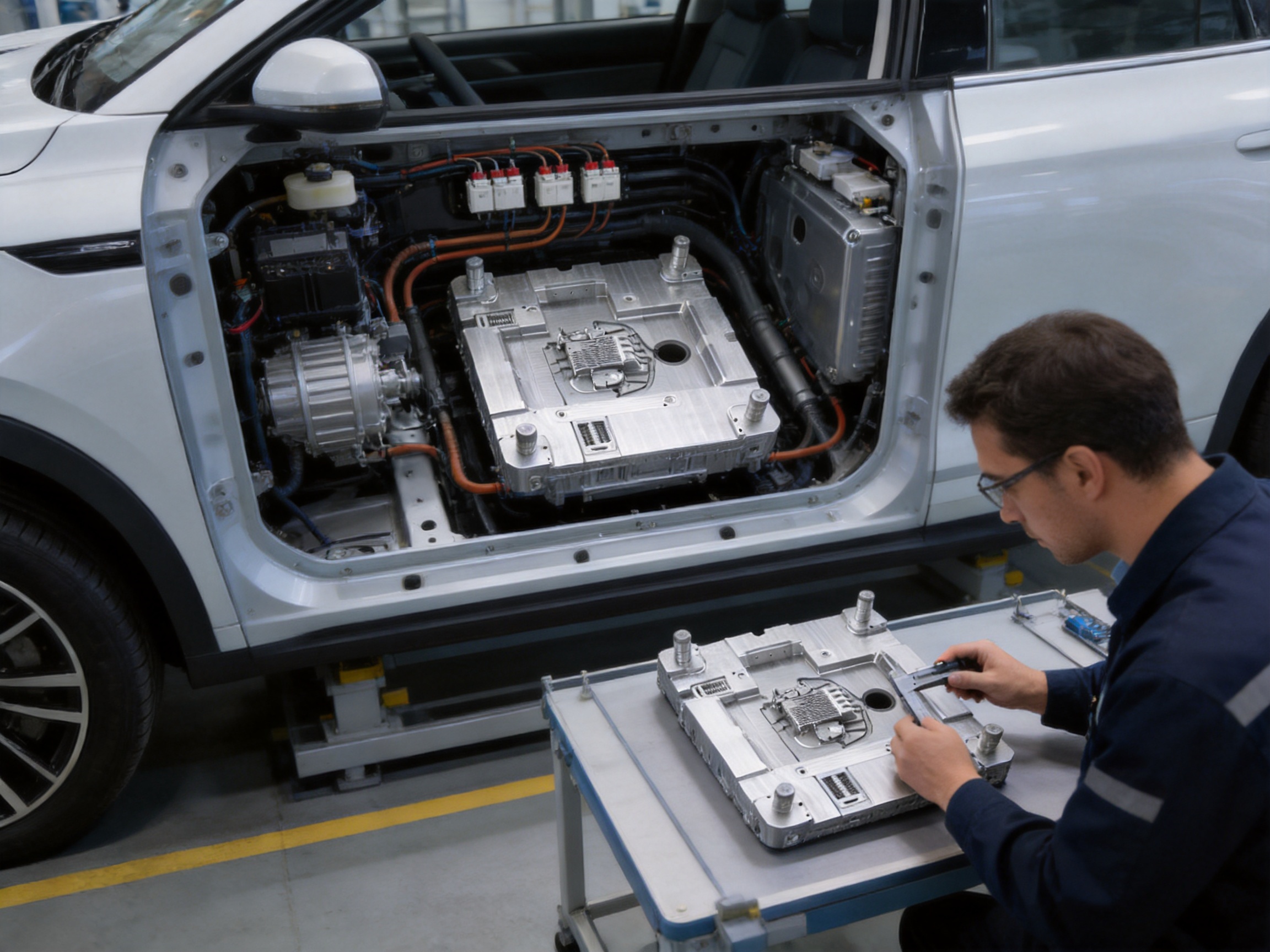
New energy vehicles depend on compact, reliable, and thermally stable electronic control systems. Components such as motor control units, vehicle control units, battery management systems, power distribution modules, and charging controllers must operate continuously in demanding conditions. Their housings are not simple protective covers. They are engineered structures that support electronic components, protect sensitive circuits from moisture and contamination, dissipate heat, maintain dimensional stability, and provide secure interfaces for vehicle installation.
The die casting mold used to produce a controller housing has a direct influence on all of these functions. A well-designed mold supports accurate wall thickness, stable casting quality, efficient filling, controlled solidification, reliable sealing surfaces, and repeatable production. By contrast, a poorly engineered mold may produce porosity, deformation, flash, dimensional variation, inadequate cooling performance, or premature tool failure.
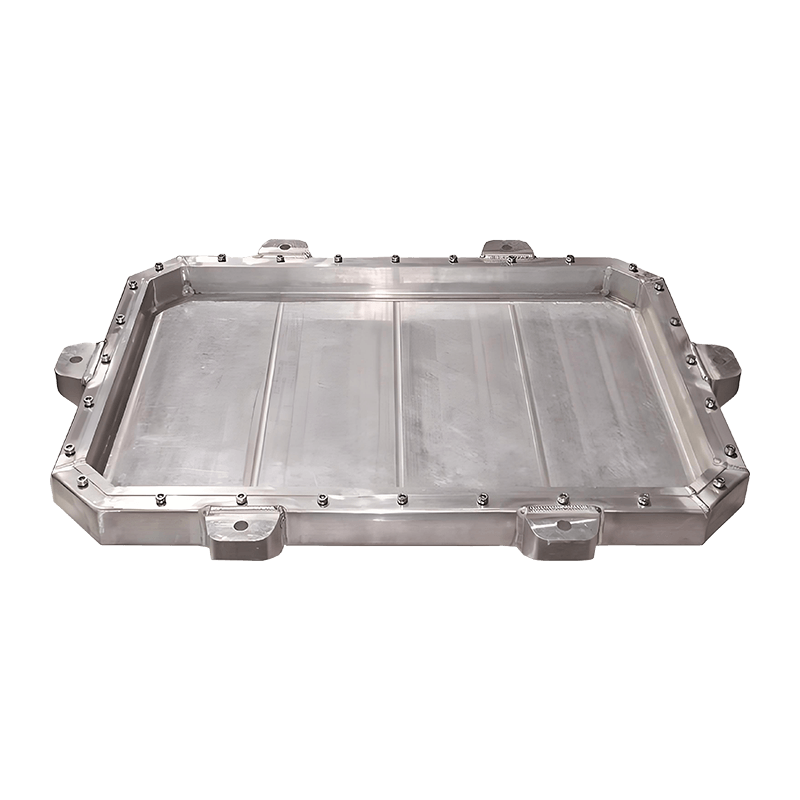
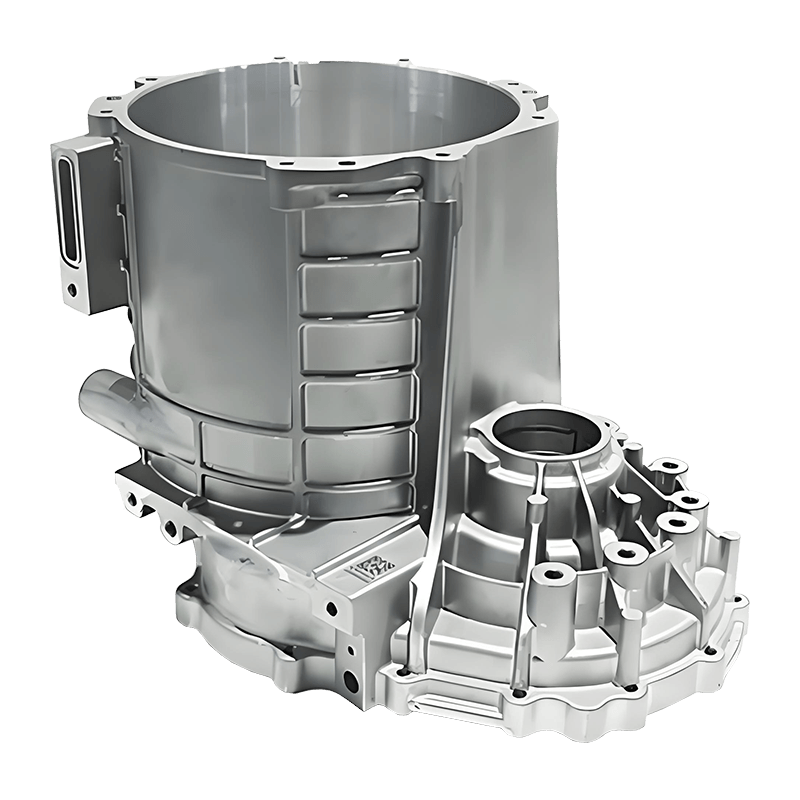
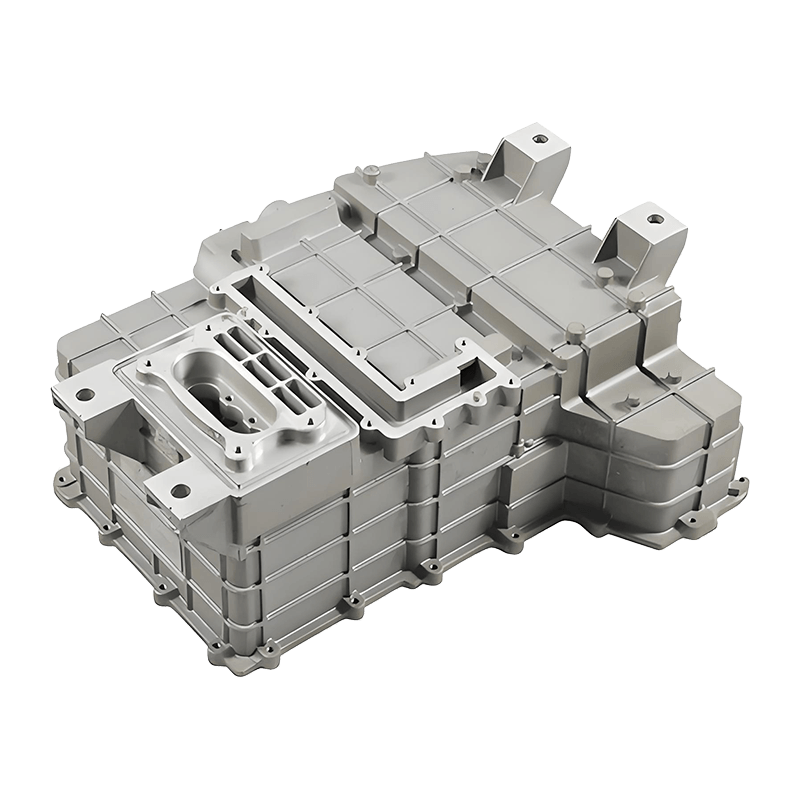
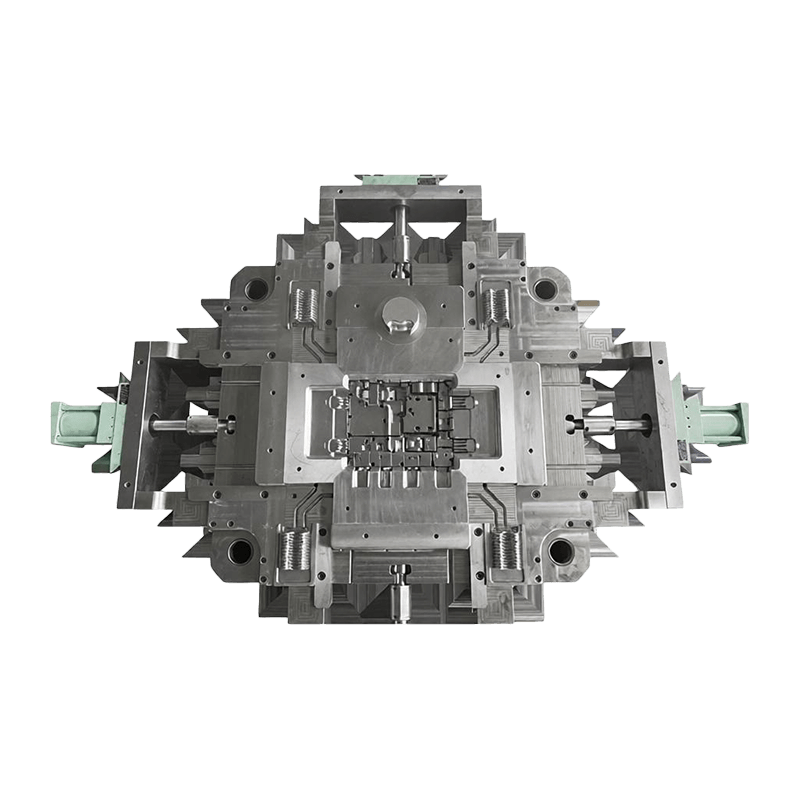
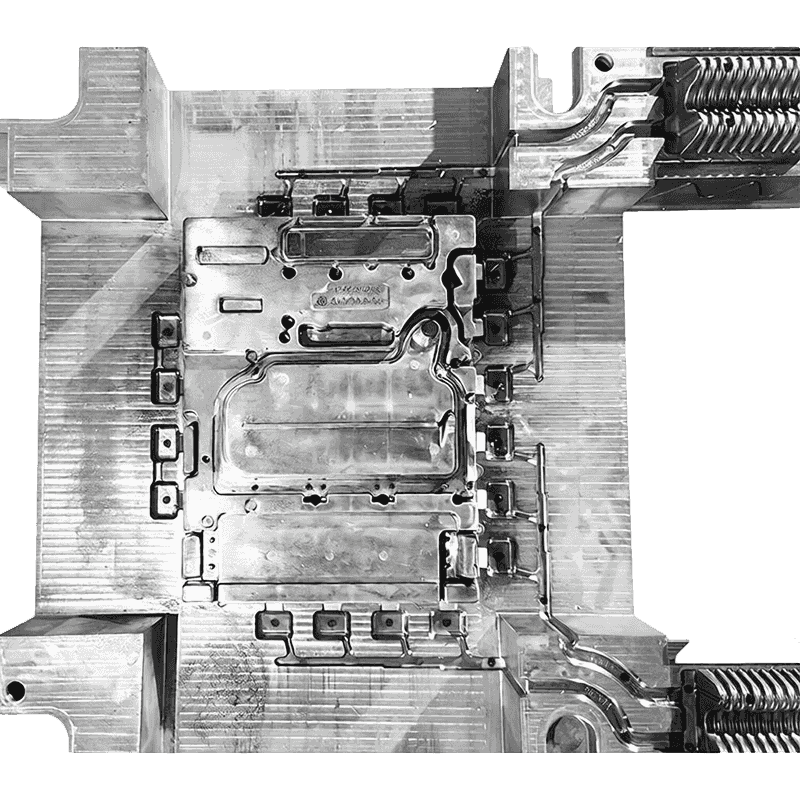
The Die Casting NIO Controller Housing Mold is developed for the production of aluminum alloy housings used in new energy vehicle electronic control systems. It is intended for applications such as motor control units, vehicle control units, and related controller assemblies. The mold combines precision design, advanced machining, optimized cooling, controlled die-casting performance, and carefully planned finishing processes to help manufacturers achieve consistent, high-quality housing components.
Manufactured by Ningbo Dinghong Mould Co., Ltd., the product benefits from an integrated manufacturing capability covering mold design, mold-flow analysis, precision machining, die casting, finishing, inspection, and quality management. This integrated approach allows the mold supplier to consider not only tool construction but also the final performance of the cast housing, the requirements of electronic assembly, and the efficiency of mass production.
This article explains the product’s structure, application value, manufacturing process, quality advantages, customization capabilities, and suitability for new energy vehicle programs. It also examines how the mold compares with less specialized alternatives and why integrated die-casting expertise is important when producing complex aluminum alloy controller housings.
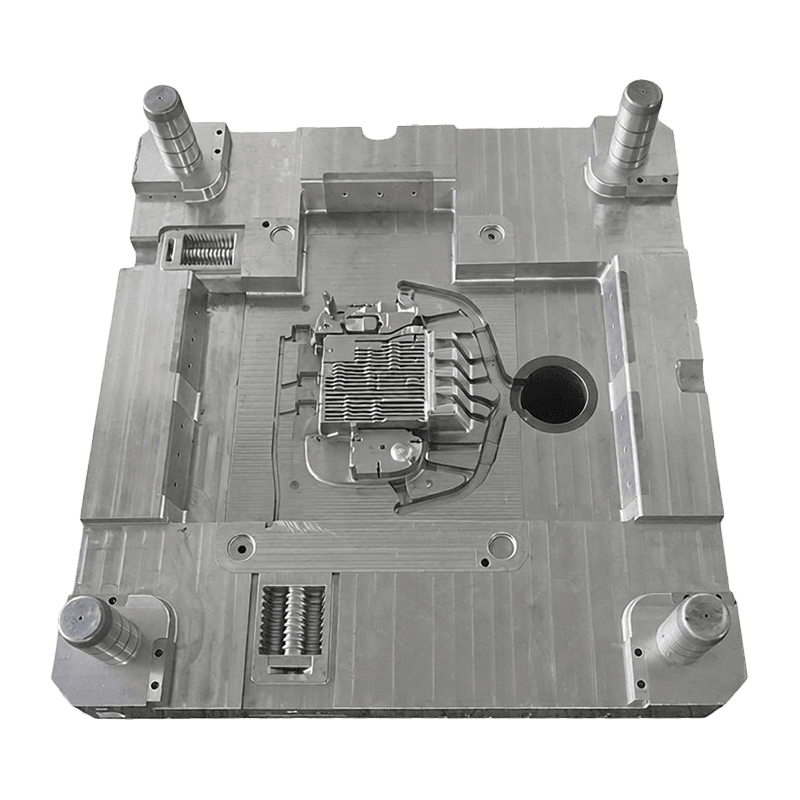
Die Casting NIO Controller Housing Mold
The Die Casting NIO Controller Housing Mold is a precision tooling solution for producing aluminum alloy controller housings. The housing may contain mounting bosses, sealing grooves, connector openings, ribs, heat-dissipation features, positioning structures, and internal support elements. Each feature must be formed accurately and remain stable throughout repeated production cycles.
Controller housing molds are generally designed around the functional requirements of the electronic system installed inside the casting. The mold must support an exterior shape that fits the available vehicle space while also creating an internal cavity that protects the control module. At the same time, the casting must remain sufficiently lightweight for vehicle efficiency objectives. This creates a demanding balance between structural strength, wall thickness, thermal performance, casting reliability, and production cost.
Aluminum alloy is widely used for these housings because it offers a useful combination of low density, thermal conductivity, corrosion resistance, and castability. However, aluminum die casting also requires careful control of filling behavior and solidification. Thin walls, deep ribs, narrow passages, and complex transitions can increase the risk of incomplete filling or trapped gas. The mold therefore requires a carefully engineered gating system, overflow arrangement, venting solution, cooling layout, and ejection structure.
The mold is suitable for high-volume manufacturing environments in which repeatability is essential. Once the tool has been validated, it can support the production of large quantities of housings with consistent dimensions and surface quality. This is especially valuable for automotive customers that require stable delivery, controlled process capability, traceable quality, and predictable maintenance requirements.
The mold can be applied to aluminum alloy housings for a variety of electronic control systems used in new energy vehicles. Typical applications include motor control units, vehicle control units, battery control modules, power electronics housings, charging control systems, electronic axle controllers, and integrated control assemblies.
Motor control units regulate the operation of electric drive systems and may experience substantial heat generation and vibration. Their housings must protect internal circuits while providing an efficient path for heat transfer. Vehicle control units coordinate multiple vehicle functions and may require numerous connectors, mounting locations, and sealing interfaces. Battery-related controllers must provide reliable protection in an environment where electrical safety, thermal management, and environmental resistance are critical.
The exact housing geometry depends on the customer’s electronic architecture, installation space, connector layout, fastening method, and cooling strategy. For this reason, controller housing molds are commonly customized according to three-dimensional data, technical drawings, casting alloy, production quantity, die-casting machine, and post-processing requirements.
The mold is engineered to support several important functions in the finished casting:
First, it creates the external shell that protects the electronic controller from impact, dust, moisture, and other environmental influences. Second, it forms accurate mounting and locating features so that the housing can be installed securely in the vehicle. Third, it supports sealing surfaces and grooves that help prevent fluid or contaminant ingress. Fourth, it can incorporate ribs and structural features that increase rigidity without adding unnecessary material. Fifth, it may include heat-dissipation features that improve thermal transfer from the controller to the surrounding structure or cooling system.
These functions are closely related. A sealing surface that is slightly distorted may cause leakage. A mounting boss with dimensional variation may create assembly stress. A thin wall with internal porosity may reduce mechanical strength or compromise machining. A poorly positioned rib may interfere with electronic components. The mold must therefore be designed as a complete functional system rather than as a basic cavity used only to reproduce an outer shape.
New energy vehicle controller housings often contain complex three-dimensional features within a relatively compact envelope. The casting may require multiple stepped surfaces, intersecting ribs, threaded-hole locations, connector windows, bosses, seals, and cooling structures. The mold must reproduce these details accurately while allowing the casting to be removed safely after solidification.
Precision mold design helps control critical dimensions and reduces the amount of correction required during downstream machining. Accurate cavity construction also improves consistency between production batches. When the housing is used with electronic components and sealing elements, dimensional repeatability becomes particularly important because small deviations can affect assembly alignment or compression of the sealing system.
Controller housings are often expected to protect electronics from water, dust, oil mist, road contaminants, and humidity. Sealing performance depends on the overall product design, gasket or seal selection, machining quality, fastening system, and casting integrity. The mold contributes by producing stable sealing planes, grooves, flanges, and locating surfaces.
A well-engineered mold reduces the risk of excessive flash, distortion, and local surface irregularity near sealing areas. It also supports a casting process that minimizes defects which could later develop into leakage paths. Where machining is required, the mold can be designed with suitable allowances so that final sealing surfaces can be finished accurately and consistently.
Electronic control systems generate heat during operation. If heat is not transferred away effectively, the operating temperature of the electronics may increase, potentially affecting service life, performance, or reliability. Aluminum alloy is beneficial in this respect because of its thermal conductivity, but the housing geometry also plays an important role.
Controller housing molds can be designed to form external fins, internal ribs, mounting interfaces, thermal contact areas, and other features that support heat transfer. The arrangement must be carefully balanced with casting feasibility. Very thin or tall heat-dissipation features may be difficult to fill and may be vulnerable to deformation. Mold-flow analysis and practical die-casting experience help determine feature dimensions, draft angles, transitions, and cooling arrangements that are suitable for stable production.
The housing must maintain the position of the controller in the vehicle and withstand vibration, shock, thermal cycling, and assembly forces. Mounting bosses and reinforcement ribs are therefore important design elements. The mold supports the creation of these structures while controlling wall transitions that could otherwise produce stress concentration or casting defects.
Uniform transitions and appropriate fillets can improve the structural behavior of the casting. Properly positioned ejector components also help avoid unnecessary marks or localized stress in important areas. When the mold design, alloy selection, and casting parameters are considered together, the finished housing can achieve a suitable combination of weight, strength, rigidity, and manufacturability.
Automotive production requires more than a technically correct first sample. The mold must remain stable through repeated cycles and support a predictable production rhythm. Efficient cooling, durable mold components, optimized ejection, and accessible maintenance features all contribute to productivity.
A properly balanced mold can reduce cycle-time variation and help maintain consistent casting quality. Efficient runner and overflow design may also reduce unnecessary material waste, although the final result depends on the specific casting geometry and process settings. When trimming and finishing are considered during the initial mold design, the production line can reduce manual intervention and improve overall throughput.
Controller housings may require trimming, deburring, CNC machining, leak testing, surface treatment, shot blasting, cleaning, or assembly operations after die casting. The mold should be designed with these steps in mind. Extra material may be provided where machining is required, while non-functional areas can be configured to minimize trimming difficulty.
Accurate reference points and stable datum structures make later machining easier. Clear separation between functional surfaces and trimming regions helps prevent damage to sealing or mounting areas. The goal is to make the complete manufacturing route efficient, not simply to produce a casting that leaves the die successfully.
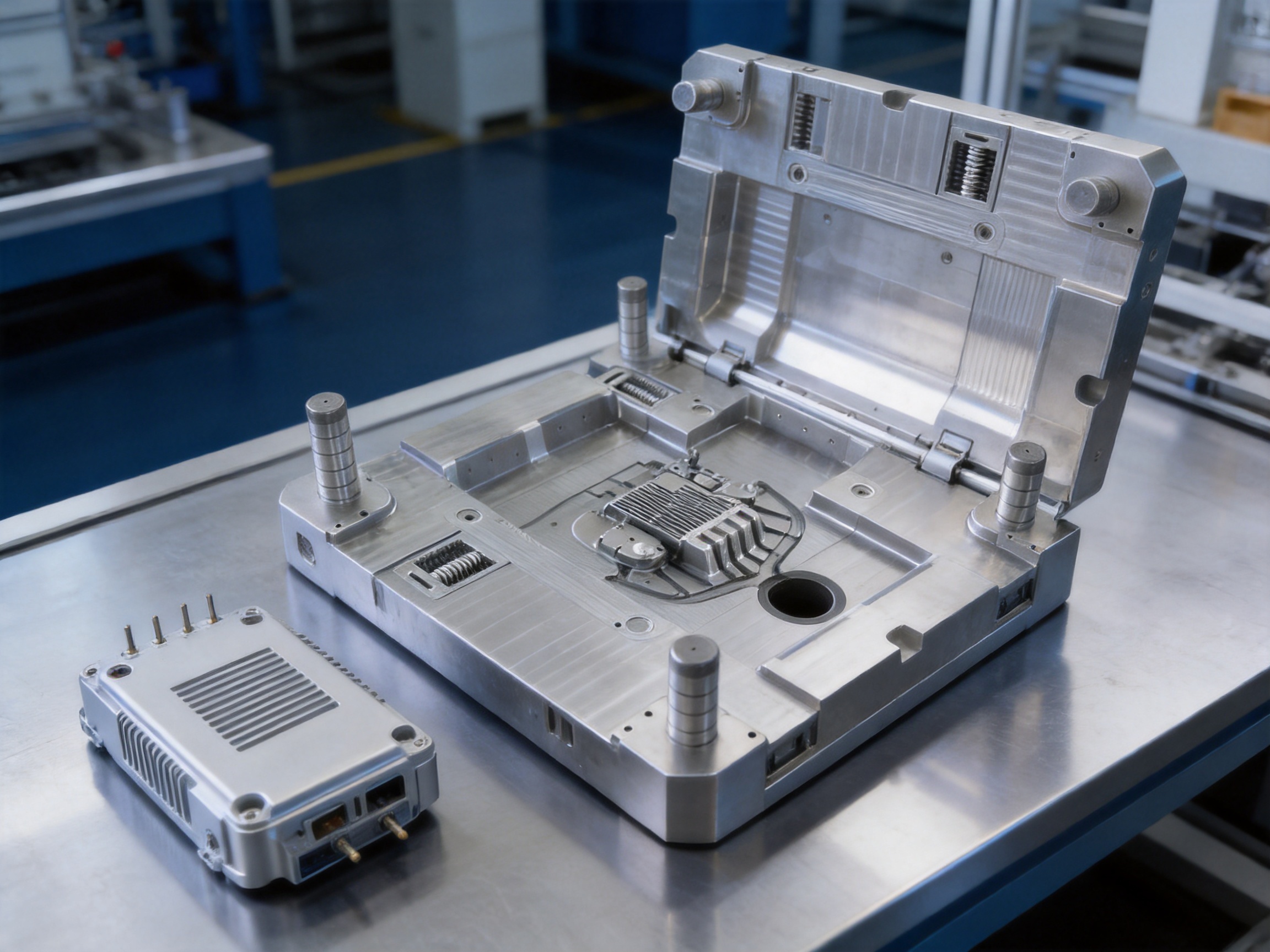
The design process begins with a review of the customer’s three-dimensional model, two-dimensional drawings, material specification, performance requirements, production forecast, and machine conditions. The mold designer evaluates the housing’s wall thickness, deep cavities, undercuts, mounting features, sealing interfaces, connector openings, ribs, and potential machining areas.
The team also considers the direction in which the casting will open, the position of the parting line, the draft angle required for release, the placement of slides or lifters, and the location of ejector components. For an automotive controller housing, these decisions can influence both the appearance and the function of the final product. A parting line located across a sealing surface, for example, may increase the risk of flash or require additional finishing.
Mold-flow analysis is an important tool for evaluating the proposed design before steel is cut. It can help visualize how molten aluminum fills the cavity, where air may become trapped, how the metal cools, and where shrinkage or porosity risks may occur. This information allows the design team to adjust the gate location, runner dimensions, overflow positions, venting strategy, cooling layout, and local wall geometry.
Analysis does not replace practical engineering judgment. Simulation results must be interpreted alongside the selected alloy, die-casting machine, injection conditions, thermal behavior of the mold, and customer quality requirements. However, early analysis can reduce design uncertainty and identify potential problems before mold manufacturing begins.
For complex controller housings, the ability to compare alternative filling plans is especially valuable. A suitable filling pattern can reduce turbulence, improve the joining of flow fronts, and limit the amount of air carried into critical areas. The design team may also use simulation to assess whether thin ribs or remote corners are likely to fill adequately and whether local cooling adjustments are necessary.
The parting line should be selected to support reliable mold opening, simple casting removal, acceptable surface quality, and efficient trimming. It must account for the housing’s functional surfaces and the position of any slides or inserts. Draft angles help the casting release from the die, but excessive draft can alter the design or reduce available internal space. The mold designer therefore seeks a practical balance between release performance and dimensional requirements.
Where the housing includes deep pockets, side openings, or undercut features, movable slides or replaceable inserts may be required. These components must be designed to withstand thermal and mechanical loads while maintaining accurate alignment. Wear-resistant materials and suitable guidance structures can help preserve dimensional stability during production.
The gating system directs molten aluminum into the cavity. Its design influences filling speed, flow direction, pressure distribution, surface quality, and the likelihood of defects. Controller housings with broad thin walls or multiple branches may require a carefully distributed gate arrangement to achieve balanced filling.
Overflow wells provide locations where the initial or colder material, air, and contaminants can be directed away from important product areas. Vents allow air and gases to escape as the cavity fills. Their position and size must be selected according to the filling pattern and the geometry of the housing. Inadequate venting can contribute to gas porosity, incomplete filling, surface defects, or inconsistent mechanical performance.
The gating and venting system also affects post-casting work. If overflows and runners are positioned in accessible non-functional regions, trimming can be faster and less likely to damage the housing. This is one example of how mold design directly influences the entire manufacturing process.
Die-casting molds operate under repeated thermal cycles. Cooling channels must remove heat efficiently while maintaining appropriate temperature balance across the cavity. Uneven cooling can lead to differential shrinkage, distortion, soldering, thermal fatigue, or inconsistent surface quality.
The cooling layout for a controller housing should consider thick sections, bosses, ribs, deep pockets, and areas close to sealing or machining surfaces. Cooling lines may be arranged to provide more effective heat removal in regions that solidify slowly. The design must also maintain adequate steel thickness and avoid weakening critical mold components.
Temperature control is not only a production concern. It can influence the dimensional stability and performance of the finished housing. A balanced thermal design supports more consistent cycle times and reduces the need for frequent process adjustments.
The ejection system must remove the casting without excessive force, distortion, or damage. Ejector pins, sleeves, blocks, and other components are positioned according to the strength and geometry of the casting. Areas with adequate wall support are preferred for ejection, while sealing surfaces and visible areas may require special consideration.
In complex housings, ejection must be coordinated with slides, inserts, runners, and any vacuum or cooling elements. The casting should release smoothly and consistently throughout the production cycle. Poorly designed ejection can cause sticking, deformation, ejector marks, or unplanned downtime.
Mold durability depends significantly on the selection and preparation of tool steel. Die-casting molds are exposed to high temperatures, thermal shock, mechanical pressure, molten aluminum erosion, and repeated opening and closing. Critical inserts and cavity components therefore require materials and heat-treatment conditions appropriate for the expected production environment.
Before machining, the steel is prepared according to the mold structure and production requirements. Critical components may receive heat treatment and stress-relief processes to improve hardness, toughness, and dimensional stability. The precise material grade and treatment route should be selected based on the casting alloy, cycle conditions, expected shot count, cavity complexity, and maintenance plan.
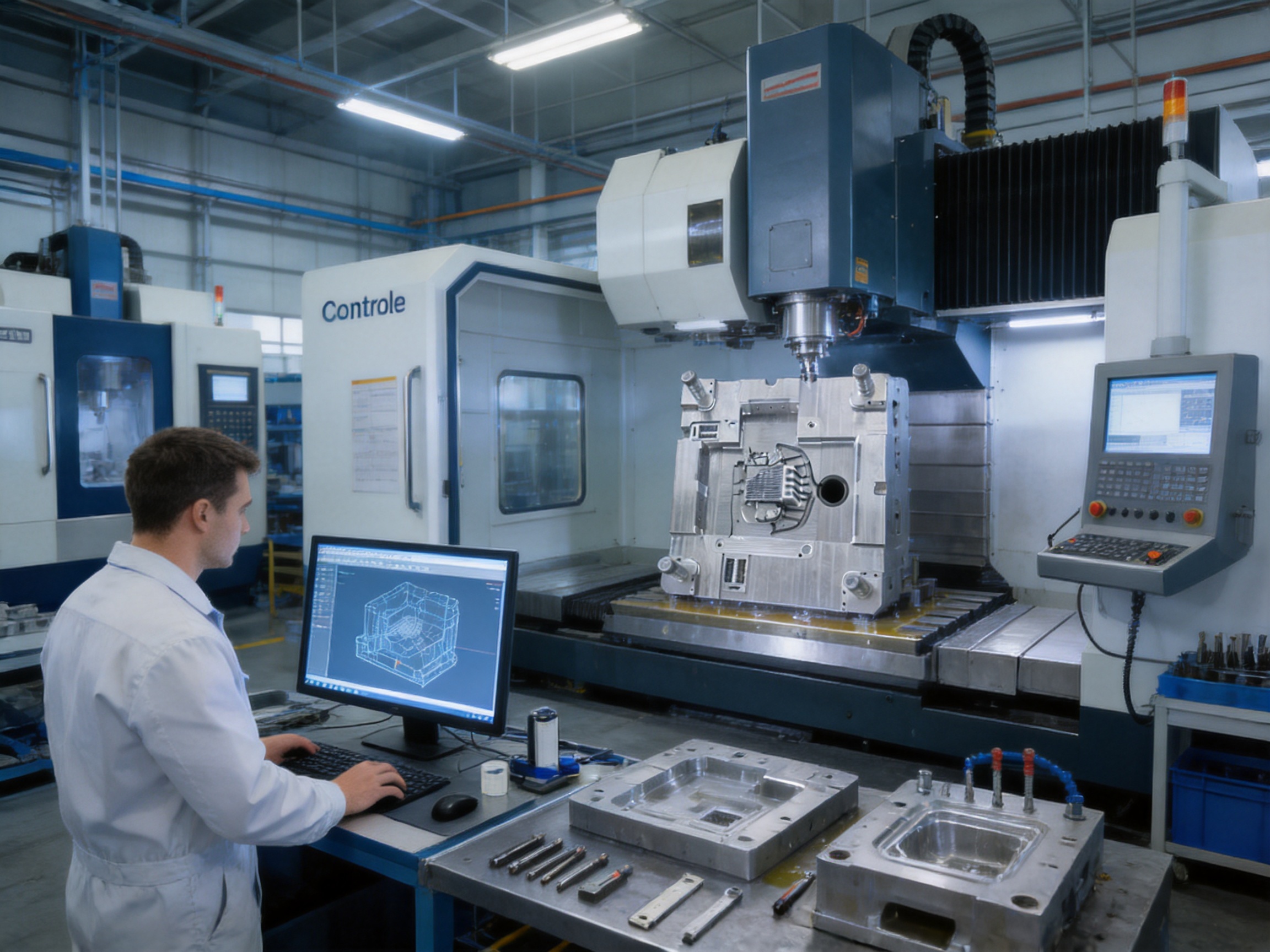
High-precision CNC machining centers are used to produce cavity plates, core components, inserts, slides, cooling features, and other mold elements. Computer-controlled machining allows complex three-dimensional surfaces to be reproduced with repeatable accuracy. It also supports the use of digital product data from the design stage.
Machining strategy is important for both accuracy and surface quality. Rough machining removes the majority of material efficiently, while semi-finishing and finishing operations gradually achieve the required geometry. Tool selection, cutting parameters, fixture stability, and inspection between operations all influence the final result.
For controller housing molds, machining must preserve thin edges, sharp functional transitions, sealing surfaces, rib details, and connector-related features. The process should also minimize deformation or residual stress in components that will later experience thermal cycling.
Electrical discharge machining is useful for producing deep, narrow, intricate, or difficult-to-cut features. It can support the manufacture of corners, slots, ribs, special inserts, and other details that may not be efficiently produced by conventional milling alone.
EDM parameters must be controlled to achieve the appropriate balance between removal rate, accuracy, and surface condition. After EDM, the working surface may require polishing or other finishing operations depending on the required casting appearance and release performance. Careful electrode design is also important for transferring small or complex features accurately.
After machining, mold components are inspected, fitted, and assembled. Working surfaces may be polished to improve release and casting appearance. The level of polishing depends on the product area, surface requirements, machining allowance, and downstream finishing process.
Fitting requires close attention to parting surfaces, inserts, slides, ejector systems, cooling connections, and alignment structures. Proper fitting helps prevent flash and supports smooth operation during production. The assembled mold is checked for movement, interference, alignment, cooling passage integrity, and accessibility for maintenance.
Before formal production, the mold is tested through trial casting. Trial results are evaluated for filling, surface condition, flash, dimensions, porosity indicators, ejection behavior, cycle stability, and trimming requirements. If necessary, modifications are made to gates, overflows, vents, cooling channels, parting areas, or local geometry.
Trial casting is a critical stage because it connects theoretical design with actual production behavior. Even a well-prepared simulation may require practical adjustment when the mold is operated on the intended machine using the specified alloy and process settings. A structured validation process reduces the risk of transferring unresolved problems to mass production.
Controller housings commonly require removal of runners, overflows, and flash. Ningbo Dinghong Mould Co., Ltd. has capabilities in die casting and finishing, including automated trimming lines and related production equipment. This integrated capacity allows the mold design to be evaluated from the perspective of the finished component.
When trimming requirements are considered during tooling development, the locations of runners, overflows, ejector marks, and parting lines can be planned more effectively. This can reduce manual correction, help protect functional surfaces, and improve consistency across large production runs.
Ningbo Dinghong Mould Co., Ltd. provides mold design, mold manufacturing, die casting, finishing, and trade services within one organization. This integrated model is valuable because the performance of a die-casting mold cannot be separated completely from the casting process. Tool design decisions influence machine settings, cycle time, trimming, inspection, and final product quality.
A supplier with both tooling and die-casting experience can assess whether a proposed feature is realistic for production, whether a gate arrangement is practical, and whether a design may create excessive finishing work. The same organization can also use production feedback to improve future molds and support troubleshooting after delivery.
The company primarily manufactures automotive parts, household appliance parts, telecommunication parts, and other aluminum alloy products. This product experience supports an understanding of thin-wall casting, dimensional control, mounting structures, surface requirements, and production repeatability.
Automotive components often require stronger process discipline than general industrial products because they may be exposed to vibration, temperature changes, moisture, and long service periods. They also require stable documentation, controlled inspection, and close attention to customer-specific standards. Experience across automotive and related aluminum alloy applications helps the supplier respond to these requirements.
The company operates a manufacturing facility of approximately 15,000 square meters and uses high-precision CNC machining centers, EDM equipment, die-casting machines, automated trimming lines, and testing equipment. This equipment base supports the main stages required for a controller housing mold, from initial steel processing to final casting validation.
Modern equipment improves repeatability, but equipment alone does not guarantee quality. It must be supported by capable programming, tooling knowledge, maintenance, inspection, and process management. The combination of technical personnel, production equipment, and standardized procedures enables more reliable manufacturing outcomes.
Ningbo Dinghong Mould Co., Ltd. has obtained ISO 9001 and IATF 16949 quality management system certifications. ISO 9001 provides a general framework for controlled quality management, while IATF 16949 is specifically associated with automotive quality requirements.
These systems support documented procedures, traceability, process control, corrective action, supplier management, inspection planning, and continual improvement. For customers purchasing controller housing molds, such systems provide a more structured basis for project communication and quality assurance.
Quality management is particularly important for tooling because a mold may remain in use for an extended period and affect thousands or millions of castings. Clear records of steel, heat treatment, machining, inspection, trial results, modifications, and maintenance recommendations can help customers manage the tool throughout its service life.
An experienced design team supported by advanced software can transform customer product data into a practical mold solution. Digital tools help evaluate parting lines, draft, interference, slides, cooling channels, ejection, and casting simulation results.
Designers must also apply manufacturing judgment. A mathematically correct model may not be the best production solution if it is difficult to machine, repair, cool, polish, or maintain. The combination of software-assisted analysis and practical mold-building experience supports more balanced decisions.
The company’s sales network covers China, South America, Southeast Asia, and other international markets, with plans to expand into additional regions. International project experience can help a supplier understand different documentation practices, shipping conditions, customer approval procedures, and communication requirements.
For overseas customers, effective communication is important from the early design stage through mold approval and production support. Technical drawings, inspection reports, trial-casting feedback, packaging requirements, spare-parts lists, and maintenance guidance should be prepared clearly so that the customer can operate and manage the tool effectively.
A general-purpose mold maker may be able to produce a basic aluminum casting mold, but controller housings require more specialized consideration. They combine structural, sealing, thermal, electrical, and assembly requirements. The mold supplier must understand how each feature functions in the finished vehicle system.
The integrated capabilities of Ningbo Dinghong Mould Co., Ltd. allow the mold to be considered together with die casting and finishing. This helps reduce the gap between the tool design and the customer’s final production needs. Instead of focusing only on cavity geometry, the project can address filling behavior, trimming, machining, inspection, and assembly performance.
Controller housings may include numerous ribs, bosses, windows, interfaces, and thermal features. Advanced CNC machining, EDM, mold-flow analysis, and experienced fitting personnel provide a stronger foundation for manufacturing these features than a simple, low-complexity tooling approach.
Complexity must still be managed carefully. Not every feature should be formed directly in the die, and not every thin section is suitable for high-pressure die casting. Engineering review helps distinguish between features that can be cast reliably and those better handled through machining or secondary operations.
Production stability is a major competitive factor. A low initial mold price may become less attractive if the tool requires frequent repairs, produces inconsistent castings, or creates extensive finishing work. A mold designed with appropriate cooling, durable components, controlled ejection, accessible maintenance areas, and balanced filling can reduce the total cost of ownership.
Process stability also supports customer scheduling. Consistent cycle behavior makes it easier to plan machine capacity, material consumption, inspection resources, and delivery dates. For automotive programs, these benefits can be more important than a small difference in initial tooling cost.
Early mold-flow analysis, structured design review, precision machining, trial casting, and quality inspection help identify problems before serial production. This reduces the risk of late-stage redesign, delayed approval, or repeated tooling modification.
No engineering process can eliminate every development risk, especially when the housing design or process conditions change. However, a systematic supplier can identify potential problems earlier and respond with organized corrective action.
Controller housing designs differ between vehicle platforms and electronic architectures. The mold should therefore be adaptable to customer requirements rather than limited to a fixed standard shape. Customization may involve cavity dimensions, connector openings, mounting points, cooling features, sealing structures, alloy selection, machine compatibility, and post-processing.
A company with its own design and production resources can coordinate these changes more efficiently. The customer can communicate technical requirements directly to the engineering team, while production feedback can be incorporated into the design without relying entirely on multiple external subcontractors.
Steel and other mold materials should be verified before machining. Documentation may include material certificates, heat-treatment information, hardness data, and identification records. Proper material control helps ensure that critical components have the expected mechanical and thermal properties.
Mold components and trial castings require dimensional inspection against approved drawings or three-dimensional data. Critical dimensions may include sealing planes, mounting holes, connector interfaces, wall thickness, overall envelope, cavity depth, and reference datums.
Inspection equipment may include coordinate measuring systems, height gauges, gauges, optical equipment, and other appropriate instruments. The inspection method should reflect the tolerance and functional importance of each feature.
Visual inspection can identify flash, cold shuts, flow marks, cracks, dents, machining damage, polishing defects, and other surface conditions. Although visual inspection cannot replace dimensional or internal quality testing, it remains an important part of the overall control process.
Sealing surfaces and connector areas require particular attention because small defects may interfere with assembly or environmental protection. Cosmetic requirements should be established according to the customer’s technical specification and the location of the surface on the vehicle.
Aluminum die castings can contain internal porosity or inclusions that are not visible from the exterior. Depending on the housing’s function, internal quality may be evaluated through leak testing, X-ray inspection, computed tomography, density testing, machining observation, or other methods.
The appropriate inspection plan depends on the product design and customer requirements. Areas near sealing surfaces, threaded locations, structural bosses, and thermal interfaces may require special attention. Process control is also important because inspection alone cannot correct an unstable filling or solidification process.
Documentation may include mold design records, material information, machining inspection results, trial-casting reports, dimensional data, process conditions, modification records, and maintenance instructions. These documents assist with customer approval, future troubleshooting, and lifecycle management.
A successful mold project begins with accurate technical input. The customer should provide the latest product model, drawings, alloy requirements, annual volume, machine information, expected service life, quality standards, sealing requirements, surface treatment needs, and downstream machining details.
If the housing is still under development, the supplier can review manufacturability and identify features that may create casting or tooling challenges. Early cooperation often provides more options than late modification after the product geometry has been frozen.
After initial evaluation, the supplier prepares a mold concept covering the parting line, gating, overflow, venting, cooling, ejection, slides, inserts, and expected production route. The concept can be reviewed with the customer before detailed manufacturing begins.
Design approval should confirm critical dimensions, appearance expectations, sealing areas, machining allowances, casting alloy, cycle assumptions, and inspection criteria. Clear approval reduces misunderstandings and establishes a reference for later modifications.
Trial casting provides an opportunity to compare actual samples with the approved design. The customer may evaluate assembly fit, sealing, machining behavior, connector alignment, surface condition, and other functional requirements. Any required changes should be recorded and verified during subsequent trials.
For new energy vehicle programs, validation may involve several departments, including mold engineering, casting production, machining, electronics assembly, quality control, and vehicle integration. A supplier that can support multiple stages of the process can simplify technical coordination.
Die-casting molds require regular inspection and maintenance. Wear may occur at parting surfaces, slides, inserts, ejector components, gates, vents, and areas exposed to high thermal stress. Maintenance recommendations should identify inspection intervals, lubrication points, replaceable components, and signs of potential failure.
Spare inserts and wear components can reduce downtime when replacement is necessary. A maintenance plan should also include cleaning of cooling channels, checking for leakage, verifying alignment, and inspecting critical dimensions after extended production.
Motor control units manage electrical power delivered to the traction motor. Their housings may need to accommodate high-current connections, control boards, sensors, cooling structures, and multiple fastening points. The mold must support a housing that protects these elements while assisting thermal management.
Vehicle control units coordinate information and commands across different systems. Their housings may require numerous connector openings and mounting interfaces. Dimensional accuracy is important because connectors and wiring harnesses must align correctly during vehicle assembly.
Battery management and power electronics systems may require housings with high environmental protection, stable sealing, and resistance to thermal cycling. Aluminum die casting can provide a lightweight structure with useful heat-transfer properties, while the mold helps form the specific features required by the electrical architecture.
On-board chargers, DC-DC converters, and related energy conversion systems generate heat and may be installed in confined spaces. Their cast housings may include heat-dissipation features, mounting structures, connector interfaces, and sealing areas. Precision tooling supports the repeatability required for these integrated assemblies.
| Parameter | Why It Matters | Typical Review Focus |
|---|---|---|
| Housing material | Influences castability, strength, thermal behavior, and corrosion performance. | Aluminum alloy grade, flow characteristics, heat-treatment expectations, and surface requirements. |
| Part geometry | Determines cavity complexity, slides, inserts, draft, and ejection. | Wall thickness, ribs, bosses, deep pockets, openings, undercuts, and transitions. |
| Sealing structure | Affects environmental protection of electronic components. | Sealing planes, grooves, gasket compression, flash control, and machining allowance. |
| Thermal design | Influences controller operating temperature and service life. | Cooling fins, thermal contact surfaces, thick sections, and mold temperature balance. |
| Die-casting machine | Determines available injection force, shot volume, die dimensions, and process range. | Machine capacity, tie-bar spacing, platen size, injection conditions, and automation compatibility. |
| Production volume | Influences mold steel, replaceable inserts, maintenance design, and cycle optimization. | Annual quantity, expected service life, spare parts, and repair strategy. |
| Post-processing | Determines machining allowances, trimming access, and reference features. | CNC operations, deburring, leak testing, surface treatment, and cleaning. |
| Inspection requirements | Defines how quality will be verified and documented. | Dimensional inspection, internal quality, leak testing, appearance, and traceability. |
The mold is used to produce aluminum alloy housings for new energy vehicle electronic controllers. These may include motor control units, vehicle control units, battery-related controllers, charging modules, and other power electronics assemblies. It forms the housing’s external and internal features, including mounting structures, sealing interfaces, ribs, connector openings, and heat-dissipation elements where required by the design.
Aluminum alloy offers low weight, good thermal conductivity, useful corrosion resistance, and suitability for high-pressure die casting. These properties make it practical for vehicle electronics that require both structural protection and heat management. The final material choice should always be confirmed according to the customer’s mechanical, thermal, electrical, corrosion, and processing requirements.
Yes. Controller housings vary according to vehicle platform, electronic architecture, connector arrangement, installation position, cooling strategy, and sealing method. Mold design can be customized based on three-dimensional product data, drawings, alloy, production quantity, machine specifications, and required secondary operations.
Mold-flow analysis helps evaluate filling, air evacuation, solidification, cooling, and potential defect locations before manufacturing. It can guide the design of gates, runners, overflows, vents, cooling channels, and local geometry. The analysis is used together with practical die-casting experience and actual trial-casting results.
Ningbo Dinghong Mould Co., Ltd. has obtained ISO 9001 and IATF 16949 quality management system certifications. These certifications support controlled procedures, documentation, process management, traceability, corrective action, and continual improvement in accordance with the scope of the certified systems.
The company’s capabilities include mold design, mold manufacturing, die casting, finishing, and trade. It also operates die-casting machines, automated trimming lines, CNC machining centers, EDM equipment, and testing resources. This integrated capability allows the mold and the finished aluminum casting to be considered together.
Useful information includes the product model, two-dimensional drawings, three-dimensional data, material specification, annual demand, expected tool life, die-casting machine details, critical dimensions, sealing requirements, surface expectations, machining processes, inspection standards, and delivery schedule. More complete information allows the supplier to prepare a more accurate technical and commercial proposal.
The mold can be designed to create stable sealing planes, grooves, flanges, and locating features. Proper gating, venting, cooling, and process control also help reduce defects that may affect leakage performance. Final sealing depends on the complete system, including casting integrity, machining, gasket design, fastening, and validation testing.
Routine maintenance may include cleaning, lubrication, inspection of parting surfaces, checking slides and ejectors, verifying cooling passages, removing deposits, monitoring wear, and replacing damaged inserts or other consumable components. A maintenance schedule should be established according to the casting alloy, production volume, cycle conditions, and observed wear.
Its suitability comes from the combination of precision mold design, aluminum die-casting capability, mold-flow analysis, CNC and EDM machining, trial validation, finishing resources, and automotive-oriented quality management. These capabilities support the dimensional stability, repeatability, sealing performance, thermal functionality, and production efficiency required by new energy vehicle controller housings.
The Die Casting NIO Controller Housing Mold is a specialized tooling solution for a demanding category of new energy vehicle components. Controller housings must protect electronics, support installation, manage heat, resist environmental exposure, and maintain stable dimensions throughout production and service. These requirements make mold design a critical part of the product-development process.
The main advantages of the mold include precision for complex geometry, support for sealing and thermal-management features, stable ejection, compatibility with downstream machining and trimming, and suitability for repeatable high-volume production. Its value is increased when the mold is developed through a complete engineering process that includes product-data review, mold-flow analysis, gating and venting design, cooling optimization, CNC machining, EDM, fitting, trial casting, and structured inspection.
Ningbo Dinghong Mould Co., Ltd. strengthens this product through integrated capabilities in mold design, mold manufacturing, die casting, finishing, and trade. Its experience with automotive, telecommunications, household appliance, and aluminum alloy products, combined with ISO 9001 and IATF 16949 quality management certifications, provides a structured foundation for serving new energy vehicle programs.
For customers evaluating a controller housing mold supplier, the most important consideration is not only the initial tooling quotation. Mold durability, production stability, casting quality, maintenance accessibility, technical communication, downstream finishing, and total lifecycle cost are equally important. A supplier capable of connecting design, tooling, die casting, finishing, and quality control can help reduce development risk and support more reliable production.
As vehicle electronics become more integrated and electric vehicle platforms continue to evolve, controller housings will require increasingly sophisticated combinations of lightweight construction, thermal performance, sealing, structural support, and dimensional accuracy. Precision die-casting molds designed around these requirements can provide a practical foundation for efficient, reliable, and scalable manufacturing.
1. International Organization for Standardization. Quality Management Systems: Fundamentals and Vocabulary.
2. International Automotive Task Force. Quality Management System Requirements for Automotive Production and Relevant Service Parts Organizations.
3. American Foundry Society. Die Casting Engineering and Process Control Principles.
4. NADCA. Product Specification Standards for Die Castings.
5. ASM International. Aluminum Alloy Processing and Die Casting Technology.
6. Davis, J. R. Aluminum and Aluminum Alloys: Applications and Engineering Properties.
7. Campbell, J. Complete Casting Handbook: Metal Casting Processes, Metallurgy, Techniques and Design.
8. Automotive electronics engineering practice covering enclosure design, sealing, thermal management, dimensional control, and production validation.
9. Supplier technical information concerning mold design, mold-flow analysis, CNC machining, EDM, die casting, finishing, quality management, and controller housing applications.

One large aluminum die casting can now replace what used to be 70 to 130 separately stamped and welded steel parts in a...
READ MOREMetal Injection Molding vs Die Casting: Start With the Part A buyer often arrives at this comparison with two very diff...
READ MOREA 12-week die casting mold build can look competitive on quote and still become the expensive option if the first trial...
READ MOREA 180 g aluminum housing with 1.8 mm walls and a ±0.10 mm bearing bore is quoted in the same week as a 12 g stainless s...
READ MORE

Sun Yuejun: +86-13806631860
Wang Shiyong: +86-15958891460 / 15058297768
Dove Yao: +86-18625086675


Copyright © Ningbo Dinghong Mould Co., Ltd. Rights Reserved. Custom Precision Die Casting Aluminum Alloy Parts Manufacturers
