
 English
 Español
 русский
 Français


Materials & Manufacturing Yes, Aluminum Die Casting Parts are consistently lighter than Cast Iron Parts when engin...
READ MORE
Content

Modern vehicle chassis systems must satisfy several demanding requirements at the same time. They must be light enough to support energy efficiency, rigid enough to preserve suspension geometry, durable enough to withstand repeated impact, and precise enough to deliver predictable handling. These requirements become even more critical in pure electric vehicles, hybrid supercars, performance SUVs, and track-oriented automobiles, where high vehicle mass, rapid torque delivery, sophisticated suspension control, and severe operating conditions place exceptional loads on structural components.
The aluminum die casting shock absorber tower is an important answer to these challenges. Positioned within the vehicle body structure, the shock absorber tower connects the suspension system to the chassis and transfers forces generated during acceleration, braking, cornering, road impacts, and body movement. Its design directly affects suspension positioning, steering response, ride comfort, noise control, and long-term structural reliability.
The Lotus Shock Absorber Tower is a high-performance die casting structural part developed for demanding vehicle applications. It combines a lightweight aluminum alloy construction with a highly integrated structural design. By bringing shock absorber mounting features, reinforcement areas, and load-transfer structures into a unified component, the product helps reduce assembly complexity while improving rigidity, dimensional accuracy, and force transmission efficiency.
Manufactured through an advanced die casting and precision finishing process, the component is intended for vehicle platforms that require a balance of low weight, high strength, compact packaging, and reliable dynamic performance. Its development reflects the increasing use of large, integrated aluminum castings in automotive engineering, especially in new-energy vehicles and high-performance chassis systems.
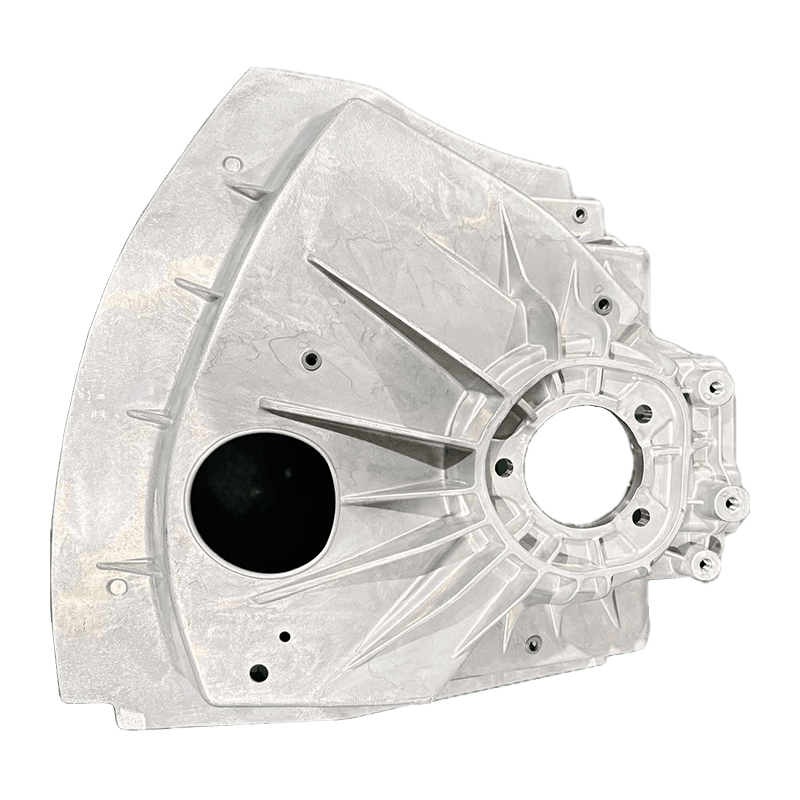
Lotus Shock Absorber Tower
A shock absorber tower is more than a simple mounting bracket. It is a structural interface between the suspension assembly and the vehicle body. During normal driving, the component receives vertical loads from the spring and damper, lateral forces generated during cornering, longitudinal forces produced during braking and acceleration, and complex combined loads caused by uneven roads or sudden impacts.
In a conventional suspension system, the tower must maintain the correct position of the shock absorber and related suspension elements. Even a small amount of unwanted deformation can change wheel alignment, camber, caster, toe behavior, or the effective motion ratio of the suspension. These changes can influence tire contact, steering feel, braking stability, and cornering balance.
For this reason, the tower must provide a rigid and accurately positioned mounting platform. It must also distribute concentrated suspension loads into surrounding body structures without creating excessive stress concentrations. A successful design therefore combines local strength around mounting points with carefully engineered reinforcement paths throughout the casting.
High-performance vehicles impose additional requirements. A performance vehicle may generate high cornering loads, rapid suspension movement, and repeated chassis excitation. An electric vehicle can also be heavier because of its battery pack, while its electric motor can deliver immediate torque. The shock absorber tower must therefore be able to support increased structural demands without becoming unnecessarily heavy.
The product is designed around these conditions. Its integrated form supports the installation of suspension components while providing a continuous structural path for transmitting loads into the chassis. This approach reduces the need for multiple separate brackets and can improve the consistency of the final assembly.
The Lotus Shock Absorber Tower is categorized as a die casting structural part and is designed for high-performance automotive chassis applications. It uses a high-strength aluminum alloy selected for its combination of low density, castability, structural performance, corrosion resistance, and suitability for precision finishing.
The product adopts a unibody molding concept in which the shock absorber mounting area and reinforcement structures are developed as one integrated component. This design can reduce the number of individual parts required in the surrounding assembly. It also reduces the number of mechanical joints, welds, and interfaces that may otherwise introduce tolerance variation or local weakness.
Its primary product characteristics include lightweight construction, high rigidity, high positioning accuracy, optimized load transfer, impact resistance, fatigue resistance, and compatibility with advanced suspension systems. The component can be adapted for vehicles using conventional passive dampers as well as active suspension, air suspension, and intelligent chassis technologies.
The product is particularly suitable for pure electric vehicles, hybrid vehicles, high-performance SUVs, sports cars, and other platforms where chassis performance and weight efficiency are major design priorities. It can also support vehicle programs in which compact packaging and integrated body structures are essential.
Although the component is designed for a specific structural function, its engineering value extends across the entire vehicle. By improving suspension mounting rigidity and reducing unnecessary mass, it can contribute to sharper steering response, more stable wheel control, improved ride consistency, and better overall chassis refinement.
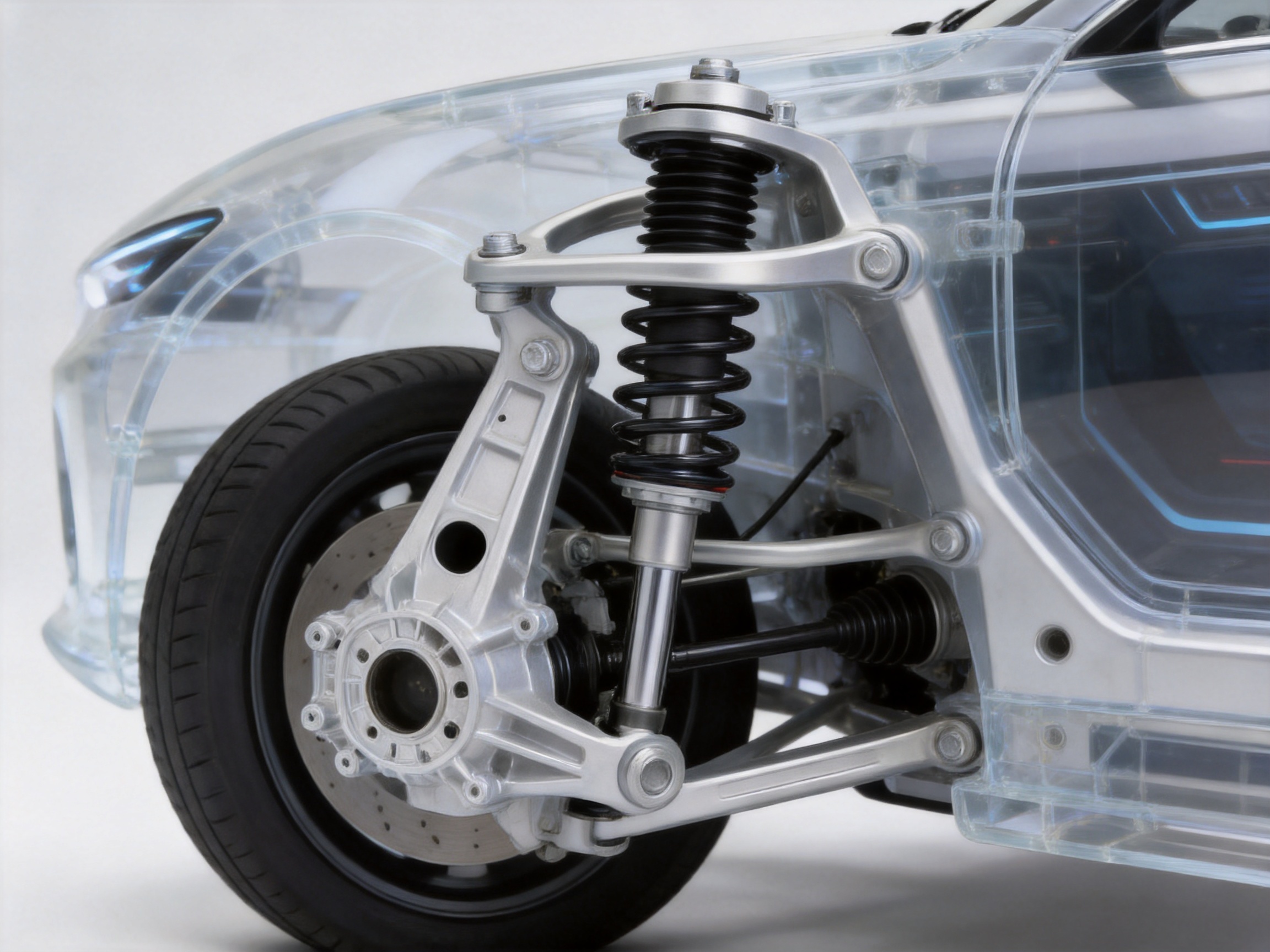
One of the most important advantages of an aluminum die casting shock absorber tower is its weight-saving potential. Aluminum alloys have a lower density than conventional structural steels. When the casting is engineered with efficient ribs, optimized wall thicknesses, and integrated reinforcement geometry, the finished component can reduce mass while preserving the required structural performance.
Weight reduction in the chassis is valuable for several reasons. Lower vehicle mass can support improved energy efficiency, longer electric driving range, lower fuel consumption in hybrid applications, and better acceleration and braking performance. It can also reduce the total load carried by suspension and braking systems.
The location of the component is equally important. Suspension-related mass is especially sensitive because it can influence the response of the wheel and tire assembly. Reducing unnecessary mass near the suspension structure can help the suspension react more effectively to road irregularities. This can improve tire contact with the road and support a more controlled driving experience.
Compared with traditional steel shock absorber towers, an aluminum die casting solution can achieve a more favorable balance between strength and weight. Steel remains a valuable material for many chassis applications, but steel components may require thicker sections, additional reinforcement pieces, or welded assemblies to achieve equivalent stiffness and load capacity.
The integrated aluminum design reduces the need to combine numerous separate pieces. This can create a lighter and more compact assembly while maintaining essential mounting functions. It also offers greater freedom to place material where it contributes most effectively to strength and stiffness.
Traditional shock absorber tower assemblies are often formed from stamped steel panels, welded brackets, reinforcement plates, and separate mounting interfaces. Such assemblies can be effective, but their performance depends on the quality of many individual operations, including forming, welding, alignment, surface treatment, and dimensional inspection.
An integrated die casting can consolidate several of these functions. Instead of relying on a series of overlapping components, the structure can be designed as a single near-net-shape casting with strategically placed ribs and bosses. This reduces redundant material and can improve the relationship between mass and rigidity.
The result is not simply a lighter part. It is a component with a more efficient structural architecture. The design team can use three-dimensional geometry to manage load paths, strengthen high-stress regions, and reduce material in areas that contribute less to overall performance.
Rigidity is fundamental to suspension performance. When the shock absorber tower deforms under load, some of the suspension movement intended to control the wheel may be lost in the body structure. This can make the vehicle feel less precise, reduce steering consistency, and create undesirable changes in suspension geometry.
The product is designed to provide high rigidity around the shock absorber mounting region and the associated reinforcement areas. Its unibody structure helps create a continuous connection between mounting points and the surrounding vehicle body. This supports more direct force transmission and helps minimize local deformation.
High rigidity is particularly important in vehicles with electronically controlled suspension. Active suspension systems can respond quickly to road and driving conditions, but their effectiveness depends on a stable mechanical foundation. If the mounting structure flexes excessively, the control system may not achieve the intended wheel and body response.
Air suspension systems also benefit from a rigid and accurately positioned mounting structure. Correct positioning helps maintain the intended suspension travel, ride height behavior, and damper alignment. In intelligent chassis systems, accurate structural interfaces allow sensors, actuators, and control algorithms to operate within their designed conditions.
The shock absorber tower supports accurate positioning through controlled casting geometry and precision machining. Mounting holes, contact surfaces, and interface locations can be finished to meet the dimensional requirements of the vehicle platform. This consistency is important for assembly efficiency and for maintaining alignment across a large production volume.
A well-designed tower does not merely resist force at one mounting point. It distributes the load through a broader section of the vehicle body. The product incorporates reinforcement structures that help guide forces away from concentrated interfaces and into the surrounding chassis.
This load-transfer strategy can reduce localized stress and support long-term fatigue performance. It also allows the component to remain compact without relying on excessive material thickness throughout the entire casting. The final design can therefore achieve a stronger relationship between structural performance, packaging space, and weight.
During cornering, lateral forces act through the wheel and suspension links and ultimately reach the shock absorber tower and body. During braking, longitudinal forces and pitch-related loads are transmitted through the chassis. During road impacts, the tower may experience rapid, high-amplitude loading. The integrated structure is intended to accommodate these combined conditions more effectively than a poorly coordinated collection of separate brackets.
High-performance vehicle components must operate reliably under repeated and sometimes extreme loading. A shock absorber tower may experience thousands or millions of load cycles over the service life of a vehicle. It must also tolerate occasional high-energy events such as pothole impacts, curb strikes, emergency maneuvers, and severe road surfaces.
The aluminum alloy die casting is engineered to provide resistance to impact and fatigue. Material selection, casting parameters, mold design, wall thickness control, heat treatment where applicable, and machining quality all influence this performance. A reliable component requires these factors to be managed together rather than treated as separate stages.
Fatigue resistance is especially important because the tower is a cyclically loaded structural part. Repeated stress can gradually initiate cracks if the geometry contains sharp transitions, unsuitable casting features, or uncontrolled defects. For this reason, the design uses appropriate fillets, smooth transitions, optimized rib arrangements, and controlled load paths.
Impact performance also depends on the relationship between material properties and geometry. The component must be strong enough to support severe loads but should not be designed with unnecessary mass or abrupt stiffness changes. A balanced structure can distribute impact energy through the body more effectively and reduce the chance of premature local failure.
Environmental durability is another key requirement. Automotive chassis components may be exposed to moisture, road salt, dust, temperature variation, cleaning chemicals, and long-term vibration. Aluminum alloy offers useful corrosion resistance, while appropriate finishing, sealing, and interface design can further support durability in demanding environments.
Noise, vibration, and harshness performance is often associated with soft trim, tires, or cabin insulation, but structural chassis components also have a significant influence. A flexible or poorly connected shock absorber tower can transmit unwanted vibration into the body. It may also amplify road noise or create inconsistent damper behavior.
The product supports NVH performance through its rigid, integrated form and reliable connection interfaces. By minimizing unnecessary movement around the shock absorber mounting location, it can help the suspension respond in a more controlled manner. This can reduce the transmission of certain vibration paths and support a quieter, more refined cabin environment.
High rigidity does not mean that the vehicle must feel harsh. When the structure is accurately engineered, the suspension system can be tuned more precisely. The damper and spring can perform their intended functions without excessive structural compliance interfering with their response. This creates greater freedom for engineers to balance handling, ride comfort, and road isolation.
For luxury performance SUVs and high-end electric vehicles, this balance is particularly important. Drivers expect precise steering and stable cornering, but they also expect smooth operation and low cabin noise. A strong, accurate shock absorber tower contributes to both objectives by providing a dependable foundation for the suspension system.
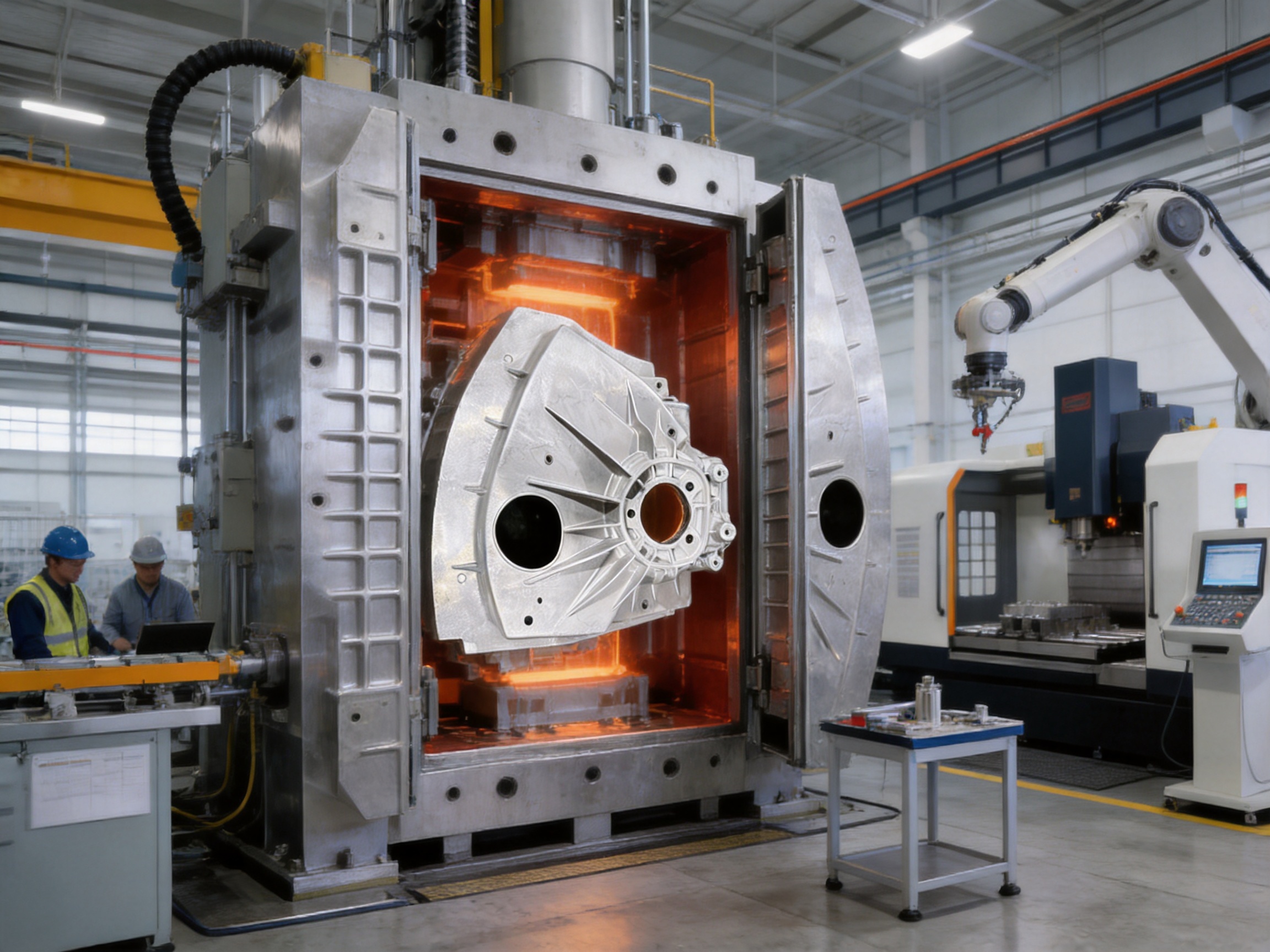
The most distinctive feature of the product is its integrated unibody configuration. Rather than treating the shock absorber mounting bracket and reinforcing elements as unrelated components, the design combines them into a coordinated structural casting.
This approach creates several possible advantages. First, it reduces the number of parts in the assembly. Fewer parts can simplify logistics, storage, assembly sequencing, and quality management. Second, it reduces the number of joining interfaces, which can improve dimensional consistency and reduce the risk of loosened or misaligned connections. Third, it provides more freedom to develop continuous load paths through the component.
Integrated design also supports compact packaging. Vehicle platforms contain many competing systems, including battery structures, steering components, wiring, brake systems, cooling lines, and electronic control units. A compact shock absorber tower can help engineers use the available space more efficiently.
For electric and hybrid vehicles, packaging efficiency is especially valuable because the battery system occupies a substantial portion of the vehicle structure. An integrated casting can help preserve space for battery modules and related systems while maintaining the required suspension geometry.
A conventional multi-piece assembly may require several forming operations, welding operations, fasteners, alignment steps, and inspection points. Each additional operation creates opportunities for variation. A casting that consolidates several structural functions can reduce this complexity.
Reduced assembly complexity can improve production efficiency and support more stable quality. It may also help reduce the number of potential corrosion sites associated with overlapping panels or weld zones. Where appropriate, the part can be connected to the body using a planned combination of fasteners, structural adhesives, or other joining methods selected by the vehicle manufacturer.
The integrated structure does not eliminate the need for engineering validation. Instead, it allows validation to focus on a carefully defined component and its interfaces. Mold design, casting integrity, machining accuracy, and final assembly conditions remain essential to achieving the intended result.
The performance of a die cast structural part begins with the mold. A complex shock absorber tower contains mounting bosses, reinforcement ribs, curved transitions, varying wall sections, and multiple interface surfaces. The mold must reproduce these features consistently while supporting efficient filling, solidification, ejection, and production cycling.
Advanced mold-flow analysis is used to evaluate how molten aluminum fills the cavity. Engineers can examine filling balance, temperature distribution, air entrapment risk, potential shrinkage, solidification behavior, and areas that may require special process control. This analysis helps identify design issues before the mold is manufactured.
Simulation can also support the design of gates, runners, overflows, vents, cooling channels, and ejector locations. Proper arrangement of these elements is important for achieving stable filling and reducing casting defects. For a structural component, defect control is particularly important because internal discontinuities may influence fatigue strength and load-bearing reliability.
The mold design process may include three-dimensional modeling, casting simulation, structural analysis, thermal analysis, and manufacturing review. These tools allow the engineering team to coordinate product geometry and production requirements from an early stage.
After the design is verified, the mold components are manufactured using high-precision machining equipment and electrical discharge machining where necessary. Complex cavity details, deep features, sharp dimensional requirements, and hardened mold components may require a combination of machining technologies.
High-quality mold manufacturing helps maintain dimensional accuracy across repeated casting cycles. It also supports proper surface quality, reliable part release, and consistent reproduction of the designed geometry. Mold maintenance and controlled repair procedures are important for preserving this performance throughout the production life of the tool.
The manufacturer’s experience in mold design and production is a major advantage for customers seeking a complete die casting solution. Instead of treating tooling as an isolated purchase, the project can be managed as a connected sequence from product design and mold-flow analysis to casting, finishing, inspection, and delivery.
Die casting requires careful control of metal temperature, mold temperature, injection speed, pressure, filling time, cooling conditions, and cycle stability. These parameters influence the surface quality, dimensional accuracy, internal integrity, and mechanical performance of the finished component.
For a structural shock absorber tower, process control must be particularly systematic. The casting must fill complex sections without excessive turbulence or incomplete filling. Cooling must be balanced to minimize distortion and support consistent solidification. Ejection must be controlled to avoid damaging thin sections or critical interfaces.
Automated or semi-automated production equipment can improve repeatability and reduce variation between cycles. Automated trimming lines can remove runners, overflows, and flash efficiently while protecting the main structure. Subsequent machining operations can produce the precise mounting surfaces and holes required by the vehicle assembly.
Process documentation and traceability also support quality assurance. Production records can include material batches, machine parameters, inspection results, tooling status, and corrective actions. Such information helps manufacturers identify trends and maintain stable production over time.
After casting and trimming, the part may undergo machining, deburring, cleaning, surface treatment, and other finishing operations. Machining is used where casting tolerances alone are not sufficient, particularly for shock absorber mounting interfaces, locating surfaces, threaded holes, and precision connection areas.
Accurate finishing helps ensure that the tower fits the vehicle body and suspension system without excessive adjustment during assembly. It also supports correct load distribution at each interface. Burr removal and edge control are important for safe handling, reliable fastener seating, and prevention of unwanted stress concentrations.
Surface treatment may be selected according to the vehicle manufacturer’s corrosion, appearance, sealing, and environmental requirements. The final process should be compatible with surrounding materials and joining methods. Proper cleaning is also essential because residual particles, machining debris, or processing fluids can affect assembly and long-term performance.
Structural automotive components require a quality system that combines process management, material control, dimensional inspection, and performance validation. The manufacturer maintains ISO 9001 and IATF 16949 quality management system certifications, demonstrating a structured approach to quality planning and automotive production requirements.
Quality management begins before production. The product design, mold design, material specification, process plan, inspection plan, and packaging method should be reviewed as a connected system. Potential failure modes can be evaluated during development so that preventive controls are built into the process rather than added only after problems appear.
During production, inspections may include visual checks, dimensional measurement, alloy verification, surface inspection, and monitoring of key process parameters. Depending on customer requirements, non-destructive testing and internal defect evaluation may also be applied to critical structural areas.
Coordinate measuring equipment and other precision inspection tools can verify mounting locations, hole positions, surface profiles, wall dimensions, and key datum relationships. These measurements are important because structural performance depends not only on material strength but also on accurate geometry.
Quality control also extends to mold condition and equipment maintenance. A worn mold, unstable machine, blocked cooling channel, or inconsistent trimming process can affect product quality. Preventive maintenance, calibration, and operator training help reduce such risks.
Ningbo Dinghong Mould Co., Ltd. was established in 2013, following the earlier establishment of Yuejin Mould in 1998. This background provides experience in mold engineering and die casting production. The company operates in Beilun District, Ningbo, Zhejiang, an important manufacturing region with strong automotive, tooling, port, and industrial supply-chain resources.
The company occupies approximately 15,000 square meters of plant space and specializes in mold design, mold manufacturing, die casting, finishing, and trade. Its production capability covers aluminum alloy products for automotive, new-energy, photovoltaic, telecommunications, electrical, motorcycle, pump and valve, fitness equipment, robotic, and other industries.
Its equipment includes high-precision CNC machining centers, electrical discharge machining equipment, die casting machines, automated trimming lines, and testing equipment. This combination supports a complete manufacturing chain from tooling development through final product processing.
A major advantage is the ability to coordinate mold design and product manufacturing within one organization. This can shorten communication paths when a casting requires design changes, process optimization, or tooling adjustments. It also allows practical production feedback to influence mold and product development.
The company’s design team uses advanced software and mold-flow analysis to visualize and optimize mold concepts before manufacturing. This reduces the risk of discovering major filling or ejection problems only after the tool has been completed. Early simulation can improve development efficiency, reduce modification costs, and support a more reliable launch schedule.
The company serves customers in China, South America, Southeast Asia, and other international markets, with plans to expand further into Europe and additional regions. This international experience supports communication with customers that operate different technical specifications, approval procedures, packaging standards, and delivery requirements.
For an automotive structural part, supplier communication must extend beyond price and delivery. Customers need support during design review, prototype approval, process validation, mass production, quality reporting, and technical change management. A supplier with mold, casting, machining, and inspection capabilities can provide more coordinated support throughout this process.
Long-term cooperation is strengthened when the supplier maintains transparent quality procedures, responds quickly to technical issues, and invests in manufacturing improvements. The company’s emphasis on reliable manufacturing, technological development, and customer relationships supports this type of cooperation.
The product competes with several possible technologies, including stamped steel assemblies, welded aluminum structures, forged components, and multi-piece machined brackets. Each method has advantages, but the integrated aluminum die casting approach offers a distinctive combination of structural integration, production efficiency, and design flexibility.
| Evaluation Factor | Integrated Aluminum Die Casting | Stamped and Welded Steel | Multi-Piece Machined Assembly | Forged Aluminum Component |
|---|---|---|---|---|
| Weight efficiency | High potential for lightweight structural design | Generally heavier for equivalent integrated functions | Can be moderate to high, depending on material removal | High strength-to-weight potential |
| Part integration | Excellent; multiple features can be combined | Requires several panels, brackets, and welds | Usually requires separate pieces and fasteners | Limited by forging direction and tooling considerations |
| Complex geometry | Well suited to ribs, bosses, curved transitions, and integrated reinforcement | More limited by forming and joining operations | Highly flexible but may involve high machining cost | More restricted by forging draft and material flow |
| Assembly complexity | Reduced through part consolidation | Higher due to welding and alignment steps | Higher due to multiple interfaces | Can be moderate, depending on final design |
| Production scalability | Strong for medium- to high-volume programs | Strong where stamping and welding lines are established | Better suited to lower volumes or specialized parts | Suitable for selected high-value applications |
| Dimensional consistency | Supported by stable molds and controlled machining | Depends on forming, welding, and fixture control | High for machined features, but assembly variation remains | High potential with suitable finishing operations |
Compared with stamped and welded steel, the die casting design can reduce mass and part count while offering more freedom for three-dimensional reinforcement. Compared with a multi-piece machined assembly, it can reduce material waste and assembly labor. Compared with forging, it can provide greater geometric integration and more efficient production of complex features.
These advantages do not mean that die casting is automatically the best solution for every vehicle. The correct technology depends on production volume, required mechanical properties, geometry, joining strategy, cost targets, and validation requirements. However, for an integrated shock absorber tower with complex structural features, aluminum die casting is highly competitive.
Pure electric and hybrid vehicles create a strong demand for lightweight, rigid, and integrated structural components. Battery systems increase vehicle mass, while electric powertrains provide rapid torque delivery. The chassis must control these forces without unnecessary weight growth.
The shock absorber tower contributes to this objective by combining suspension mounting functions with reinforcement structures in a compact aluminum component. Its lower mass can help offset some of the weight challenges associated with electrified powertrains. Its rigidity supports accurate control of wheel movement and body motion.
Electric vehicles also require careful management of cabin refinement. Because electric powertrains are quieter than internal combustion engines, road noise, suspension noise, and structural vibration may become more noticeable. A rigid and accurately connected suspension tower can support improved NVH tuning and reduce unwanted structural movement.
Hybrid and performance vehicles may operate across a wide range of conditions, from quiet urban driving to high-speed acceleration and aggressive cornering. A durable component capable of handling changing load patterns is therefore essential. The product’s combination of impact resistance, fatigue performance, and environmental adaptability supports this broad operating range.
High-performance SUVs combine a relatively high body height and vehicle mass with powerful drivetrains, large tires, advanced suspension systems, and strong customer expectations for comfort. The shock absorber tower must support stable wheel control while fitting into a tightly packaged front or rear body structure.
Supercars and sports cars place even greater emphasis on steering precision, cornering stability, and rapid response. In these vehicles, small structural compliance can influence driver perception. A rigid mounting tower helps preserve the intended relationship between suspension movement and chassis response.
The product is suited to these applications because it combines a compact profile with high rigidity and accurate interfaces. It can support passive, active, air, and intelligent suspension architectures, allowing it to be adapted to different vehicle development strategies.
Track-level operation introduces repeated high loads and rapid temperature changes. The tower must remain stable under severe braking, cornering, curb impacts, and suspension travel. Its structural design and controlled manufacturing process are intended to support dependable performance under these demanding conditions.
Although the product is designed around a defined shock absorber tower application, automotive customers often require customized geometry. Mounting locations, body interfaces, suspension layouts, packaging constraints, alloy specifications, surface treatments, and inspection requirements may differ from one platform to another.
A typical development process begins with customer drawings, three-dimensional data, performance targets, and application information. Engineers review the intended load cases, assembly interfaces, material requirements, and production volume. They then evaluate casting feasibility and identify areas that may require draft, fillets, local reinforcement, machining allowance, or process changes.
Mold-flow analysis is used to study cavity filling and solidification. Design-for-manufacturing reviews help ensure that the part can be produced consistently and economically. Prototype or trial castings may be inspected and tested before final process approval.
After the mold is released for production, machining fixtures and inspection programs are developed. Process validation confirms that the casting, trimming, finishing, and machining operations can achieve the required quality. Production documentation is then established for regular manufacturing.
This integrated development model allows customers to work with one supplier for mold design, die casting, finishing, and related technical support. It can simplify project coordination and help reduce the time required to move from concept to production.
The final performance of a shock absorber tower depends on the entire vehicle assembly, not only the casting itself. Correct installation requires controlled fastener torque, accurate contact surfaces, proper alignment, and compliance with the vehicle manufacturer’s joining specifications.
The body-side interface should provide stable support around the tower. Fasteners, adhesives, welds, or hybrid joining methods must be selected according to the vehicle structure and material combination. Galvanic corrosion protection may be necessary when aluminum is connected to dissimilar metals in a wet or salt-exposed environment.
Assembly fixtures should control the position of the tower and prevent unwanted distortion. Quality checks can confirm hole alignment, contact conditions, and the correct relationship between the tower and adjacent suspension components. These controls help ensure that the precision built into the casting is retained in the final vehicle.
Service requirements should also be considered during the design stage. Access to fasteners, compatibility with replacement procedures, and protection against damage during maintenance can influence the final geometry. A well-integrated component should support both production efficiency and practical vehicle service.
The choice of supplier has a direct effect on the success of a structural die casting project. A supplier may produce an acceptable casting but still struggle with mold reliability, dimensional stability, delivery consistency, or engineering communication. For critical chassis parts, these factors are as important as the initial product quotation.
A capable supplier should understand the connection between design, tooling, casting, machining, testing, and assembly. Improvements in one stage can create problems in another if the entire process is not coordinated. For example, a rib that improves local rigidity may create a filling challenge; a machining allowance may affect wall thickness; a mold cooling strategy may influence dimensional stability.
Dinghong’s combined experience in mold manufacturing and aluminum die casting provides a foundation for managing these relationships. Its equipment, quality systems, engineering software, and industry experience support a process-oriented approach rather than a single-operation manufacturing model.
The company’s experience across automotive, new-energy, communication, electrical, and industrial applications also provides exposure to different technical requirements. This broad background can support practical problem solving when a customer needs a design adapted for weight, strength, packaging, corrosion, appearance, or production efficiency.
For vehicle manufacturers, the product offers benefits that extend beyond the component itself. Its lightweight design can support vehicle mass targets. Its integrated structure can reduce part count and assembly complexity. Its precision interfaces can improve suspension alignment. Its rigidity can support handling and NVH objectives.
The product also offers a path toward greater chassis integration. As vehicle platforms become more complex, manufacturers increasingly seek components that perform several structural functions at once. A die cast tower can contribute to this trend by combining mounting, reinforcement, and load-distribution functions in one engineered part.
From a manufacturing perspective, a stable die casting process can support repeatable production and efficient cycle times. Automated trimming and precision machining can further improve consistency. When supported by mold-flow analysis and systematic inspection, the process can provide a reliable foundation for large-scale automotive programs.
From an engineering perspective, the product supports advanced suspension technologies. Active dampers, air springs, electronically controlled systems, and intelligent chassis functions all benefit from rigid and accurately positioned mounting structures. The tower therefore serves as an enabling component for the broader evolution of vehicle dynamics.
The shock absorber tower connects the suspension damper and related mounting components to the vehicle body. It transfers suspension loads into the chassis and helps maintain the accurate position of the suspension system during braking, acceleration, cornering, and road impacts.
Aluminum offers lower density than conventional steel and can provide a favorable strength-to-weight balance. Through integrated die casting geometry, engineers can create ribs, bosses, reinforcement features, and smooth transitions that help reduce mass while maintaining the required structural performance.
A traditional steel solution may use several stamped panels, brackets, reinforcement plates, and welded joints. The integrated aluminum design combines multiple structural functions into one casting, which can reduce part count, assembly operations, joining interfaces, and overall package size.
Yes. The product is designed to be compatible with advanced suspension architectures, including active suspension, air suspension, and intelligent chassis systems. Final compatibility depends on the vehicle platform, mounting geometry, load requirements, and customer specifications.
Its high rigidity and accurate mounting interfaces help reduce unwanted deformation around the shock absorber connection. This supports more stable suspension geometry, more direct force transmission, faster dynamic response, and improved steering and cornering consistency.
Yes. A rigid and accurately connected tower can reduce unwanted movement and help control structural vibration paths. This gives vehicle engineers a more stable foundation for balancing ride comfort, road noise, suspension response, and handling performance.
The manufacturing process can include mold-flow analysis, precision mold design, CNC machining, electrical discharge machining, aluminum die casting, automated trimming, precision machining, cleaning, surface finishing, and dimensional inspection. The exact process depends on the customer’s part design and technical requirements.
Mold quality is supported through three-dimensional design, casting simulation, precision machining, electrical discharge machining where required, trial production, dimensional verification, and ongoing mold maintenance. These activities help preserve cavity accuracy and stable production performance.
The supplier has obtained ISO 9001 and IATF 16949 quality management system certifications. These systems support structured quality planning, process control, traceability, corrective action, and continuous improvement for automotive manufacturing.
Yes. Customer-specific customization may include mounting geometry, body interfaces, alloy requirements, machining tolerances, surface treatment, packaging, inspection standards, and production volume. The development process normally begins with drawings or three-dimensional data and an assessment of the vehicle application.
The supplier manufactures aluminum alloy die casting products and molds for automotive, new-energy, photovoltaic, telecommunications, electrical, motorcycle, pump and valve, fitness equipment, robotic, and other industrial applications.
An integrated supplier can coordinate product design, mold development, casting, trimming, machining, inspection, and delivery. This reduces communication gaps and allows production feedback to be incorporated into tooling and product improvements more efficiently.
The aluminum die casting shock absorber tower is a high-value structural component for the next generation of vehicle chassis systems. Its lightweight construction, high rigidity, accurate mounting interfaces, and integrated reinforcement design address the central challenges of modern automotive engineering.
Compared with conventional multi-piece steel assemblies, the product can offer lower mass, fewer components, reduced assembly complexity, and greater freedom for three-dimensional load-path optimization. Compared with multi-piece machined structures, it can provide a more efficient production method for complex geometry. Its suitability for active suspension, air suspension, and intelligent chassis systems also makes it relevant to advanced vehicle platforms.
Its performance depends on more than aluminum alloy selection. Mold-flow analysis, precision mold manufacturing, stable die casting, automated trimming, accurate machining, controlled finishing, and systematic inspection all contribute to the final result. The supplier’s experience in mold design, die casting, automotive manufacturing, quality management, and international service provides important support for customers developing demanding structural parts.
For pure electric vehicles, hybrid vehicles, high-performance SUVs, sports cars, and supercars, the shock absorber tower can contribute to improved handling, suspension accuracy, comfort, safety, and durability. By combining lightweight design with structural integration and manufacturing discipline, it represents an effective solution for vehicle manufacturers seeking higher chassis performance and more efficient production.
1. Automotive Engineering Principles: Chassis Structures, Suspension Loads, and Vehicle Dynamics.
2. Aluminum Alloy Die Casting Technology: Mold Design, Filling Behavior, Solidification, and Process Control.
3. Automotive Materials and Manufacturing Processes: Lightweight Structural Components and Joining Methods.
4. Quality Management Systems for Automotive Production, including ISO 9001 and IATF 16949 principles.
5. Vehicle Noise, Vibration, and Harshness Engineering: Structural Paths and Suspension Interface Design.
6. Fatigue Design of Automotive Structural Components: Load Cycles, Stress Concentrations, and Durability Validation.
7. New-Energy Vehicle Chassis Engineering: Weight Reduction, Battery Packaging, and Intelligent Suspension Integration.
Materials & Manufacturing Yes, Aluminum Die Casting Parts are consistently lighter than Cast Iron Parts when engin...
READ MOREA mold quote for an aluminum die casting mold can swing by 30–50% for the same nominal part. The difference is rarely t...
READ MOREBefore a part ever reaches production, every buyer eventually asks the same question: should this component be injectio...
READ MORETwo quotations for the same aluminum controller housing can differ by 20% or more, even when both suppliers list the sa...
READ MORE

Sun Yuejun: +86-13806631860
Wang Shiyong: +86-15958891460 / 15058297768
Dove Yao: +86-18625086675


Copyright © Ningbo Dinghong Mould Co., Ltd. Rights Reserved. Custom Precision Die Casting Aluminum Alloy Parts Manufacturers
