
 English
 Español
 русский
 Français

One large aluminum die casting can now replace what used to be 70 to 130 separately stamped and welded steel parts in a...
READ MORE
Content
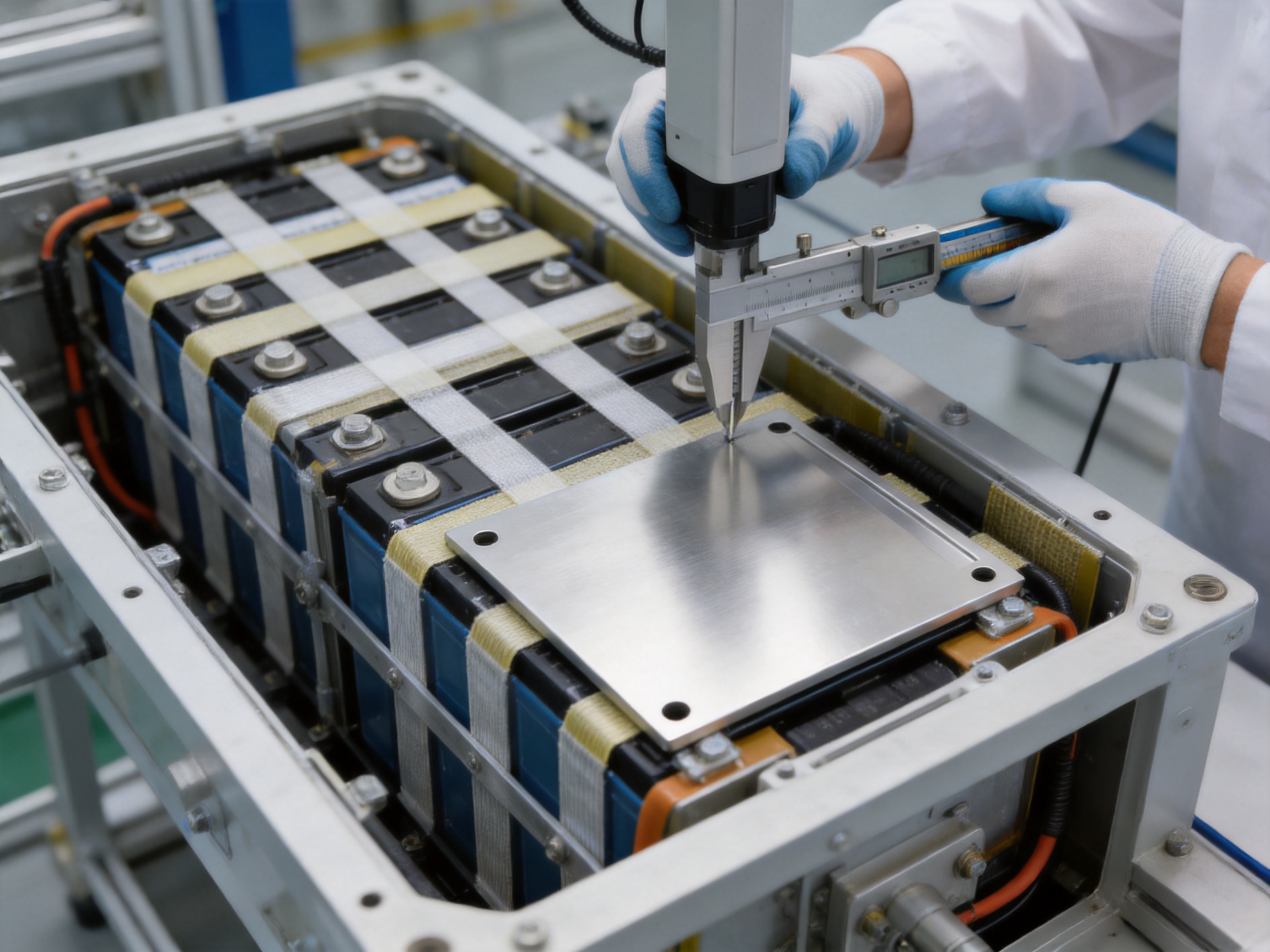
Energy storage systems are becoming an essential part of modern electrical infrastructure. They support renewable power integration, peak-load management, backup power, electric mobility, industrial automation, and distributed energy applications. As battery modules become larger, more powerful, and more closely integrated into demanding operating environments, the mechanical components surrounding the cells must provide dependable structural support without adding unnecessary mass, cost, or manufacturing complexity.
The energy storage end plate is one of the most important structural components in a battery module. Installed at the ends of a cell stack, it helps maintain the designed arrangement of the cells, transfers compression forces through the module, supports dimensional stability, and contributes to electrical isolation and thermal-management arrangements. Although the end plate may appear to be a relatively simple component, its performance has a direct influence on battery-module durability, assembly efficiency, safety, and service life.
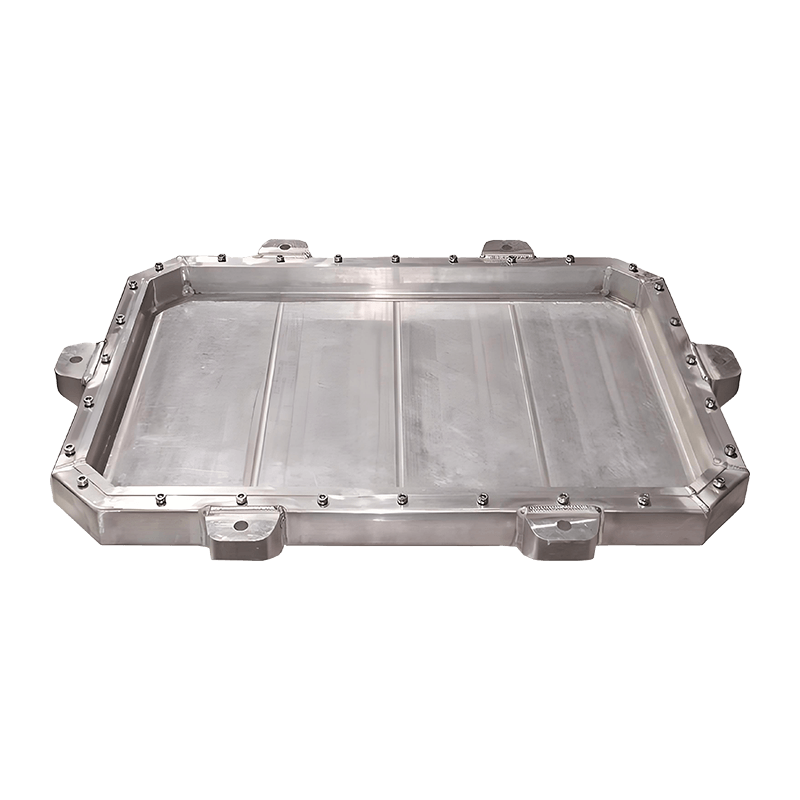
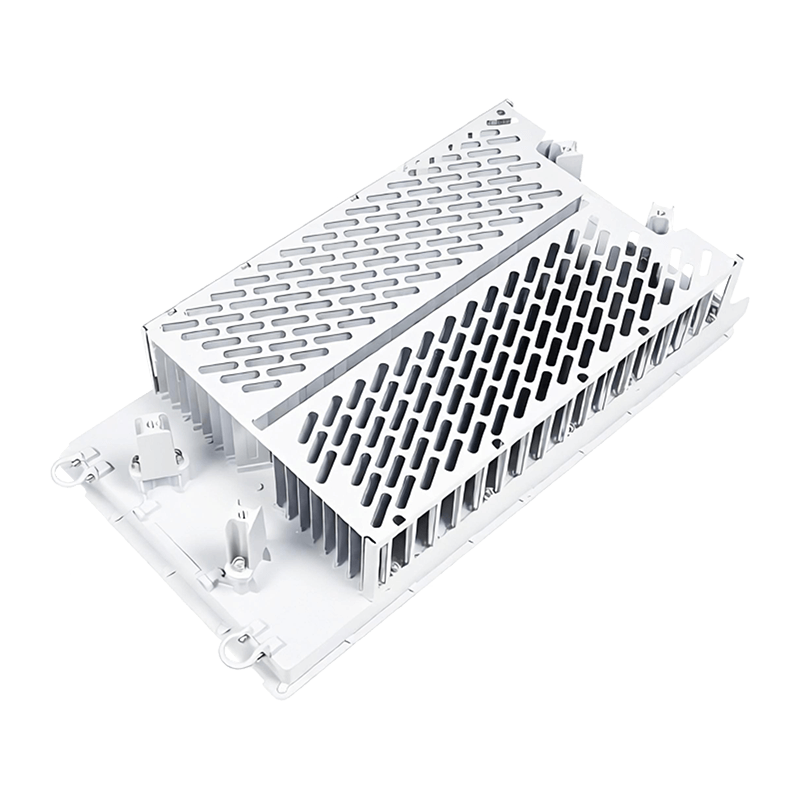
Die-cast aluminum alloy is particularly suitable for energy storage end plates because it combines low weight, high structural efficiency, corrosion resistance, thermal conductivity, and excellent suitability for high-volume production. A well-designed die-cast end plate can integrate mounting bosses, reinforcing ribs, locating features, cable or connector interfaces, and other functional details into one accurately formed component. This reduces the number of individual parts and can simplify downstream assembly.
Ningbo Dinghong Mould Co., Ltd. provides die-casting mold design, mold manufacturing, aluminum alloy die casting, finishing, inspection, and related manufacturing services for energy storage, photovoltaic, automotive, telecommunications, electrical, and other applications. Its experience in mold engineering and aluminum alloy production supports the development of energy storage plates that are designed for repeatable production, dimensional consistency, and practical integration into battery-module systems.
An energy storage end plate is positioned at one or both ends of a battery-cell assembly. Depending on the battery architecture, the plate may work together with side frames, tie rods, straps, busbar supports, cooling components, insulation layers, and module covers. Its exact geometry varies according to cell type, module dimensions, loading requirements, assembly method, and electrical design.
The primary mechanical responsibility of the end plate is to provide a stable boundary for the cell stack. Battery cells must remain aligned during assembly and operation. Movement caused by vibration, thermal expansion, transportation, or repeated charge and discharge cycles can create unwanted stress on cell housings, electrical connections, and insulating components. The end plate helps constrain this movement and maintain the designed module geometry.
A second function is the transmission of preload. Many battery modules require controlled compression to maintain contact between cells and to manage dimensional changes during operation. The end plate receives forces from fastening systems and distributes those forces across the module. A plate with insufficient stiffness may deform unevenly, creating local pressure concentrations or reducing the effectiveness of the clamping system.
A third function is the provision of an interface for adjacent parts. The end plate may include mounting holes, threaded inserts, positioning points, support surfaces, cable openings, connector mounting areas, or interfaces for thermal and electrical isolation components. Integrating these features into a die-cast component can make the module easier to assemble and reduce the need for separate brackets.
The end plate may also support safety-related design objectives. Its geometry can help maintain separation between conductive components and the surrounding structure. It can provide controlled paths for fasteners, help protect sensitive areas from impact, and contribute to the overall rigidity of the module enclosure. The final safety performance depends on the complete battery-module design, material selection, insulation system, validation program, and applicable standards.
Aluminum alloy die casting offers an effective balance between weight, strength, productivity, and design flexibility. Compared with many steel alternatives, aluminum alloy components can significantly reduce mass while maintaining the stiffness required for a battery-module support component. Lower weight is valuable in stationary systems as well as mobile or vehicle-mounted applications because it can simplify installation, transportation, and structural support requirements.
The high productivity of die casting is another major advantage. Once a suitable mold has been developed and validated, the process can produce a large quantity of substantially similar components with consistent geometry. This repeatability is important for battery modules, where small dimensional variations can affect cell alignment, fastening, sealing, and the fit of related components.
Die casting also allows designers to create complex shapes with integrated details. Reinforcing ribs, bosses, mounting pads, corner supports, recessed areas, and locating structures can often be produced in one casting. Integrating these features reduces the number of secondary parts and may eliminate welding or extensive machining operations.
Aluminum alloys provide useful corrosion resistance for many operating environments. The actual resistance depends on alloy selection, surface condition, coating, exposure, and the surrounding materials. For applications requiring additional protection or a particular appearance, the cast component may be subjected to finishing processes such as deburring, shot blasting, machining, powder coating, painting, anodizing where appropriate, or other specified treatments.
Aluminum also offers favorable thermal conductivity. An end plate is not necessarily the primary cooling component in every battery design, but its ability to conduct heat can support the broader thermal-management strategy. Engineers must evaluate the complete heat path, including cell interfaces, cooling plates, thermal pads, insulation layers, and enclosure structures. A die-cast part can be designed to include controlled contact areas or mounting features that support this system.
The die-casting energy storage plate can be developed around the specific dimensions and functional requirements of a battery module. Rather than treating the end plate as a generic flat panel, the design process considers load transfer, assembly sequence, fastening, electrical isolation, thermal behavior, manufacturing feasibility, and inspection requirements from the beginning.
Reinforcing ribs are commonly used to increase bending resistance without creating an unnecessarily thick or heavy component. A well-designed rib system improves the relationship between stiffness and mass. Rib placement should correspond to the primary load paths, fastening locations, supported areas, and expected deformation modes.
Rib geometry must also account for die-casting limitations. Excessive thickness changes can create uneven solidification and increase the risk of shrinkage-related defects. Sharp internal corners can concentrate stress and make mold manufacture more difficult. Proper transitions, draft angles, fillets, and consistent wall design help balance performance with casting quality.
End plates frequently include holes, bosses, slots, locating points, and fastening surfaces. These features allow the plate to connect with side frames, straps, module covers, cooling systems, or vehicle and cabinet structures. Their position and tolerance can be critical because several components may need to align simultaneously during assembly.
Some features may be cast near-net-shape and then finished through machining. This approach allows the die-casting process to form the overall geometry while machining establishes accurate datum surfaces, holes, threads, or critical interfaces. The balance between as-cast features and machined features is determined by tolerance requirements, production volume, tooling cost, and the assembly design.
The energy storage plate can include controlled interfaces for insulating sheets, protective covers, busbar supports, or other electrical isolation components. The aluminum casting itself is conductive, so the complete design must ensure that conductive areas are separated from live electrical components by suitable insulation and clearance distances.
Features supporting isolation components should be designed to prevent movement, abrasion, incorrect installation, and interference with fasteners. Surface quality, dimensional consistency, and the absence of sharp unintended edges are important considerations. The final electrical safety assessment must be performed at the module or system level by the responsible product engineer.
Battery manufacturing increasingly relies on controlled and semi-automated assembly processes. A die-cast end plate can be designed with locating features that support repeatable robotic handling, fixture positioning, and fastening. Clearly defined datums can reduce assembly variation and help inspection equipment verify the component quickly.
Consistent casting dimensions are especially valuable when the plate is assembled with seals, thermal interface materials, insulation pads, or precision cell stacks. A stable component geometry reduces the risk of excessive rework and contributes to more predictable production-line performance.
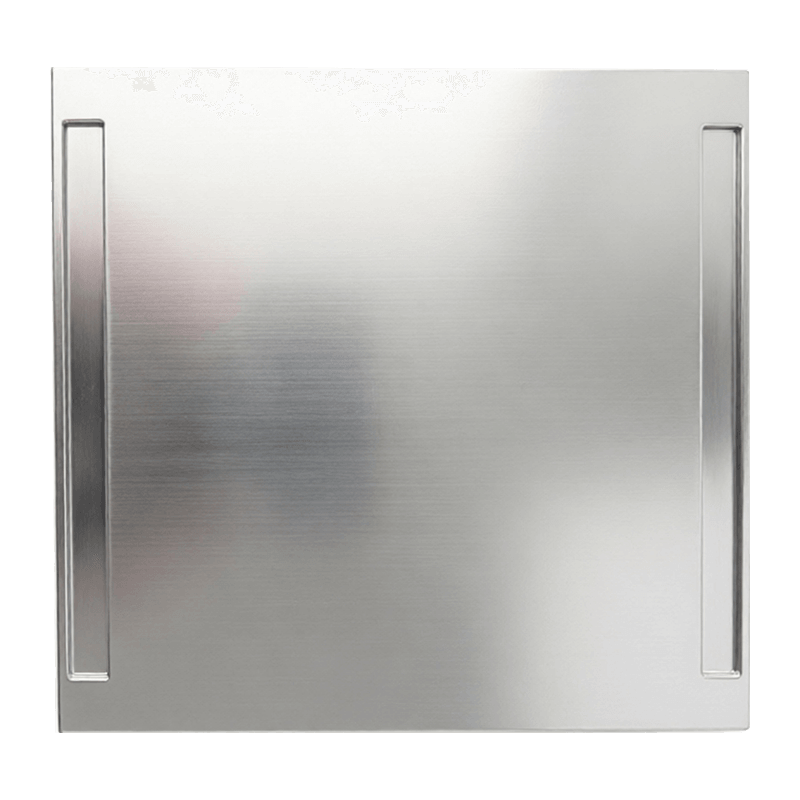
Die Casting Energy Storage Plate
The quality of an energy storage plate is influenced by every stage of production. Mold design, alloy control, casting parameters, trimming, machining, finishing, inspection, and packaging must work together. A strong manufacturing process does not rely on one isolated operation; it establishes controls throughout the complete product life cycle.
Production begins with a review of the customer’s drawings, three-dimensional data, technical specifications, annual demand, material requirements, tolerance definitions, surface expectations, and inspection criteria. The engineering team evaluates whether the proposed geometry is suitable for die casting and identifies areas that may require adjustment.
This review may consider wall thickness, draft, parting lines, ejector locations, overflow positions, gate design, machining allowances, shrinkage compensation, threaded features, and the accessibility of inspection points. Early cooperation between the product designer and mold engineer can prevent costly changes after tooling has been completed.
Mold-flow analysis is used to examine how molten alloy is expected to fill and solidify within the cavity. The analysis can help identify potential air entrapment, cold-flow areas, weld lines, unbalanced filling, hot spots, and other risks. It also supports the evaluation of gate locations, overflow design, runner layout, venting, and cooling arrangements.
For a structurally important plate, mold-flow analysis is valuable because the location and severity of internal defects can influence strength, sealing, machining quality, and dimensional stability. Simulation does not replace physical trials and inspection, but it allows the engineering team to improve the design before manufacturing the final mold.
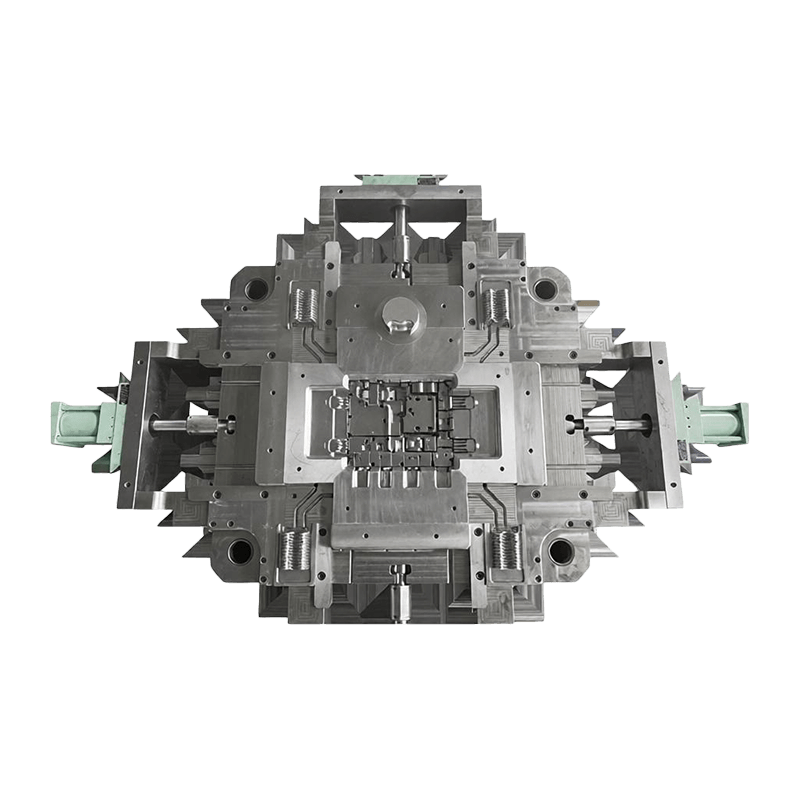
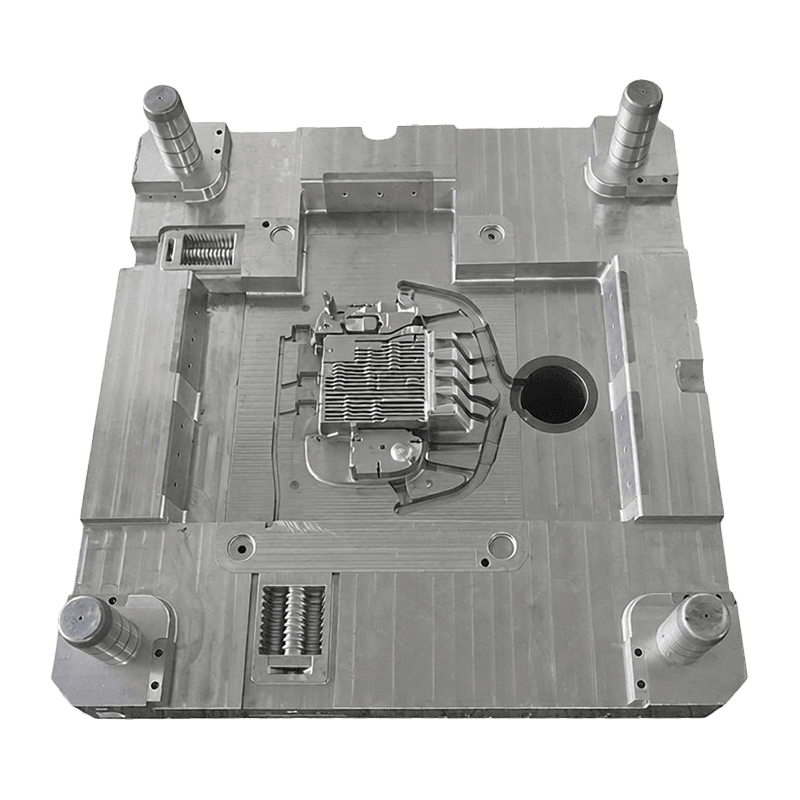
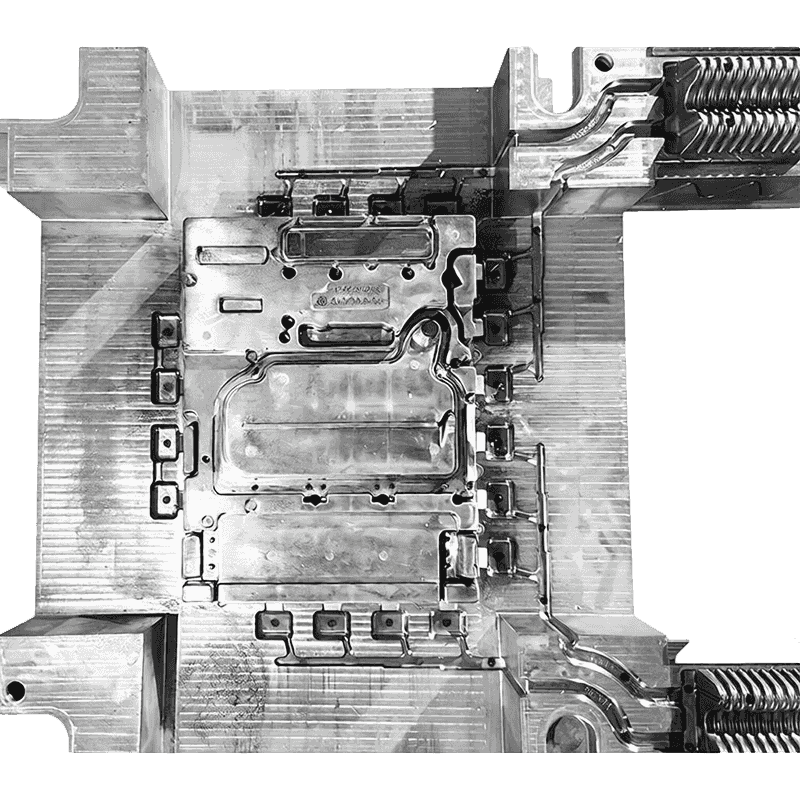
The die-casting mold is the foundation of repeatable production. It must withstand thermal cycling, injection pressure, mechanical loading, and repeated opening and closing during production. Mold components require appropriate material selection, heat treatment, machining accuracy, cooling-channel design, and maintenance access.
High-precision CNC machining centers are used to produce cavity components, inserts, mold bases, and other tooling elements. Electrical discharge machining can be applied to complex details or areas that are difficult to produce through conventional cutting. Skilled mold fitting and finishing are necessary to ensure that the components work together accurately and that the casting can be ejected without damage.
Tooling design also considers future maintenance. Wear areas, replaceable inserts, cooling lines, venting structures, and inspection access should be arranged so that the mold can be serviced efficiently. Proper maintenance extends tool life and helps preserve casting quality during long production runs.
Alloy preparation is an important part of die-casting control. The selected aluminum alloy should match the required balance of strength, castability, corrosion resistance, machinability, and thermal performance. The alloy specification should be controlled through approved material sources and documented inspection procedures.
Before injection, the molten metal is managed at a controlled temperature and processed to reduce contamination and gas-related risks. The exact melting, holding, degassing, and transfer procedures depend on the alloy and equipment. Consistent material handling supports stable filling behavior and reduces variation between production batches.
In high-pressure die casting, molten aluminum alloy is injected into a steel mold at high speed and pressure. The metal fills the cavity rapidly, reproducing the mold’s external geometry and integrated features. Pressure is maintained during solidification to improve surface replication and reduce certain forms of porosity.
Process parameters include injection speed, intensification pressure, filling time, metal temperature, mold temperature, lubrication, and cooling conditions. These parameters must be developed for the specific part and mold. A stable process window is essential because changes can affect surface appearance, internal soundness, dimensional behavior, and cycle time.
The casting machine must be suitable for the projected area, locking force, shot requirements, and production volume of the energy storage plate. Machine selection also affects the available level of automation, repeatability, and process monitoring. Where appropriate, production records can be used to trace key operating conditions and identify deviations.
After casting, excess material such as runners, gates, overflows, and flash must be removed. Automated trimming lines can improve consistency and reduce manual labor for suitable production volumes. Secondary deburring may be required around complex features, parting lines, holes, or edges.
Trimming tools should be designed to support the casting without creating distortion. Excessive force or poor fixture alignment can affect the dimensional accuracy of thin sections or critical interfaces. The trimming process is therefore considered part of the dimensional-control plan rather than merely a cosmetic operation.
Machining is used when the component requires tighter tolerances than can be economically or reliably achieved in the as-cast condition. Typical machined features may include mounting holes, threaded holes, datum surfaces, sealing areas, bearing or connector interfaces, and accurately positioned locating features.
CNC machining centers provide repeatable tool paths and allow multiple operations to be performed with controlled fixturing. The machining fixture should reference stable datums and prevent movement while avoiding distortion. Tool wear, cutting conditions, coolant management, and chip removal are monitored to maintain consistent results.
Machining allowances must be established during mold design. If the allowance is too small, the final surface may not clean up completely. If it is too large, cycle time and material removal increase, and the risk of exposing internal defects may become greater. Proper coordination between mold design and machining engineering is therefore essential.
Depending on the application, the energy storage plate may receive shot blasting, tumbling, powder coating, painting, conversion treatment, or another finishing process. Finishing can improve appearance, remove minor residues, support corrosion resistance, and prepare selected areas for assembly.
The finish must be compatible with electrical isolation requirements, adhesives, thermal interface materials, seals, and fasteners. Masking may be required for machined datums, grounding points, threaded holes, or surfaces that must remain conductive or dimensionally accurate. Coating thickness and adhesion can be verified according to the customer’s specifications.
Quality control begins with incoming material and continues through mold manufacture, casting, machining, finishing, final inspection, and shipment. For energy storage components, inspection planning should focus on the features that influence mechanical performance, assembly accuracy, electrical separation, and long-term reliability.
| Control Area | Typical Focus | Value to the Battery Module |
|---|---|---|
| Material control | Alloy specification, batch identification, and material documentation | Supports consistent mechanical and casting performance |
| Mold verification | Cavity dimensions, inserts, cooling, ejection, and parting-line condition | Improves repeatability and reduces tooling-related variation |
| Process monitoring | Metal temperature, injection parameters, cycle stability, and machine status | Helps maintain consistent filling and solidification behavior |
| Dimensional inspection | Critical holes, datums, flatness, thickness, and mounting locations | Ensures reliable fit with cells, frames, covers, and fixtures |
| Surface inspection | Flash, burrs, cracks, dents, coating condition, and visible defects | Supports safe handling, appearance, and assembly quality |
| Internal quality evaluation | Porosity or other internal conditions where specified | Supports structural reliability and machining performance |
| Final documentation | Inspection records, traceability, nonconformance control, and release approval | Provides evidence of conformity and supports customer audits |
Critical dimensions can be checked using coordinate measuring equipment, specialized gauges, calipers, micrometers, height gauges, or automated inspection systems. The appropriate method depends on the tolerance, geometry, production volume, and customer requirement.
Inspection should be based on a clear datum structure. Measuring isolated dimensions without considering the part’s functional reference system may not accurately represent how the component will perform in assembly. A well-defined control plan links each critical dimension to its functional purpose.
Visual inspection can identify flash, burrs, incomplete filling, surface damage, cracks, coating irregularities, and handling marks. While visual inspection cannot replace dimensional or internal testing, it remains an important first-line control. Clean, smooth, and correctly finished surfaces are especially valuable where insulation layers or thermal materials are installed against the plate.
Die-cast aluminum parts may contain internal features that are not visible from the surface. The acceptable level depends on the design, location, stress condition, machining allowance, and customer specification. When required, non-destructive testing or section-based process validation can be used to evaluate internal quality.
Design and process optimization can reduce the likelihood of internal defects. Balanced filling, effective venting, suitable overflow design, controlled solidification, stable metal temperature, and appropriate intensification pressure all contribute to improved casting quality. The correct combination is determined through engineering trials and validation.
Sheet-metal end structures may require several pieces, stamping operations, bending, welding, grinding, and dimensional correction. This can introduce weld distortion and increase the number of assembly interfaces. A die-cast energy storage plate can combine several structural features in one component, potentially reducing part count and simplifying production.
Die casting can also provide more freedom for integrated ribs, bosses, and three-dimensional mounting structures. Sheet metal remains useful for certain designs, particularly where very large flat surfaces or low-volume flexibility are required, but die casting may offer greater integration and repeatability for medium- and high-volume production.
Machining an end plate from a solid aluminum block can provide excellent dimensional control, but it may involve substantial material removal, long cycle times, high tool consumption, and increased material cost. Die casting forms much of the geometry near the final shape, reserving machining for critical features. This can reduce waste and improve production efficiency.
Machined solid components may be appropriate for prototypes or very low-volume applications. Once demand increases, a die-cast solution can offer a more economical and scalable manufacturing route, subject to tooling investment and design validation.
Extrusions are efficient for constant cross-section structures, but battery end plates often require varying geometry, local bosses, mounting points, and complex interfaces. Die casting can create these features in a single integrated shape. Extruded assemblies may require cutting, drilling, welding, or fastening, which adds operations and can increase variation.
Steel can provide high strength and stiffness, but its greater density increases component weight. Steel may also require corrosion-protection treatments and more demanding forming or machining operations for complex shapes. Aluminum die casting offers a lower-density alternative with good structural efficiency and strong suitability for integrated production.
The correct material must always be selected according to the actual loads, temperature range, environment, fastening method, safety requirements, and cost objectives. Aluminum die casting is not automatically suitable for every application, but it is a strong option for many energy storage module structures.
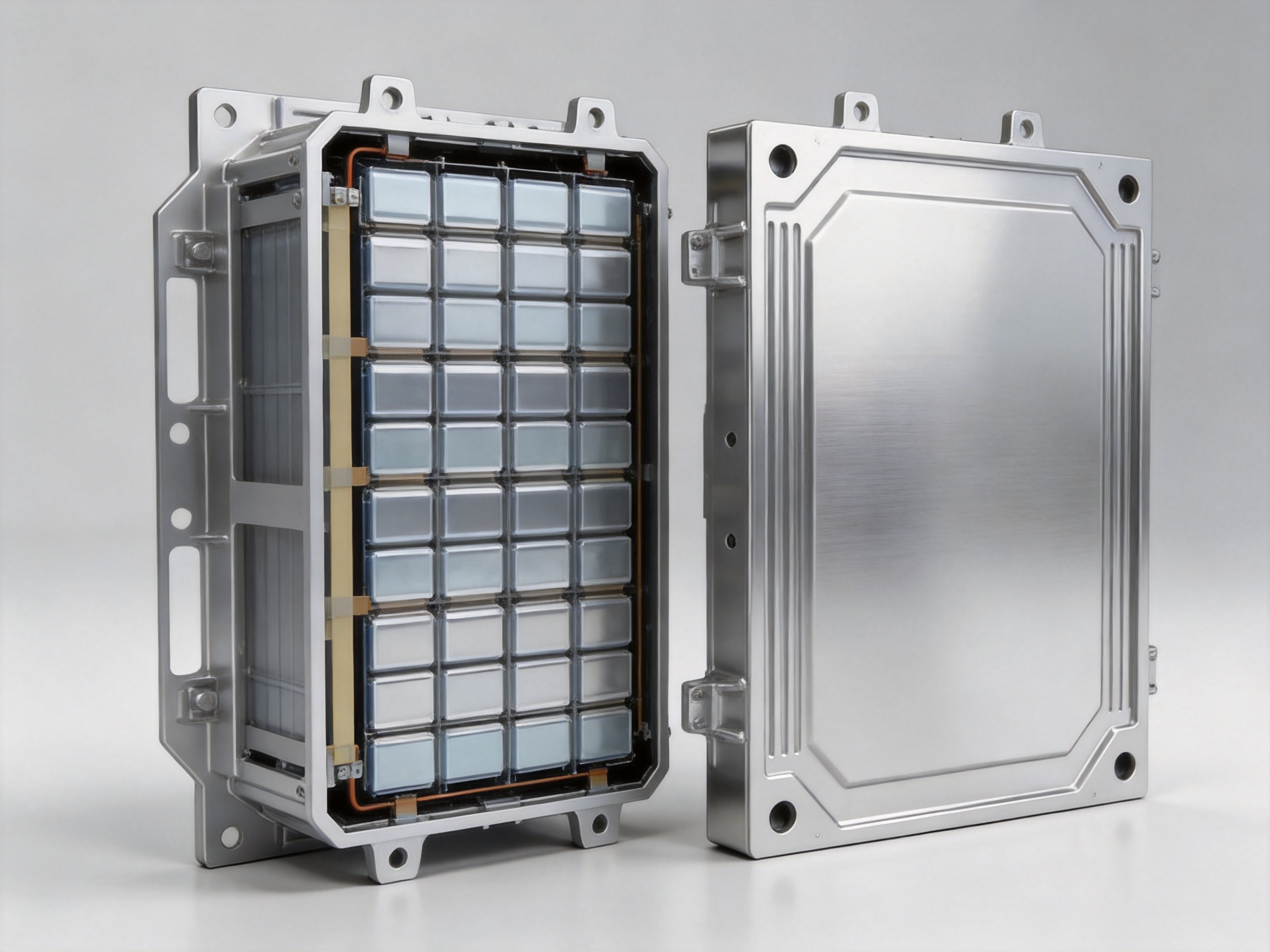
The supplier’s main value is not limited to the physical casting. A complete die-casting partner should contribute to product development, mold engineering, process planning, quality assurance, and production support. Ningbo Dinghong Mould Co., Ltd. combines these capabilities through an integrated manufacturing model.
The company was established in 2013 following the earlier development of Yuejin Mould in 1998. Its location in Daqi Street, Beilun District, Ningbo, places the manufacturing facility within an established die-casting and mold-production region. Proximity to Beilun Port also supports domestic and international logistics planning.
The company occupies approximately 15,000 square meters of plant space on a site of approximately 20 mu. Its operations include mold design, mold manufacture, aluminum alloy die casting, trimming, machining, finishing, inspection, and trade. This integrated arrangement can improve communication between engineering and production teams and reduce the need to coordinate separate suppliers for each major process.
Dinghong manufactures components for automotive, household appliance, telecommunications, electrical, new-energy, photovoltaic, motorcycle, pump and valve, fitness equipment, robotic, and other industries. This broad application experience exposes the engineering team to different requirements for strength, appearance, corrosion resistance, dimensional control, and production volume.
Energy storage products often share design challenges with automotive and electrical components, including vibration resistance, weight reduction, complex mounting, controlled tolerances, and production traceability. Experience in these related fields can support practical development decisions for battery-module components.
The manufacturing facility includes CNC machining centers, electrical discharge machining equipment, die-casting machines, automated trimming lines, and testing equipment. The combination of these resources supports a continuous workflow from tooling manufacture to finished-product processing.
High-precision CNC equipment contributes to accurate mold cavities, inserts, fixtures, and machined part features. EDM equipment supports complex tooling details. Die-casting machines provide the production platform for aluminum alloy components, while automated trimming lines can improve the consistency and efficiency of post-casting operations.
Dinghong has obtained ISO 9001 and IATF 16949 quality management system certifications. ISO 9001 provides a framework for process management, customer focus, corrective action, documentation, and continuous improvement. IATF 16949 is associated with the automotive supply chain and places additional emphasis on risk management, defect prevention, traceability, and process control.
Although an energy storage application may not always be automotive, the disciplined practices associated with these management systems can be beneficial. Battery-module customers often require clear specifications, controlled changes, documented inspection, reliable traceability, and formal handling of nonconforming products.
Consistent wall thickness helps promote predictable filling and solidification. Sudden changes between thick and thin areas can increase the risk of shrinkage, distortion, and uneven cooling. Where thickness transitions are necessary, gradual changes and appropriate fillets should be considered.
Draft allows the casting to be removed from the mold without damaging the part or the cavity. The required draft depends on the surface, texture, depth, alloy, and mold design. Insufficient draft can cause ejection problems, scuffing, or accelerated mold wear.
Datums should be established based on how the plate is assembled and inspected. Defining them early improves mold design, machining-fixture design, coordinate measurement, and communication between the customer and supplier.
Not every surface needs the same tolerance. Using tight tolerances only where function requires them can reduce tooling and machining costs. A practical drawing distinguishes as-cast dimensions, machined dimensions, cosmetic surfaces, and critical assembly features.
The fastening approach should be evaluated during product development. Threads may be machined after casting, formed through inserts, or created using other methods. The choice affects strength, assembly speed, serviceability, tooling complexity, and total cost.
Clearance for insulation sheets, thermal pads, busbar covers, sensors, cables, and connectors should be included in the early design. Late additions can result in awkward brackets, unnecessary machining, or interference during assembly.
Critical features should be accessible to inspection equipment. If a dimension cannot be measured reliably after production, it is difficult to control it systematically. Inspection points, gauges, fixtures, and sampling plans should be considered alongside the component design.
A well-developed die-cast energy storage plate can support several commercial and technical objectives. Part consolidation may reduce the number of purchased components and simplify inventory management. Integrated geometry can reduce assembly steps and improve the repeatability of module construction.
Weight reduction can make cabinets, racks, vehicles, and installation structures easier to handle. The lower mass of aluminum may also support system-level energy-efficiency goals, particularly in mobile applications. The value of weight reduction must be considered together with structural stiffness, thermal performance, cost, and recyclability.
Repeatable die-casting production can support expansion from pilot volumes to larger commercial programs. Once the mold and process have been validated, the supplier can produce standardized components with controlled cycle times and defined inspection procedures. This is important for customers planning long-term product programs.
Integrated manufacturing can also shorten communication paths. When mold engineering, casting, trimming, machining, finishing, and inspection are managed within one coordinated supply chain, design changes and process feedback can be handled more efficiently. This does not eliminate the need for customer approval, but it can improve responsiveness during development.
Energy storage plates should be packaged to prevent impact, abrasion, contamination, and deformation during storage and transportation. Packaging design depends on part size, surface finish, production quantity, stacking limitations, and customer assembly requirements. Protective separators may be used where finished surfaces could contact one another.
Clear labeling and batch identification support traceability from shipment back to production records. For international customers, packaging and documentation should be coordinated with logistics requirements, customs information, and the customer’s receiving procedures.
Dinghong’s sales network covers China, South America, Southeast Asia, and other international markets, with plans to expand into additional regions. This experience supports communication with customers that require export packaging, technical documentation, production scheduling, and cross-border delivery coordination.
Effective customer support begins before the purchase order. During quotation and development, the customer can provide three-dimensional models, two-dimensional drawings, alloy requirements, annual demand, target cost, surface specifications, inspection standards, and application information. The supplier can then evaluate tooling, cycle time, machining, finishing, packaging, and quality requirements more accurately.
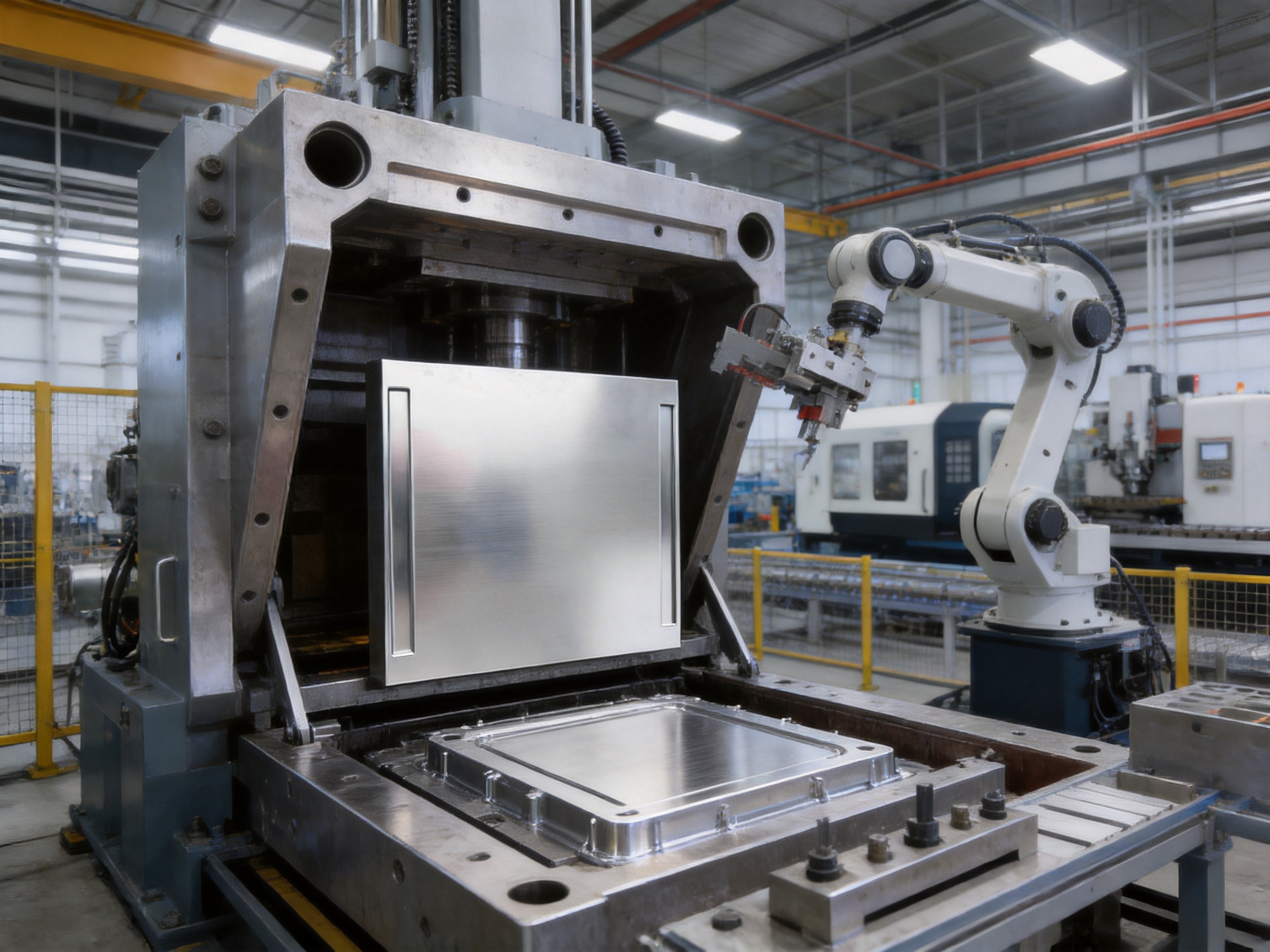
An energy storage end plate is a structural component installed at the end of a battery-cell stack. It helps maintain cell alignment, transmit compression or preload, support module assembly, and provide interfaces for mounting and electrical isolation components.
Aluminum alloy offers low density, good structural efficiency, corrosion resistance, thermal conductivity, and suitability for high-pressure die casting. It can also support the integration of ribs, bosses, holes, and other features into one component.
Yes. The geometry can be developed according to the cell arrangement, module dimensions, fastening structure, load requirements, insulation system, cooling design, and assembly method. Customization normally begins with customer drawings or three-dimensional data.
Depending on the design, integrated features may include reinforcing ribs, mounting bosses, locating points, recessed areas, cable clearances, connector supports, fastening interfaces, and protective structures. Features requiring tight tolerances may receive secondary CNC machining.
No. Some surfaces and features can be used in the as-cast condition when their tolerances and surface requirements permit. Machining is generally applied to critical holes, datums, threads, mounting surfaces, sealing areas, or other features requiring higher accuracy.
Internal quality is supported through mold-flow analysis, suitable gate and overflow design, controlled alloy preparation, stable injection parameters, effective venting, and process validation. Where specified, non-destructive testing or additional inspection methods may be used.
Yes. Depending on the application, the component may be deburred, shot blasted, coated, painted, or treated through another approved finishing process. The selected treatment should be compatible with insulation, thermal materials, fasteners, and environmental requirements.
Die casting can consolidate several structural features into one component. This may reduce brackets, welding, drilling, and separate fastening operations. The actual reduction depends on the product design and the required validation process.
Useful information includes three-dimensional models, two-dimensional drawings, material requirements, annual or monthly volume, critical tolerances, surface finish, inspection standards, packaging requirements, target application, and expected delivery schedule.
Yes. The company’s capabilities include mold design, mold-flow analysis, mold manufacturing, die casting, trimming, machining, finishing, and inspection. This integrated structure supports product development from initial design review through serial production.
Ningbo Dinghong Mould Co., Ltd. has obtained ISO 9001 and IATF 16949 quality management system certifications. Customer-specific inspection documents and quality requirements should be confirmed during project development.
The company serves customers in China, South America, Southeast Asia, and other markets. Export packaging, shipping terms, technical documents, and delivery arrangements can be discussed according to the customer’s project requirements.
The die-casting energy storage plate is a compact but highly functional component within a battery module. It supports cell-stack stability, preload transmission, mounting, alignment, electrical isolation interfaces, and the broader structural performance of the module. Its design must therefore address more than basic shape and appearance. Mold engineering, alloy selection, filling behavior, machining, surface treatment, inspection, and assembly integration all influence final performance.
Compared with fabricated, heavily machined, or multi-piece alternatives, a well-designed aluminum die-cast plate can provide lower weight, integrated geometry, efficient production, and repeatable dimensional performance. These advantages are particularly relevant as energy storage manufacturers seek scalable solutions for larger production volumes and increasingly demanding module designs.
Ningbo Dinghong Mould Co., Ltd. combines mold design, mold manufacturing, die casting, automated trimming, CNC machining, finishing, inspection, and quality-system management. Its experience across automotive, electrical, photovoltaic, telecommunications, and new-energy applications provides a foundation for developing customized energy storage plates. Through mold-flow analysis, advanced equipment, documented process control, and coordinated engineering support, the company can help customers convert battery-module requirements into practical, manufacturable components.
For a successful project, the customer and supplier should define functional loads, tolerances, alloy requirements, insulation interfaces, surface treatment, inspection standards, annual demand, and packaging expectations at an early stage. When these requirements are considered together, the die-casting energy storage plate can provide a reliable and efficient structural solution for modern battery-module production.
1. ISO 9001, Quality Management Systems—Requirements.
2. IATF 16949, Quality Management System Requirements for Automotive Production and Relevant Service Parts Organizations.
3. NADCA Product Specification Standards for Die Castings.
4. Aluminum Association, Aluminum Standards and Data.
5. ASM International, ASM Handbook: Casting.
6. Battery Energy Storage System Engineering and Manufacturing Practice Guides.
7. General design principles for high-pressure aluminum die casting, mold-flow analysis, and casting process control.

One large aluminum die casting can now replace what used to be 70 to 130 separately stamped and welded steel parts in a...
READ MOREDie casting automotive parts are made by forcing molten metal into a steel mold under high pressure, where it fills t...
READ MOREBefore a part ever reaches production, every buyer eventually asks the same question: should this component be injectio...
READ MORETwo quotations for the same aluminum controller housing can differ by 20% or more, even when both suppliers list the sa...
READ MORE

Sun Yuejun: +86-13806631860
Wang Shiyong: +86-15958891460 / 15058297768
Dove Yao: +86-18625086675


Copyright © Ningbo Dinghong Mould Co., Ltd. Rights Reserved. Custom Precision Die Casting Aluminum Alloy Parts Manufacturers
