
 English
 Español
 русский
 Français

One large aluminum die casting can now replace what used to be 70 to 130 separately stamped and welded steel parts in a...
READ MORE
Content
The F01R402N7501 die-cast reducer housing is a precision aluminum alloy structural component developed for demanding reducer and new energy powertrain applications. Designed to protect internal gears, shafts, bearings, seals, and lubrication systems, the housing combines structural rigidity, dimensional stability, efficient manufacturability, and long-term service reliability. Its integral casting construction and dense reinforcing-rib layout help it withstand the bending, torsional, vibration, and thermal conditions commonly associated with electric drive systems.
As electric vehicles and other new energy machines become more compact, efficient, and powerful, the reducer housing has become more than a simple protective shell. It is a load-bearing engineering component that influences gear alignment, bearing performance, noise and vibration behavior, sealing reliability, thermal management, service life, and overall system weight. A housing that lacks rigidity can allow shaft-center movement, uneven gear contact, accelerated bearing wear, oil leakage, and increased operating noise. The F01R402N7501 design addresses these challenges through an integrated die-casting structure with carefully reinforced load zones, thickened bearing seats, and a strengthened base.
Ningbo Dinghong Mould Co., Ltd. manufactures die-casting molds and aluminum alloy die-cast products for automotive, new energy, household appliance, telecommunications, photovoltaic, electrical, motorcycle, pump and valve, fitness equipment, robotic, and other industrial applications. With experience in mold design, mold manufacturing, die casting, finishing, testing, and trade, the company provides an integrated manufacturing service for customers requiring both tooling and production components.
The following article examines the construction, performance benefits, production process, quality-control approach, customization potential, and application value of the F01R402N7501 reducer housing.
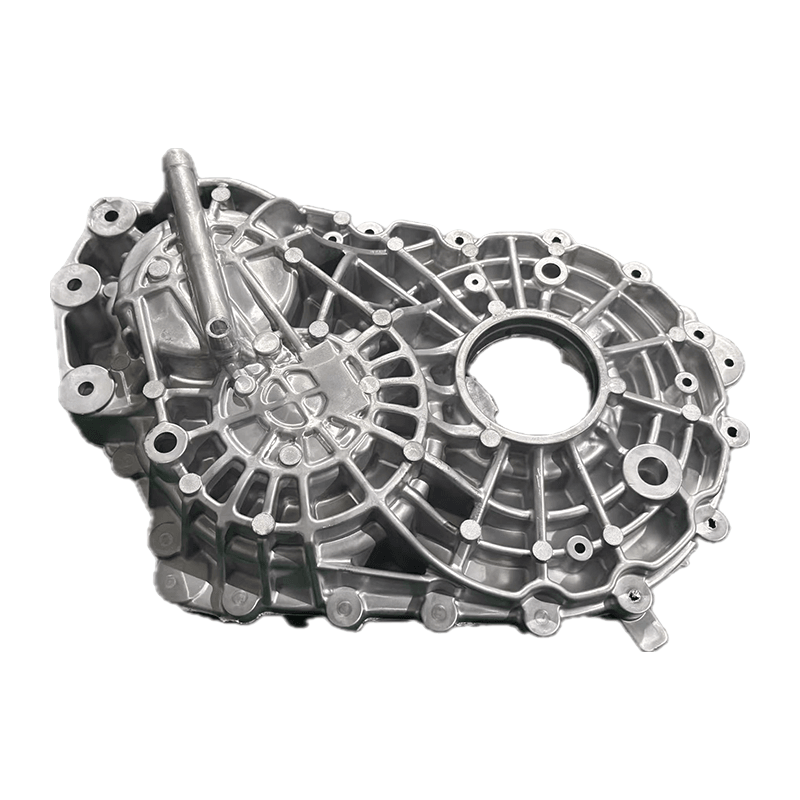
F01R402N7501 Die casting Reducer housing
A reducer housing forms the external structural body of a gear-reduction assembly. In an electric vehicle or other electrically powered machine, the reducer transfers and manages torque between the motor and the driven axle or mechanical output. The housing maintains the relative position of gears and shafts, supports bearings, contains lubricant, protects internal parts from contamination, and provides mounting interfaces for installation in the vehicle or equipment.
These requirements make the housing a precision component rather than a conventional enclosure. The positions of bearing bores, shaft openings, sealing surfaces, mounting holes, and gear clearances must remain within controlled tolerances. Even a small change in alignment can affect gear meshing, contact pressure, friction, noise, and service life. At the same time, the housing must be strong enough to handle road shock, vibration, torque reaction, and repeated thermal cycling.
New energy powertrains introduce several additional design considerations. Electric motors can operate at high rotational speeds, creating demanding requirements for balance, bearing support, and gear alignment. Instant motor torque can produce rapid load changes. Compact packaging can reduce the available wall thickness and installation space. Weight reduction is also important because lower mass can support improved vehicle efficiency and driving range. The housing must therefore provide a combination of light weight, high stiffness, accurate geometry, good heat dissipation, and stable performance.
Aluminum alloy die casting is well suited to these requirements. It enables the production of complex shapes with integrated ribs, bosses, mounting features, galleries, and curved external surfaces. Compared with a housing machined entirely from a solid block, die casting can reduce material waste, shorten production cycles, and combine multiple functions in one near-net-shape component. Compared with some heavier ferrous alternatives, aluminum alloy can reduce component mass and contribute to improved thermal transfer.
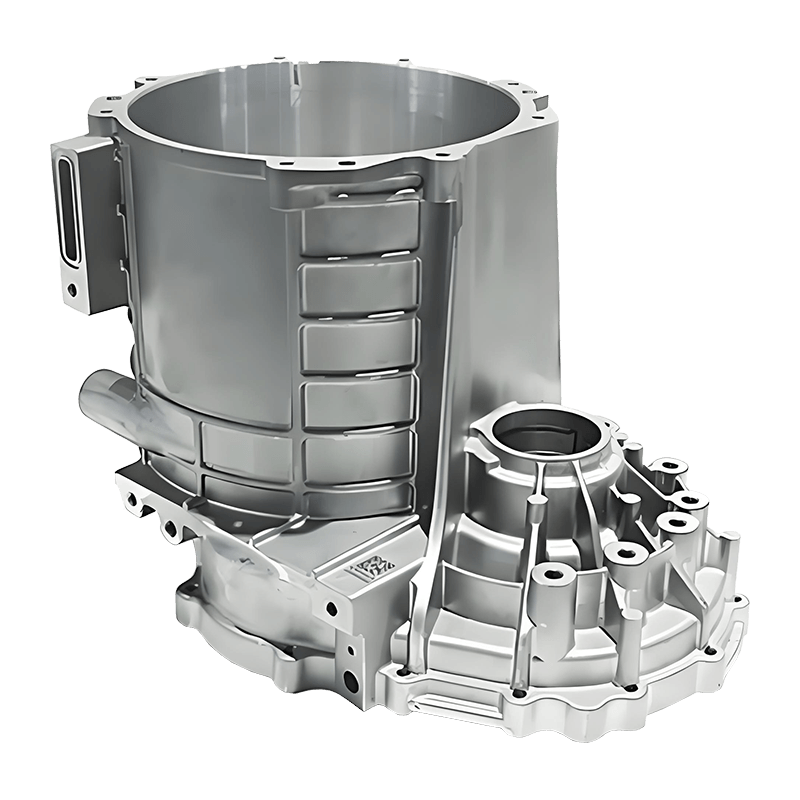
The F01R402N7501 is categorized as a die casting new energy part and is designed as a reducer housing. Its principal structural feature is an integral casting body with dense reinforcing ribs. The integrated construction reduces the need for multiple joined sections and allows load paths to be distributed through a unified component. This approach can improve stiffness, reduce joint-related concerns, and simplify downstream assembly.
The bearing seats and base areas are thickened to improve support in zones that experience concentrated forces. Bearing seats must resist deformation because they determine the position of rotating shafts. If a bearing seat shifts under load, the resulting misalignment may increase friction and wear. The strengthened base supports the housing at its mounting points and helps manage loads transferred from the reducer into the vehicle or equipment structure.
The housing is also intended to resist bending and torsion. These loads may be generated by gear engagement, motor torque, acceleration and deceleration, road impact, uneven mounting conditions, or vibration. A structure that distributes these loads efficiently is less likely to experience localized distortion. The stated design objective is to reduce susceptibility to cracking or deformation under heavy-load and vibration conditions while maintaining dimensional stability during extended operation.
In practical terms, the value of the F01R402N7501 lies in the relationship between its geometry, material, casting process, and finishing operations. A strong design alone cannot guarantee performance. The mold must accurately reproduce the geometry, filling and solidification must be controlled, machining must preserve critical dimensions, and inspection must confirm that the finished component meets technical requirements. Dinghong’s ability to combine these stages provides a unified route from product design to production delivery.
Integral casting means that key housing features are formed as part of a single die-cast body rather than being assembled from numerous separate pieces. This design can reduce the number of joints, fasteners, and interfaces. Fewer interfaces may simplify assembly and reduce potential pathways for leakage or structural movement. It can also improve consistency because the principal load-bearing geometry is created in one controlled casting operation.
The integrated structure is particularly useful for reducer housings because gear and bearing locations must remain accurately related to one another. If several housing sections are assembled, the final relationship between the sections depends on machining, fastening, sealing, and assembly control. A well-designed integral casting can reduce these variables, although critical surfaces may still require precision machining after casting.
Dense reinforcing ribs provide additional stiffness without requiring the entire housing wall to be made excessively thick. Ribs increase the section’s resistance to bending and help direct loads toward stronger regions of the casting. They may also support broad walls, reducing the likelihood of local flexing under pressure or vibration. This is an important advantage over a simple thin-wall enclosure with insufficient reinforcement.
Rib design must be carefully balanced. Excessive or poorly positioned ribs can increase casting difficulty, create uneven cooling, promote porosity, and generate unwanted stress concentrations. Appropriate rib thickness, transitions, draft angles, fillets, and intersections are therefore important. Mold-flow analysis and engineering review help evaluate how molten metal will fill the cavity and how the casting will solidify around these structural details.
Compared with a basic housing design, the F01R402N7501 approach emphasizes stiffness where it is most useful: around bearing support regions, the base, mounting areas, and broad structural panels. This targeted reinforcement can provide a practical balance between strength and weight. It avoids relying solely on thick walls, which may add unnecessary mass and increase thermal and casting challenges.
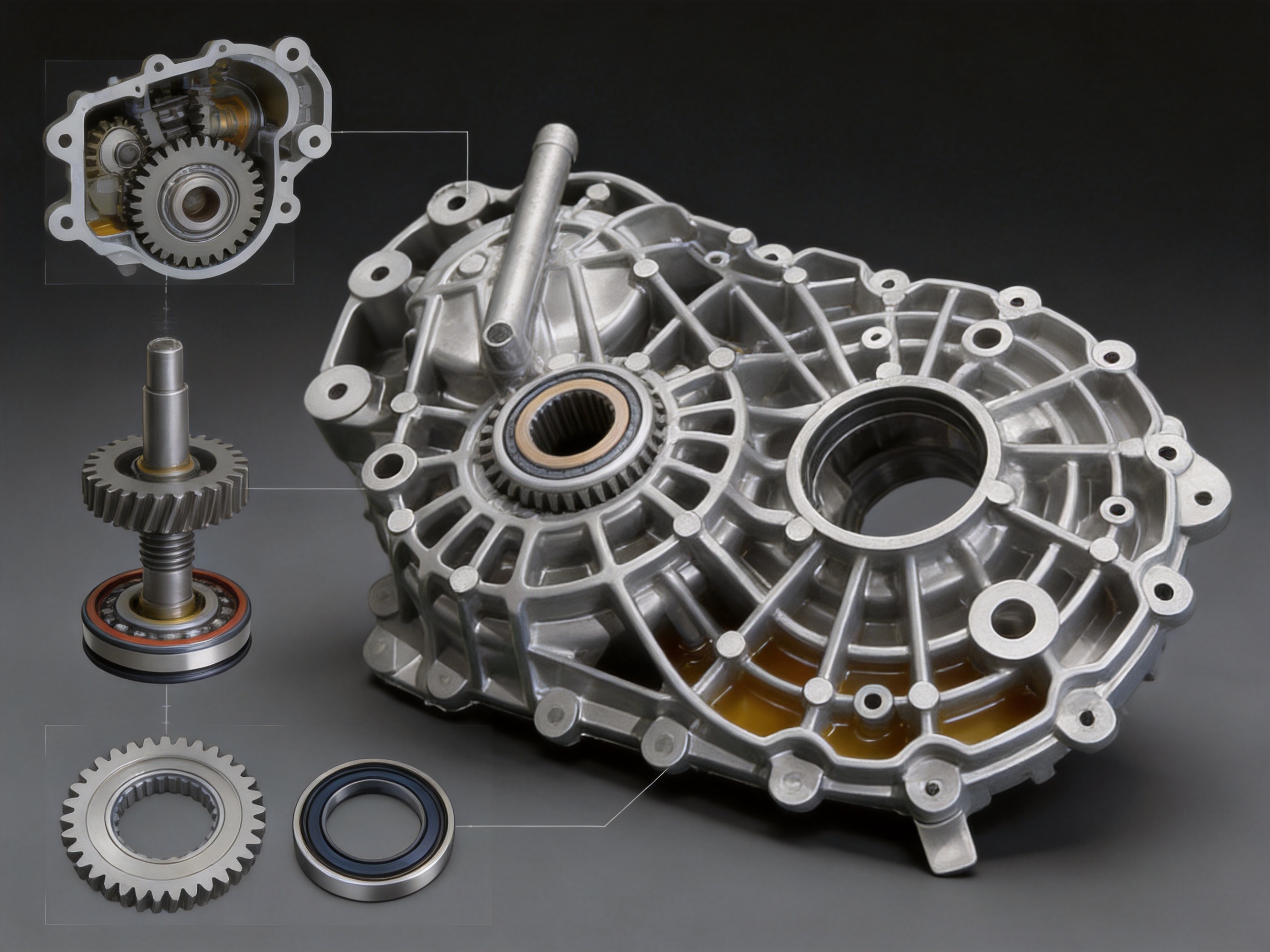
Bearing seats are among the most important functional areas of a reducer housing. They locate bearings that support rotating shafts and maintain the position of gears. During operation, the seats are exposed to radial forces, axial forces, vibration, and thermal expansion. Their geometry must remain stable so that the bearing outer rings are held correctly and the shaft centerline remains aligned with the rest of the reducer.
The thickened bearing-seat design of the F01R402N7501 provides additional material around these concentrated load zones. This can improve resistance to local deformation and help maintain the accuracy of machined bores. The additional support is particularly valuable in applications where high torque, rapid speed changes, or continuous vibration are present.
The base also plays a major role in overall housing performance. It transfers operating forces into the mounting structure and helps stabilize the reducer during acceleration, braking, and shock events. A reinforced base can reduce flexing around mounting points and limit the transfer of damaging distortion to the internal gear and bearing system.
When thickened areas are incorporated into a die-cast component, the transition between thick and thin sections must be controlled. Sudden changes in wall thickness can cause uneven cooling and shrinkage. For this reason, professional mold and process engineering are required to introduce gradual transitions, suitable radii, overflow arrangements, and effective feeding behavior. Dinghong’s mold-flow analysis capability supports this stage by allowing potential filling and solidification issues to be assessed before production tooling is completed.
Reducer housings experience combined loads rather than one isolated force. Gear engagement can generate radial and tangential forces. Motor torque can twist the housing and its mounting points. Vehicle movement or equipment operation can add vibration and impact. Thermal changes can create expansion and contraction. A reliable housing must manage this combination without losing dimensional accuracy.
The F01R402N7501 is designed to provide improved resistance to bending and torsion through its integral body, reinforcing ribs, thickened bearing areas, and strengthened base. These features help the housing preserve its shape under load. Maintaining shape is important because structural deformation can alter gear contact patterns, change bearing preload, increase seal movement, and produce abnormal noise.
Vibration resistance is also influenced by stiffness. A flexible housing can amplify vibration or allow internal components to move relative to one another. A stiffer housing can provide a more stable foundation for the rotating assembly. While final vibration behavior depends on the complete reducer system, including gears, bearings, shafts, lubricant, motor, and mounting system, the housing provides an essential structural contribution.
Crack resistance depends on material quality, geometry, process control, and service conditions. Local stress concentrations, internal defects, sharp transitions, and inadequate support can increase risk. The product design seeks to minimize susceptibility to cracking or deformation under heavy loads and vibration. This objective must be supported by proper alloy selection, controlled die-casting parameters, inspection of critical areas, and appropriate machining practices.
Dimensional stability is essential for any precision reducer housing. The component must preserve the position and shape of bearing seats, shaft openings, sealing interfaces, mounting surfaces, and fastening features over its service life. If these areas shift or distort, the performance of the complete assembly can deteriorate even when the gears and bearings themselves are manufactured accurately.
The F01R402N7501 is designed to reduce internal stress and maintain dimensional stability during long-term operation. Internal stress can result from uneven solidification, inconsistent cooling, machining removal, or unsuitable geometry. If not controlled, stress may be released after casting or machining, causing warpage or dimensional change.
Die-casting process design can help reduce these risks. Mold temperature, injection speed, filling sequence, pressure, cooling conditions, and ejection timing all influence the final condition of the casting. The mold must fill the cavity efficiently while limiting trapped air, cold shuts, incomplete filling, and excessive turbulence. Solidification should be as balanced as practical, especially around thickened bearing seats and base sections.
Post-casting operations are equally important. Flash removal, trimming, shot blasting, drilling, tapping, and CNC machining must be performed with suitable workholding and process sequences. If a housing is clamped improperly or material is removed unevenly, machining stress can affect the final geometry. A controlled production route helps ensure that the finished part retains the intended dimensional relationships.
| Design or Manufacturing Feature | Primary Function | Potential Performance Benefit |
|---|---|---|
| Integral die-cast structure | Creates major housing features in one unified body | Reduced joints, consistent structural geometry, and simplified assembly |
| Dense reinforcing ribs | Strengthen broad walls and distribute loads | Higher stiffness with controlled material use |
| Thickened bearing seats | Support bearing bores and shaft alignment | Improved resistance to local deformation and misalignment |
| Reinforced base | Transfers mounting and torque-reaction loads | Better stability under vibration, shock, and torque |
| Precision CNC machining | Finishes critical bores, faces, holes, and interfaces | Improved dimensional accuracy and assembly compatibility |
| Mold-flow analysis | Evaluates filling, cooling, and potential defects before tooling completion | More reliable mold design and reduced development risk |
| Quality inspection systems | Verifies dimensions, appearance, and process conformity | More consistent product quality and traceability |
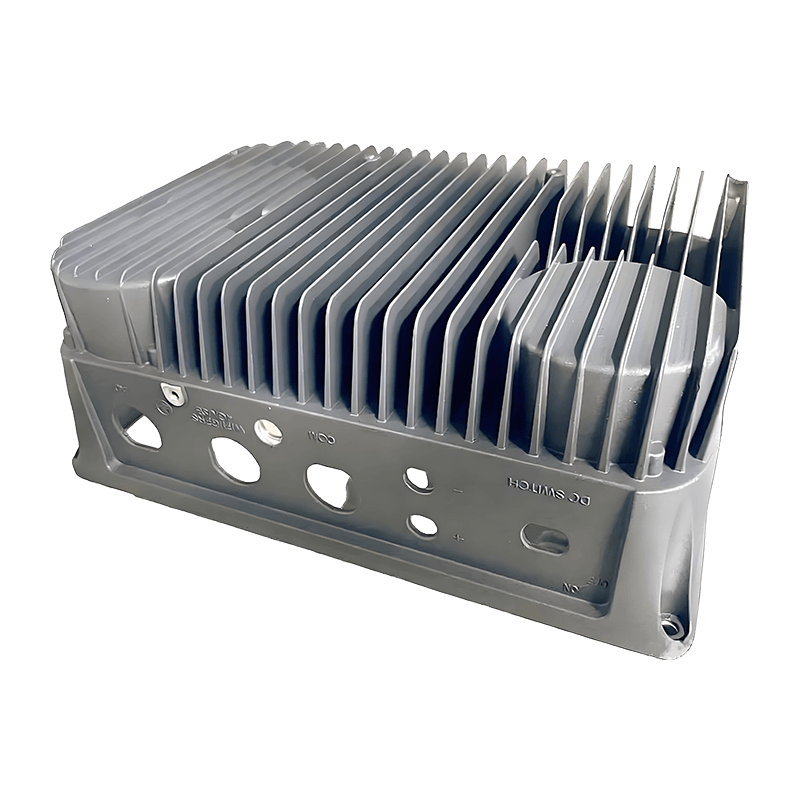
Aluminum alloy die casting offers several advantages for new energy structural parts. Aluminum alloys generally provide a favorable relationship between mass and strength, making them suitable for components where weight reduction matters. The process can also form complex external shapes, ribs, bosses, mounting pads, and internal contours with high repeatability when the mold and process are properly controlled.
For electric vehicles and compact drive systems, lower housing mass can help support vehicle efficiency and packaging objectives. Aluminum also offers useful thermal conductivity, which can assist heat transfer from the reducer assembly to the surrounding environment, depending on the alloy, wall design, surface condition, and overall system configuration.
Die casting can provide a near-net-shape starting point. This reduces the amount of material that must be removed through machining compared with manufacturing a housing from a large billet. Lower machining content can support shorter cycle times, better material utilization, and more economical high-volume production. The process is also compatible with automated trimming and repeatable production control.
However, high-quality die casting requires more than simply injecting metal into a mold. The product design must account for draft, parting lines, ejection, wall thickness, fillets, overflow locations, cooling, and machining allowances. The alloy must be suitable for the required mechanical and casting performance. Production parameters must be monitored and adjusted to achieve stable filling and solidification.
Dinghong’s manufacturing scope covers mold design, mold manufacturing, die casting, finishing, and trade. This integrated capability helps coordinate the relationship between component geometry and tooling. When the mold maker and die-casting producer work from a unified process plan, design-for-manufacture decisions can be made earlier and potential production problems can be addressed before mass production.
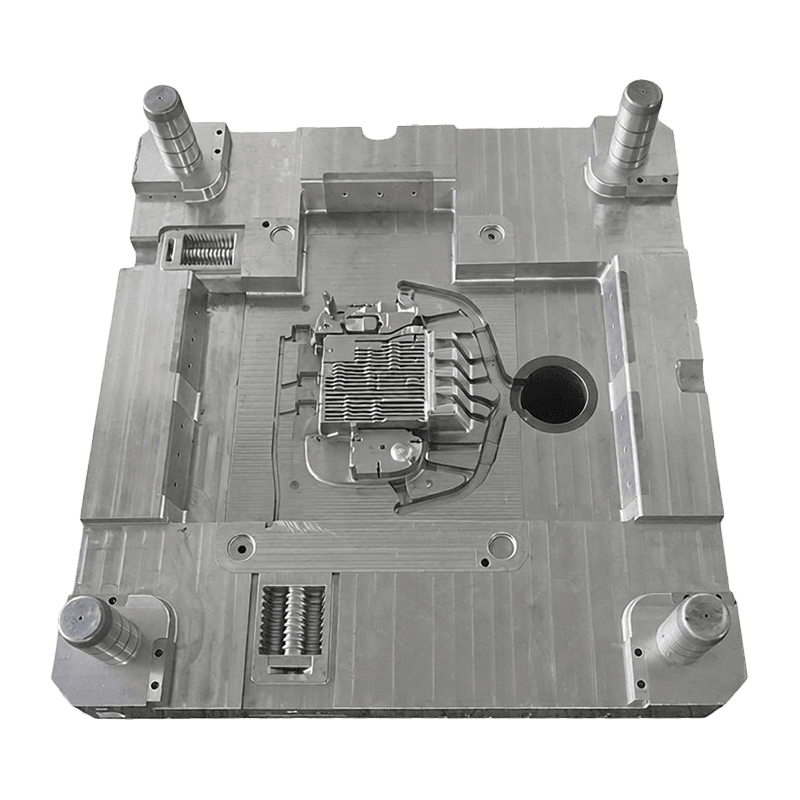
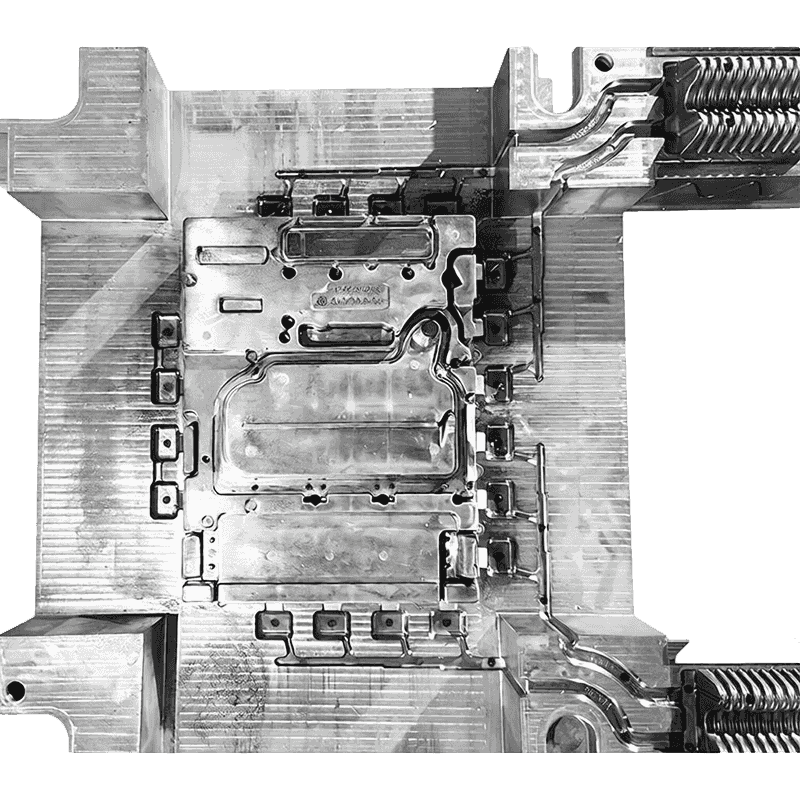
The mold is the foundation of a die-cast reducer housing. It determines how the molten alloy enters the cavity, how the component cools, how it is ejected, and how accurately important features are reproduced. A complex housing with ribs, thickened areas, mounting bosses, bearing supports, and curved surfaces requires careful mold engineering.
The development process normally begins with review of three-dimensional product data, functional requirements, material information, expected production volume, machining requirements, and quality standards. Engineers evaluate the parting line, draft angles, slide or insert requirements, ejector layout, gate arrangement, overflow design, cooling channels, and machining references.
Mold-flow analysis is an important part of this work. It can help visualize the filling pattern and identify areas where molten metal may hesitate, meet unfavorably, trap air, or cool too early. It can also assist with the evaluation of shrinkage, potential porosity, weld lines, and thermal balance. Analysis does not replace production testing, but it provides useful information for optimizing the design before steel is cut.
For the F01R402N7501, mold engineering must pay particular attention to transitions around the reinforcing ribs, bearing-seat areas, base sections, and mounting features. These regions can have different heat-transfer and solidification behavior. A well-designed gate, overflow, venting, and cooling system helps produce a more consistent casting and supports downstream machining.
Dinghong has an experienced design team supported by advanced software, equipment, and systems. Its mold-development capability allows the company to provide tooling solutions that are aligned with the intended casting process. This is an advantage for customers who need a complete solution rather than a mold sourced separately from production.
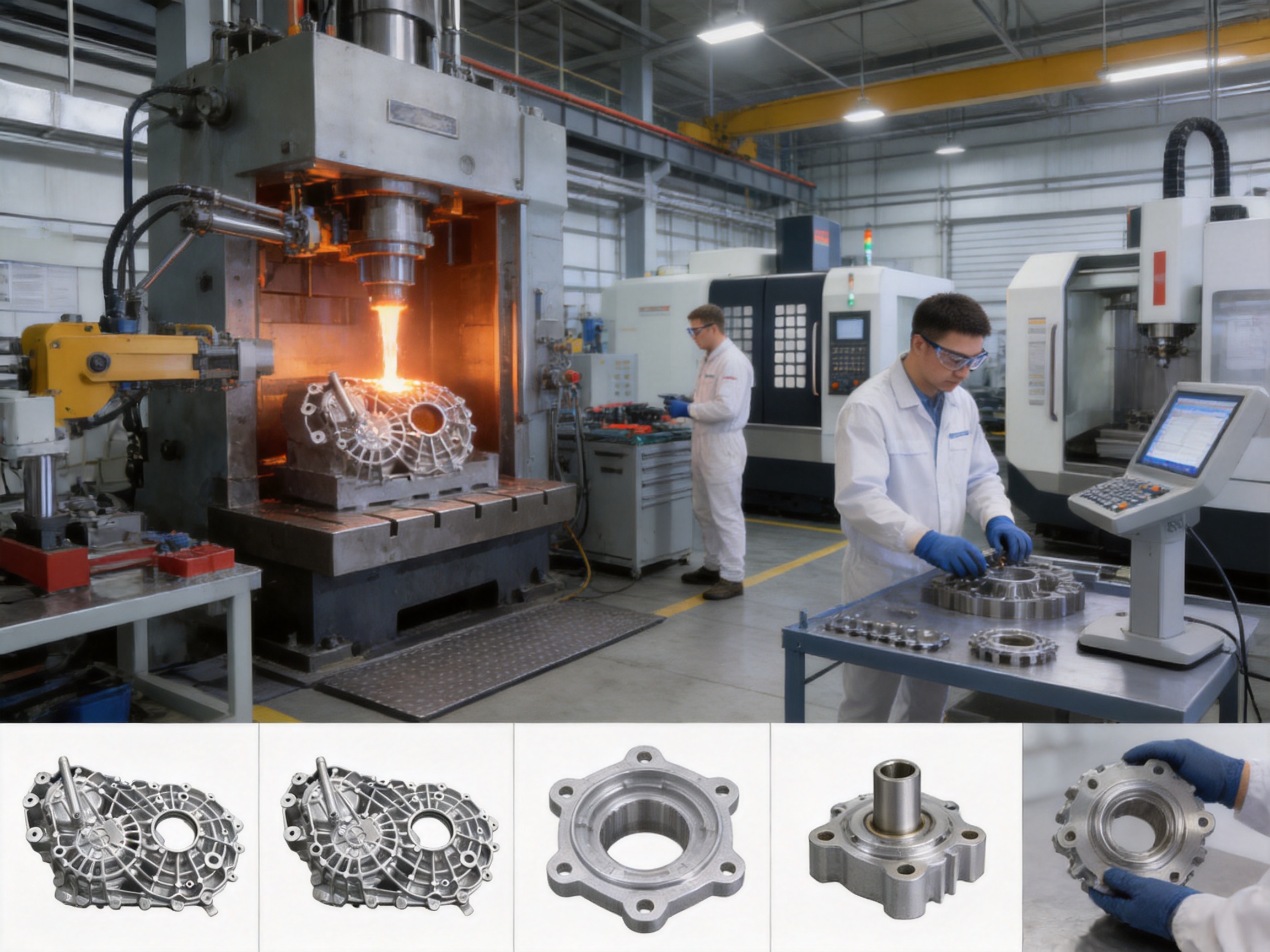
Production begins with preparation and control of the aluminum alloy. Material selection should reflect the required casting behavior, mechanical performance, corrosion resistance, dimensional stability, and finishing requirements. Consistent charge materials and controlled melting practices help support repeatable results.
Before casting, the alloy is brought to a suitable temperature and managed to limit contamination and excessive oxidation. Process records may include material batch information, melting temperature, holding conditions, and other parameters relevant to traceability. Stable material preparation is important because variations in alloy condition can influence filling, solidification, surface quality, and mechanical behavior.
The die is cleaned, inspected, assembled, and brought to an appropriate operating condition. Release agents and cooling systems must be managed carefully. The mold temperature affects filling behavior, surface finish, cycle time, and the risk of defects. Cooling channels should operate consistently so that the cavity remains thermally balanced during production.
During die casting, molten alloy is injected into the mold cavity at high speed and pressure. The injection profile must be matched to the housing geometry. If the filling speed is too low, premature solidification may lead to incomplete filling or cold shuts. If it is too high or poorly controlled, turbulence and air entrapment may increase.
The runner and gate design directs metal toward the required regions. For a reinforced housing, the flow must reach rib intersections, thickened bearing seats, base sections, and remote cavity areas without creating unacceptable discontinuities. Proper venting and overflow design can help manage trapped air and promote more complete filling.
After filling, the casting solidifies under pressure. Cooling conditions influence shrinkage, internal integrity, surface appearance, and dimensional stability. The mold must support appropriate heat removal while avoiding excessive temperature differences between sections.
Once the casting has solidified sufficiently, the mold opens and ejector systems remove the part. Ejection must be balanced to prevent distortion or damage to thin walls, ribs, bosses, and other features. The casting then proceeds to trimming and inspection.
Excess material from gates, runners, overflows, and flash is removed through trimming and finishing operations. Automated trimming lines can improve consistency and production efficiency, especially for repeat orders. Additional operations may include deburring, shot blasting, surface cleaning, drilling, tapping, reaming, and CNC machining.
The required machining plan depends on the customer’s drawing and assembly requirements. Bearing bores, sealing faces, mounting planes, threaded holes, and datum surfaces commonly require controlled machining. The near-net-shape casting reduces the amount of material removed while providing a stable basis for precision finishing.
Die casting creates the basic geometry, but critical functional features often require machining. CNC machining centers can finish bearing seats, mounting faces, shaft openings, threaded holes, dowel holes, sealing surfaces, and other interfaces to specified dimensions.
Machining accuracy depends on the machine, fixture, tool condition, datum strategy, cutting parameters, coolant management, and inspection method. The housing should be located from stable references that reflect its functional assembly position. Incorrect datum selection can create dimensional relationships that appear individually acceptable but do not assemble correctly.
For the F01R402N7501, machining must preserve the relationship between bearing seats, shaft openings, mounting surfaces, and internal reducer features. The process plan should consider how the housing is supported during machining and whether any stress relief or stabilization period is appropriate before final finishing.
Tool wear monitoring can help maintain bore size, surface finish, and hole-position accuracy during production. Periodic inspection of first-off parts, process samples, and final components supports early detection of drift. Where required, coordinate measurement or other precision inspection methods can verify critical dimensions and geometric relationships.
Consistent machining also improves assembly efficiency. Correctly finished mounting faces can reduce installation difficulty. Accurate threaded holes can support reliable fastener engagement. Properly controlled sealing surfaces can reduce the risk of leakage. Stable bearing bores can help maintain shaft alignment and reduce operating irregularities.
Quality control for a reducer housing should cover the complete production chain, from design and mold development through casting, finishing, machining, and final shipment. A visual inspection alone is not sufficient for a precision structural component. Dimensional, material, process, and functional requirements must be considered together.
Ningbo Dinghong Mould Co., Ltd. has obtained ISO 9001 and IATF 16949 quality management system certifications. ISO 9001 provides a framework for controlled quality processes and continual improvement. IATF 16949 is associated with quality management requirements for the automotive supply chain and emphasizes process control, risk management, traceability, defect prevention, and customer-specific requirements.
Inspection activities may include incoming material verification, mold inspection, first-article approval, in-process visual checks, dimensional measurement, machining inspection, and final product review. The exact inspection plan should be established according to the customer’s drawings, specifications, application risks, and production volume.
Important inspection areas for a reducer housing may include:
• Overall dimensions and casting profile.
• Bearing-seat diameter, roundness, position, and alignment.
• Mounting-face flatness and hole position.
• Thread condition and depth.
• Sealing-surface quality and dimensional conformity.
• Rib integrity, base condition, and surface appearance.
• Flash, burrs, cracks, cold shuts, and visible casting defects.
• Internal integrity where specified by the customer.
• Cleanliness and removal of machining chips or casting residue.
Advanced testing equipment supports the company’s quality-control procedures. Inspection results can be used to identify process trends, support corrective action, and improve future mold or production runs. For long-term supply programs, documented control plans and traceability can help customers manage their own assembly and warranty requirements.
The F01R402N7501 offers several advantages compared with a basic, lightly reinforced, or poorly integrated reducer housing design.
Dense reinforcing ribs and an integral cast body increase structural support without depending entirely on thick walls. This can improve resistance to bending and torsion while supporting a practical weight-to-strength balance.
Thickened bearing seats provide additional material around critical support zones. This helps reduce local deformation and supports the dimensional relationships required for stable shaft and gear operation.
The reinforced base is designed to manage loads transferred through mounting points. This can reduce flexing and help preserve the position of the housing relative to the larger vehicle or machine structure.
The design objective of minimizing internal stress and maintaining dimensional stability is valuable for long-term operation. Stable housing geometry supports consistent bearing, gear, and sealing performance over repeated operating cycles.
The integrated design can be produced as a near-net-shape aluminum die casting, reducing the need for extensive machining and multiple assembly operations. This may support competitive production cost and consistent repeatability in larger quantities.
Because the manufacturer provides mold design, mold manufacturing, die casting, finishing, and machining coordination, the product can be developed around the customer’s functional requirements rather than treated as a generic enclosure. This supports customization of mounting interfaces, machining datums, wall features, and production specifications.
Ningbo Dinghong Mould Co., Ltd. was established in 2013 following the establishment of Yuejin Mould in 1998. The company is located in Daqi Street, Beilun District, Ningbo, Zhejiang Province, near Beilun Port. Its location supports access to manufacturing resources, logistics infrastructure, and international shipping channels.
The company occupies approximately 15,000 square meters of plant space and has developed from a smaller factory into a modern manufacturing enterprise. Its operations include mold design, mold manufacturing, die casting, finishing, and trade. This combination allows customers to coordinate tooling and production through one experienced supplier.
Available production resources include high-precision CNC machining centers, EDM equipment, die-casting machines, automated trimming lines, and testing equipment. CNC machining centers support precision finishing of functional surfaces. EDM equipment is useful for detailed mold features and complex tool geometries. Die-casting machines support the production of aluminum alloy components, while automated trimming lines can improve repeatability and productivity.
The company serves automotive and major OEM customers and manufactures automotive parts, household appliance parts, telecommunication parts, and other aluminum alloy products. Its product experience includes components for new energy, photovoltaic, electrical, motorcycle, pump and valve, fitness equipment, robotic, and related industries.
An experienced design team uses advanced software and mold-flow analysis to visualize and optimize tooling concepts before production. This reduces development uncertainty and helps align the mold with the final product’s structural and quality requirements. For a complex reducer housing, early engineering review can be especially valuable because mold corrections after tool completion can increase cost and lead time.
Although the F01R402N7501 is identified by a specific product code, reducer housings are often developed according to the needs of a particular drive system. Customers may require changes to mounting holes, bearing-seat dimensions, sealing features, connector openings, sensor interfaces, rib layout, wall thickness, or machining tolerances.
Customization should begin with a clear exchange of technical information. Useful inputs include three-dimensional models, two-dimensional drawings, material requirements, production quantity, assembly data, critical-to-quality characteristics, surface treatment expectations, testing requirements, and packaging specifications.
The manufacturer can then evaluate casting feasibility, mold complexity, machining requirements, expected cycle time, and quality-control needs. Design-for-die-casting feedback may identify opportunities to improve draft, reduce unnecessary thickness changes, strengthen transitions, simplify machining, or improve filling and cooling behavior.
Collaboration is also important when a customer is replacing an existing housing. A new aluminum die-cast design may offer weight or cost benefits, but the redesign must preserve interface compatibility, internal clearance, bearing support, seal location, and thermal behavior. A structured review helps prevent problems during prototype assembly and validation.
The F01R402N7501 is intended for reducer and new energy applications where a lightweight, rigid, and dimensionally stable housing is required. Potential application environments include electric vehicle drive units, compact electric axles, industrial electric drives, automated equipment, robotic mechanisms, and other systems using gear reduction.
In electric vehicles, the housing may be integrated with a motor, inverter, differential, or axle assembly. The exact configuration depends on the vehicle platform and powertrain architecture. In industrial equipment, it may support a geared actuator, conveyor drive, automated positioning system, or compact transmission.
The suitability of the product for a particular application depends on design verification and customer specifications. Factors such as torque, speed, temperature, lubricant, mounting arrangement, vibration spectrum, environmental exposure, and service life must be assessed. The product’s structural design provides a strong basis, but final validation should be conducted as part of the complete reducer system.
For photovoltaic tracking systems, robotic equipment, and automated machinery, compact gear housings may be exposed to continuous duty cycles and repeated directional changes. The same structural principles—bearing support, torsional stiffness, stable mounting, and reliable sealing interfaces—remain important even when the operating environment differs from an electric vehicle.
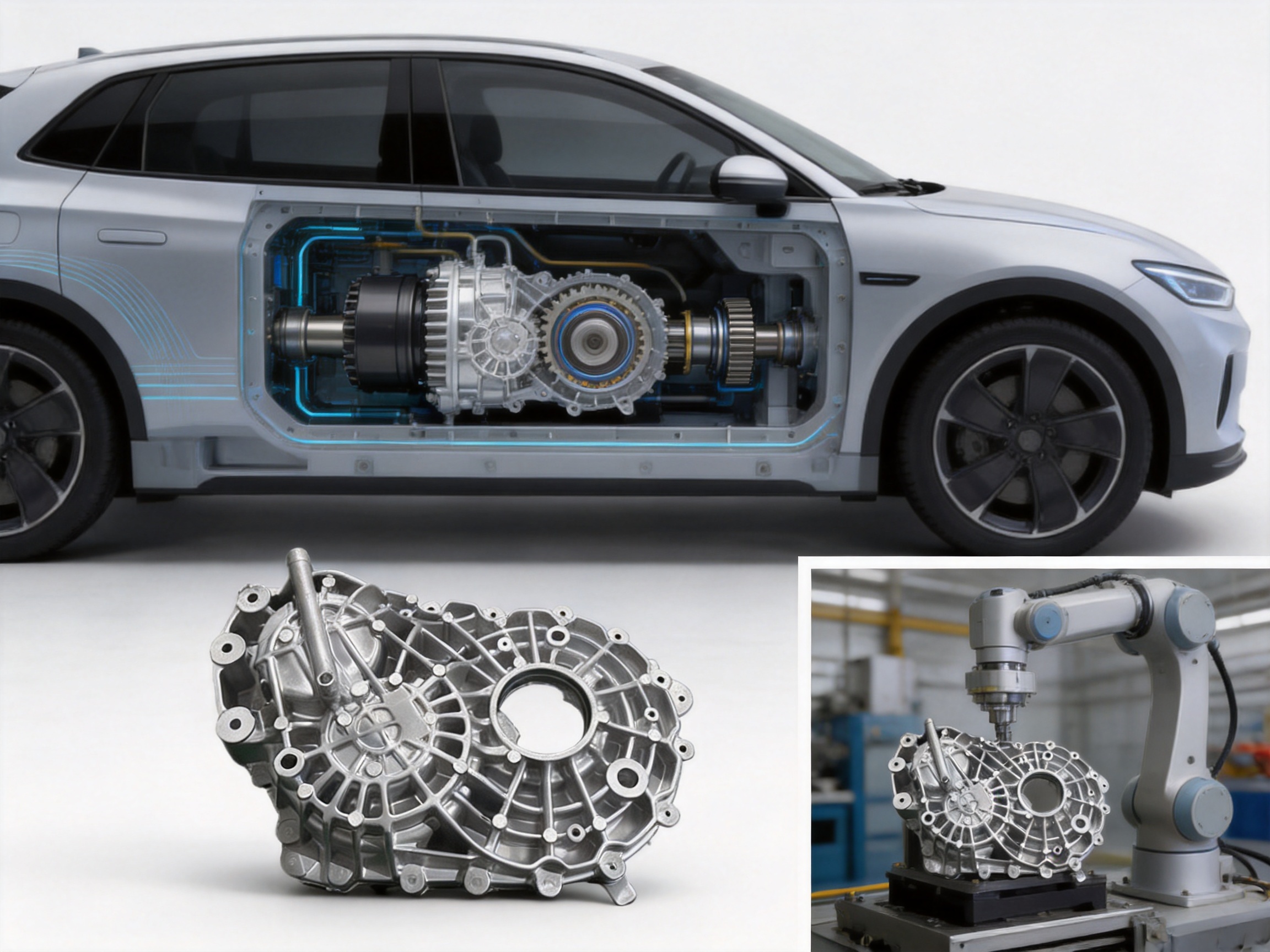
Die-cast housings must be protected from impact, contamination, moisture, and deformation during storage and transportation. Packaging should prevent contact between machined surfaces and provide adequate support for ribs, bosses, mounting features, and sealing faces. Where components are shipped internationally, packaging should also reflect the expected transit time, handling conditions, and environmental exposure.
Ningbo Dinghong Mould Co., Ltd. is located near Beilun Port, an important logistics location in Ningbo. This can support domestic and international shipments to customers in China, South America, Southeast Asia, and other markets. The company also plans to expand into additional international regions, including Europe.
Supply support involves more than shipping finished components. Customers may require production scheduling, sample approval, engineering communication, inspection documentation, packaging confirmation, and repeat-order management. A manufacturer with integrated tooling and production capabilities can coordinate these activities more efficiently than a supply chain divided among unrelated mold, casting, and machining vendors.
When evaluating a die-cast reducer housing supplier, buyers should review the complete manufacturing capability rather than focusing only on the quoted unit price. Important questions include whether the supplier can design and build the mold, perform mold-flow analysis, control die casting, complete precision machining, inspect critical dimensions, and support continuous production.
Buyers should also examine the supplier’s experience with comparable structural components. Relevant experience may include automotive housings, electric drive parts, motor covers, gear cases, pump bodies, or other aluminum alloy castings with demanding dimensional and mechanical requirements.
Quality-system certification is another important factor. ISO 9001 and IATF 16949 certification indicate that the supplier has established management processes suited to controlled production and automotive-related quality expectations. Certification does not replace product-specific validation, but it provides a useful foundation for process discipline.
Technical communication should be evaluated as well. A capable supplier should be able to discuss draft angles, parting lines, ribs, machining allowances, material selection, porosity risk, distortion control, inspection points, and production feasibility. Early communication can reduce tooling changes and improve the chance of successful first-article approval.
The reducer housing must be installed according to the complete assembly drawing and the customer’s process requirements. Bearing installation, seal installation, fastener torque, lubricant filling, alignment, and cleanliness can all influence the final performance of the reducer. Even a precisely manufactured housing may not perform correctly if assembly procedures are uncontrolled.
Machined bearing seats and sealing surfaces should be kept clean and protected from scratches. Fasteners should be tightened using the specified sequence and torque. If the housing is mounted to a larger structure, the mating surface should be free of burrs and contaminants. Uneven mounting can introduce stress into the housing and affect alignment.
During service, inspection may include checking for unusual noise, vibration, leakage, mounting looseness, or abnormal temperature. These symptoms can result from many parts of the system, so diagnosis should consider gears, bearings, lubricant, seals, motor behavior, and mounting conditions together.
Aluminum die casting can contribute to resource efficiency by producing complex parts close to their final shape. Compared with extensive machining from a solid block, near-net-shape production can reduce removed material and shorten machining time. Efficient mold design and automated production can also reduce repetitive manual operations.
Aluminum is recyclable, and manufacturing scrap generated during trimming or machining may be managed through controlled recycling systems, subject to alloy segregation and the company’s material procedures. Responsible recycling can reduce waste and improve material utilization.
Long service life is another aspect of sustainability. A housing that maintains structural integrity, dimensional stability, and sealing performance over extended operation can reduce the need for replacement parts and associated manufacturing resources. Product durability should therefore be considered together with material use, process efficiency, and end-of-life recycling.
The F01R402N7501 is an aluminum alloy die-cast reducer housing designed for new energy and related powertrain applications. It features an integral casting body, dense reinforcing ribs, thickened bearing seats, and a reinforced base.
The housing supports and protects the reducer’s internal gears, shafts, bearings, seals, and lubrication system. It also maintains the alignment of internal components and provides mounting interfaces for installation in a vehicle or machine.
Reinforcing ribs increase structural stiffness and distribute loads across the housing. They can improve resistance to bending and torsion without requiring the entire housing to be made significantly thicker or heavier.
Bearing seats support the bearings that locate rotating shafts. Thickening these regions helps resist local deformation and supports stable bearing and gear alignment under torque, vibration, and repeated operating loads.
The product is categorized as a die casting new energy part and is designed for reducer applications. Final suitability depends on the customer’s torque, speed, temperature, vibration, packaging, sealing, and validation requirements.
Ningbo Dinghong Mould Co., Ltd. provides mold design, mold manufacturing, die casting, trimming, finishing, CNC machining, testing, and related production support.
Customization can be discussed according to the customer’s drawings, three-dimensional model, performance requirements, mounting interfaces, bearing dimensions, sealing arrangement, machining tolerances, and expected production volume.
Mold-flow analysis helps evaluate how molten alloy fills and solidifies in the cavity. It can support improvements to gate locations, venting, overflow design, cooling, wall transitions, and defect prevention before the mold is manufactured.
Ningbo Dinghong Mould Co., Ltd. has obtained ISO 9001 and IATF 16949 quality management system certifications. Product-specific inspection and validation requirements should still be agreed with the customer.
The company operates high-precision CNC machining centers, EDM equipment, die-casting machines, automated trimming lines, and testing equipment. These resources support tooling, casting, finishing, machining, and inspection operations.
Aluminum die casting can offer reduced mass, complex integrated geometry, good repeatability, efficient material use, and reduced machining compared with manufacturing a housing entirely from a solid block.
Buyers should provide product drawings or three-dimensional data, material requirements, annual or monthly volume, critical dimensions, assembly information, inspection standards, surface requirements, and packaging expectations. The supplier can then evaluate tooling and production feasibility.
The F01R402N7501 die-cast reducer housing is designed to meet the structural and dimensional demands of modern new energy powertrain systems. Its integral casting construction, dense reinforcing ribs, thickened bearing seats, and strengthened base provide a practical foundation for resisting bending, torsion, vibration, and long-term deformation.
The product’s advantages are supported by a complete manufacturing process. Mold-flow analysis helps optimize the tooling concept. Die casting creates a complex near-net-shape aluminum alloy body. Automated trimming and finishing improve production efficiency. CNC machining provides the accuracy required for bearing bores, mounting faces, sealing interfaces, and other functional features. Inspection and quality-management systems support repeatable production and customer-specific requirements.
Ningbo Dinghong Mould Co., Ltd. combines mold design, mold manufacturing, die casting, finishing, machining coordination, and testing within one manufacturing organization. Its ISO 9001 and IATF 16949 certifications, experienced technical team, modern equipment, and experience across automotive and industrial sectors provide a strong foundation for supplying precision aluminum alloy components.
For customers seeking a reliable reducer housing, the F01R402N7501 offers a balanced combination of structural reinforcement, dimensional stability, die-cast efficiency, and application-oriented engineering. Its final performance should be confirmed through product-specific design review, sample approval, assembly evaluation, and validation testing, but its architecture provides a solid platform for demanding electric drive and industrial reducer applications.
1. Aluminum Association. Aluminum Standards and Data: Designations, Properties, and Applications of Aluminum Alloys.
2. International Organization for Standardization. ISO 9001: Quality Management Systems—Requirements.
3. International Automotive Task Force. IATF 16949: Quality Management System Requirements for Automotive Production and Relevant Service Parts Organizations.
4. American Foundry Society. Die Casting Design and Process Engineering Principles.
5. European Aluminium. Aluminum Applications in Automotive and Electric Mobility Systems.
6. NADCA. Product Specification Standards for Die Castings.
7. ASM International. ASM Handbook: Volume 15, Casting.
8. Society of Automotive Engineers. Engineering Considerations for Electric Drive Units, Gear Housings, and Lightweight Vehicle Structures.
9. Ningbo Dinghong Mould Co., Ltd. Company Manufacturing Information and Product Materials.

One large aluminum die casting can now replace what used to be 70 to 130 separately stamped and welded steel parts in a...
READ MOREDie casting automotive parts are made by forcing molten metal into a steel mold under high pressure, where it fills t...
READ MOREBefore a part ever reaches production, every buyer eventually asks the same question: should this component be injectio...
READ MORETwo quotations for the same aluminum controller housing can differ by 20% or more, even when both suppliers list the sa...
READ MORE

Sun Yuejun: +86-13806631860
Wang Shiyong: +86-15958891460 / 15058297768
Dove Yao: +86-18625086675


Copyright © Ningbo Dinghong Mould Co., Ltd. Rights Reserved. Custom Precision Die Casting Aluminum Alloy Parts Manufacturers
