
 English
 Español
 русский
 Français

One large aluminum die casting can now replace what used to be 70 to 130 separately stamped and welded steel parts in a...
READ MORE
Content
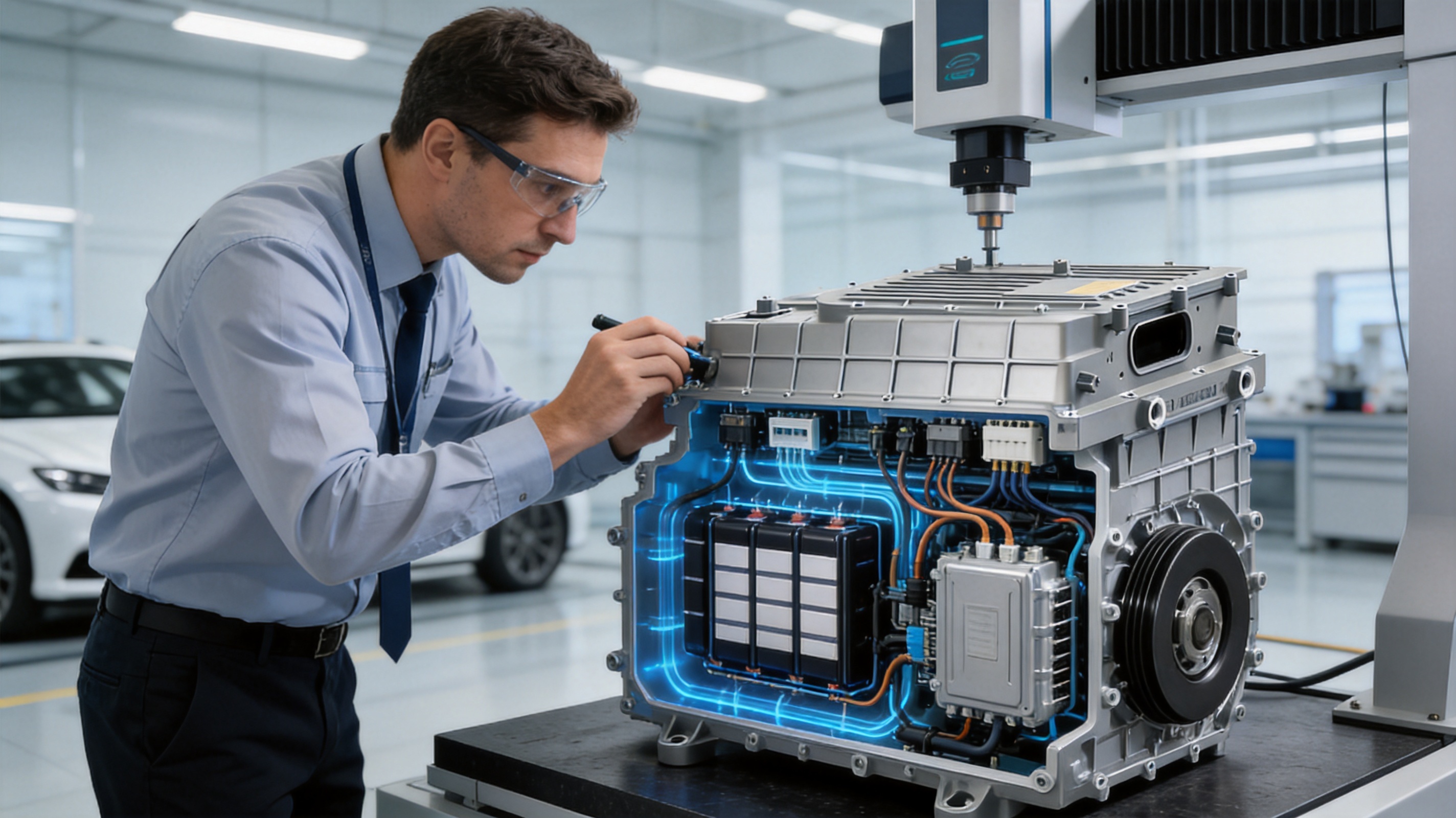
New energy vehicles depend on compact, reliable, and highly integrated electronic systems to manage propulsion, energy storage, charging, safety, and communication. At the center of this architecture are the electronic control units that coordinate the vehicle control unit, motor controller, battery management system, power distribution functions, and other electrical subsystems. As these systems become more powerful and more integrated, their housings and structural components must provide much more than basic mechanical protection. They must support thermal management, electromagnetic compatibility, sealing, dimensional accuracy, assembly efficiency, and long-term durability in demanding operating environments.
Precision aluminum alloy die casting is an effective manufacturing solution for these requirements. It enables the production of complex electronic control unit housings and related parts with thin walls, integrated mounting features, cooling structures, cable interfaces, reinforcing ribs, and carefully controlled sealing surfaces. Compared with assemblies made from multiple machined or stamped components, a well-designed die-cast housing can reduce part count, simplify assembly, improve structural consistency, and create a more efficient path for heat dissipation.
Die casting for new energy vehicle electronic control units requires close cooperation between product design, mold engineering, material selection, casting-process development, machining, finishing, inspection, and final quality control. Ningbo Dinghong Mould Co., Ltd. provides this integrated capability through mold design and manufacturing, aluminum alloy die casting, automated trimming, precision machining, finishing, testing, and trade services. With experience in automotive components and a manufacturing base in Ningbo, Zhejiang, the company supports customers seeking dependable die-casting molds and finished aluminum alloy parts for modern vehicle electronics.
The electronic control system of a new energy vehicle functions as the vehicle’s central decision and coordination network. It gathers information from sensors, interprets operating conditions, and sends instructions to the battery, electric motor, charging system, braking system, thermal-management system, and other vehicle subsystems. The performance of the control system directly affects driving safety, energy efficiency, acceleration response, charging behavior, battery life, and overall vehicle reliability.
Three major control functions are commonly associated with the new energy vehicle “three-electric” system. The vehicle control unit, or VCU, coordinates vehicle-level operating logic. It receives signals from the accelerator pedal, brake pedal, gear selector, battery system, motor system, and safety devices. It then determines how the vehicle should respond and communicates commands to the relevant components.
The motor control unit, or MCU, manages the operation of the electric motor. It converts direct current from the battery into the alternating current required by the traction motor and regulates torque, speed, regenerative braking, and operating efficiency. Because the MCU handles high electrical power and generates heat during operation, its housing must support effective heat transfer and protect internal components from vibration, moisture, dust, and mechanical damage.
The battery management system, or BMS, monitors the condition of the battery pack. It measures parameters such as cell voltage, pack voltage, temperature, current, and state of charge. It can also support cell balancing and issue warnings or protective commands when abnormal conditions occur. A BMS enclosure must maintain a stable and protected environment for sensitive electronic boards and connections.
Modern vehicle manufacturers increasingly combine several of these functions into integrated electronic assemblies. An integrated system may reduce wiring, connectors, brackets, and separate housings. It can also reduce installation space and vehicle weight while improving the coordination between control functions. However, integration makes the housing more technically demanding. One die-cast enclosure may need to accommodate multiple electronic modules, cooling paths, mounting locations, connectors, shielding requirements, and sealing interfaces in a single component.
This trend creates a strong need for advanced die-casting design and manufacturing. The housing must be light enough for vehicle efficiency but strong enough for structural protection. It must be compact yet capable of accommodating complex internal features. It must be produced efficiently in large quantities while maintaining stable dimensional quality from one batch to the next.
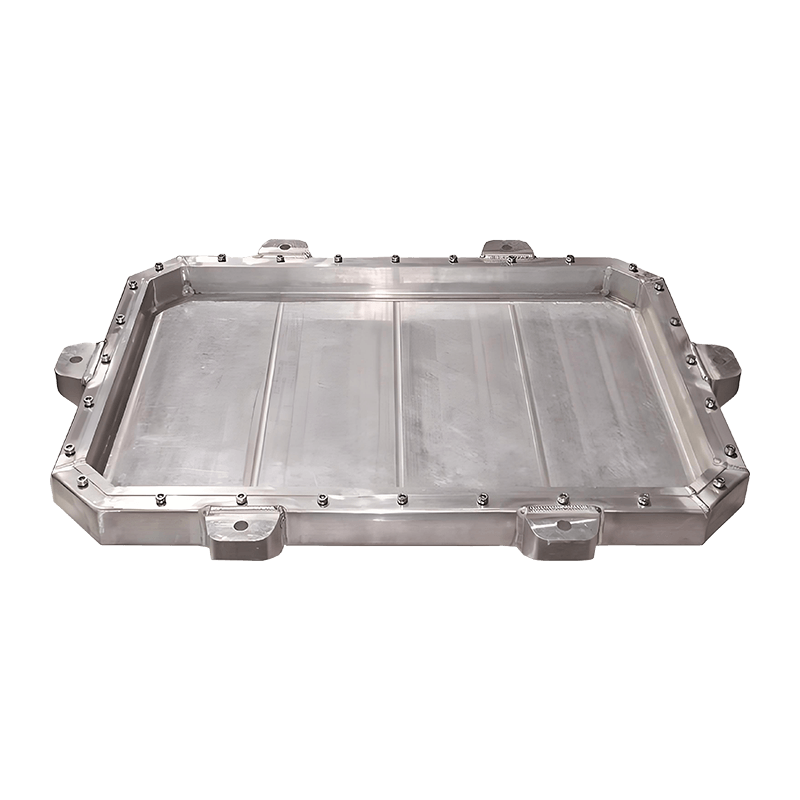
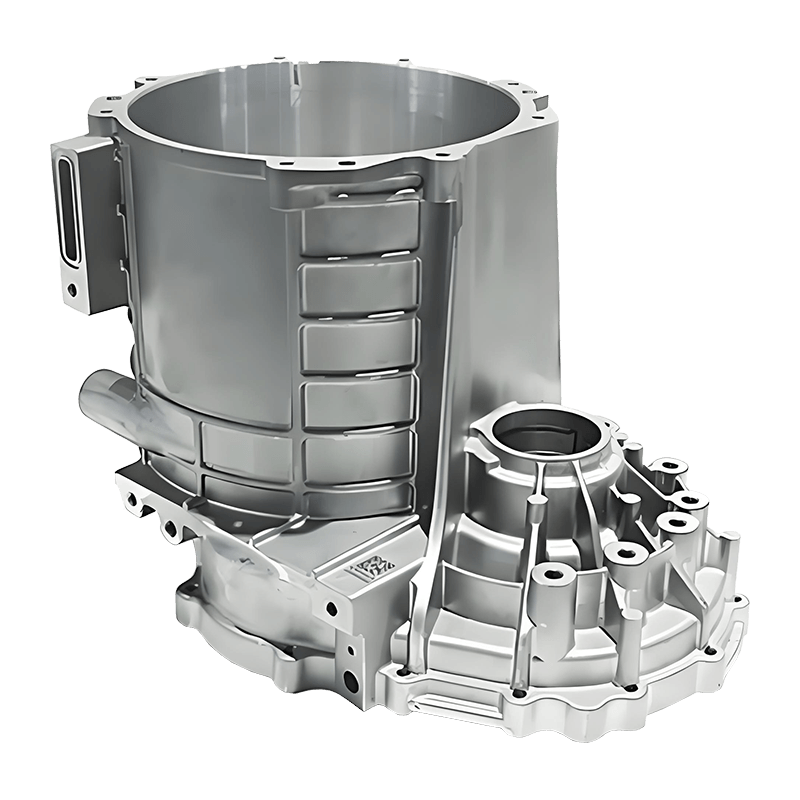
Die casting for new energy vehicle electronic control units generally involves aluminum alloy housings, covers, base plates, structural carriers, heat-dissipation bodies, connector supports, and related precision parts. The exact geometry depends on the electronic architecture, installation position, power level, cooling concept, and customer requirements.
A typical housing may include a deep or semi-deep cavity for electronic components, external mounting bosses, ribbed walls, cable and connector openings, gasket grooves, positioning features, and machined holes. It may also include integrated cooling channels or surfaces designed to connect with a liquid-cooling plate, thermal interface material, or vehicle cooling circuit.
Aluminum alloy is widely used because it offers a useful balance of low density, thermal conductivity, castability, corrosion resistance, and mechanical performance. It can be formed into complex shapes at high production speed, which makes it suitable for automotive volumes. The material also supports the production of thin-walled structures that can reduce weight without eliminating essential stiffness.
The product is not simply a protective shell. It is a functional engineering component that contributes to the performance of the entire control system. Its geometry influences heat transfer, vibration resistance, assembly accuracy, sealing reliability, electromagnetic shielding, and serviceability. For this reason, die-cast control-unit housings should be developed as part of the complete electronic and vehicle system rather than treated as isolated metal containers.
Important product characteristics may include:
• Complex aluminum alloy geometry produced in an integrated structure.
• Stable wall thickness and controlled filling behavior.
• Reinforcing ribs and bosses designed for stiffness and assembly.
• Precisely formed sealing grooves and cover interfaces.
• Machined holes, threaded features, and locating surfaces.
• Openings and interfaces for wiring harnesses and connectors.
• Heat-dissipation surfaces and cooling-related features.
• Resistance to vibration, moisture, dust, temperature variation, and corrosion.
• Compatibility with subsequent finishing, coating, sealing, and assembly processes.
• Consistent dimensions suitable for automated or semi-automated vehicle assembly.
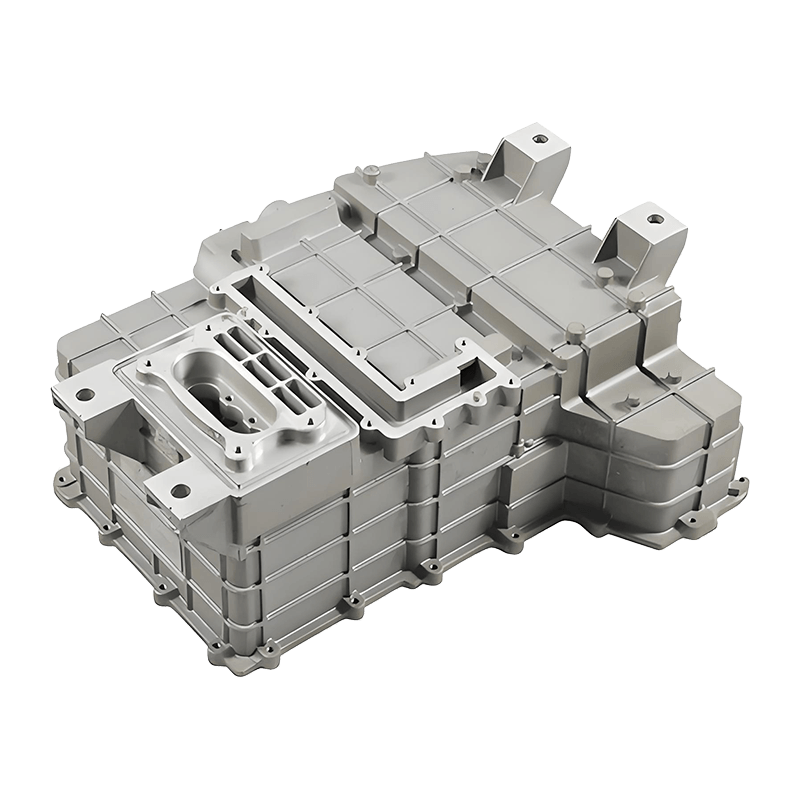
Die casting for New Energy Vehicle Electronic Control Units
Reducing vehicle weight is an important objective in new energy vehicle development. Lower mass can contribute to improved driving range, acceleration response, braking performance, and energy efficiency. Aluminum die casting allows designers to create light structures with ribs, bosses, curved walls, and localized reinforcement where strength is required.
Unlike a simple uniform sheet-metal box, a die-cast housing can place material precisely where it contributes to stiffness and protection. Internal or external ribs can reduce deformation, while mounting bosses can be formed as part of the casting. This integrated approach can eliminate separate brackets and reduce the number of fasteners used in the finished vehicle system.
Electronic control unit housings often contain numerous features that would be difficult or expensive to create using conventional machining alone. These features can include multiple connector towers, curved external walls, reinforcing ribs, deep cavities, raised platforms, cable passages, and gasket seats.
Die casting can form many of these features during the primary casting operation. Secondary machining is then reserved for areas that require close dimensional control, such as sealing surfaces, bearing-like locating surfaces, precision holes, and threaded holes. This combination of near-net-shape casting and selective machining can achieve a practical balance between production efficiency and precision.
Heat generation is a major concern in motor controllers, power electronics, charging modules, and integrated control systems. Excessive heat can reduce component life, affect electrical performance, and trigger protective limitations. The housing therefore has an important role in transferring heat away from internal components.
Aluminum alloy provides useful thermal conductivity, while the die-casting process enables the incorporation of broad heat-transfer surfaces, mounting pads, rib structures, and cooling-related geometry. When combined with appropriate thermal interface materials and vehicle cooling systems, the housing can help maintain a more stable operating temperature.
A properly engineered casting must avoid excessive porosity in areas where thermal transfer or sealing is critical. Mold-flow analysis, suitable gate and overflow design, controlled filling, and appropriate process parameters can help improve casting integrity. Machining and inspection also play important roles in maintaining the flatness and surface quality of thermal interfaces.
Vehicle electronic units may be exposed to road vibration, water spray, dust, temperature changes, salt, oil, cleaning agents, and accidental impact. Their housings must protect sensitive circuit boards, power modules, connectors, and sensors from these conditions.
A die-cast aluminum housing can provide a rigid protective shell with carefully designed cover joints and sealing grooves. The casting can also support mounting points that distribute loads into the vehicle structure. Surface treatment or coating may be applied when additional corrosion protection, appearance, insulation, or compatibility with assembly materials is required.
Integrated casting can combine walls, brackets, connector supports, and reinforcement into one component. Reducing the number of separate parts may lower assembly labor, reduce inventory requirements, shorten assembly time, and decrease the number of potential failure points.
Fewer joints can also improve dimensional consistency. If several brackets are replaced by integrated cast features, there are fewer tolerance stacks and fewer opportunities for misalignment. This is particularly valuable when the electronic control unit must interface accurately with cooling plates, wiring connectors, vehicle mounting points, and adjacent components.
The competitive value of a die-cast electronic control unit housing should be evaluated against the complete manufacturing and vehicle-assembly process. It is not enough to compare the initial price of a casting with the material price of a stamped or machined part. A complete comparison should consider tooling, part count, machining time, assembly operations, weight, heat management, dimensional stability, and long-term reliability.
Fabricated housings may be made from several stamped, bent, welded, or fastened pieces. This approach can be suitable for low-volume production or simple geometries, but it may create additional joints and tolerance variations. Welding can introduce distortion, while multiple fasteners increase assembly steps and may create possible leakage paths.
A die-cast structure can integrate many of these features into one part. The result may be a more rigid assembly with fewer joints and a more consistent interface for the electronic module. The integrated structure can also simplify sealing because the number of separate interfaces is reduced.
Machining a complete housing from an aluminum block can deliver precise geometry, but it may generate substantial material waste and require long cycle times. Deep cavities, external ribs, bosses, and complex curved surfaces can be especially expensive to produce by machining alone.
Die casting forms most of the required geometry in a high-speed production process. CNC machining is then used only where necessary. This can reduce material waste, shorten production time, and make high-volume manufacturing more economical while preserving precision at critical locations.
Plastic housings can offer low weight and design flexibility, but aluminum die-cast housings may provide stronger mechanical protection, better thermal conductivity, and more consistent performance in high-temperature or high-power applications. Metal housings may also support electromagnetic shielding when the design includes suitable electrical continuity and grounding provisions.
The appropriate material depends on the application. However, for electronic control units that manage significant electrical power or require strong thermal transfer, aluminum die casting provides an attractive combination of properties.
Electronic control unit housings are more demanding than ordinary structural castings because they combine mechanical, thermal, sealing, and electrical requirements. A supplier with dedicated experience in automotive die casting and mold engineering can provide better support for these combined requirements than a general-purpose casting source.
Advanced mold-flow analysis, controlled tooling design, stable die-casting parameters, automated trimming, precision machining, and documented inspection provide a more complete manufacturing solution. These capabilities help reduce the risks associated with misruns, porosity, distortion, flash, dimensional variation, and inadequate surface quality.
Vehicle manufacturers are increasingly seeking integrated assemblies that occupy less space and require fewer separate components. A die-cast housing can support this direction by combining mounting, cooling, shielding, and protection functions into one engineered part.
The greater the level of integration, the more important the design and process capability of the supplier becomes. Complex castings require a deep understanding of metal flow, solidification, draft angles, ejection, machining allowance, shrinkage, and inspection access. A mold manufacturer that participates early in product development can identify manufacturability issues before tooling is completed.
The manufacturing process begins with a review of the electronic control unit housing design. Engineers examine wall thickness, draft angles, rib proportions, boss locations, corner transitions, hole requirements, sealing surfaces, machining allowances, and ejection feasibility.
At this stage, the design team also considers how the part will be installed in the vehicle and how it will be inspected after casting. A feature that appears acceptable in a three-dimensional model may be difficult to machine, measure, or remove from the die. Early engineering review helps prevent expensive modifications after tooling begins.
Mold-flow analysis is an important tool for visualizing how molten aluminum will fill the die cavity and solidify. It can help identify filling imbalances, air entrapment risks, potential cold shuts, hot spots, shrinkage areas, and possible distortion.
The analysis supports the selection of gate locations, overflow positions, venting strategies, cooling arrangements, and process conditions. It can also help compare design alternatives before physical tooling is manufactured. By optimizing the mold design in advance, the manufacturer can improve development efficiency and reduce the risk of repeated trial-and-error modifications.
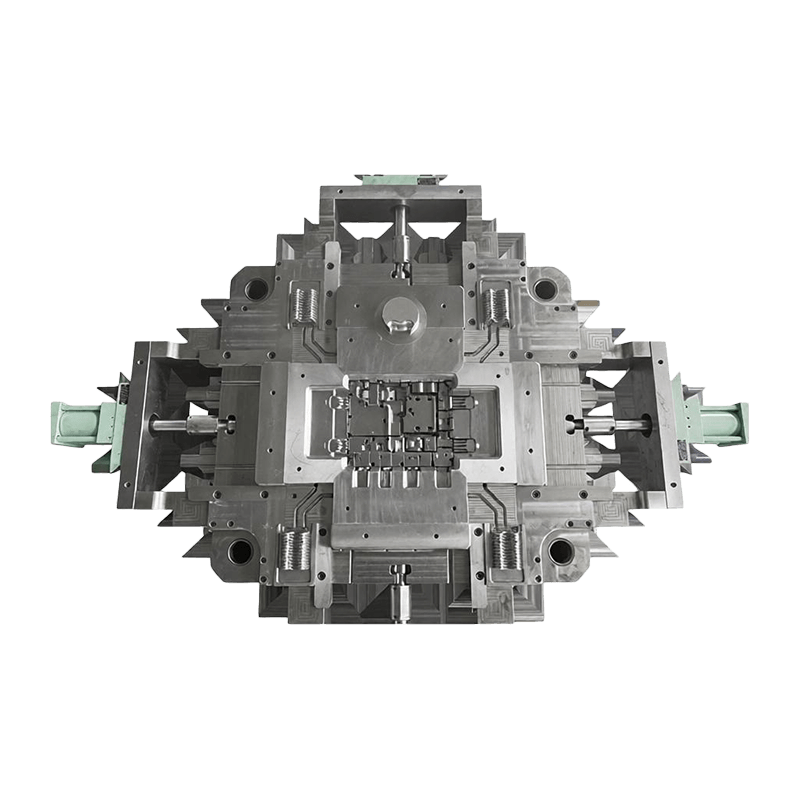
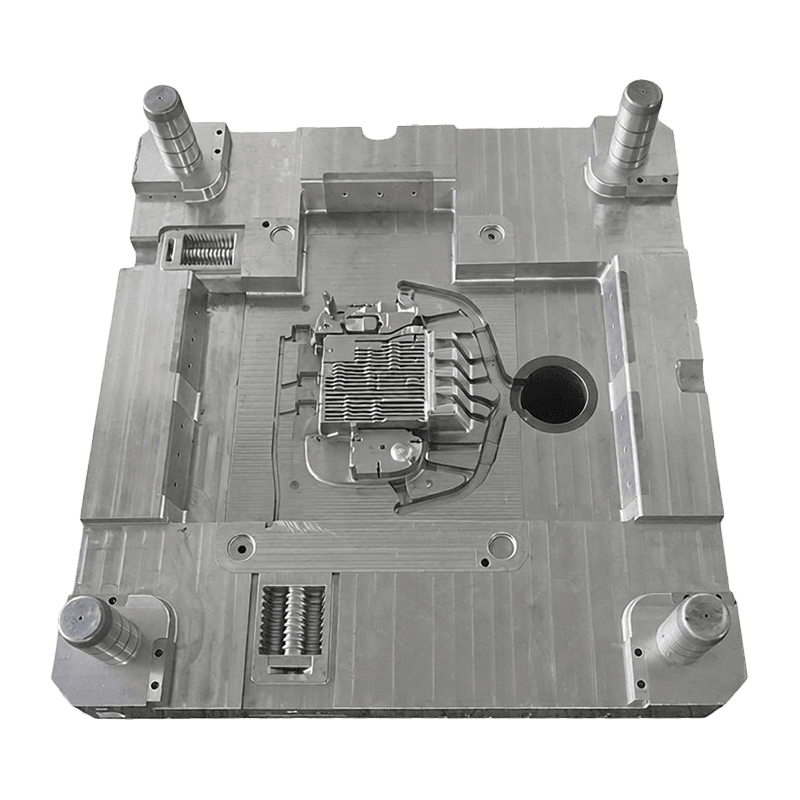
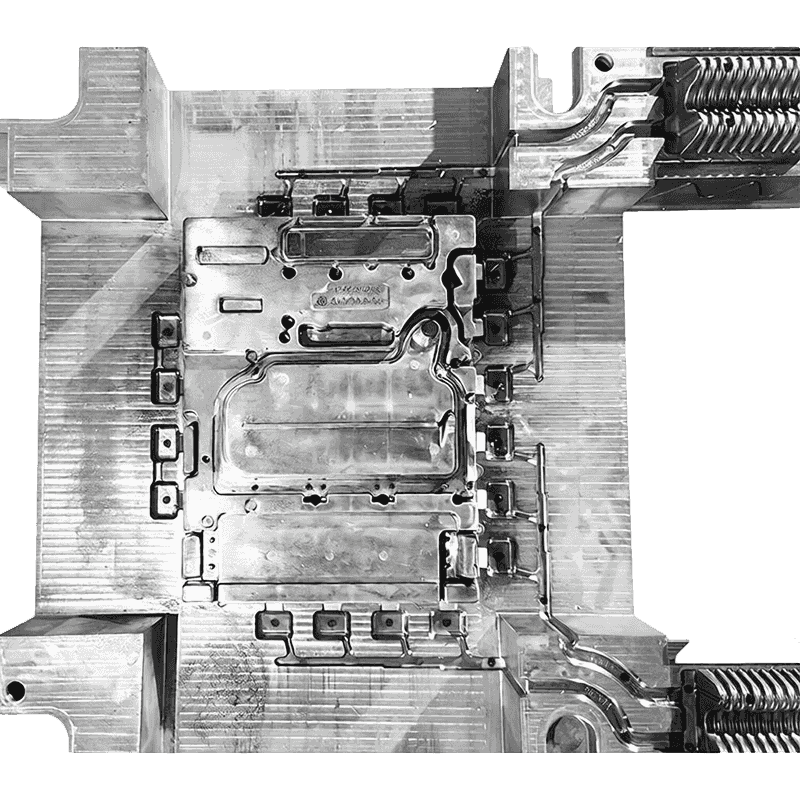
The die must be designed to withstand repeated thermal and mechanical loads while maintaining the required cavity dimensions. For an electronic control unit housing, the die may contain complex slides, cores, inserts, ejector systems, cooling channels, and venting features.
Ejection design is especially important for parts with deep cavities, tall bosses, or uneven wall structures. Ejector forces must be distributed carefully to avoid deformation or visible marks on critical surfaces. Moving components must be positioned so that they do not interfere with sealing faces, connector openings, or precision machining areas.
After design approval, the mold is manufactured using high-precision machining and electrical discharge machining equipment. CNC machining creates accurate cavity and insert geometry, while EDM is used for detailed areas and complex features that are difficult to produce through conventional cutting.
Tool manufacturing quality has a direct effect on casting quality. Cavity accuracy, surface finish, insert alignment, cooling-channel placement, and moving-part fit all influence the stability of production. A well-made mold can improve part consistency, reduce flash, extend tool life, and support more predictable maintenance.
Initial trial casting verifies whether the mold fills correctly and whether the finished part can be removed without damage. Engineers inspect the trial parts for surface defects, deformation, flash, incomplete filling, dimensional variation, and areas requiring additional machining or design adjustment.
Process parameters are refined to achieve stable filling and solidification. Depending on the part and equipment, these parameters may include injection speed, pressure, temperature, intensification, cycle timing, lubrication, cooling, and vacuum or venting conditions. The objective is not merely to produce one acceptable sample but to establish a repeatable process window.
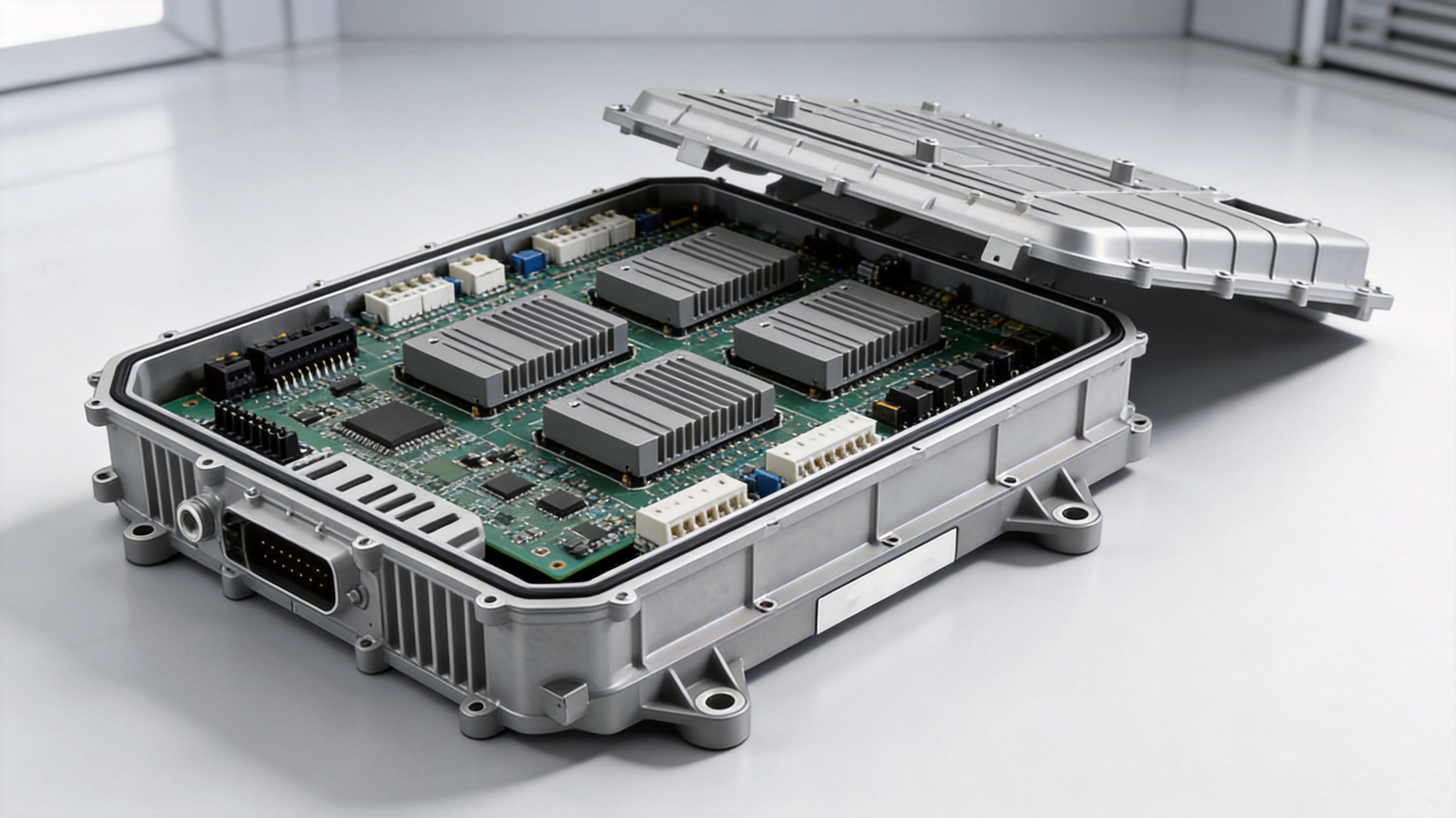
Aluminum alloy material must be managed carefully before casting. Material selection should reflect the required strength, castability, thermal behavior, corrosion resistance, and finishing requirements of the control unit housing. Proper handling and melting practices help maintain chemical consistency and reduce contamination.
Material traceability is also important for automotive applications. Production records can connect incoming material, casting batches, process parameters, inspection results, and shipment information. This supports quality analysis and helps the manufacturer respond effectively if a process issue is identified.
During high-pressure die casting, molten aluminum alloy is injected into a prepared steel die at high speed and pressure. The metal fills the cavity rapidly and reproduces the designed geometry. Pressure is maintained as the material solidifies, helping form the shape and reduce certain types of shrinkage.
The process is suitable for high-volume production because it offers short cycle times and repeatable geometry. However, the quality of the final part depends on the coordination of equipment, mold, alloy, process parameters, lubrication, cooling, venting, and operator control.
Electronic control unit housings often include thin walls and complex intersections. These features require a carefully balanced filling process. Excessive turbulence can contribute to internal defects, while insufficient filling energy can produce cold shuts or incomplete areas. Process development must therefore consider both surface appearance and internal integrity.
After casting, runners, overflows, gates, and flash must be removed. Dinghong’s production capabilities include automated trimming lines, which can improve consistency and reduce manual variation for suitable product families.
Accurate trimming is important because excess material around connector openings, mounting areas, or sealing interfaces can interfere with assembly. Automated equipment can also improve production efficiency and support more consistent cycle times. Secondary manual operations may still be used where the geometry requires flexible handling or detailed visual confirmation.
Die casting produces the general shape, while CNC machining establishes critical dimensions. Typical machining operations may include drilling, reaming, tapping, milling of sealing faces, finishing of mounting surfaces, and preparation of connector or cable interfaces.
The machining strategy should be developed together with the casting and mold design. Adequate machining allowance must be provided without creating unnecessarily thick sections. Datum selection must support the functional requirements of the finished part and maintain the relationship between mounting, sealing, and electronic interfaces.
For control unit housings, flatness and positional accuracy can be especially important. A cover or gasket may not seal properly if a flange is distorted. A connector may not align correctly if the mounting surface or locating hole shifts beyond its allowable tolerance. CNC fixtures and inspection plans should therefore reference stable datums and protect critical surfaces from damage.
Surface finishing depends on the application and customer requirements. It may include deburring, cleaning, shot blasting, coating, anodizing, painting, chromate treatment, or other processes. The selected finish should be compatible with corrosion requirements, electrical grounding, appearance, sealing, thermal transfer, and assembly materials.
Before finishing, parts should be cleaned thoroughly to remove chips, release-agent residues, oil, and other contaminants. Surface preparation affects coating adhesion and the long-term performance of the finished product. Areas intended for electrical contact or heat transfer may require special masking or process control.
Quality control should cover raw materials, tooling, casting parameters, machining, surface treatment, and final packaging. Depending on customer requirements, inspection may include dimensional measurement, visual examination, leak testing, thread verification, flatness measurement, surface roughness checks, and internal defect evaluation.
Coordinate measuring machines can be used for complex dimensional verification. Specialized gauges may support fast production checks for holes, locating features, and sealing interfaces. X-ray or other nondestructive methods may be considered where internal integrity is critical and specified by the application.
A complete quality system helps distinguish isolated defects from process trends. Statistical monitoring, first-article inspection, process audits, and corrective-action procedures can support stable production. Automotive customers often require evidence that the manufacturing process is controlled rather than relying only on final inspection.
| Requirement | Why It Matters | Typical Manufacturing Response |
|---|---|---|
| Thermal performance | Protects electronic components and supports stable power operation | Use suitable aluminum alloy, thermal surfaces, controlled wall design, and accurate machining |
| Dimensional accuracy | Ensures proper assembly with covers, connectors, cooling parts, and vehicle mounts | Apply mold-flow analysis, stable tooling, CNC machining, fixtures, and dimensional inspection |
| Sealing capability | Helps prevent water, dust, and contaminants from reaching sensitive electronics | Provide controlled gasket grooves, flat sealing faces, suitable surface finish, and leak verification |
| Mechanical strength | Protects internal components from vibration, impact, and installation loads | Optimize ribs, bosses, wall transitions, alloy selection, and casting integrity |
| Lightweight construction | Supports vehicle energy efficiency and compact packaging | Use integrated thin-wall geometry with localized reinforcement and reduced part count |
| Heat and corrosion resistance | Supports service life under changing vehicle conditions | Control alloy quality, finishing, cleaning, and protective treatment |
| Electromagnetic compatibility | Helps limit interference between electronic systems | Use conductive metal continuity, grounding provisions, and controlled interfaces where required |
| Production consistency | Enables reliable vehicle assembly and scalable supply | Combine standardized processes, automation, traceability, and quality-system controls |
Ningbo Dinghong Mould Co., Ltd. was established in 2013 following the earlier establishment of Yuejin Mould in 1998. The company is located in Daqi Street, Beilun District, Ningbo, Zhejiang Province, near Beilun Port. Its location supports convenient logistics for domestic and international customers and provides access to a region known for mold manufacturing and die-casting production.
The company occupies approximately 15,000 square meters of plant space and has developed from a small factory into a modern manufacturing enterprise. Its capabilities cover mold design, mold manufacturing, aluminum alloy die casting, finishing, and trade. This combination allows customers to coordinate tooling and production through one supplier rather than managing every stage independently.
The production facility includes high-precision CNC machining centers, EDM equipment, die-casting machines, automated trimming lines, and testing equipment. This equipment supports the complete manufacturing route from mold construction to finished product preparation.
The company’s engineering team uses advanced design software and mold-flow analysis. Early simulation can help visualize the filling process, identify possible defects, and improve gate, overflow, venting, and cooling arrangements. This approach is particularly valuable for electronic control unit housings because their complex geometry and functional interfaces leave limited room for process instability.
Quality management is supported by ISO 9001 and IATF 16949 certifications. ISO 9001 provides a structured framework for quality management, documented processes, customer focus, and continual improvement. IATF 16949 is specifically associated with automotive quality requirements and emphasizes process control, risk management, traceability, supplier management, and defect prevention.
Certifications alone do not replace engineering capability, but they provide a foundation for consistent manufacturing practices. When combined with qualified personnel, suitable equipment, documented inspection, and corrective-action systems, they help support the quality expectations of automotive and new energy vehicle customers.
Dinghong serves multiple sectors, including automotive, new energy, photovoltaic, telecommunications, electrical products, motorcycles, pumps and valves, fitness equipment, robotics, and other industrial applications. This broad experience can contribute to flexible problem-solving because the company works with different product geometries, material requirements, surface finishes, and production volumes.
Uniform and practical wall thickness supports stable filling and solidification. Sudden changes in thickness can increase the risk of shrinkage, distortion, or uneven cooling. Where thickness changes are necessary, gradual transitions and suitable radii should be considered.
Ribs can improve stiffness without adding large amounts of material, but they should be designed with suitable thickness and draft. Overly thick intersections may create hot spots or internal defects. Mounting bosses should include adequate support and should be positioned to avoid excessive local stress.
Draft angles allow the casting to release from the die. Insufficient draft can cause sticking, surface damage, or increased wear on moving components. Draft requirements should be reviewed together with sealing, machining, and appearance requirements so that the final product remains functional and attractive.
Not every surface needs the same level of precision. The casting should establish the general geometry, while machining should be reserved for functional surfaces that require tighter tolerances. This approach reduces machining time and helps control cost without compromising assembly performance.
Gasket grooves, cover flanges, and sealing faces should be clearly identified during design review. These areas may require controlled machining, careful handling, and dedicated inspection. The design should also consider the selected gasket material, compression requirements, fastener layout, and thermal expansion.
Critical features must be accessible to measurement equipment and production gauges. If a deep cavity or enclosed feature cannot be inspected effectively, quality verification becomes more difficult. Designing suitable datums and inspection access early can improve both development and mass production.
Electronic control unit housings are expected to perform throughout the vehicle’s service life. Their reliability depends on both the design and the manufacturing process. A housing with excellent nominal geometry may still create problems if the material contains excessive porosity, if machining damages a sealing surface, or if the coating is not compatible with the operating environment.
Thermal cycling can cause repeated expansion and contraction of the housing and its attached components. Vibration can apply alternating loads to mounting points and connector areas. Moisture and salt can accelerate corrosion if the surface treatment or joint design is inadequate. Assembly forces can also distort thin flanges if the housing does not provide sufficient stiffness.
These conditions should be addressed through design analysis, prototype testing, process validation, and production monitoring. The die-casting supplier can support customers by reviewing high-risk areas, recommending suitable structural features, and developing inspection methods for critical characteristics.
Internal casting integrity is another important consideration. Porosity may reduce mechanical strength, affect pressure tightness, and interfere with machining or sealing. While no manufacturing process eliminates every potential defect, optimized filling, venting, overflow, cooling, and process control can reduce risk. Where necessary, nondestructive testing or additional validation can be incorporated into the quality plan.
New energy vehicles are associated with energy efficiency, and their components should also be manufactured with attention to resource utilization. Aluminum die casting can support material efficiency because the process produces near-net-shape components and allows scrap from runners and trimming to be managed within an appropriate recycling system.
Integrated housings may reduce the number of separate components, brackets, fasteners, and logistics operations. A lower part count can reduce packaging needs and simplify the supply chain. Lightweight aluminum structures may also contribute to lower vehicle energy consumption during operation.
Production efficiency depends on more than machine speed. Stable tooling, automated trimming, optimized cycle times, reduced rework, and reliable inspection all influence the total environmental and economic performance of the manufacturing process. Mold-flow analysis and design-for-manufacturing reviews can reduce the number of trial cycles and limit avoidable tooling modifications.
Responsible production also requires proper management of lubricants, cleaning agents, coatings, metal scrap, and process waste. Customers may request environmental documentation or information about material recycling and production controls as part of their supplier evaluation.
The same die-casting capabilities used for electronic control unit housings can support a wide range of new energy vehicle components. These may include motor housings, inverter housings, battery-related structural components, charging modules, power distribution housings, cooling-system parts, and other aluminum alloy enclosures.
Each application has different requirements. A motor housing may emphasize thermal performance and concentricity. A battery-related component may require dimensional stability, sealing, impact resistance, and integration with a large structural assembly. A charging or power distribution housing may require connector precision and electromagnetic considerations.
Experience across these applications helps the manufacturer understand common challenges such as thin-wall filling, large projected areas, complex cores, machining distortion, sealing, and corrosion protection. It also provides opportunities to transfer suitable engineering practices from one product family to another.
When selecting a supplier for new energy vehicle electronic control unit parts, customers should evaluate the complete capability rather than only the quoted piece price. Important questions include whether the supplier can design and manufacture the mold, perform simulation, provide casting and machining, manage finishing, conduct inspection, and maintain traceability.
Engineering communication is also important. The supplier should be able to review a three-dimensional model, identify high-risk features, explain design changes, and provide realistic recommendations regarding tolerances, draft, wall thickness, machining allowance, and production volume.
Tool maintenance and after-sales support should be considered as well. A die-casting mold is a long-term production asset. Preventive maintenance, spare inserts, repair procedures, and clear responsibility for modifications can help maintain output quality throughout the tool’s service life.
Customer service is strengthened when the supplier can coordinate multiple processes. A single integrated source may simplify project management, reduce communication gaps, and improve accountability for dimensional or appearance issues that involve both casting and machining.
Dinghong’s experience in automotive parts, household appliance parts, telecommunications parts, and other aluminum alloy products provides a foundation for serving customers with different technical and commercial requirements. Its sales network covers China, South America, Southeast Asia, and other international markets, with plans to expand further into Europe and additional regions.
A typical cooperation project begins with the customer providing product drawings, three-dimensional data, material requirements, annual volume, application conditions, inspection standards, and packaging expectations. The supplier reviews the information and identifies manufacturing risks or missing specifications.
Next, the engineering team develops the die structure and performs mold-flow analysis. Recommendations may be made regarding parting lines, draft, wall thickness, ribs, gates, overflows, machining datums, and inspection features. After design confirmation, the mold is manufactured and trial castings are produced.
Trial samples are evaluated for geometry, surface condition, internal integrity, machining feasibility, and assembly performance. Any required corrections are implemented before formal production approval. A control plan and inspection procedure are then established for regular manufacturing.
During mass production, process records, in-process checks, trimming, machining, finishing, final inspection, and packaging are managed according to the approved quality requirements. Customer feedback is used to support continual improvement and future product development.
This structured process is especially useful for electronic control units because the product often evolves alongside the vehicle platform. Design revisions, connector changes, cooling improvements, and integration updates may occur during development. A responsive mold and die-casting partner can help manage these changes with less disruption.
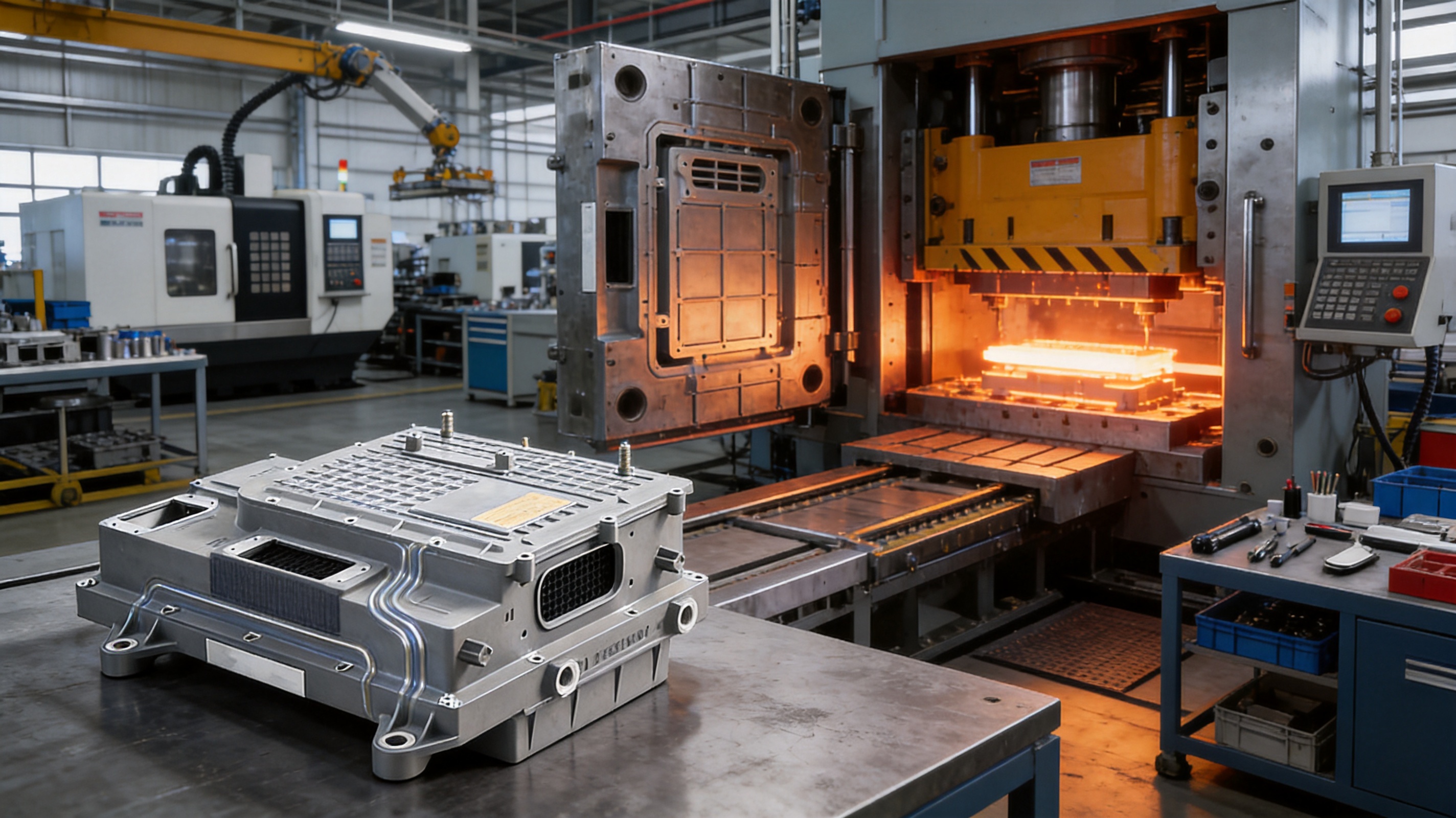
Aluminum die casting provides a useful combination of low density, thermal conductivity, mechanical protection, corrosion resistance, and production efficiency. It can form complex housings with ribs, bosses, mounting features, cooling surfaces, and connector interfaces in an integrated structure.
Yes. The housing can be designed for integrated electronic assemblies, although the exact structure depends on the customer’s system architecture. Integrated functions usually require careful attention to thermal management, sealing, electromagnetic considerations, connector layout, mounting, and internal component clearance.
No. Die casting forms most of the part geometry, but critical features may still require CNC machining. Sealing surfaces, precision holes, threaded holes, locating surfaces, and selected mounting interfaces commonly need secondary machining to meet functional requirements.
Mold-flow analysis helps predict how molten aluminum will fill and solidify in the die. It can support the optimization of gate locations, overflow design, venting, cooling, and process parameters. This may reduce the risk of incomplete filling, air entrapment, hot spots, shrinkage, and distortion before the mold is manufactured.
The company operates with ISO 9001 and IATF 16949 quality management system certifications. These frameworks support documented processes, process control, traceability, risk management, corrective action, and continual improvement relevant to automotive manufacturing.
Yes. The company provides mold design, mold manufacturing, die casting, finishing, and related trade services. This integrated capability allows customers to coordinate tooling development and production through one manufacturing partner.
Useful information includes product drawings or three-dimensional data, alloy requirements, estimated annual volume, application environment, dimensional tolerances, sealing or leak requirements, surface-finish expectations, machining details, inspection standards, packaging needs, and delivery schedule.
They can be designed for automated or semi-automated production when the casting, trimming, machining, inspection, and handling requirements are considered early. Automated trimming lines and standardized fixtures can improve repeatability and production efficiency for suitable product geometries.
Sealing performance depends on the housing design, gasket selection, groove geometry, flange flatness, surface finish, fastener arrangement, and assembly process. The casting should be designed with appropriate allowances, and critical sealing areas may be machined and inspected. Leak testing can be included when required by the application.
A competitive supplier combines strong mold design, simulation, die manufacturing, stable casting, precision machining, finishing, inspection, automotive quality systems, responsive engineering communication, and reliable delivery. The ability to coordinate these functions can reduce development risk and improve total project efficiency.
Electronic control units are essential to the safe, efficient, and intelligent operation of new energy vehicles. As manufacturers integrate VCU, MCU, BMS, charging, power distribution, and other functions into compact assemblies, the housing becomes an increasingly important engineering component. It must protect electronics, support heat transfer, withstand vibration and environmental exposure, maintain sealing, and enable accurate vehicle assembly.
Precision aluminum alloy die casting addresses these requirements through lightweight integrated structures, complex geometry, efficient production, and compatibility with CNC machining and surface treatment. Compared with multi-part fabricated housings or fully machined blocks, die-cast solutions can reduce part count, material waste, assembly operations, and overall system complexity.
The quality of the final product depends on the complete manufacturing chain. Mold-flow analysis, accurate die design, high-precision mold manufacturing, controlled high-pressure die casting, automated trimming, selective CNC machining, suitable finishing, and documented inspection must work together. A supplier with these capabilities can help customers transform a complex electronic control unit design into a stable and scalable production component.
Ningbo Dinghong Mould Co., Ltd. offers an integrated manufacturing platform covering mold design, mold manufacturing, aluminum alloy die casting, finishing, and trade. Its automotive experience, advanced equipment, simulation capability, automated trimming lines, testing resources, ISO 9001 and IATF 16949 certifications, and international service network support the development of electronic control unit housings and other new energy vehicle three-electric parts.
For vehicle manufacturers, electronic-system integrators, and component developers, cooperation should begin at the design stage. Early communication about thermal performance, sealing, structural strength, tolerances, machining, inspection, and production volume can improve the final solution. With a manufacturing process built around engineering collaboration and continuous quality improvement, precision die casting can provide a dependable foundation for the next generation of new energy vehicle electronic control systems.
1. International Organization for Standardization. ISO 9001: Quality Management Systems—Requirements.
2. International Automotive Task Force. IATF 16949: Quality Management System Requirements for Automotive Production and Relevant Service Parts Organizations.
3. American Foundry Society. Aluminum High-Pressure Die Casting Process Principles and Applications.
4. European Aluminium. Aluminum in Electric Vehicles: Lightweight Structures, Thermal Management, and Manufacturing Considerations.
5. Society of Automotive Engineers. Automotive Electronic Control Systems and Electric Vehicle Power Electronics Engineering Practices.
6. ASM International. Aluminum Casting Technology and Die-Casting Materials.
7. Battery and electric-drive engineering literature concerning vehicle control units, motor control units, and battery management systems.

One large aluminum die casting can now replace what used to be 70 to 130 separately stamped and welded steel parts in a...
READ MOREDie casting automotive parts are made by forcing molten metal into a steel mold under high pressure, where it fills t...
READ MOREBefore a part ever reaches production, every buyer eventually asks the same question: should this component be injectio...
READ MORETwo quotations for the same aluminum controller housing can differ by 20% or more, even when both suppliers list the sa...
READ MORE

Sun Yuejun: +86-13806631860
Wang Shiyong: +86-15958891460 / 15058297768
Dove Yao: +86-18625086675


Copyright © Ningbo Dinghong Mould Co., Ltd. Rights Reserved. Custom Precision Die Casting Aluminum Alloy Parts Manufacturers
