
 English
 Español
 русский
 Français

A 12-week die casting mold build can look competitive on quote and still become the expensive option if the first trial...
READ MORE
Content
Modern communication networks depend on compact, reliable, and precisely manufactured components that can protect sensitive electronics while maintaining stable signal performance. Among these components, the telecommunication filter housing plays an important mechanical and functional role. It surrounds and protects the filter assembly used in communication equipment, supports accurate installation, assists with electromagnetic shielding, and helps the finished device withstand heat, vibration, moisture, and long-term outdoor operation.
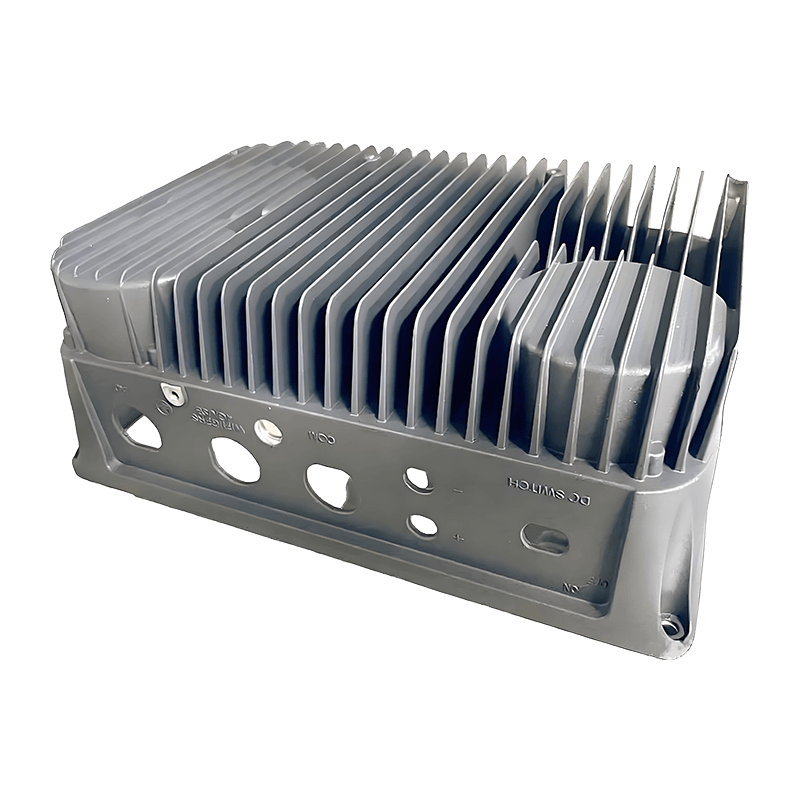
The die casting telecommunication filter housing described in this article is an aluminum alloy housing developed for 5G communication equipment and related telecommunication applications. It is produced through precision die casting and can be combined with mold design, CNC machining, trimming, finishing, inspection, and other value-added manufacturing processes. This integrated approach allows the housing to achieve consistent dimensions, controlled wall thickness, complex structural details, and a professional surface finish while supporting efficient large-volume production.
As 5G networks continue to expand, communication equipment manufacturers require housings that are lightweight, strong, thermally efficient, corrosion resistant, and dimensionally stable. A properly engineered die cast housing can meet these requirements more effectively than many conventional fabricated alternatives. It can reduce the number of separate parts, simplify assembly, provide a repeatable interface for internal filter components, and support the electromagnetic and environmental requirements of modern base stations and related equipment.
A 5G filter is a key component in communication equipment. Its primary function is to select required frequency-band signals and suppress unwanted interference. Mobile phones, base stations, antennas, remote radio units, and other communication devices must operate within carefully controlled frequency ranges. Without effective filtering, signals from neighboring bands, other transmitters, electronic circuits, or environmental sources could reduce communication quality and network reliability.
The housing does not replace the electrical filter assembly. Instead, it provides the structural environment in which the filter is installed and protected. The housing may include mounting bosses, screw holes, sealing interfaces, locating features, internal cavities, ribs, connector openings, and other details required for integration into a complete telecommunications product. Its dimensional accuracy directly affects assembly efficiency and the alignment of internal components.
In many applications, the housing also contributes to electromagnetic compatibility. A conductive aluminum alloy enclosure can help create a controlled shielding environment when the design, contact surfaces, fasteners, gaskets, coatings, and grounding arrangements are correctly specified. The final electromagnetic performance depends on the complete system design, but the housing is an important part of that system.
Outdoor telecommunication equipment must often operate in demanding conditions. Temperature changes, rain, humidity, dust, salt-containing air, vibration, transportation shock, and continuous operating heat can all affect the service life of the equipment. A strong die cast housing helps protect the filter assembly from these external influences while providing a stable platform for installation and maintenance.
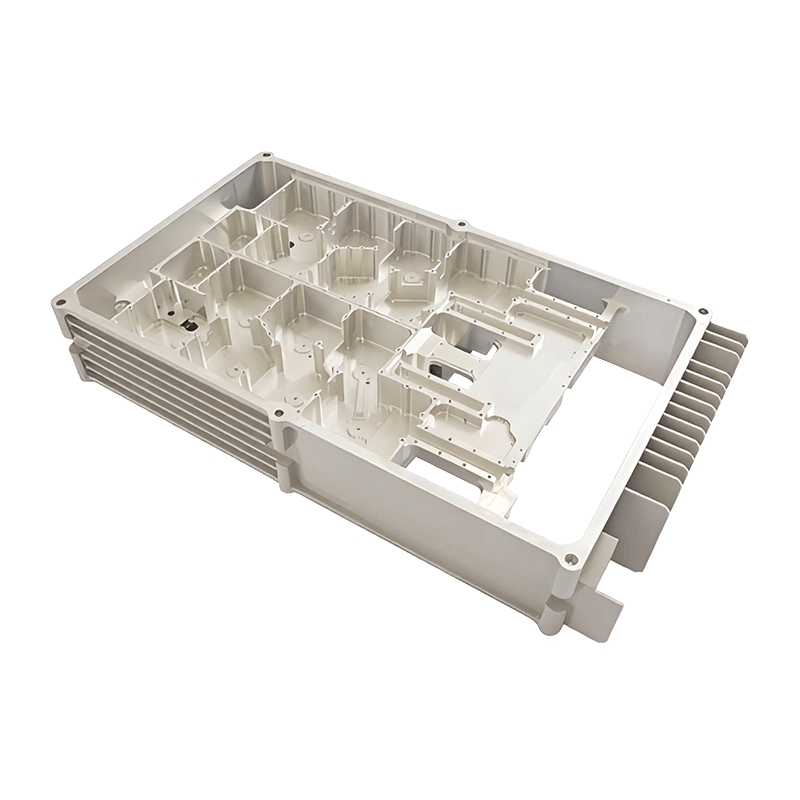
Die Casting Telecommunication Filter Housing
The die casting telecommunication filter housing is an aluminum alloy component intended for use in 5G communication equipment and related telecommunications systems. Its principal advantages come from the combination of aluminum alloy properties, high-pressure die casting technology, precision mold engineering, and secondary machining.
Aluminum alloy is widely used in communication equipment because it offers a useful balance of low density, strength, thermal conductivity, corrosion resistance, and processability. Compared with heavier materials, aluminum can reduce the weight of a finished communication module. This is valuable for equipment installed on towers, rooftops, poles, walls, and other structures where installation weight affects transportation, lifting, supporting brackets, and maintenance operations.
The housing can be designed as a complex near-net-shape casting. Instead of manufacturing every wall, rib, boss, and mounting feature as a separate piece, die casting can form many of these details in a single production cycle. This helps simplify the part structure and may reduce the number of assembly operations. A simplified assembly can reduce opportunities for misalignment, loose fasteners, leakage paths, and inconsistent fit.
Depending on the customer’s technical drawing and performance requirements, the product may be further processed through CNC machining, drilling, tapping, trimming, deburring, surface treatment, leak testing, dimensional inspection, and other operations. The final process route is selected according to the housing geometry, alloy specification, tolerance requirements, production volume, and intended operating environment.
Lightweight aluminum construction: Aluminum alloy provides a lower-density alternative to many steel-based housing designs. Reduced weight can make the equipment easier to transport, install, and service while lowering the mechanical load placed on support structures.
High structural efficiency: Die casting allows engineers to incorporate ribs, bosses, reinforcing sections, curved surfaces, and integrated mounting details into a compact housing design. These features can improve rigidity without requiring excessive material thickness.
Thermal conductivity: Aluminum alloy can help transfer heat away from internal components toward the outer surface or designated heat-dissipation structures. The actual thermal performance depends on the alloy, wall design, contact conditions, surface area, and complete equipment architecture.
Repeatable production: Once a properly validated die casting mold is in production, the process can manufacture large quantities of geometrically consistent parts. Stable repeatability is essential for housings that must mate with filters, covers, seals, brackets, connectors, and other assemblies.
Complex integrated geometry: The casting process can form internal and external features that may be difficult or expensive to create through sheet-metal fabrication or machining from solid material.
Machinable functional surfaces: Critical faces, threaded holes, sealing grooves, connector interfaces, and mounting locations can be finished by CNC machining to achieve the required dimensional accuracy and surface condition.
Protection for sensitive assemblies: The housing helps protect the filter and associated electronics from mechanical damage, contamination, handling impact, vibration, and environmental exposure.
Compatibility with high-volume production: Die casting is suitable for repeated production runs where stable cycle times, controlled process parameters, and consistent inspection are required.
Telecommunication products often combine demanding performance requirements with strict size and weight limitations. A housing must be strong enough for installation and transportation, yet compact enough to fit within a restricted equipment envelope. It must include several functional features but remain economical to manufacture. Die casting is well suited to this combination of requirements.
In high-pressure die casting, molten aluminum alloy is injected into a precision steel mold at high speed and pressure. The metal fills the mold cavity and reproduces the designed shape. After solidification, the casting is removed, trimmed, inspected, and processed as required. The process can generate detailed components with relatively thin walls, integrated ribs, and repeatable external profiles.
For telecommunications products, the ability to integrate several features into a single casting can be particularly valuable. A housing may require multiple mounting points, internal locating platforms, connector windows, cable routing areas, cover interfaces, and reinforcement structures. Creating these elements in one die cast component can reduce welding, bending, joining, and manual assembly compared with a multi-piece fabricated housing.
Die casting can also provide a consistent base for subsequent machining. While the as-cast surfaces may be sufficient for many nonfunctional areas, selected surfaces can be machined to meet tighter requirements. This selective machining strategy helps control cost because only the areas that require higher precision need additional processing.
Sheet-metal fabrication is flexible for low-volume production and simple geometries, but it may require multiple bending, cutting, welding, riveting, or fastening operations. These joints can increase assembly time and may create additional areas that require sealing or corrosion protection. A die cast housing can reduce the number of separate components and joining operations.
CNC machining from a solid aluminum block can produce accurate parts, but it may generate substantial material waste and require long machining times for large or complex cavities. Die casting forms most of the geometry close to the final shape, reserving machining for critical surfaces. This can provide a better balance between precision and production efficiency.
Plastic injection molding can provide low weight and attractive production economics for some applications, but an aluminum alloy housing generally offers better thermal conductivity, higher rigidity, and conductive shielding potential. The appropriate material depends on the electrical, mechanical, thermal, environmental, and cost requirements of the complete product.
Sand casting and gravity casting can be suitable for certain larger or lower-volume components, but high-pressure die casting generally provides better surface consistency, higher production speed, and more detailed thin-wall capability for many telecommunications housings.
| Manufacturing Method | Typical Strength | Potential Limitation for Filter Housings | Value of Die Casting |
|---|---|---|---|
| Sheet-metal fabrication | Flexible for prototypes and low-volume work | More joints, forming operations, and assembly steps | Integrates structural and mounting features into one casting |
| CNC machining from solid material | High dimensional accuracy | Long cycle times and high material removal | Produces near-net shape before selective precision machining |
| Plastic injection molding | Low weight and efficient mass production | Lower rigidity and thermal conductivity in many designs | Provides a conductive, rigid aluminum structure |
| Gravity or sand casting | Suitable for selected large or low-volume parts | May offer lower detail reproduction or slower cycles | Supports detailed geometry and repeatable high-volume production |
| High-pressure aluminum die casting | Complex shape, repeatability, and production efficiency | Requires careful mold and process design | Combines integrated geometry, lightweight construction, and scalable output |
Telecommunication equipment is frequently installed in locations where weight matters. A lighter housing can reduce the effort required during handling and installation. It can also help engineers optimize brackets, frames, and support structures. Aluminum die casting enables structural ribs and localized reinforcement to be placed where they are most useful, rather than increasing the thickness of every wall.
Weight reduction should not be considered only as a material-saving measure. It can influence the complete product lifecycle. Lighter products may require less packaging material, lower transportation energy, simpler lifting equipment, and fewer workers during installation. For network operators managing large numbers of base stations or remote units, these benefits can accumulate across a major deployment project.
A competing housing design made from several sheet-metal or machined components may require separate brackets, inserts, support plates, and fastening hardware. Each additional part creates another interface that must be designed, stocked, assembled, inspected, and maintained. A die cast housing can integrate many of these features directly into the main body.
Integrated bosses can support screws or inserts. Ribs can reinforce broad surfaces. Locating pins and platforms can position the filter assembly. Perimeter flanges can support covers and seals. Connector cutouts and cable-routing features can be incorporated into the mold or completed through secondary machining. This integration can improve assembly consistency and reduce the risk of part-to-part variation.
Signal filters and communication electronics may generate heat during operation. Excessive heat can affect electrical stability, component life, seal performance, and overall system reliability. Aluminum alloy offers useful thermal conductivity compared with many nonmetallic materials. The housing can also be designed with external ribs, fins, broad heat-transfer surfaces, or contact areas that assist the wider thermal-management strategy.
Die casting is valuable because thermal features can be formed as part of the housing geometry. Instead of adding separate heat sinks or bonded parts, designers may be able to incorporate selected heat-dissipation structures into the main casting. The most appropriate solution depends on the heat load, airflow, installation orientation, interface materials, and required operating temperature range.
Telecommunication filter assemblies often require precise interfaces. The housing may need to align with a cover, gasket, connector, circuit board, filter cavity, or external mounting bracket. Dimensional variation can cause assembly difficulty, uneven sealing, connector misalignment, or additional rework.
A precision die casting mold provides a stable reference for repeated production. Critical dimensions can then be controlled through mold maintenance, process monitoring, fixture design, CNC machining, and inspection. This combination is more reliable than depending solely on manual fabrication and adjustment.
Many communication housings require a conductive enclosure or conductive contact path as part of the electromagnetic compatibility design. Aluminum alloy naturally provides a conductive material base. When mating surfaces, fasteners, grounding points, coatings, and gaskets are properly engineered, the housing can support shielding objectives.
It is important to distinguish material capability from final product certification. The complete communication device must be tested according to its applicable technical standards. Nevertheless, an accurately manufactured conductive housing provides a strong foundation for controlling electromagnetic leakage and protecting the internal filter assembly from external interference.
Die cast aluminum housings can provide a durable structure for outdoor and industrial telecommunication equipment. The precise alloy, wall thickness, porosity control, finishing method, sealing design, and environmental protection all affect durability. Properly selected surface treatments can further improve appearance, corrosion resistance, and compatibility with adjacent components.
The housing’s durability also depends on design details such as corner radii, draft angles, rib transitions, screw-boss strength, gasket compression, and avoidance of excessive stress concentration. These factors should be reviewed during mold-flow analysis and design validation rather than being left to final production adjustment.
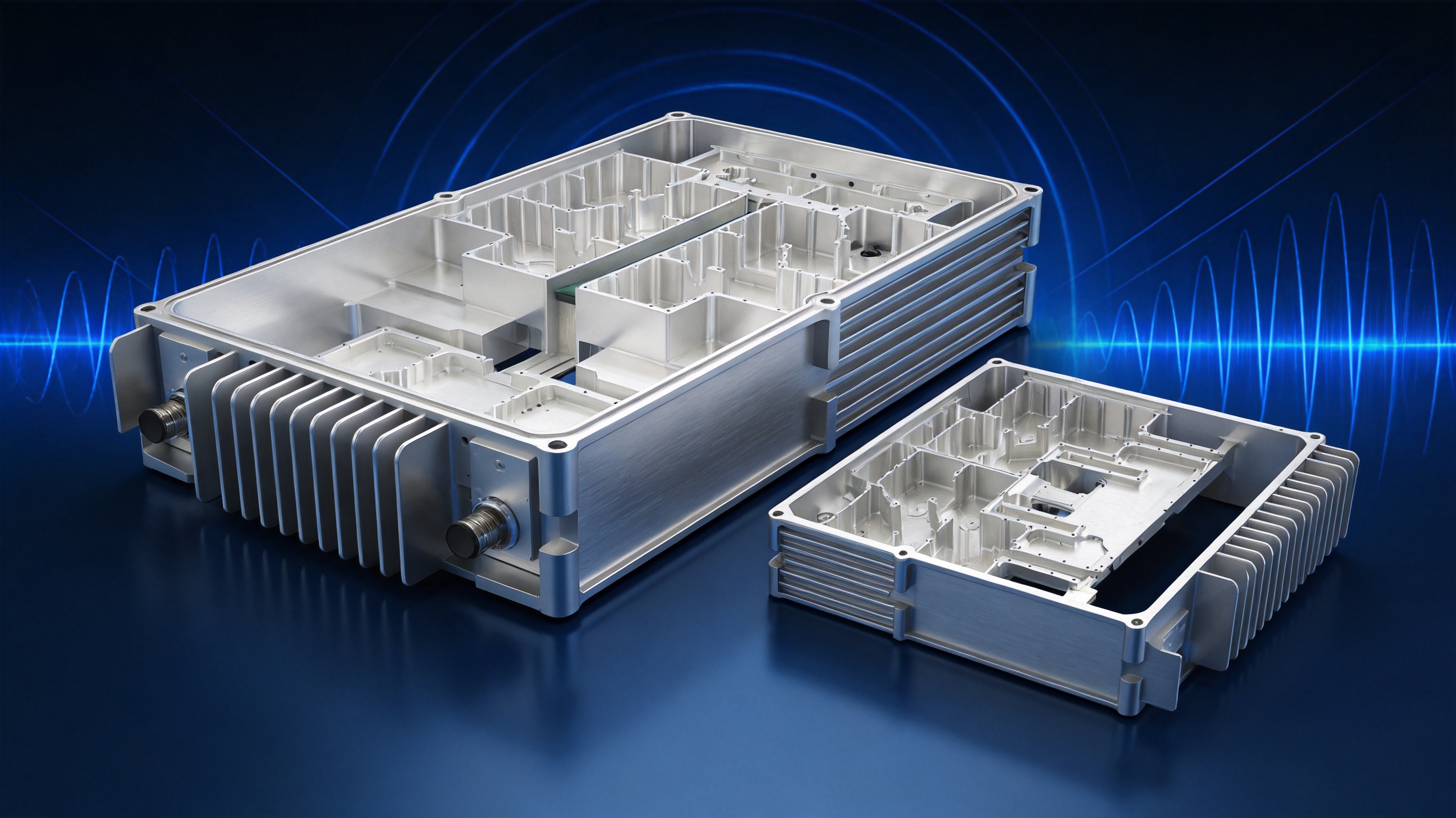
The quality of a die cast telecommunication housing begins before metal is injected. Mold design determines how the alloy flows, fills, cools, and solidifies. It also influences dimensional stability, surface quality, porosity, cycle time, trimming requirements, and tool life. For this reason, mold development is a central part of the manufacturing process rather than a separate activity.
Engineers first review the customer’s three-dimensional model, two-dimensional drawings, material requirements, critical tolerances, assembly relationships, appearance expectations, and production volume. They analyze whether the proposed design can be filled successfully and whether the part can be removed from the mold without distortion or damage.
Effective die casting design normally considers uniform wall thickness, appropriate draft angles, suitable corner radii, balanced ribs, controlled boss dimensions, and logical parting-line placement. Sudden changes in thickness can increase the risk of shrinkage, distortion, or inconsistent cooling. Smooth transitions help the molten alloy flow and reduce local stress concentration.
Mounting bosses require special attention because they must provide enough strength for fastening without creating excessive mass or thermal concentration. Ribs should reinforce the housing efficiently while remaining fillable and removable from the mold. Sealing grooves and machined interfaces must be positioned so that they can be completed accurately after casting.
Connector openings, cable passages, and service access areas must also be reviewed. Some features can be created directly in the mold, while others may be better produced through CNC machining. The best decision depends on tolerance, feature size, tool complexity, expected wear, and production quantity.
Mold-flow analysis allows engineers to evaluate the filling and solidification behavior before the mold is manufactured. The simulation can help identify potential filling hesitation, air entrapment, weld lines, hot spots, shrinkage areas, and unbalanced flow paths. It can also support decisions regarding gate location, overflow design, venting, cooling channels, and injection parameters.
By visualizing the filling process in advance, the design team can make corrections earlier, when changes are less expensive and less disruptive. A revised gate position or improved venting strategy may help reduce defects and improve casting quality. Simulation does not eliminate the need for physical trials, but it can make mold development more efficient and evidence based.
For a filter housing, simulation is especially valuable when the casting includes large flat surfaces, thin walls, multiple mounting bosses, internal cavities, or demanding appearance areas. These features can influence heat flow and solidification behavior. Early analysis helps the team balance functional requirements with manufacturability.
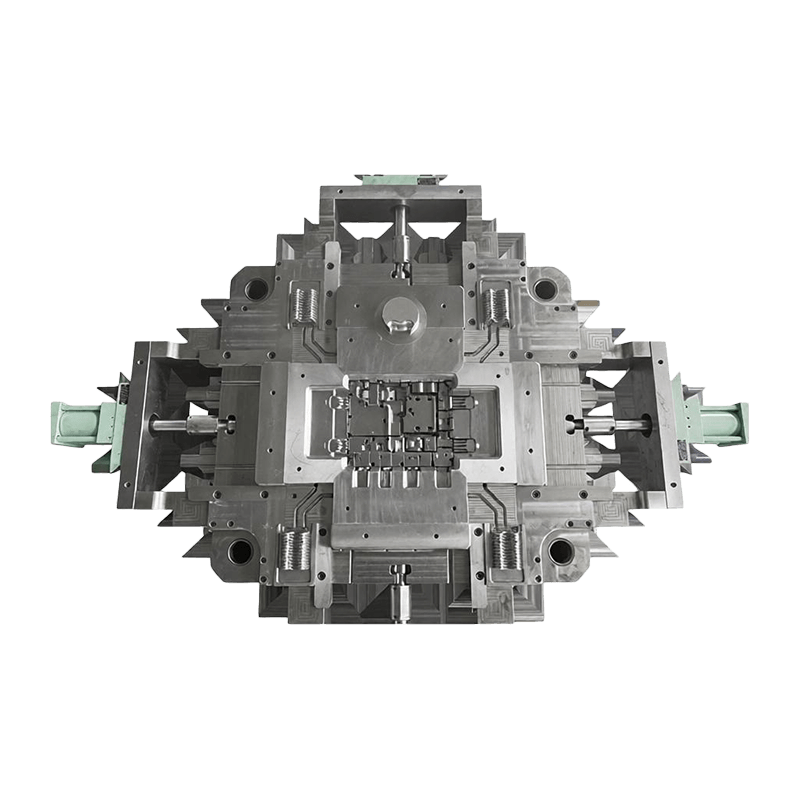
After design approval, the mold is manufactured using high-precision machining and electrical discharge machining where required. The cavity, core, slides, inserts, ejector system, cooling channels, and other components must be produced and assembled accurately. Tool steel selection, heat treatment, surface preparation, and maintenance planning affect mold life and casting consistency.
A well-made die casting mold supports stable production over repeated cycles. It also helps reduce flash, dimensional drift, premature wear, and unplanned maintenance. Since the mold represents a significant part of the production investment, proper engineering at this stage protects both product quality and long-term manufacturing economics.
The production of a precision telecommunication filter housing generally involves a coordinated sequence of operations. Each stage contributes to the performance of the final product.
The process begins with a technical review of the customer’s drawings, models, specifications, expected annual volume, delivery requirements, and inspection standards. Engineers identify critical-to-function dimensions and classify surfaces according to their roles. For example, a cosmetic outer wall, a sealing face, and a threaded mounting hole may require different process treatments and inspection methods.
Process planning also determines the appropriate casting machine, alloy, mold structure, trimming method, machining fixtures, inspection equipment, and packaging approach. Early planning helps align product design with production capability.
Aluminum alloy ingots or approved recycled alloy material are prepared according to the required material specification. The alloy must be managed carefully to maintain suitable composition, fluidity, strength, corrosion behavior, and casting performance. Melting temperature, holding time, cleanliness, and transfer conditions are controlled to reduce contamination and instability.
Material traceability is important for industrial communication components. Production records can associate alloy batches with casting dates, machine parameters, inspection results, and final shipment information. This supports quality review and customer confidence.
During die casting, the molten alloy is injected into the closed mold under controlled pressure and speed. The machine settings must be matched to the product geometry and material. Excessively slow filling can create incomplete filling or cold shuts, while overly aggressive settings may increase turbulence, air entrapment, flash, or tool stress.
Pressure, injection speed, metal temperature, mold temperature, cooling time, and cycle time are monitored to maintain stable production. The goal is not simply to produce a filled part; it is to produce a casting with consistent structure, dimensional stability, surface quality, and sufficient integrity for the intended application.
After casting, runners, overflows, gates, and flash are removed. Automated trimming lines can improve consistency and productivity, particularly for repeated production. Manual finishing may still be used for selected areas or special requirements. Burrs must be removed carefully so that they do not interfere with assembly, sealing, grounding, cable routing, or operator safety.
Trimming tools and fixtures must be matched to the casting geometry. Poorly controlled trimming can damage edges, distort mounting features, or leave residual material. For this reason, trimming is treated as a controlled manufacturing operation rather than a purely cosmetic step.
Not every area of a die cast housing requires machining. CNC operations are normally concentrated on critical interfaces such as sealing faces, mounting planes, threaded holes, bearing or locating surfaces, connector interfaces, and precision openings. This approach provides accuracy where it matters while preserving the productivity advantages of near-net-shape casting.
Fixtures are designed to locate the casting consistently and support it without excessive deformation. Cutting tools, speeds, feeds, coolant management, and tool-life monitoring are selected according to the alloy and feature requirements. After machining, parts may undergo deburring, cleaning, washing, and drying before inspection or surface treatment.
Surface treatment depends on the customer’s appearance, corrosion, electrical-contact, and environmental requirements. Possible processes may include shot blasting, vibratory finishing, powder coating, painting, anodizing, chemical treatment, or other approved methods. The treatment must be compatible with sealing areas, grounding interfaces, threaded holes, and assembly tolerances.
Surface preparation is essential. Oil, dust, machining residue, and casting contaminants must be removed before coating or other finishing. Consistent surface treatment improves appearance and can help protect the housing during storage, transportation, installation, and service.
Inspection may include dimensional measurement, visual examination, surface assessment, thread checking, leak testing, material verification, coating inspection, and functional assembly trials. The exact inspection plan is established according to the drawing and customer quality agreement.
Critical dimensions can be checked using coordinate measuring machines, gauges, calipers, micrometers, height gauges, or dedicated fixtures. Surface and internal quality may be evaluated through appropriate non-destructive inspection methods when required. The purpose is to identify variation before shipment and confirm that the housing can be assembled into the intended communication equipment.
Finished housings must be protected against impact, rubbing, moisture, contamination, and deformation during transportation. Packaging design should separate parts, protect machined surfaces, and accommodate the product’s shape. Identification labels and traceability records help customers organize incoming inspection and production scheduling.
Ningbo Dinghong Mould Co., Ltd. was established in 2013, following the establishment of Yuejin Mould in 1998. The company is located in Daqi Street, Beilun District, Ningbo, Zhejiang Province, near Beilun Port. Its location supports access to manufacturing resources, logistics services, and international shipping channels.
The company occupies approximately 20 mu of land and has developed into a modern manufacturing enterprise with approximately 15,000 square meters of plant space. Its capabilities cover mold design, mold manufacturing, die casting, finishing, and trade. This combination allows customers to coordinate multiple stages of product development and production through one experienced manufacturing partner.
Dinghong manufactures automotive parts, household appliance parts, telecommunication parts, and other aluminum alloy products. Its broader industry experience includes automotive, new-energy, photovoltaic, telecommunications, electrical, motorcycle, pump and valve, fitness equipment, robotic, and other applications. Experience across several sectors can help the engineering team apply lessons from different product categories while adapting them to the requirements of each project.
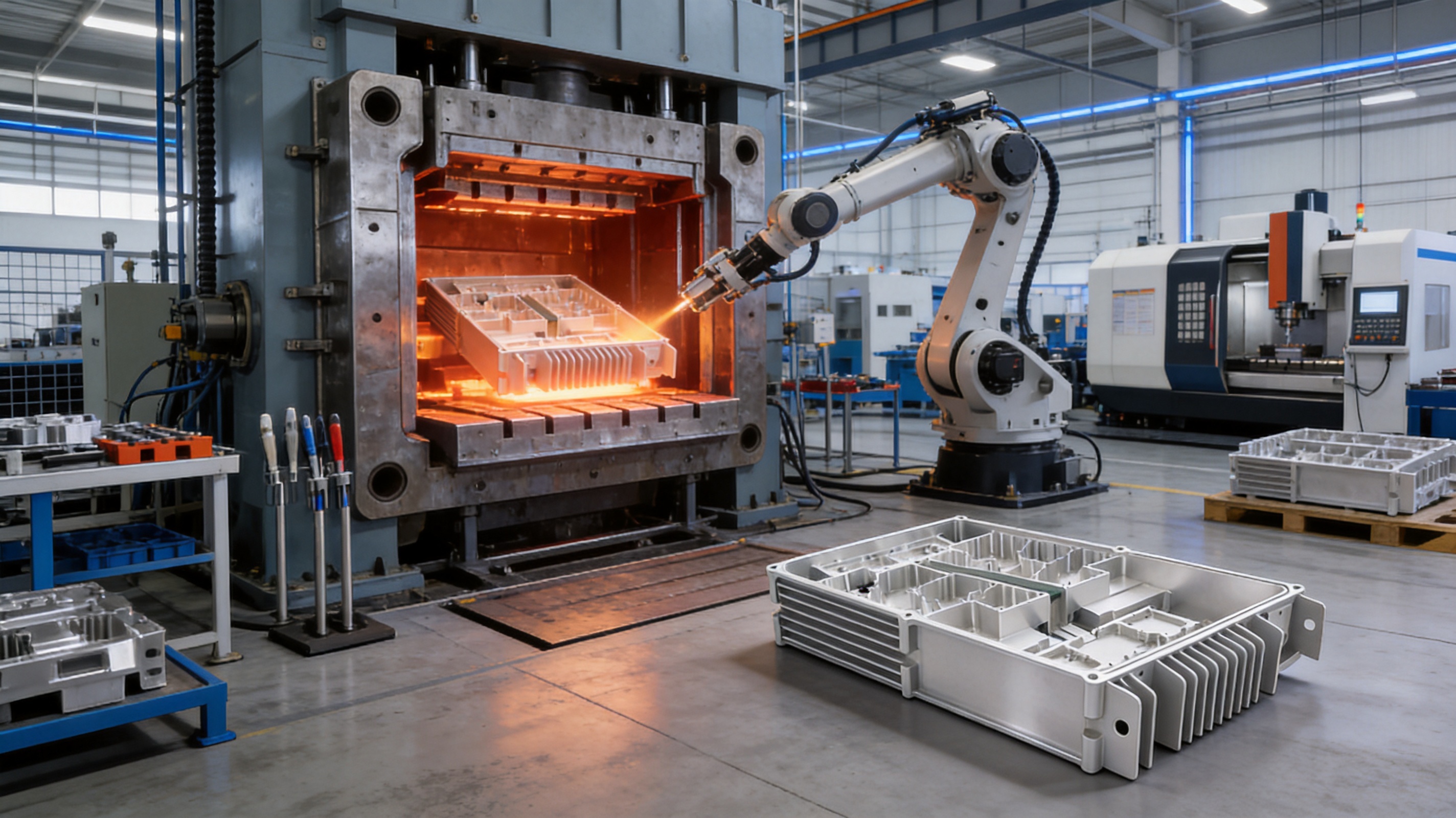
The company operates high-precision CNC machining centers, EDM equipment, die-casting machines, automated trimming lines, and other production and testing equipment. These resources support the complete manufacturing chain from tool production to casting, finishing, machining, and inspection.
A major strength of an integrated mold manufacturer is the direct connection between tooling knowledge and production knowledge. Mold engineers understand how a housing should be designed for filling, ejection, cooling, trimming, and maintenance. Casting engineers can provide feedback about actual process behavior. Machining and quality teams can identify features that create downstream difficulties.
This communication reduces the risk that a mold will be designed in isolation from the production process. It also supports faster technical responses when customers request design changes, new versions, or production adjustments.
Ningbo Dinghong Mould Co., Ltd. has obtained ISO 9001 and IATF 16949 quality management system certifications. ISO 9001 provides a structured framework for quality management, documented processes, customer focus, and continual improvement. IATF 16949 is associated with the automotive industry and emphasizes process control, risk management, traceability, defect prevention, and supply-chain quality.
Although the telecommunication filter housing is intended for communication equipment, disciplined quality systems developed for demanding industrial and automotive applications can provide valuable process-control practices. These may include documented work instructions, process audits, equipment maintenance, corrective action, supplier management, inspection records, and customer feedback handling.
Certification alone does not guarantee that every individual part is suitable for every application. Product quality depends on the approved design, material specification, process controls, inspection plan, and customer requirements. However, a certified quality-management framework provides an organized basis for managing those factors.
Dinghong’s sales network covers China, South America, Southeast Asia, and other international markets, with plans to expand into Europe and additional regions. International manufacturing experience requires attention to communication, documentation, packaging, delivery coordination, technical interpretation, and customer-specific quality expectations.
For global telecommunication equipment manufacturers, supplier communication is especially important because projects may involve multiple locations, engineering teams, and production schedules. A supplier capable of discussing drawings, mold changes, sample approvals, inspection data, and mass-production requirements can help reduce project friction.
The housing must maintain the dimensions that affect assembly and performance. These may include overall length and width, cavity dimensions, mounting-hole locations, cover interfaces, sealing grooves, connector openings, and internal locating features. Critical dimensions should be identified during design review and monitored through a suitable inspection plan.
High-pressure die casting can produce internal porosity if filling, venting, pressure, or solidification conditions are not properly controlled. The significance of porosity depends on the location and function of the feature. Porosity near sealing surfaces, pressure boundaries, machined interfaces, or highly stressed regions may require particular attention.
Good mold design, controlled process parameters, appropriate overflow and venting arrangements, and stable material handling can reduce the risk of unacceptable casting defects. Where necessary, inspection methods can be selected to evaluate internal quality in critical areas.
Many communication housings use gaskets or sealants to protect internal components from water and dust. The housing must provide a consistent sealing surface and appropriate gasket compression. Surface flatness, groove dimensions, corner transitions, fastener locations, and torque control all influence final sealing performance.
Machining may be required for the most critical sealing surfaces. The casting design should also avoid excessive distortion during cooling or machining. Leak testing can be performed when specified by the customer or required by the equipment design.
Threaded holes and screw bosses must support repeated assembly without cracking, stripping, or excessive deformation. The design should account for screw size, insertion depth, torque, load direction, and expected service cycles. Machined threads, thread inserts, or other solutions may be used depending on the application.
The visible surfaces of communication equipment contribute to product appearance and customer perception. They should be free from unacceptable flash, sharp edges, cracks, excessive flow marks, or finishing defects. Appearance requirements should be defined clearly because acceptable variation can differ between concealed, functional, and exposed surfaces.
Aluminum alloy naturally forms a protective oxide layer, but additional surface treatment may be required for severe environments, appearance, electrical contact, or compatibility with other metals. The selected treatment should consider humidity, salt exposure, temperature, ultraviolet exposure, cleaning agents, and galvanic interaction with fasteners or brackets.
The filter housing can be used in various 5G and telecommunications products where a protected aluminum enclosure is required. Potential applications include base-station filter assemblies, remote radio equipment, antenna-related modules, outdoor communication units, signal-processing enclosures, and other equipment requiring compact conductive protection.
It may also be adapted for communication systems beyond 5G. As wireless networks continue to evolve, equipment designers will still require housings that provide mechanical protection, thermal management, dimensional stability, and efficient integration. The same die casting principles can support different frequency bands, internal filter layouts, connector arrangements, and installation methods.
The housing can be customized according to the product architecture. Customization may include external dimensions, cavity layout, mounting pattern, wall thickness, rib structure, cover interface, connector openings, surface treatment, alloy grade, and inspection requirements. Any customization should be reviewed for casting feasibility before tooling begins.
Custom die casting is most successful when the customer and manufacturer collaborate from the earliest design stage. The customer provides the functional requirements, assembly interfaces, operating conditions, and performance targets. The manufacturer contributes knowledge of mold design, alloy behavior, machine capability, machining, finishing, and inspection.
During the design-for-manufacturing review, engineers may recommend changes to wall transitions, draft angles, rib thickness, boss geometry, corner radii, parting lines, gate locations, or machining allowances. These recommendations are intended to improve manufacturability without compromising the product’s mechanical or electrical function.
Prototype or trial castings may be used to verify assembly, appearance, dimensional capability, and process behavior before mass production. Trial results can reveal opportunities for mold modification, machining adjustment, surface-treatment refinement, or packaging improvement.
Once the product is approved, production documentation should define the material, drawing revision, process route, inspection points, acceptance criteria, packaging method, and change-control procedure. Controlled documentation helps ensure that future production remains consistent with the approved sample.

Choosing a supplier for a telecommunication filter housing involves more than comparing the price of an individual casting. The total value includes mold quality, engineering support, production stability, machining capability, surface finishing, inspection, delivery reliability, and responsiveness to technical changes.
An integrated supplier can coordinate mold manufacturing and die casting internally. This can simplify communication and reduce the delays that sometimes occur when design, tooling, casting, machining, and finishing are divided among unrelated companies. It may also make it easier to identify the root cause of a defect because the supplier has visibility across multiple process stages.
In-house or closely coordinated CNC machining can improve control over critical features. Integrated trimming and finishing resources can reduce handling between suppliers. A documented quality system can support repeatable inspection and corrective action. Together, these capabilities provide a stronger foundation for long-term production than a supplier that performs only one isolated operation.
Aluminum is a widely recycled metal, and the ability to recycle aluminum scrap can support more efficient material use. In a controlled die casting operation, runners and approved process scrap may be managed through suitable recycling procedures. Material reuse must still comply with alloy and quality requirements, but the recyclability of aluminum is an important advantage in product planning.
Die casting can also reduce manufacturing waste compared with machining a complete housing from a solid block. Since the casting forms much of the final geometry directly, fewer chips may be generated during secondary machining. The economic benefit becomes more significant as production volume increases.
Energy and environmental performance depend on the entire production system, including melting efficiency, machine utilization, mold life, scrap rate, surface treatment, packaging, transportation, and product service life. A durable housing that protects a valuable communication assembly can help extend equipment life and reduce replacement frequency.
When evaluating a die cast filter housing supplier, customers should review the supplier’s experience with aluminum alloy products, telecommunications components, mold design, high-pressure die casting, CNC machining, surface treatment, inspection, and international delivery.
Customers should also confirm whether the supplier can support three-dimensional design review, mold-flow analysis, prototype trials, dimensional reports, material certificates, process documentation, traceability, and corrective action. The required documents depend on the project, but expectations should be agreed before tooling starts.
Important technical questions include the selected alloy, casting machine capacity, expected wall thickness, critical tolerances, machining allowances, surface-finish options, sealing requirements, internal quality expectations, inspection equipment, and production capacity. Clear answers help prevent misunderstandings and provide a more realistic basis for quotation and scheduling.
| Evaluation Area | Questions to Consider | Expected Benefit |
|---|---|---|
| Engineering | Can the supplier review the design for die casting and recommend improvements? | Lower tooling risk and better manufacturability |
| Mold development | Is mold-flow analysis available, and how are trial results managed? | Improved filling, cooling, venting, and dimensional stability |
| Production | Are die-casting machines, trimming lines, and machining equipment suitable for the product? | Stable output and coordinated processing |
| Quality | Are inspection plans, traceability, and corrective-action procedures documented? | More reliable product consistency |
| Finishing | Can the supplier provide the required coating, treatment, cleaning, and appearance control? | Better environmental protection and product appearance |
| Delivery | Can the supplier support international packaging, logistics, and schedule coordination? | Reduced delivery and handling risk |
A telecommunication filter housing is a protective and structural enclosure for a filter assembly used in communication equipment. It may support electromagnetic shielding, thermal transfer, mechanical protection, sealing, and accurate installation of the internal filter and related components.
Aluminum alloy offers low density, useful strength, thermal conductivity, corrosion resistance, and good die-casting processability. These characteristics make it suitable for communication equipment that must remain lightweight while protecting sensitive components.
The filter is the functional electrical assembly that selects desired frequency bands and suppresses unwanted signals. The housing is the mechanical enclosure that supports, protects, locates, and may electrically shield the filter assembly.
Yes. Dimensions, mounting holes, internal cavities, ribs, connector openings, cover interfaces, sealing grooves, alloy specifications, machining features, and surface treatments can generally be customized according to approved drawings and technical requirements.
Die casting provides repeatable near-net-shape geometry, but the achievable tolerance depends on the feature, alloy, mold design, machine stability, and production conditions. Critical surfaces can be CNC machined to achieve tighter dimensional requirements.
No. Some areas may be used in the as-cast condition, while critical mounting, sealing, threading, connector, and locating surfaces may require machining. Selective machining helps balance precision and production efficiency.
Mold-flow analysis simulates how molten alloy fills and solidifies within the mold. It can help identify potential air entrapment, weld lines, incomplete filling, shrinkage, hot spots, and cooling imbalances before the tool is manufactured.
An aluminum alloy housing provides a conductive material base that may support electromagnetic shielding. Final shielding performance also depends on the complete design, including joints, covers, gaskets, fasteners, grounding arrangements, coatings, and electrical testing.
Ningbo Dinghong Mould Co., Ltd. has obtained ISO 9001 and IATF 16949 quality management system certifications. Product acceptance should still be based on the customer’s approved drawings, specifications, inspection plan, and application requirements.
The company manufactures products for automotive, household appliance, telecommunication, electrical, new-energy, photovoltaic, motorcycle, pump and valve, fitness equipment, robotic, and other industries.
The company operates die-casting machines, automated trimming lines, CNC machining centers, EDM equipment, and testing resources. Production capacity and delivery schedules should be confirmed for each specific housing design and order quantity.
Useful information includes three-dimensional models, two-dimensional drawings, alloy requirements, annual volume, estimated order quantity, surface-treatment requirements, critical tolerances, inspection expectations, packaging needs, and target delivery schedule.
Customers should provide the required environmental protection level, gasket or sealant design, sealing-surface dimensions, flatness requirements, leak-test expectations, and assembly torque conditions. These details help the manufacturer design and inspect the housing correctly.
An integrated supplier can coordinate mold design, tool manufacturing, die casting, trimming, machining, finishing, inspection, and delivery. This can simplify communication, improve process feedback, and reduce the risk of inconsistent information between separate suppliers.
The die casting telecommunication filter housing is an important enabling component for modern 5G communication equipment. It provides the mechanical foundation for a filter assembly while supporting protection, alignment, thermal management, potential electromagnetic shielding, and efficient integration into a complete communication product.
Compared with many fabricated or fully machined alternatives, precision aluminum die casting can offer a strong combination of lightweight construction, complex integrated geometry, repeatable production, reduced assembly requirements, and scalable manufacturing economics. The best results depend on careful design for die casting, mold-flow analysis, stable process control, selective CNC machining, suitable surface treatment, and comprehensive inspection.
Ningbo Dinghong Mould Co., Ltd. combines mold design, mold manufacturing, die casting, finishing, machining, and trade services. Its technical background, production equipment, quality-management certifications, international market experience, and broad industrial customer base provide a foundation for developing customized aluminum alloy telecommunication components.
For customers seeking a reliable housing for 5G filters or related communication assemblies, early cooperation between the product design team and the die casting manufacturer is essential. When material selection, mold construction, casting parameters, machining, sealing, surface treatment, inspection, and packaging are planned as one connected process, the result can be a more reliable, economical, and production-ready telecommunication housing.
1. ISO 9001, Quality Management Systems—Requirements.
2. IATF 16949, Quality Management System Requirements for Automotive Production and Relevant Service Parts Organizations.
3. NADCA Product Specification Standards for Die Castings.
4. ASM Handbook, Volume 15: Casting.
5. ASM Handbook, Volume 2: Properties and Selection—Nonferrous Alloys and Special-Purpose Materials.
6. Aluminum Association, Aluminum Standards and Data.
7. General engineering principles for high-pressure aluminum die casting, mold design, machining, and casting quality control.
8. Technical information supplied for the die casting telecommunication filter housing and the manufacturing capabilities of Ningbo Dinghong Mould Co., Ltd.

A 12-week die casting mold build can look competitive on quote and still become the expensive option if the first trial...
READ MOREMetal Injection Molding vs Die Casting: Start With the Part A buyer often arrives at this comparison with two very diff...
READ MOREA 180 g aluminum housing with 1.8 mm walls and a ±0.10 mm bearing bore is quoted in the same week as a 12 g stainless s...
READ MOREDie casting automotive parts are made by forcing molten metal into a steel mold under high pressure, where it fills t...
READ MORE

Sun Yuejun: +86-13806631860
Wang Shiyong: +86-15958891460 / 15058297768
Dove Yao: +86-18625086675


Copyright © Ningbo Dinghong Mould Co., Ltd. Rights Reserved. Custom Precision Die Casting Aluminum Alloy Parts Manufacturers
