
 English
 Español
 русский
 Français

Die casting automotive parts are made by forcing molten metal into a steel mold under high pressure, where it fills t...
READ MORE
Content
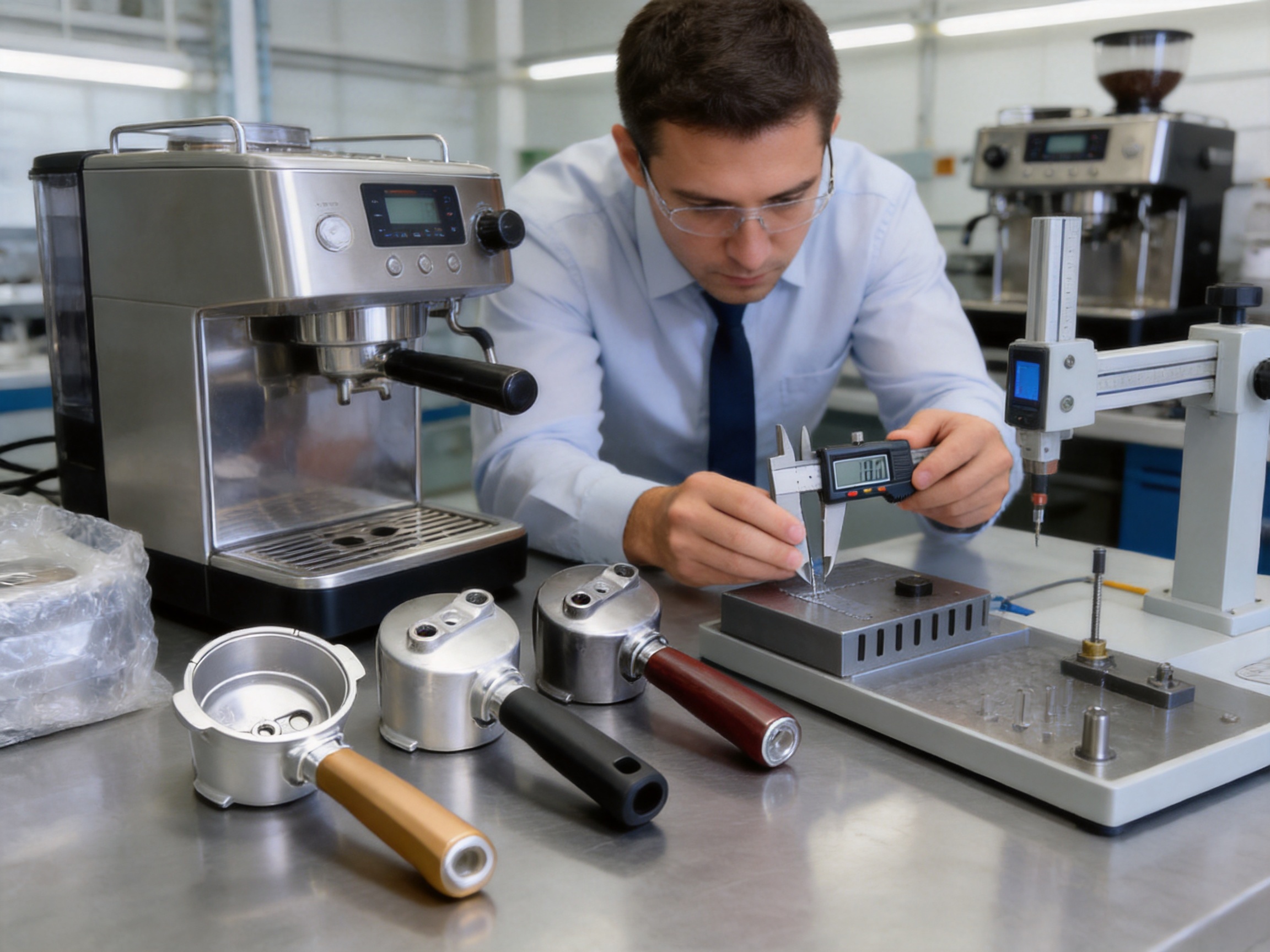
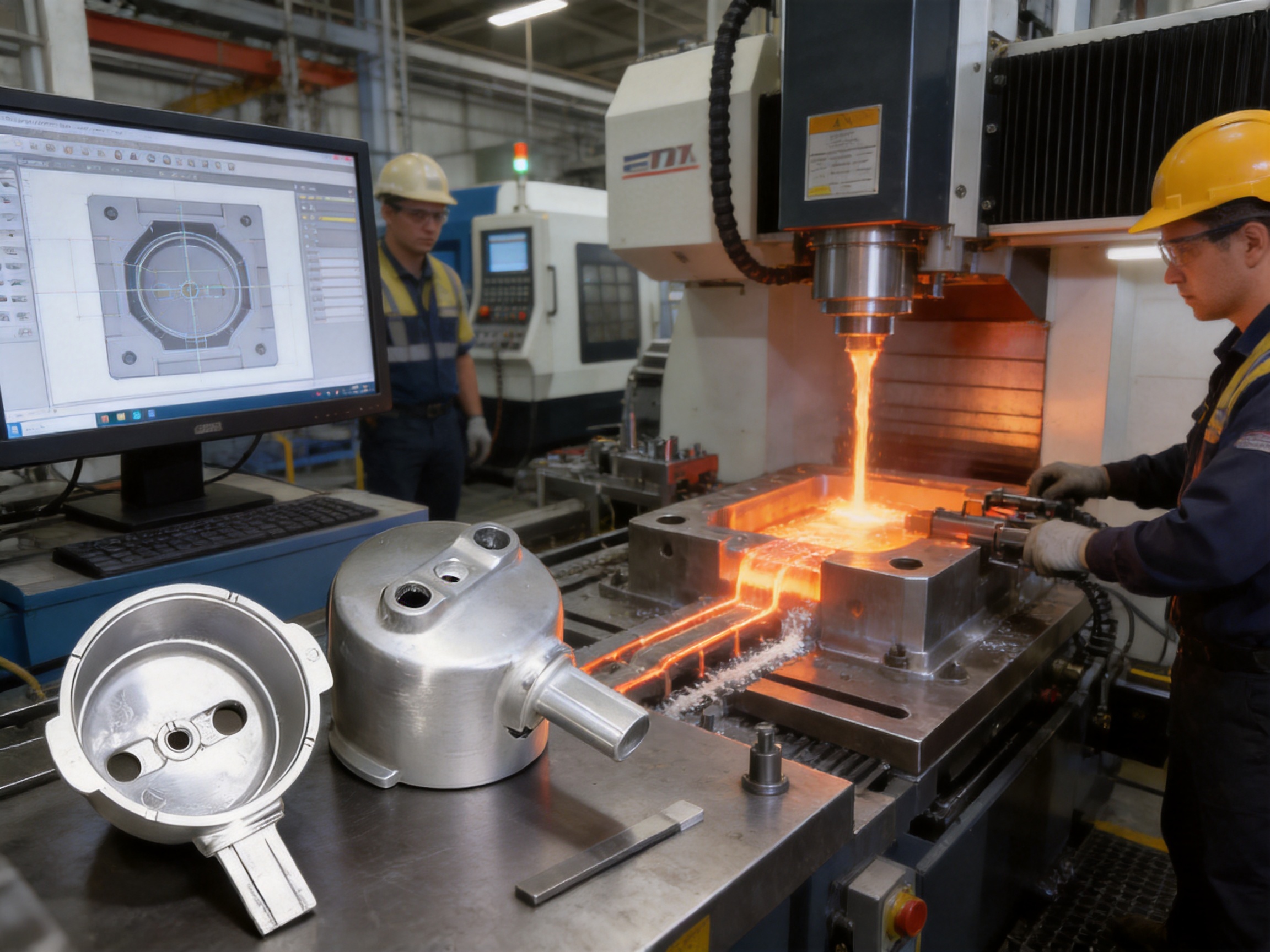
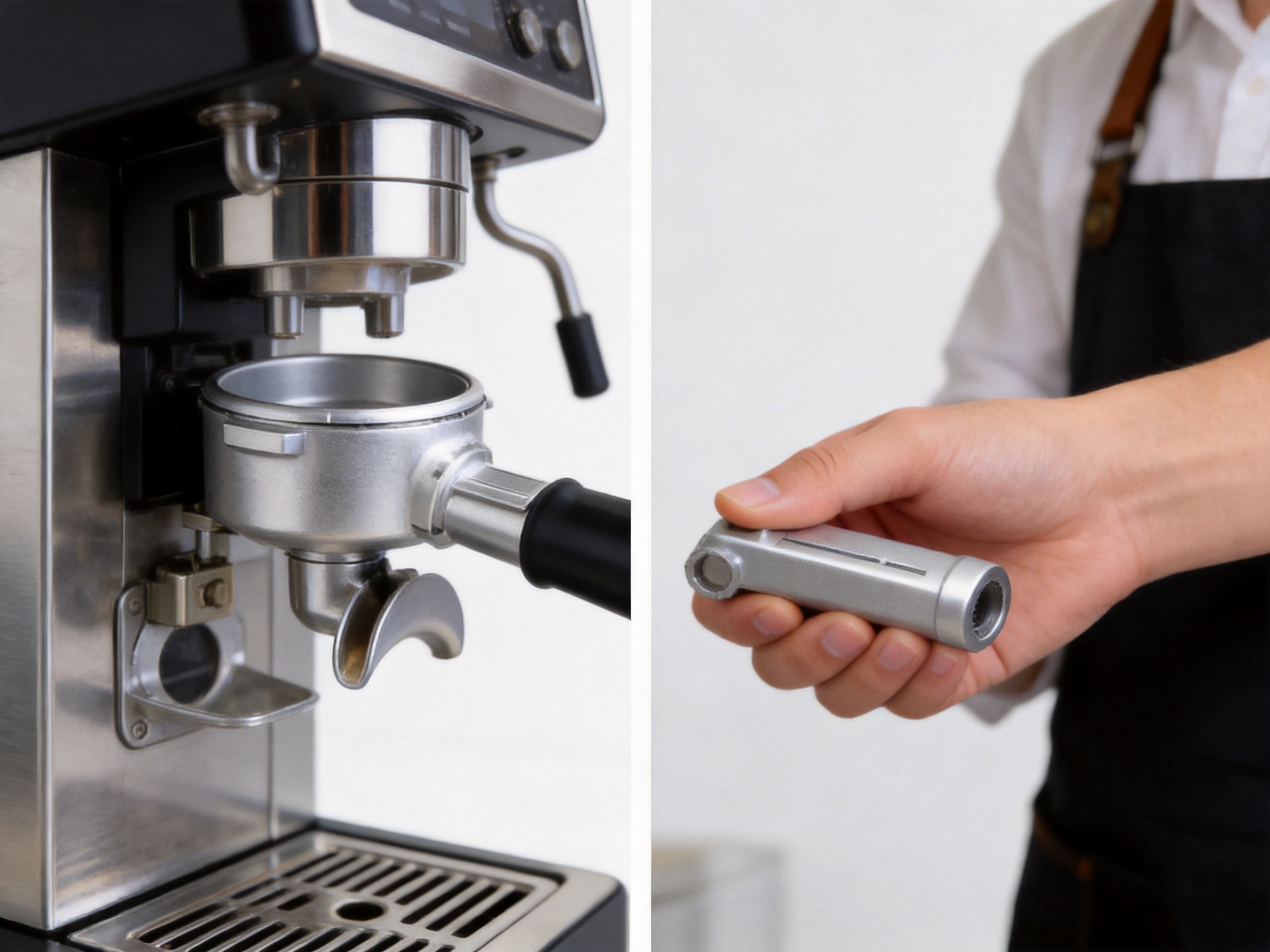
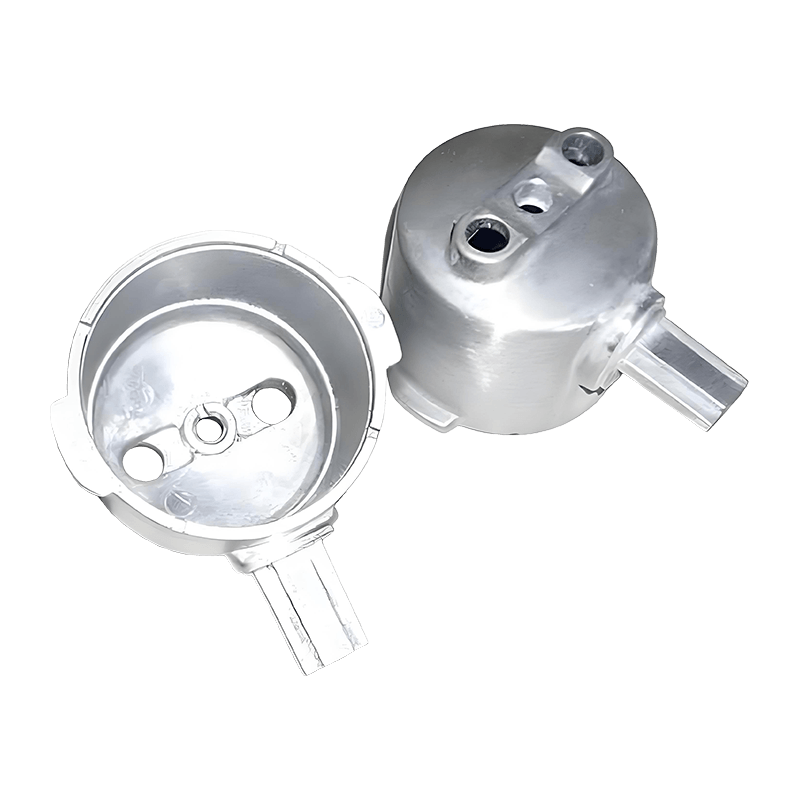
Die Casting Coffee Machine Filter Handle
Coffee equipment depends on many small components to deliver a consistent result. Among these components, the filter handle plays an important role because it connects the filter assembly to the coffee machine, supports the filter during brewing, and allows the operator to remove the prepared coffee safely and efficiently. Although it may appear to be a simple part, a filter handle must satisfy demanding requirements for strength, dimensional accuracy, surface quality, thermal resistance, ergonomic use, and long-term durability.
The die casting coffee machine filter handle is developed for manufacturers and equipment brands seeking a dependable metal component for coffee machines, espresso equipment, and related beverage appliances. Produced through controlled die casting and precision finishing processes, the component can provide the rigidity and stable shape required for repeated daily operation. Its structure may be customized according to the coffee machine platform, filter dimensions, mounting method, grip design, and appearance requirements.
Ningbo Dinghong Mould Co., Ltd. combines mold design, mold manufacturing, aluminum alloy die casting, trimming, finishing, inspection, and technical support within one manufacturing system. This integrated capability allows customers to obtain a complete solution rather than purchasing an isolated cast component from separate suppliers. The result is improved process coordination, reduced communication risk, and greater consistency between the mold, the casting, and the final assembled product.
The coffee machine filter mainly includes a powder residue filter, which separates coffee powder from brewed coffee liquid. The filter handle is the supporting and operating component attached to this filter assembly. During use, the handle helps position the filter in the brewing head, maintains a secure connection, and gives the operator a practical grip for installation and removal.
A professionally manufactured filter handle must combine functional strength with a refined appearance. It may be exposed to warm water, coffee residue, cleaning agents, pressure from repeated operation, and frequent handling. The component must also fit accurately with the machine body and filter basket. If the handle is poorly designed or manufactured, it can create loose assembly, uneven alignment, uncomfortable operation, premature cracking, or an inconsistent external appearance.
The die casting process is suitable for this type of product because it can form complex metal shapes with repeatable dimensions and efficient production cycles. Features such as mounting bosses, reinforcing ribs, curved grips, connection interfaces, and decorative contours can be incorporated into the mold design. This reduces the need for multiple secondary machining operations and helps manufacturers achieve an efficient balance between product performance and production cost.
The filter handle can be developed for different coffee machine designs. Customers may require a compact handle for household equipment, a more robust configuration for commercial espresso machines, or a customized appearance that matches a particular appliance family. The part may also be coordinated with other components, including filter baskets, brewing heads, locking mechanisms, covers, trim pieces, and internal support elements.
The primary role of the filter handle is to provide a stable connection between the filter assembly and the coffee machine. During brewing, the filter must remain correctly positioned so that coffee water passes through the intended area. The handle contributes to this positioning by transferring the operator’s tightening and removal force to the filter assembly.
The handle also improves usability. A well-designed grip gives the user sufficient leverage to install or remove the filter without excessive effort. Its size, contour, and surface condition influence how comfortably the machine can be operated. For commercial equipment, where the filter may be handled many times each day, this ergonomic factor becomes especially important.
Another function is structural support. The handle must resist mechanical stress generated during locking, unlocking, cleaning, and transportation. A robust die-cast body can provide stable support while maintaining a relatively efficient material distribution. Design features such as ribs and transition radii can be used to improve strength without creating unnecessary weight or difficult filling conditions.
The filter handle also contributes to the visual quality of the coffee machine. Users often associate the visible metal components of an appliance with its overall quality. A clean casting surface, accurate edges, consistent finishing, and carefully controlled appearance can help the finished machine achieve a more professional and premium impression.
Die casting uses a reusable metal mold to shape molten alloy under controlled pressure. For products requiring repeated production, the process offers strong repeatability and efficient cycle times. Once the mold has been properly designed and validated, large quantities of filter handles can be produced with consistent geometry.
Compared with some conventional machining methods, die casting can reduce material waste because the component is formed close to its final shape. Machining remains useful for precision holes, threads, sealing surfaces, and other critical features, but the main body can be produced efficiently through the casting process. This combination helps control manufacturing cost while preserving functional accuracy.
Die casting also supports integrated design. Instead of assembling several separate metal pieces, engineers may combine compatible features into a single cast body. This can reduce the number of joints, simplify assembly, and decrease the possibility of misalignment. Fewer individual parts may also make inventory management and quality inspection more straightforward.
Aluminum alloy die casting is particularly suitable for many appliance components because aluminum alloys offer a useful combination of low weight, corrosion resistance, thermal conductivity, and structural performance. The precise alloy grade should be selected according to the customer’s requirements, including strength, surface finishing, operating conditions, and applicable regulations.
The process can support both functional and decorative requirements. After casting, the filter handle may receive deburring, shot blasting, polishing, machining, coating, plating, or other finishing operations. The most appropriate treatment depends on the required appearance, contact conditions, environmental exposure, and design specification.
Accurate dimensions are essential for a filter handle because it must match the coffee machine’s brewing head and filter assembly. Dinghong’s mold design and precision machining capabilities support the development of controlled interfaces, mounting locations, and external contours. Dimensional consistency helps reduce assembly difficulties and supports stable operation across production batches.
A filter handle is subjected to repeated torque and handling force. A properly designed die-cast body can distribute these forces through an optimized structure. Reinforcing ribs, rounded transitions, suitable wall thickness, and carefully positioned mounting features can help reduce local stress concentration. The final design should be verified according to the customer’s functional testing requirements.
Die casting permits engineers to balance material placement and product weight. Unnecessary bulk can be reduced while maintaining strength in critical areas. This is valuable for coffee machines because the handle should feel solid in use without making the appliance unnecessarily heavy or difficult to operate.
The visible quality of the filter handle depends on mold condition, alloy control, filling behavior, trimming, and surface finishing. A stable production process helps maintain consistent edges, contours, and surface texture. For customers producing branded coffee equipment, visual consistency across thousands of parts is an important part of product quality.
The mold can be developed around the customer’s drawings, samples, three-dimensional data, or functional concept. This allows the grip length, connection form, decorative details, mounting geometry, and external profile to be adapted to different machine platforms. Design flexibility is especially useful when a customer needs several related models within the same product family.
Compared with manually fabricated or individually machined handles, a controlled die casting process provides a more repeatable production method. Stable mold maintenance, process monitoring, trimming control, and final inspection all contribute to consistent output. Repeatability helps customers plan assembly and reduce unexpected variation during mass production.
Several manufacturing methods can be used to produce a coffee machine handle, but each has different advantages and limitations. The appropriate choice depends on production volume, geometry, material, surface requirements, tolerance, and target cost.
CNC machining from a solid billet can achieve excellent dimensional accuracy, especially for prototypes and low-volume production. However, it may involve long machining times, high material removal, and greater material waste when the handle has a large or complex shape. Die casting is generally more efficient for medium- and high-volume production after the mold has been completed.
Fabricated sheet metal can be suitable for brackets or simple covers, but it may require bending, welding, riveting, and additional cosmetic treatment. These operations can create visible joints and may limit the shape of the grip. A die-cast component can integrate multiple geometric features into one body, reducing assembly steps.
Plastic injection molding may provide a low-cost solution for some handles, especially when low weight and electrical insulation are priorities. However, metal handles are often preferred when the product requires a more substantial feel, higher rigidity, improved heat transfer, or a premium appearance. The choice should be made according to the coffee machine’s operating conditions and design objectives.
Gravity casting and sand casting can produce metal components, but they may not deliver the same combination of surface quality, thin-wall capability, cycle efficiency, and dimensional repeatability required for a refined appliance component. Die casting is often a stronger choice when the customer needs a consistent appearance and stable mass production performance.
| Manufacturing Method | Typical Strength | Potential Limitation | Suitability for Filter Handles |
|---|---|---|---|
| Die casting | Repeatable shape, efficient production, integrated features, good surface potential | Requires an initial mold investment | Well suited to medium- and high-volume customized production |
| CNC machining | High dimensional control and flexible prototyping | Higher cycle time and material removal for complex bodies | Useful for prototypes, samples, and selected precision features |
| Sheet metal fabrication | Practical for simple brackets and formed covers | May require welding, assembly, and additional cosmetic work | Suitable for simple structures rather than integrated handles |
| Plastic injection molding | Low weight and efficient production of polymer parts | Different rigidity, thermal, and appearance characteristics | Suitable when a non-metallic design is acceptable |
| Sand or gravity casting | Flexible for certain larger or lower-volume castings | Generally less refined surface and dimensional repeatability | Less suitable for a high-volume precision appliance handle |
The quality of a die-cast filter handle begins before production starts. Mold design determines how the alloy fills the cavity, how air is discharged, how the part solidifies, and how the finished casting is removed. A well-designed mold can reduce defects and improve the consistency of the final component.
Dinghong uses experienced designers and advanced software systems to develop mold solutions. Mold-flow analysis allows engineers to study the filling process before the mold is manufactured. This provides an opportunity to evaluate filling balance, potential air entrapment, solidification behavior, gate positions, overflow arrangements, and areas that may require structural improvement.
Simulation does not replace practical engineering judgment, but it helps the design team identify risks earlier. Changes made during the digital design stage are generally more efficient than corrections made after machining or trial production. The use of analysis supports a more reliable transition from customer concept to production-ready tooling.
Parting lines, draft angles, ejector locations, gate positions, and overflow areas must be considered in relation to the filter handle’s visible surfaces and functional interfaces. The mold should facilitate stable release without damaging the casting. Areas that require machining should also be identified clearly so that sufficient stock and reliable tool access are available.
Wall thickness should be designed with attention to alloy flow and solidification. Sudden changes in thickness can contribute to shrinkage, porosity, or distortion. Smooth transitions, appropriate radii, and balanced geometry can improve filling behavior and reduce stress concentration. At the same time, the product must retain the strength and visual form required by the coffee machine design.
Mold durability is another important consideration. The tooling must withstand repeated thermal cycles, pressure, and mechanical operation. Proper material selection, heat treatment, machining accuracy, cooling design, and maintenance planning all influence mold service life and production stability.
Production begins with a detailed review of the customer’s product requirements. The review may include three-dimensional data, two-dimensional drawings, samples, annual demand, alloy expectations, critical dimensions, appearance standards, assembly conditions, and testing requirements. The engineering team identifies which dimensions require close control and which surfaces will remain visible after final assembly.
When the customer is still developing the coffee machine, Dinghong can evaluate the proposed structure from a manufacturing perspective. This may include suggestions regarding draft, wall thickness, rib design, machining allowance, connection strength, and finishing requirements. Early cooperation can reduce later tooling modifications and improve the efficiency of product development.
After the design requirements are confirmed, engineers create the mold structure and analyze the casting process. Mold-flow analysis helps visualize how molten alloy may enter and fill the cavity. The team can then optimize gating, overflow, venting, cooling, and ejection arrangements.
The objective is to create a mold that supports stable production rather than simply producing one acceptable sample. A production-oriented design considers cycle time, tool access, trimming convenience, maintenance requirements, part handling, and the repeatability of critical features.
Dinghong manufactures molds using high-precision CNC machining centers, electrical discharge machining equipment, and related tooling systems. CNC machining is used to create accurate mold surfaces and structural components. EDM is useful for fine details, deep features, sharp internal profiles, and areas that are difficult to produce through conventional cutting.
Tooling components are inspected during manufacture to confirm dimensions and surface condition. Proper alignment of mold halves, inserts, sliders, ejectors, and other moving elements is necessary for reliable operation. Mold assembly and trial fitting provide additional opportunities to identify interference, uneven contact, or release problems before formal production.
During die casting, the selected alloy is melted and introduced into the prepared mold under controlled pressure. The metal fills the cavity and solidifies into the filter handle shape. Important process variables may include alloy temperature, mold temperature, injection speed, pressure, holding conditions, lubrication, and cycle timing.
Stable control of these variables helps reduce variation in filling, surface appearance, density, and dimensions. Operators and quality personnel monitor production conditions and inspect the castings for visible defects, incomplete filling, flash, deformation, and other irregularities.
After casting, excess material such as runners, gates, overflows, and flash must be removed. Dinghong operates automated trimming lines and supporting equipment for efficient and repeatable processing. Automated trimming can improve consistency and reduce the variation sometimes associated with manual removal.
Deburring is particularly important for a component that users will hold. Sharp edges, residual flash, and rough transition areas must be controlled to support safe and comfortable handling. The trimming process must remove unwanted material without damaging the visible surface or important assembly features.
Some filter handle features may require secondary machining after casting. These may include holes, threads, mounting faces, locating surfaces, or other interfaces with close dimensional requirements. CNC machining centers provide the accuracy and repeatability needed for these operations.
Machining plans should be coordinated with the original mold design. Correct datums and stable workholding are important for maintaining the relationship between machined features and cast surfaces. In-process checks can help identify deviations before a large batch is completed.
Surface finishing is selected according to the customer’s appearance and use requirements. Possible operations include polishing, shot blasting, coating, painting, plating, or other treatments. The appropriate choice depends on the required texture, color, corrosion resistance, tactile feel, and compatibility with adjacent parts.
For visible coffee equipment components, finishing quality can strongly influence the perceived value of the complete machine. Consistent preparation before coating or polishing is essential because surface defects may become more visible after treatment. Dinghong coordinates finishing requirements with the casting and machining processes to support a stable final appearance.
Finished filter handles are inspected according to the agreed quality plan. Inspection may include visual examination, dimensional measurement, functional fit checks, surface evaluation, and sampling-based testing. Critical characteristics should be clearly defined before production so that inspection resources are focused on the features most important to performance.
Quality records support traceability and process improvement. When a deviation is identified, the engineering and production teams can analyze whether the cause is related to the mold, casting conditions, trimming, machining, finishing, handling, or packaging. This structured approach helps prevent repeated problems.
Ningbo Dinghong Mould Co., Ltd. has obtained ISO 9001 and IATF 16949 quality management system certifications. ISO 9001 provides a structured framework for quality planning, process management, documentation, corrective action, and customer satisfaction. IATF 16949 is particularly relevant to automotive manufacturing and emphasizes process control, risk prevention, traceability, and continual improvement.
Although the coffee machine filter handle is an appliance component, the disciplined manufacturing practices associated with automotive-quality systems can provide valuable benefits. Clear procedures, controlled documentation, process audits, inspection records, and corrective-action methods help create a more predictable supply chain.
Dinghong also maintains testing equipment and comprehensive quality-control procedures. Depending on the project, quality activities may cover raw material verification, first-article inspection, dimensional checks, mold trials, process inspection, final inspection, packaging review, and customer-specific testing.
Quality should not be treated as a final inspection activity alone. It begins with product design and mold analysis, continues through machining and die casting, and remains important during finishing, storage, and shipment. This process-based approach is useful for customers that require stable long-term supply rather than one-time sample production.
Dinghong has developed from a small factory into a modern manufacturing enterprise with approximately 15,000 square meters of plant space. Its facility includes high-precision CNC machining centers, EDM equipment, die-casting machines, automated trimming lines, and production and testing equipment.
The availability of multiple capabilities within one organization supports better coordination. Mold designers can communicate directly with machining and production teams. Lessons learned during mold trials can be transferred to later tooling projects. Production feedback can also be used to improve part design, machining allowances, or finishing methods.
The company’s technical team uses advanced software and engineering systems to support mold design and manufacturing. Digital modeling and mold-flow analysis can help customers evaluate a design before significant production resources are committed. This contributes to more efficient development and provides a technical basis for decisions involving wall thickness, gating, ejection, and cooling.
Integrated production is also beneficial for schedule management. When mold construction, die casting, trimming, and machining are coordinated under one organization, the customer does not need to manage as many independent suppliers. This can simplify communication regarding samples, engineering changes, quality feedback, and delivery planning.
The filter handle can be customized to match different coffee machine platforms. Customization may involve the overall length, grip profile, mounting interface, filter connection, decorative shape, logo area, surface texture, and finishing treatment. The exact options depend on the product design and manufacturing feasibility.
Customers may provide a complete drawing package, a three-dimensional model, a physical sample, or a preliminary concept. Dinghong’s engineering team can review the information and identify the most suitable die casting and finishing approach. If a sample is provided, the team can study its dimensions, assembly relationship, and appearance requirements before preparing a production proposal.
For product families with several sizes or models, a common design platform may be considered. Shared tooling principles or similar mold structures can help maintain a consistent appearance across models while allowing differences in filter capacity, handle length, or machine interface.
Packaging can also be coordinated according to customer requirements. Protective separators, individual wrapping, cartons, labels, and batch identification may be selected to reduce surface damage during transportation and simplify receiving inspection at the customer’s facility.
The primary application is coffee machine equipment, including filter-based brewing systems and espresso-related machines. The component may be used in household appliances, commercial coffee equipment, hospitality equipment, and other beverage preparation systems that require a removable filter assembly.
The broader production capabilities of Dinghong also serve automotive parts, household appliance parts, telecommunications parts, electrical components, motorcycle products, pump and valve components, fitness equipment, robotic equipment, photovoltaic products, and new-energy applications. This cross-industry experience supports a broad understanding of die-cast aluminum alloy design and production.
Experience across different industries can be valuable because each sector emphasizes different performance requirements. Automotive projects may prioritize dimensional consistency and traceability, electrical products may require controlled interfaces and appearance, while appliance components may place greater emphasis on ergonomics and cosmetic quality. Knowledge gained from these applications can support a balanced approach to coffee equipment components.
Choosing an integrated mold and die casting supplier can reduce the risks associated with transferring a design between multiple companies. When the mold maker and casting producer are separate, responsibility for filling behavior, mold maintenance, dimensional changes, and process adjustments may become unclear. A single technical partner can manage these relationships more directly.
An integrated supplier can also support engineering changes more efficiently. If a customer needs to modify the grip shape, mounting hole, decorative surface, or wall thickness, the change can be evaluated in relation to both the mold and the casting process. This helps reduce the possibility that a change solves one issue while creating another production problem.
Communication is another advantage. Customers can discuss design, tooling, samples, production, finishing, quality, and delivery with a coordinated team. Clear communication is particularly important when the product is being developed for an international market or when technical information must be exchanged across different organizations.
Dinghong’s sales network covers China, South America, Southeast Asia, and other international markets, with plans to expand into Europe and additional regions. Its experience with international customers supports cooperation involving technical specifications, quality expectations, packaging, and export logistics.
When selecting a coffee machine filter handle, buyers should evaluate more than the external appearance. The connection interface must be compatible with the filter assembly and brewing head. Critical dimensions should be defined clearly, including hole locations, mounting surfaces, locking features, and contact areas.
Material selection should reflect the expected environment. Buyers should consider operating temperature, cleaning chemicals, moisture exposure, mechanical loading, surface treatment, and any applicable food-contact or appliance requirements. The appropriate alloy and finishing system should be confirmed during product development.
Ergonomics should be assessed through physical samples or prototypes. The handle should provide an adequate grip, sufficient leverage, and comfortable edges. If the coffee machine is intended for commercial use, repeated operation testing may be useful for evaluating fatigue, loosening, deformation, and surface wear.
Appearance requirements should be documented in a practical way. Terms such as “high quality” or “smooth surface” can have different meanings to different suppliers. A better approach is to define acceptable textures, visible areas, color references, permissible marks, edge conditions, and sample approval standards.
Production volume also affects the tooling strategy. A low-volume project may require a different mold investment and finishing plan from a high-volume program. Dinghong can evaluate the project according to expected demand, part complexity, and target cost to help identify a suitable production route.
Before mass production, customers should approve a representative sample. The sample provides an opportunity to verify assembly fit, handle feel, external appearance, filter alignment, and interaction with the coffee machine. It also allows engineering teams to confirm that the manufactured component reflects the intended design.
Sample evaluation should include both dimensional and functional checks. A handle may meet individual drawing dimensions but still create difficulty during assembly if its relationship with neighboring components is not correct. Practical installation and removal testing can reveal issues that are not obvious from a drawing alone.
Appearance approval should be performed under agreed lighting and viewing conditions. Visible casting marks, machining traces, polishing lines, coating variation, and small surface imperfections should be assessed according to the agreed standard. Retaining an approved reference sample can help maintain consistency in future batches.
Once the sample is approved, the customer and supplier should confirm the production specification. This may include alloy, finishing, critical dimensions, inspection method, packaging, labeling, and change-control requirements. A clearly defined specification provides a common reference throughout the supply relationship.
A reliable supply relationship depends on more than the ability to produce an initial batch. Customers need stable quality, predictable communication, reasonable lead-time planning, and responsive support when designs or demand change. Dinghong’s integrated structure is intended to support these long-term requirements.
Production planning may be arranged according to customer forecasts, order quantities, mold capacity, finishing schedules, and shipping requirements. Maintaining appropriate communication about demand changes helps the supplier organize materials, machine time, inspection resources, and packaging in advance.
Long-term cooperation can also support continuous improvement. Production data may identify opportunities to improve mold life, shorten cycle time, reduce trimming work, improve surface consistency, or simplify assembly. Improvements should be evaluated carefully so that cost reduction does not compromise the functional or visual requirements of the coffee machine.
Dinghong is committed to building long-term customer relationships through reliable manufacturing, technological innovation, and sincere cooperation. Its capabilities cover mold design, mold manufacturing, die casting, finishing, and trade, allowing customers to work with one partner throughout the product life cycle.
Efficient material use is an important advantage of near-net-shape die casting. By forming much of the component during the casting operation, the process can reduce the amount of material removed compared with machining a complete handle from a solid block. Reusable tooling also supports consistent production over many cycles.
Process efficiency can be further improved through automated trimming, optimized mold design, stable cycle control, and reduced rework. Fewer defective parts mean lower material consumption and better use of machine capacity. Good process control therefore supports both economic and environmental objectives.
Customers may also consider the service life of the component. A durable filter handle that maintains its shape and connection performance over repeated use may reduce replacement frequency and support the overall reliability of the coffee machine. Product durability should be verified through appropriate testing rather than assumed solely from the manufacturing method.
Environmental requirements vary by market and application. Alloy selection, surface treatment, packaging, waste handling, and production documentation should be reviewed according to the customer’s regulatory and sustainability expectations.
It is a metal handle produced through the die casting process for use with a coffee machine filter assembly. It supports the filter, connects with the brewing system, and provides the user with a grip for installation and removal.
The handle helps position and secure the filter assembly during brewing. It also transfers the operator’s force during locking, unlocking, cleaning, and removal while improving the usability and appearance of the coffee machine.
Die casting can produce complex shapes with repeatable dimensions and efficient cycle times. It can integrate ribs, mounting features, curved grips, and decorative details into one component, making it suitable for medium- and high-volume production.
Yes. The grip shape, length, mounting interface, filter connection, surface texture, decorative features, and finishing treatment can be developed according to the customer’s product requirements and manufacturing feasibility.
The product is developed within an aluminum alloy die casting manufacturing system. The specific alloy should be confirmed according to the customer’s strength, appearance, corrosion resistance, thermal, finishing, and regulatory requirements.
Yes. Dinghong provides mold design, mold manufacturing, die casting, trimming, machining, finishing, inspection, and related technical support. This integrated capability allows the mold and cast component to be developed as one coordinated project.
Mold-flow analysis helps engineers evaluate how molten alloy may fill and solidify inside the cavity. It can support decisions regarding gates, overflows, vents, cooling, filling balance, and potential defect risks before the mold is manufactured.
Depending on the specification, the handle may receive deburring, shot blasting, polishing, coating, painting, plating, or another suitable treatment. The final option depends on appearance, corrosion resistance, tactile requirements, and compatibility with the coffee machine.
Quality control may include material verification, mold trial evaluation, dimensional inspection, visual inspection, functional fit checks, process monitoring, and final inspection. The exact inspection plan is established according to the customer’s drawings and quality requirements.
It can be developed for household or commercial equipment, provided that the design, material, connection, and testing requirements are specified appropriately. Commercial applications may require additional evaluation for repeated operation, wear, and cleaning conditions.
Useful information includes drawings or three-dimensional files, physical samples if available, estimated order volume, material preference, surface treatment, critical tolerances, assembly requirements, packaging expectations, and intended application conditions.
An approved sample allows the customer to confirm dimensions, assembly, grip comfort, appearance, and functional performance before mass production. It also becomes a reference for maintaining consistency in later production batches.
The die casting coffee machine filter handle is a compact but important component that influences brewing equipment performance, usability, and appearance. Its responsibilities include supporting the filter, transferring operating force, maintaining alignment, and providing a comfortable and durable grip. For these reasons, the handle requires more than a basic metal shape; it requires controlled design, accurate tooling, stable casting, careful finishing, and thorough inspection.
Die casting provides an effective manufacturing route for this product because it supports integrated geometry, repeatable dimensions, efficient production, controlled weight, and a high-quality external appearance. When combined with CNC machining, EDM, automated trimming, surface finishing, mold-flow analysis, and structured quality management, the process can meet the requirements of demanding coffee equipment manufacturers.
Ningbo Dinghong Mould Co., Ltd. offers an integrated manufacturing solution covering mold development, die casting, finishing, and quality control. Its experience in aluminum alloy products for automotive, appliance, telecommunications, electrical, new-energy, robotic, and other industries strengthens its ability to manage customized components. With ISO 9001 and IATF 16949 certifications, advanced equipment, experienced engineers, and international market experience, the company is positioned to support customers seeking reliable filter handles and precision die-cast parts.
For buyers, the most important step is to define the product requirements clearly and involve the supplier early in the design process. When material, geometry, tolerance, surface treatment, testing, and production volume are evaluated together, the resulting filter handle can provide dependable performance and efficient mass production. A coordinated partnership from initial concept through final delivery helps create a stable component and a more reliable coffee machine.
1. ISO 9001 Quality Management Systems — Requirements.
2. IATF 16949 Quality Management System Standard for Automotive Production and Relevant Service Parts Organizations.
3. NADCA Product Specification Standards for Die Casting.
4. ASM Handbook, Volume 15: Casting.
5. ASM Handbook, Volume 2: Properties and Selection of Nonferrous Alloys and Special-Purpose Materials.
6. Standard engineering principles for aluminum alloy die casting, mold design, process control, and dimensional inspection.
7. Technical manufacturing information supplied for precision die casting aluminum alloy parts, molds, finishing, and quality management.

Die casting automotive parts are made by forcing molten metal into a steel mold under high pressure, where it fills t...
READ MOREBefore a part ever reaches production, every buyer eventually asks the same question: should this component be injectio...
READ MORETwo quotations for the same aluminum controller housing can differ by 20% or more, even when both suppliers list the sa...
READ MOREMetal Injection Molding vs Die Casting: Start With the Part A buyer often arrives at this comparison with two very diff...
READ MORE

Sun Yuejun: +86-13806631860
Wang Shiyong: +86-15958891460 / 15058297768
Dove Yao: +86-18625086675


Copyright © Ningbo Dinghong Mould Co., Ltd. Rights Reserved. Custom Precision Die Casting Aluminum Alloy Parts Manufacturers
