
 English
 Español
 русский
 Français

Die casting automotive parts are made by forcing molten metal into a steel mold under high pressure, where it fills t...
READ MORE
Content

A coffee machine filter handle is a small component with a major influence on the usability, appearance, durability, and perceived quality of an espresso machine. It connects the filter assembly to the machine, supports the operator during brewing, and often serves as one of the most visible touchpoints on the product. For manufacturers of household appliances, commercial coffee equipment, and private-label brewing systems, the handle must combine structural strength, dimensional precision, comfortable operation, corrosion resistance, and an attractive finish.
The die-casting coffee machine filter handle is developed to meet these requirements through an integrated aluminum alloy manufacturing process. Die casting enables the production of complex shapes with consistent dimensions, smooth surfaces, accurate mounting features, and efficient repeatability. When supported by professional mold design, controlled filling, automated trimming, precision machining, and systematic inspection, the process can provide a dependable solution for high-volume coffee machine production.
This article explains the product structure, material advantages, manufacturing process, quality-control approach, application value, customization options, and supplier capabilities associated with precision die-cast filter handles. It also compares die-cast construction with alternative manufacturing methods and presents practical questions that purchasing teams and engineers may consider before placing an order.
The coffee machine filter handle is a die-cast aluminum alloy component designed to support and operate a coffee filter assembly. It may be used with a portafilter, filter carrier, removable brewing basket, or related coffee preparation mechanism, depending on the machine design. The handle generally includes a main gripping section, a connection interface, fastening or locking features, and transition areas that join the handle to the filter-support structure.
Although the exact geometry varies according to the coffee machine platform, the product must maintain stable alignment during installation and use. A well-designed handle should resist bending, twisting, vibration, and repeated loading. It should also provide a balanced grip and avoid sharp edges, surface defects, or uncomfortable transitions that could affect the user experience.
The supplied product description identifies the component as a die-casting coffee machine filter handle within the broader category of die-casting electrical and appliance parts. The coffee filter system is primarily associated with the separation of coffee powder residue from coffee liquid. The handle supports this filtration-related assembly and contributes to the convenient removal, installation, and handling of the filter component.
For appliance manufacturers, this part is more than a simple structural accessory. It contributes to product differentiation because users interact with it every day. Its surface quality, weight, shape, and operating feel can influence how customers perceive the entire coffee machine. A precisely manufactured handle can therefore support both technical performance and brand-level product quality.
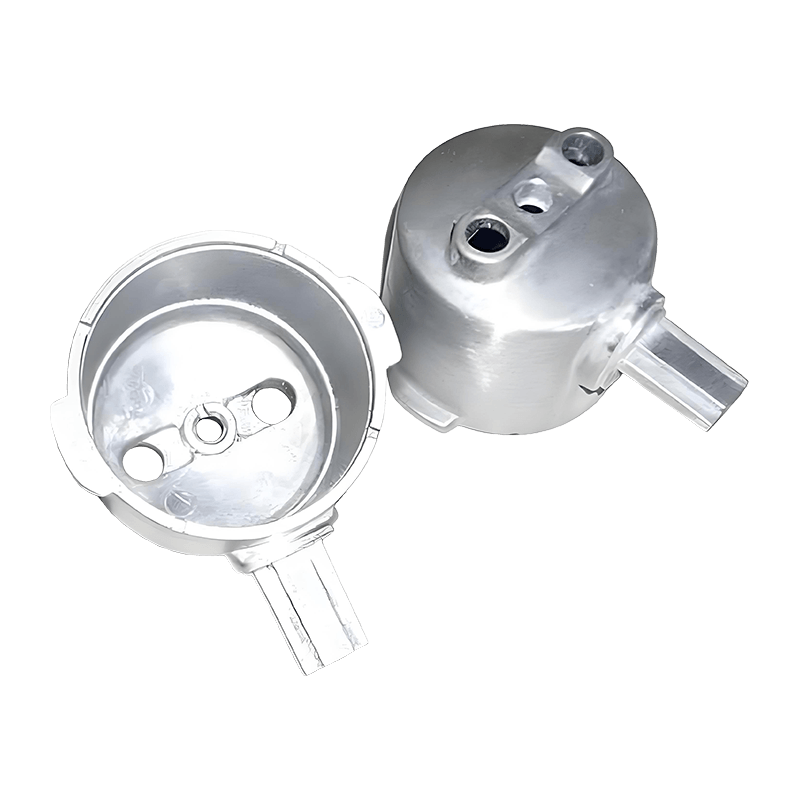
Die Casting Coffee Machine Filter Handle
During operation, the filter handle may experience torque when it is installed or removed, compressive forces when the filter assembly is locked, and repeated impact or vibration during cleaning and maintenance. The material and geometry must withstand these loads without permanent deformation or cracking.
Aluminum alloy die casting provides a favorable balance between weight and strength. Compared with heavier ferrous components, an aluminum alloy handle can help reduce the overall mass of the filter assembly while maintaining sufficient rigidity. Proper alloy selection, wall-thickness control, and mold design are essential to achieving a reliable result.
The connection between the filter handle and the coffee machine must be accurately controlled. If the locking features are too loose, the assembly may move during operation. If they are too tight, the user may experience difficulty installing or removing the filter. Dimensional accuracy also affects the alignment of sealing surfaces, filter baskets, fastening points, and decorative covers.
Die-casting molds manufactured with precision CNC equipment can reproduce the required geometry across large production batches. Critical surfaces may receive secondary machining to achieve tighter tolerances than those available directly from the casting process. This combination of near-net-shape casting and selective precision machining helps control cost while preserving functional accuracy.
The filter handle is a frequent user-contact component. Its cross-section, length, curvature, weight distribution, and surface finish all influence comfort. Rounded edges and carefully designed transitions help prevent pressure points in the hand. A stable grip also supports safer operation when the filter is hot or contains residual moisture.
Die casting allows designers to create ergonomic contours that would be difficult or costly to produce through simple extrusion or machining. Decorative grooves, recessed areas, integrated bosses, and shaped transition zones can be incorporated into the mold. These features can improve handling while maintaining a clean appearance.
Because the handle is visible on the finished coffee machine, appearance is an important acceptance criterion. Surface defects such as cold shuts, flow marks, blisters, cracks, excessive porosity, flash, and uneven polishing can reduce the perceived value of the appliance.
A controlled die-casting process, combined with appropriate mold maintenance and finishing operations, helps provide a consistent surface. Depending on the design, the component may be polished, brushed, shot blasted, anodized, painted, powder coated, or treated with another specified finish. The selected treatment should be compatible with the alloy, intended use, cleaning method, and visual requirements of the finished coffee machine.
Coffee machines are frequently exposed to water, steam, coffee oils, cleaning agents, temperature changes, and repeated handling. The filter handle should maintain its appearance and structural performance throughout the expected service life of the appliance.
Aluminum alloy die-cast parts can be finished with protective coatings or surface treatments that improve resistance to oxidation and environmental exposure. The specific level of protection depends on the alloy, coating system, cleaning chemicals, and operating conditions. Engineering validation should be carried out when the component will be exposed to aggressive detergents, elevated temperatures, or commercial food-service environments.
Aluminum alloy is widely used for appliance and equipment components because it combines low density, good thermal conductivity, corrosion resistance, and practical castability. In a filter handle, these characteristics can contribute to a lightweight but substantial product with an attractive metallic appearance.
Die casting forces molten alloy into a precision metal mold under controlled pressure. The process is capable of producing thin walls, ribs, bosses, curved surfaces, recessed features, and other complex details in a single operation. This can reduce the number of separate parts and simplify later assembly.
Compared with machining a handle entirely from a solid aluminum block, die casting can significantly reduce material waste and cycle time for medium- and high-volume production. Machining remains valuable for critical interfaces, but it is generally more efficient to cast the basic shape close to its final form and machine only the areas that require close control.
Compared with plastic injection molding, aluminum die casting provides a more rigid and premium-feeling component. It also offers greater resistance to heat and mechanical loading in many applications. Plastic may be suitable for selected handle designs, but an aluminum alloy handle can provide a solid tactile impression and enhanced structural stability.
Compared with gravity casting, pressure die casting normally provides better dimensional consistency, a finer surface finish, and improved productivity for suitable geometries. Compared with forging, die casting offers greater freedom for complex external forms and integrated features, although forging may be preferred for certain extreme-load applications.
| Evaluation factor | Die-cast aluminum filter handle | Machined solid aluminum handle | Plastic injection-molded handle | Typical benefit of die casting |
|---|---|---|---|---|
| Weight | Low to moderate, depending on wall design | Moderate to high because of solid stock removal | Very low | Provides a lighter metal solution while retaining a substantial feel |
| Shape complexity | High, with integrated ribs, bosses, and curved forms | Moderate, with cost increasing for complex geometry | High | Supports functional and ergonomic geometry in one molded component |
| Production efficiency | High after mold completion | Lower for large quantities | High | Suitable for repeatable medium- and high-volume production |
| Material waste | Relatively low with near-net-shape design | Higher because of machining from billet or bar | Low | Reduces scrap compared with fully machined construction |
| Rigidity | High for its weight | High | Dependent on polymer and reinforcement | Offers a stable and robust user-contact component |
| Heat resistance | Generally strong for appliance conditions | Generally strong for appliance conditions | Dependent on resin and temperature exposure | Provides a metal solution for heat-sensitive environments |
| Surface appearance | Suitable for polishing, coating, and decorative finishing | Excellent after machining, but with higher processing cost | Dependent on mold and resin | Supports a premium metallic appearance at production scale |
| Part integration | Several features may be formed in one casting | May require additional operations | Several features may be integrated | Combines metal strength with design flexibility |
The table illustrates why die-cast aluminum is a practical choice when the filter handle must look refined, feel solid, perform reliably, and remain economical in repeat production. The best manufacturing method still depends on the final geometry, annual quantity, performance requirements, and target cost. However, for many appliance programs, die casting provides a strong balance between aesthetics, engineering performance, and manufacturing efficiency.
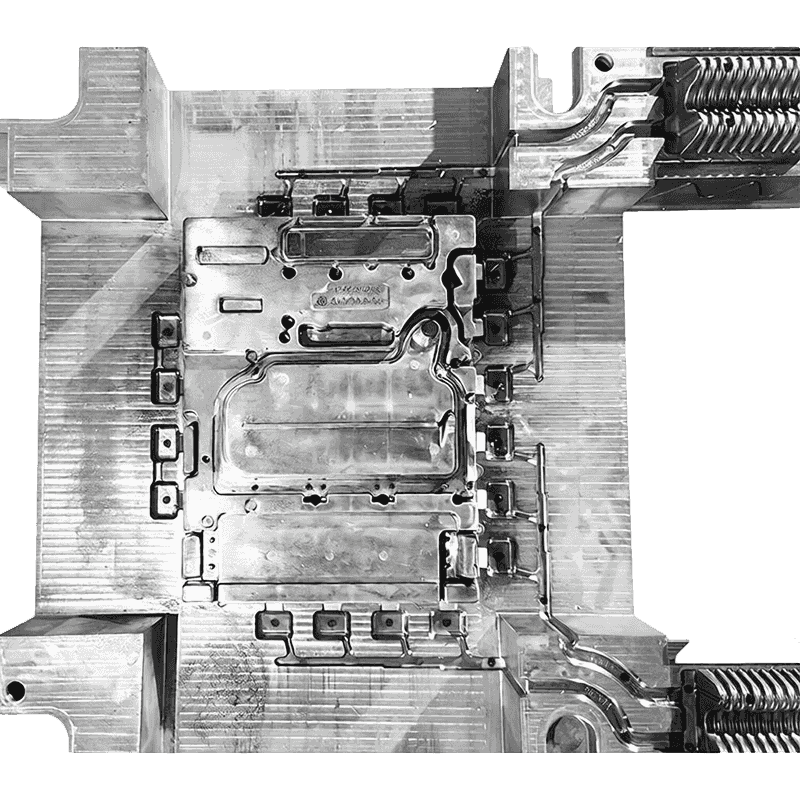
The quality of a die-cast filter handle begins before any alloy is melted. Mold design determines how the molten metal flows, fills the cavity, solidifies, and releases from the tool. A well-designed mold also influences surface quality, dimensional stability, cycle time, tool life, and the amount of secondary processing required.
The engineering team first reviews the product drawings, three-dimensional data, functional interfaces, finish requirements, and production quantity. Critical dimensions are identified, including locking features, mounting holes, sealing areas, shaft interfaces, and surfaces that may be visible after assembly. The parting line, ejector locations, overflow areas, gates, runners, and venting arrangement are then developed around these requirements.
Wall thickness should be designed as consistently as practical. Sudden changes in thickness can increase the risk of shrinkage, porosity, distortion, or uneven solidification. Ribs may be used to improve rigidity without making the entire section excessively thick. Fillets and suitable draft angles help metal flow and facilitate part ejection.
Advanced mold-flow analysis can be used to visualize filling behavior before tool manufacture. Engineers can evaluate potential air entrapment, weld lines, premature solidification, hot spots, filling imbalance, and shrinkage-related risks. This allows design improvements to be made at the digital stage, when revisions are faster and less expensive than changes made after mold completion.
For a filter handle, mold-flow analysis may be particularly useful around narrow gripping sections, thick connection zones, internal bosses, and decorative surface transitions. The objective is to achieve a complete, stable fill with controlled porosity and an acceptable cosmetic result.
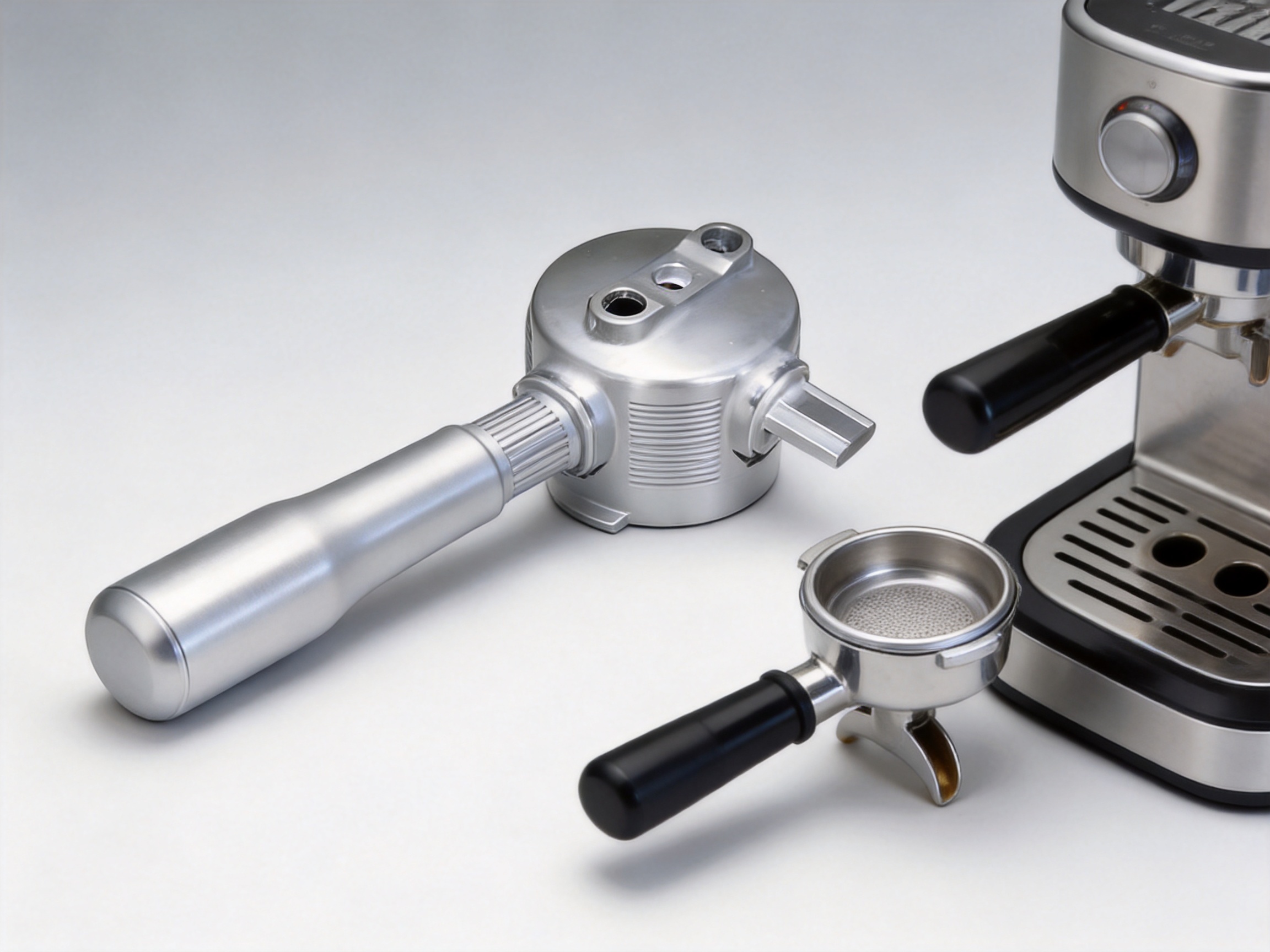
Production begins with a review of customer drawings, samples, three-dimensional files, technical specifications, and application information. The supplier evaluates the proposed material, dimensional tolerances, surface treatment, assembly method, inspection requirements, and expected annual demand.
Early communication is important because die-cast parts are influenced by draft, parting lines, minimum wall thickness, machining allowances, ejector marks, and finishing limitations. Design-for-manufacturing recommendations can prevent unnecessary tooling complexity and improve the final balance between quality and cost.
After the product design is confirmed, the mold is engineered and manufactured. High-precision CNC machining centers are used to produce cavity blocks, cores, inserts, slides, and other tooling elements. Electrical discharge machining can be applied to create intricate details or hard-to-machine features.
The mold is assembled, checked, and tested before formal production. Trial casting helps verify filling, ejection, parting-line conditions, dimensions, and cosmetic performance. Where necessary, the tool may be adjusted to improve venting, eliminate flash, refine the surface, or correct dimensional deviations.
Suitable aluminum alloy ingot or approved recycled material is prepared according to the specified composition and production requirements. The alloy is melted in a controlled furnace, and process parameters such as temperature, holding time, and metal cleanliness are managed to support consistent casting performance.
Material traceability is important for controlled production. Heat or batch information can be recorded so that the raw material used for a production lot can be identified during quality review. The selected alloy should match the requirements for strength, castability, surface treatment, corrosion resistance, and intended service conditions.
Molten aluminum alloy is injected into the mold at high speed and pressure. The die-casting machine must be selected according to the projected area, mold dimensions, locking requirements, and product geometry. Injection speed, pressure, filling time, and intensification conditions affect the internal and external quality of the casting.
Stable process settings help reduce variation between shots. Operators and process engineers monitor the equipment, mold temperature, metal temperature, cycle time, and visible condition of the castings. The objective is to produce parts that are sufficiently complete and consistent for trimming, machining, and finishing.
After casting, excess metal from the gate, runner, overflow, and flash areas is removed. Automated trimming lines can improve productivity and consistency, particularly when the same filter handle is produced in substantial quantities. Manual deburring or localized finishing may be used for areas that require additional attention.
Careful trimming protects functional edges and visible surfaces. Excessive material removal can affect dimensions, while insufficient removal may interfere with assembly or create sharp edges. The trimming process is therefore controlled as an important part of the manufacturing sequence rather than treated as a purely cosmetic operation.
Selected surfaces may be machined after casting to meet close dimensional requirements. Typical operations can include drilling, tapping, reaming, milling, facing, boring, or surface correction. CNC machining centers provide repeatable positioning and support the accurate production of mounting holes, threaded features, locating surfaces, and connection interfaces.
Using machining selectively allows the manufacturer to achieve precise function without machining the entire component from a solid billet. This hybrid approach retains the efficiency of die casting while addressing the specific areas where close tolerances are required.
Finishing is selected according to the product design and customer requirements. Possible operations include polishing, brushing, shot blasting, vibratory finishing, anodizing, powder coating, liquid painting, or other compatible treatments. Each method creates a different visual and tactile result.
Before finishing, the casting surface must be properly cleaned and prepared. Oils, oxides, residue, and loose particles should be removed. Surface preparation influences coating adhesion and the final appearance. Any cosmetic standard should define acceptable limits for color variation, texture, scratches, dents, exposed metal, coating coverage, and other visible conditions.
If requested, the filter handle may be supplied with associated fasteners, filter components, inserts, decorative pieces, or other subassemblies. Assembly operations must be controlled to prevent damage to finished surfaces and to confirm that the component operates correctly with its mating parts.
Final inspection typically includes visual examination, dimensional verification, functional checks, and packaging review. Inspection records can be maintained according to the customer’s quality plan. Samples may also be retained for traceability, process comparison, or future reference.
Reliable filter handles depend on quality control at every stage rather than inspection only at the end. A systematic quality program begins with incoming material and continues through tooling, casting, trimming, machining, finishing, assembly, and shipment.
Aluminum alloy materials should be verified against the approved specification. Depending on the project, verification may include supplier documentation, chemical composition analysis, visual checks, and batch traceability. Maintaining consistent material composition helps stabilize casting performance and mechanical properties.
Important process variables include furnace temperature, molten metal temperature, die temperature, injection parameters, cycle time, lubrication, cooling, and equipment condition. Monitoring these factors reduces the risk of inconsistent filling, excessive porosity, cold shuts, dimensional variation, or premature tool wear.
Dimensional inspection verifies that the handle matches the approved drawing or three-dimensional model. Critical features may be measured using calipers, micrometers, gauges, coordinate measuring equipment, or dedicated inspection fixtures. The inspection method should be appropriate to the required tolerance and production volume.
Functional gauges can provide an efficient way to check locking features, mounting interfaces, and assembly fit. Where several dimensions interact, a fixture may better represent the actual installation condition than individual measurements alone.
Visible surfaces are checked for defects that may affect appearance or function. The inspection standard should distinguish between critical, major, and minor defects. A consistent viewing distance, lighting condition, and sample approval process help avoid disputes between supplier and customer.
Internal porosity and inclusions can affect strength, leak resistance, machining performance, and surface finishing. The appropriate inspection method depends on the product design and risk level. Possible methods include section sampling, radiographic inspection, dye penetrant testing for relevant surface conditions, or other non-destructive techniques.
Not every filter handle requires the same testing level. A properly defined control plan should focus inspection resources on features that influence safety, assembly, durability, and customer-visible quality.
Product validation may include installation and removal cycling, torque testing, load testing, coating adhesion checks, corrosion evaluation, thermal exposure, cleaning-agent compatibility, and dimensional reinspection after testing. The exact test program should reflect the coffee machine’s intended environment.
For commercial equipment, a higher number of operating cycles and more demanding cleaning conditions may be appropriate. For household appliances, testing may focus on repeated daily use, accidental impacts, handling comfort, and appearance retention.
Ningbo Dinghong Mould Co., Ltd. provides an integrated manufacturing service covering mold design, mold manufacturing, aluminum alloy die casting, finishing, and trade. This integrated structure can simplify communication because tooling and production teams work within the same broader manufacturing organization.
The company was established in 2013 after the earlier establishment of Yuejin Mould in 1998. It is located in Beilun District, Ningbo, Zhejiang Province, near Beilun Port. The facility occupies approximately 15,000 square meters of plant space and supports the production of molds and die-cast aluminum alloy components for multiple industries.
Its equipment and production resources include high-precision CNC machining centers, EDM equipment, die-casting machines, automated trimming lines, and testing equipment. These resources support the complete production chain required for a product such as a coffee machine filter handle.
The company’s experience extends across automotive components, household appliance parts, telecommunication components, and other aluminum alloy products. It also serves applications in new energy, photovoltaic equipment, electrical products, motorcycles, pumps and valves, fitness equipment, robotics, and related industrial sectors.
Experience across demanding industries can benefit appliance customers because many manufacturing principles are shared: accurate tooling, repeatable casting, controlled machining, traceability, process discipline, and systematic inspection. Components for automotive and industrial applications often require strict attention to dimensional and quality consistency, and these practices can support the production of reliable coffee machine parts.
The company has obtained ISO 9001 and IATF 16949 quality management system certifications. ISO 9001 supports a structured approach to quality management, process documentation, corrective action, customer communication, and continual improvement. IATF 16949 is associated with the automotive supply chain and emphasizes risk management, process control, traceability, defect prevention, and systematic problem solving.
Although a coffee machine filter handle is an appliance component rather than an automotive part, the discipline associated with these systems can be valuable. A customer benefits from clearly defined procedures, controlled records, inspection planning, and a manufacturing culture focused on preventing variation.
The engineering team uses advanced software and mold-flow analysis to evaluate designs before mold production. Early simulation can help identify filling problems, optimize gates and runners, review cooling behavior, and reduce the need for repeated tooling modification. This contributes to shorter development cycles and more predictable project outcomes.
The company’s sales network covers China, South America, Southeast Asia, and other international markets. International experience can support export-oriented appliance programs that require communication across time zones, packaging coordination, documentation, production scheduling, and shipment planning.
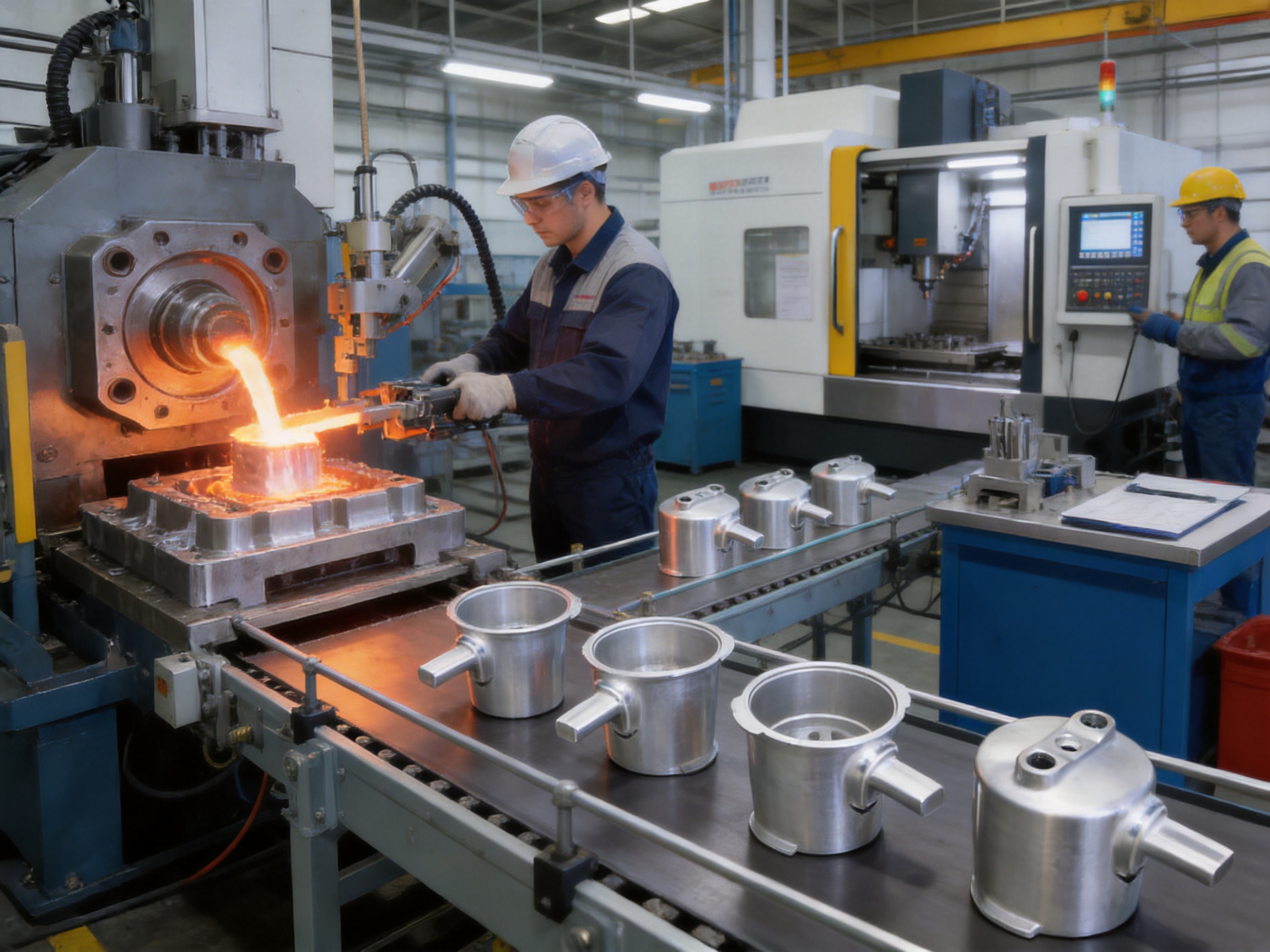
A coffee machine filter handle may be customized in many ways to suit the machine’s architecture and market positioning. Customization should begin with the functional interface and then extend to ergonomics, appearance, packaging, and production requirements.
The handle can be developed according to customer drawings or a supplied sample. Important design variables include overall length, grip diameter, mounting location, connection angle, locking mechanism, hole pattern, wall thickness, ribs, bosses, and decorative contours.
Engineers should define which dimensions are critical to function and which are primarily cosmetic. This helps allocate tighter tolerances where they are most valuable and avoids unnecessary cost on non-critical surfaces.
The aluminum alloy should be selected according to castability, strength, surface requirements, corrosion exposure, machining needs, and finishing method. The appropriate grade may vary according to whether the handle is intended for a domestic espresso machine, a commercial brewing system, or a specialized appliance.
Customers may select a natural metallic appearance, polished finish, brushed texture, matte surface, painted color, powder-coated surface, or anodized treatment, subject to compatibility with the chosen alloy and design. Surface samples should be approved before mass production so that expectations are clearly established.
Logos, lettering, textured zones, recessed marks, raised symbols, and decorative lines may be incorporated into the casting or added through a later process. The choice depends on the desired appearance, mold complexity, production volume, and need for future design changes.
Finished handles should be protected against impact, abrasion, moisture, and contamination during storage and transportation. Individual bags, trays, molded separators, corrugated partitions, or customized cartons may be used depending on the surface treatment and shipment method.
Working with a supplier that can manage mold design, tooling, casting, machining, finishing, and inspection reduces the number of external handoffs. Fewer handoffs can simplify engineering communication, shorten feedback cycles, and make responsibility clearer if a design or quality issue arises.
A die-cast handle can integrate multiple structural features into one component. Reducing separate brackets, supports, or reinforcement pieces may lower assembly labor and decrease the number of potential loose interfaces. Integrated geometry can also improve visual continuity.
Once the mold and process have been validated, die casting supports repeatable production. Stable repetition is important for coffee machine manufacturers that supply multiple markets or operate long-running product programs. Consistent part dimensions help reduce assembly adjustments and warranty-related concerns.
Near-net-shape production can use material more efficiently than machining an entire handle from a solid block. Lower material waste can contribute to cost control and support more responsible manufacturing practices, particularly in high-volume production.
The handle can be designed as a visible expression of the coffee machine’s quality. A carefully shaped aluminum component may create a more substantial and refined user impression than a basic low-cost alternative. Surface treatment and ergonomic design can further distinguish different product lines.
Before finalizing the design, engineers should review the complete coffee machine assembly rather than evaluating the handle in isolation. The filter handle interacts with the filter basket, portafilter body, machine head, gasket, locking mechanism, and user’s hand. A change to one part can affect the performance of the others.
Thermal conditions should also be considered. The handle may be near hot water, steam, heated metal, or a brewing chamber. The design should account for heat transfer, user contact temperature, coating stability, and dimensional changes caused by repeated heating and cooling.
Cleaning requirements are equally important. Coffee oils, detergents, descaling agents, and water deposits can contact the part over time. The selected surface finish should be tested against the expected cleaning routine. Deep recesses or narrow gaps should be minimized where they could trap residue.
Drainage and drying should be considered when the geometry includes cavities, grooves, or enclosed spaces. Proper design can reduce the accumulation of water and coffee residue. If inserts or fasteners are used, their materials should be evaluated for compatibility with the aluminum alloy and cleaning environment.
Packaging should be included in the project plan from the beginning. A high-quality finish can be damaged by part-to-part contact during transport. Separators and protective films may be required for polished, painted, or brushed surfaces.
The cost of a die-cast filter handle includes tooling, raw material, die-casting time, trimming, machining, finishing, inspection, packaging, and logistics. Tooling is generally the most significant initial investment, while unit cost becomes more competitive as production volume increases.
Customers should provide an expected annual quantity or project forecast when requesting a quotation. The supplier can then recommend the appropriate mold structure, cavity arrangement, automation level, inspection plan, and finishing route. A low-volume project may justify a simpler tooling strategy, while a high-volume program may benefit from multi-cavity tooling or more automated handling.
Design changes after mold completion can be expensive, particularly when they affect parting lines, slides, core inserts, or cooling systems. A detailed design review and prototype evaluation before final tooling can reduce this risk. Mold-flow analysis and sample approval are useful tools for confirming the design direction.
Total cost should not be judged only by the initial unit price. Dimensional consistency, reduced assembly adjustment, lower rejection rates, reliable delivery, and reduced field failures may have a larger effect on the total cost of ownership. A supplier with integrated tooling and production capabilities may provide value beyond the quoted piece price.
Aluminum is a recyclable material, and manufacturing systems can recover suitable scrap from runners, gates, and trimming operations according to the applicable material-control procedures. Efficient mold design and near-net-shape casting can reduce unnecessary material consumption.
Energy use is an important consideration in melting, holding, die casting, machining, and finishing. Process optimization can reduce cycle time and avoid repeated production caused by quality defects. Extending mold life also reduces the resources required for replacement tooling.
Environmental performance depends on the complete production system, including alloy sourcing, furnace efficiency, coolant management, surface-treatment chemistry, packaging, and transportation. Customers with specific sustainability targets should communicate those requirements at the beginning of the project so that relevant records and process options can be evaluated.
When selecting a supplier for a die-cast coffee machine filter handle, purchasing and engineering teams should review more than catalog capability. The following areas can help determine whether the supplier is suitable for a long-term project.
Experience with aluminum alloy die casting and appliance components.
Ability to design and manufacture molds internally or through a controlled tooling system.
Availability of CNC machining, EDM, trimming, finishing, and inspection equipment.
Capability to conduct mold-flow analysis and design-for-manufacturing reviews.
Documented quality systems and traceability procedures.
Ability to manage prototype samples, engineering changes, and production approval.
Experience with export packaging, shipment coordination, and international communication.
Capacity to support both initial development and subsequent mass production.
Ningbo Dinghong Mould Co., Ltd. offers an integrated range of these capabilities, including mold development, die casting, finishing, quality management, and international supply experience. Its location near Beilun Port also supports access to export logistics and shipping services.
It is an aluminum alloy handle produced through high-pressure die casting and designed to support the filter or portafilter assembly of a coffee machine. It may include gripping surfaces, mounting features, locking interfaces, and decorative details.
Aluminum alloy offers a useful combination of low weight, rigidity, castability, surface-treatment options, and resistance to ordinary appliance conditions. It can provide a solid metallic feel without adding the weight associated with many ferrous materials.
Yes. The geometry, interface dimensions, alloy, surface finish, color, texture, decorative details, packaging, and inspection requirements can be developed according to the customer’s design and application.
Some areas may require secondary machining, especially mounting holes, threaded features, locating surfaces, and other critical interfaces. Die casting forms the main shape efficiently, while selective machining provides the precision needed for assembly.
Depending on the alloy and design, possible finishes include polishing, brushing, shot blasting, anodizing, powder coating, painting, and other specified treatments. A finish sample should be approved before mass production.
Control begins with material preparation and stable casting parameters. Depending on the product risk and customer requirements, inspection may include process monitoring, visual checks, dimensional measurement, section analysis, radiographic inspection, or other suitable methods.
Yes. An integrated mold-and-casting supplier can design and manufacture the tooling, produce the castings, complete trimming and machining, apply finishing, perform inspection, and arrange packaging. This can simplify communication and project management.
Useful information includes a two-dimensional drawing or three-dimensional model, material requirements, annual quantity, prototype quantity, surface finish, critical tolerances, assembly details, inspection standards, packaging expectations, and delivery destination.
It can be suitable when the geometry, material, finish, and validation plan are designed for commercial operating conditions. Commercial equipment may require additional cycle testing, cleaning-agent evaluation, thermal testing, and load verification.
Mold-flow analysis helps engineers evaluate how molten aluminum fills the cavity and where air entrapment, weld lines, hot spots, or shrinkage risks may occur. The results can guide gate, runner, overflow, vent, wall-thickness, and cooling design before tool manufacturing.
The company has ISO 9001 and IATF 16949 quality management system certifications. These systems support documented procedures, process control, traceability, corrective action, and continual improvement.
Packaging should prevent impact, abrasion, moisture, and contamination. Individual protective bags, trays, separators, or customized cartons may be selected according to the finish, part geometry, shipment distance, and customer requirements.
The die-cast coffee machine filter handle combines practical engineering performance with visible product value. Its role in the filter assembly requires strength, accuracy, ergonomic comfort, heat and environmental resistance, and a consistent appearance. Aluminum alloy die casting is well suited to these requirements because it can produce complex, lightweight, rigid, and attractive parts efficiently in repeat production.
The strongest results come from an integrated process that begins with design review and mold-flow analysis, continues through precision tooling and controlled die casting, and includes automated trimming, selective CNC machining, appropriate surface finishing, and systematic inspection. This approach helps reduce manufacturing variation and supports reliable assembly in the finished coffee machine.
Ningbo Dinghong Mould Co., Ltd. combines mold design, mold manufacturing, die casting, finishing, testing, and international supply experience. Its technical equipment, quality-management certifications, experienced design team, and broad industrial background provide a foundation for producing customized aluminum alloy filter handles and other precision die-cast parts.
For coffee machine manufacturers, the component offers an opportunity to improve both functional reliability and user perception. With the correct alloy, geometry, mold structure, finish, and quality plan, a die-cast filter handle can become a durable and refined part of a modern brewing appliance.
1. Aluminum Association. Aluminum Standards and Data: Properties, Alloy Designations, and Industrial Applications.
2. American Foundry Society. Die Casting Engineering and Process Control Principles.
3. International Organization for Standardization. ISO 9001: Quality Management Systems—Requirements.
4. International Automotive Task Force. IATF 16949: Quality Management System Requirements for Automotive Production and Relevant Service Parts.
5. ASM International. ASM Handbook, Volume 15: Casting.
6. Society of Manufacturing Engineers. Design for Die Casting and High-Pressure Casting Process Guidance.
7. European Aluminium. Aluminum Alloy Selection, Casting Performance, and Surface Treatment Guidance.
8. General industry practices for coffee equipment design, filter assembly ergonomics, component validation, and appliance quality control.

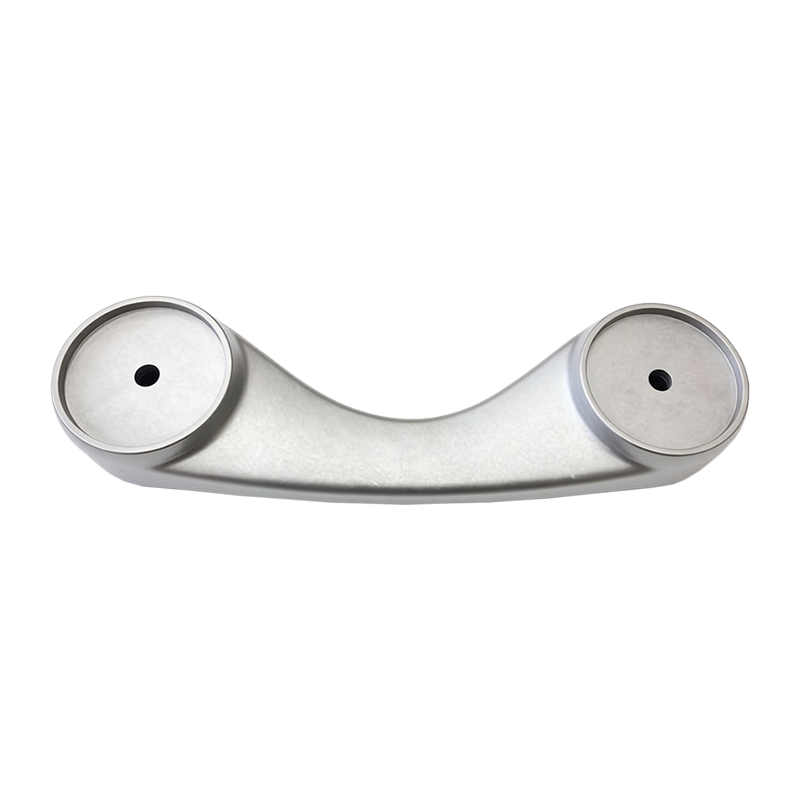
Die casting automotive parts are made by forcing molten metal into a steel mold under high pressure, where it fills t...
READ MOREBefore a part ever reaches production, every buyer eventually asks the same question: should this component be injectio...
READ MORETwo quotations for the same aluminum controller housing can differ by 20% or more, even when both suppliers list the sa...
READ MOREMetal Injection Molding vs Die Casting: Start With the Part A buyer often arrives at this comparison with two very diff...
READ MORE

Sun Yuejun: +86-13806631860
Wang Shiyong: +86-15958891460 / 15058297768
Dove Yao: +86-18625086675


Copyright © Ningbo Dinghong Mould Co., Ltd. Rights Reserved. Custom Precision Die Casting Aluminum Alloy Parts Manufacturers
