
 English
 Español
 русский
 Français

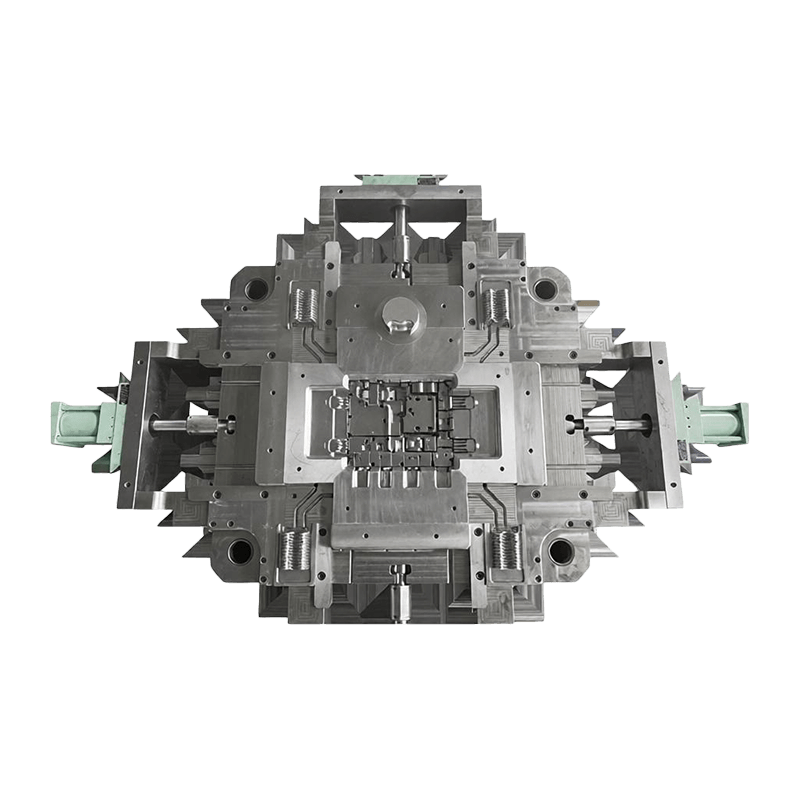
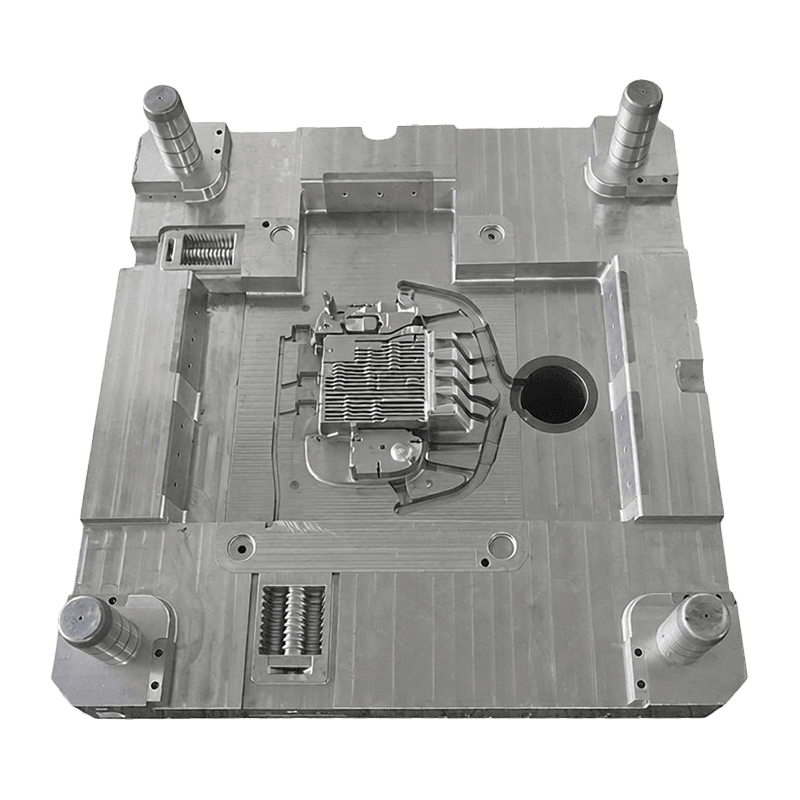
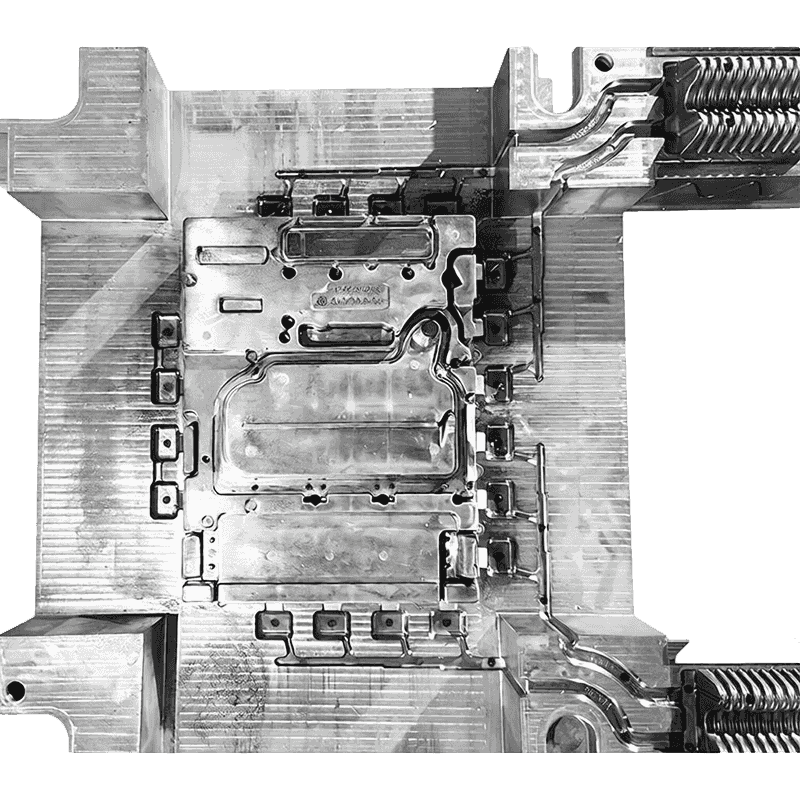
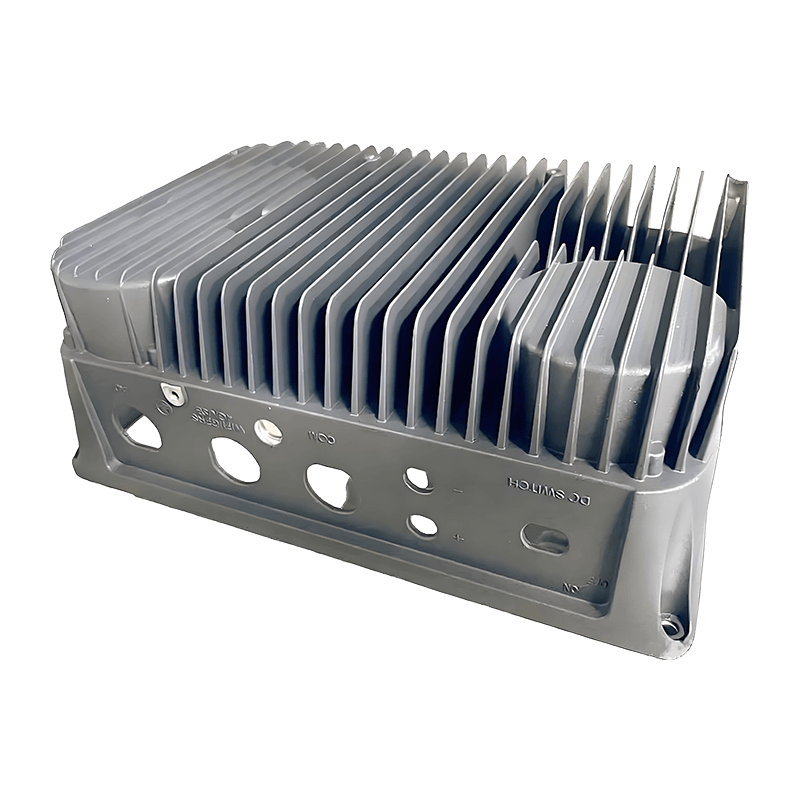
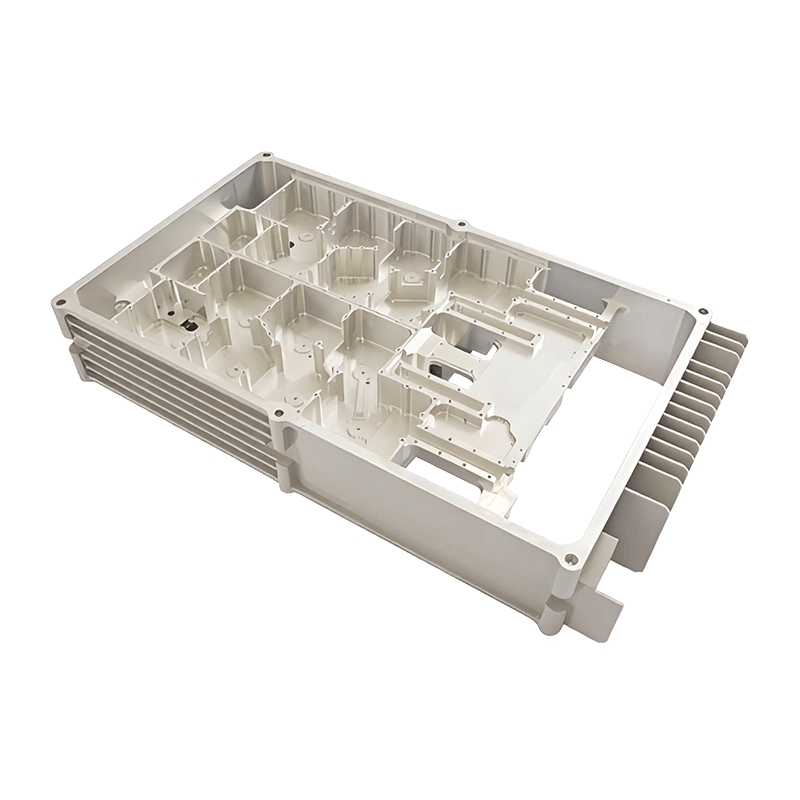
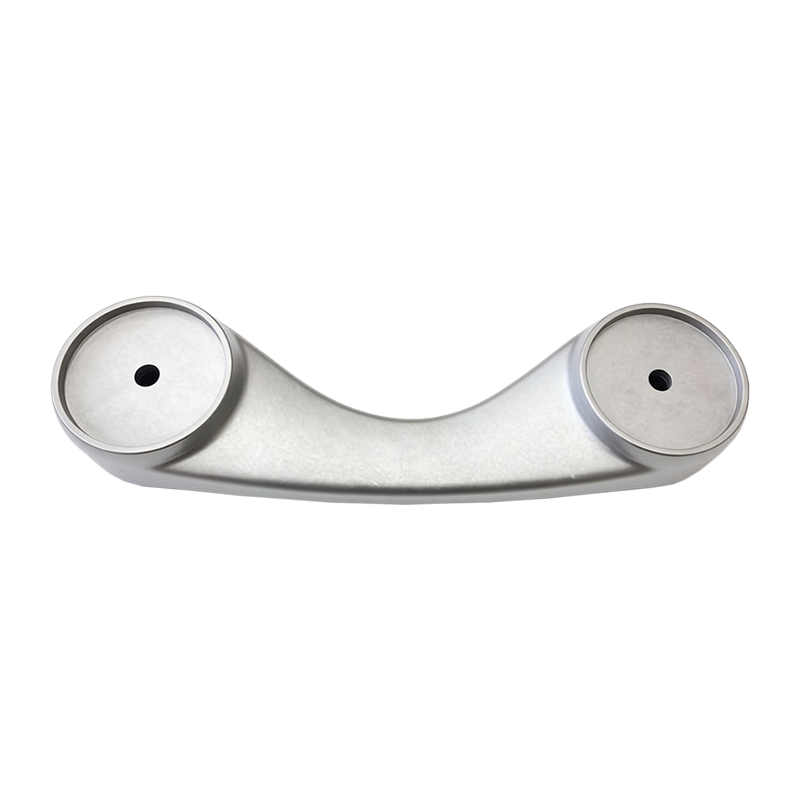
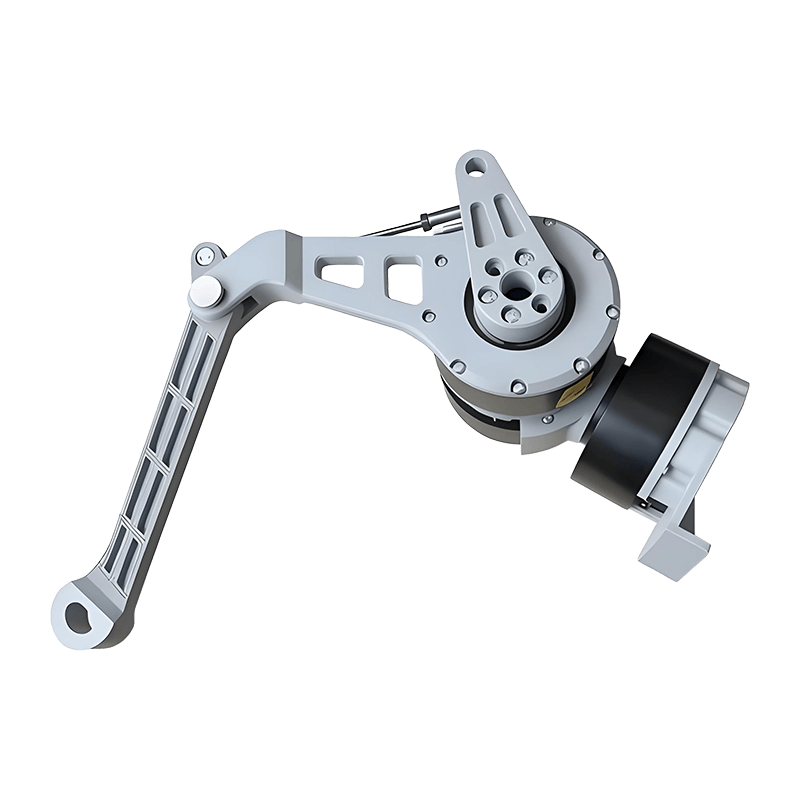
Die casting automotive parts are made by forcing molten metal into a steel mold under high pressure, where it fills t...
READ MORE
Content
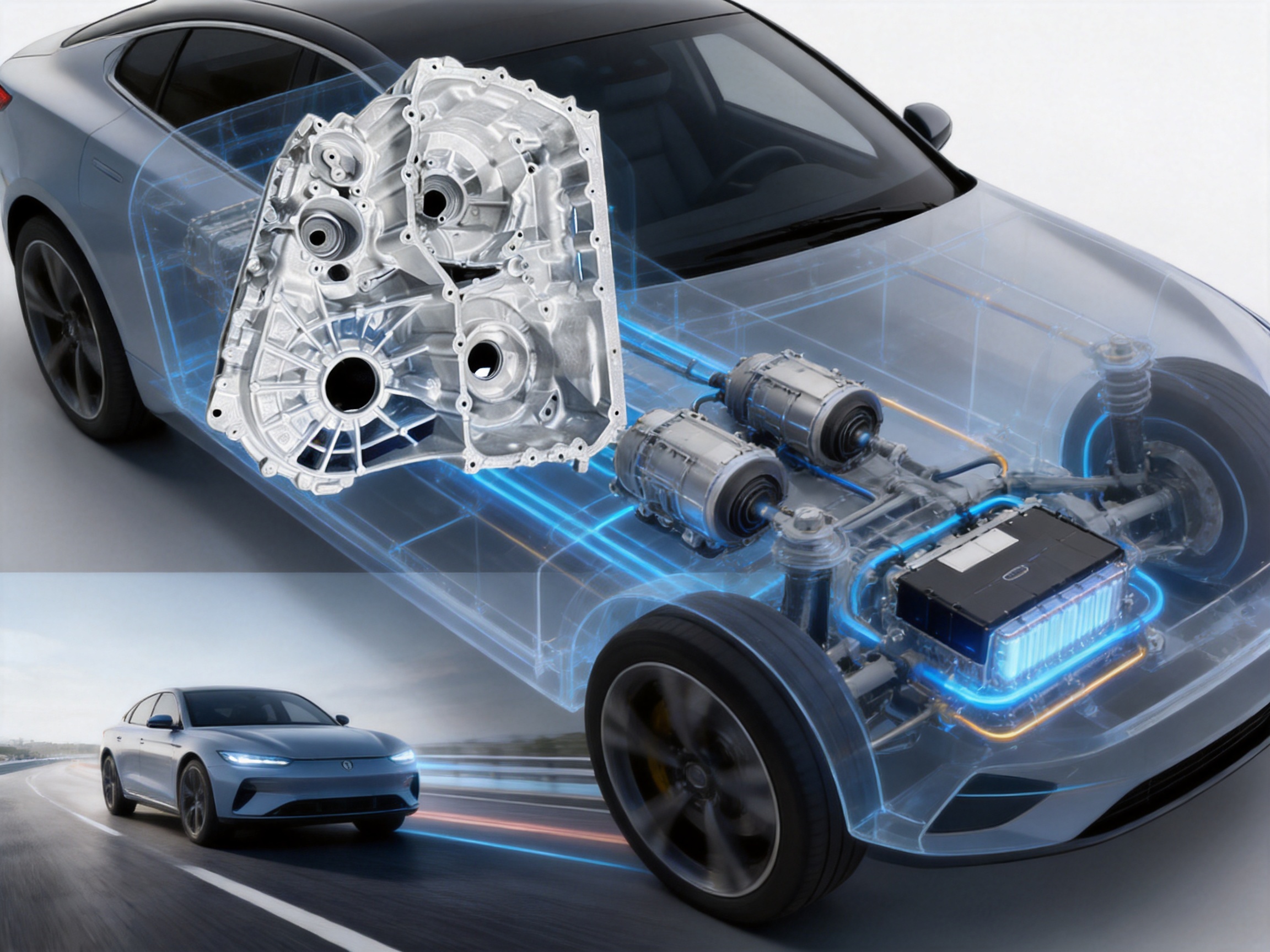
Modern hybrid powertrains require structural components that combine mechanical strength, thermal control, dimensional accuracy, sealing performance, and efficient packaging. The housing used in a three-speed hybrid transmission is not merely an external shell. It is a precision-engineered structural platform that supports motors, gears, hydraulic circuits, cooling channels, electronic controls, bearings, and sealing interfaces within one compact assembly. The Geely 160S Die Casting Super Hybrid Housing has been developed to meet these demanding requirements for three-speed DHT hybrid systems and the Thor super hybrid platform.
Manufactured from high-strength aluminum alloy through a precision die-casting process, this housing integrates multiple functional requirements into a single lightweight component. It is designed to support the motor, electronic control system, planetary gear set, cooling system, and hydraulic system while maintaining the rigidity and dimensional stability required for reliable power transmission. Its integrated architecture helps reduce assembly complexity, improve component alignment, optimize vehicle packaging, and support the long-term durability of the hybrid system.
The product is part of a broader range of precision aluminum alloy die-casting solutions for automotive, new-energy, electrical, telecommunication, appliance, and industrial applications. Its development reflects the increasing need for lightweight structural parts that can withstand high torque, high-speed impacts, thermal cycling, vibration, and continuous operating loads.
A hybrid transmission housing performs several functions at the same time. It provides the mechanical foundation for the transmission, keeps internal components aligned, separates lubricating oil from coolant and the external environment, and transfers operating loads into the surrounding vehicle structure. In a three-speed DHT system, the housing must also accommodate the interaction between dual motors, a multi-speed gear mechanism, planetary gear sets, hydraulic control components, and electronic systems.
These requirements create a challenging design environment. A housing that is too flexible can allow gear alignment to change under load. Small changes in bearing position or gear center distance can affect noise, vibration, efficiency, and service life. A housing with inadequate thermal control may allow heat to build up around the motors, gears, electronic control components, or hydraulic elements. Poor sealing can result in oil leakage, coolant leakage, dust entry, or reduced operating reliability.
The 160S Super Hybrid Housing addresses these requirements through a high-integration design. Instead of treating each functional region as an isolated structure, the housing brings supporting, cooling, sealing, and installation features together in one die-cast component. This approach helps create a compact and stable powertrain package while reducing the number of separate parts and interfaces that must be managed during assembly.
Its design is compatible with a P1+P2 dual-motor architecture and a three-speed transmission mechanism. This compatibility is important because hybrid systems must coordinate electric motor output, engine power, transmission ratios, hydraulic control, and electronic management within a limited installation space. The housing therefore needs to provide not only a strong enclosure but also a precisely formed foundation for a complex electromechanical system.
The Geely 160S Die Casting Super Hybrid Body is a precision-cast aluminum alloy housing designed for high-performance three-speed hybrid transmission applications. It is intended to support the major functional systems of the powertrain while contributing to structural stiffness, lightweight construction, heat dissipation, reliable sealing, and efficient vehicle packaging.
The housing integrates the following primary functional areas:
• Motor mounting and support regions.
• Electronic control system installation areas.
• Planetary gear set and transmission component support structures.
• Internal oil channels and lubrication-related passages.
• Water channels for thermal management.
• Hydraulic system interfaces and control-related features.
• Sealing surfaces and connection points.
• External mounting structures for installation within the vehicle powertrain.
By combining these elements into one precision die-cast body, the product supports a compact transmission layout and reduces the need for multiple independently manufactured structural components. This can improve assembly precision and simplify the management of interfaces between motors, gears, hydraulic components, cooling passages, and electronic systems.
The use of high-strength aluminum alloy provides a balance between low weight and structural performance. Compared with heavier metallic housing solutions, aluminum alloy can help reduce the mass of the powertrain while maintaining the rigidity required for high-torque operation. The material also supports heat transfer away from internal components, which is especially valuable in hybrid systems exposed to repeated acceleration, regenerative braking, high-speed operation, and continuous thermal cycling.
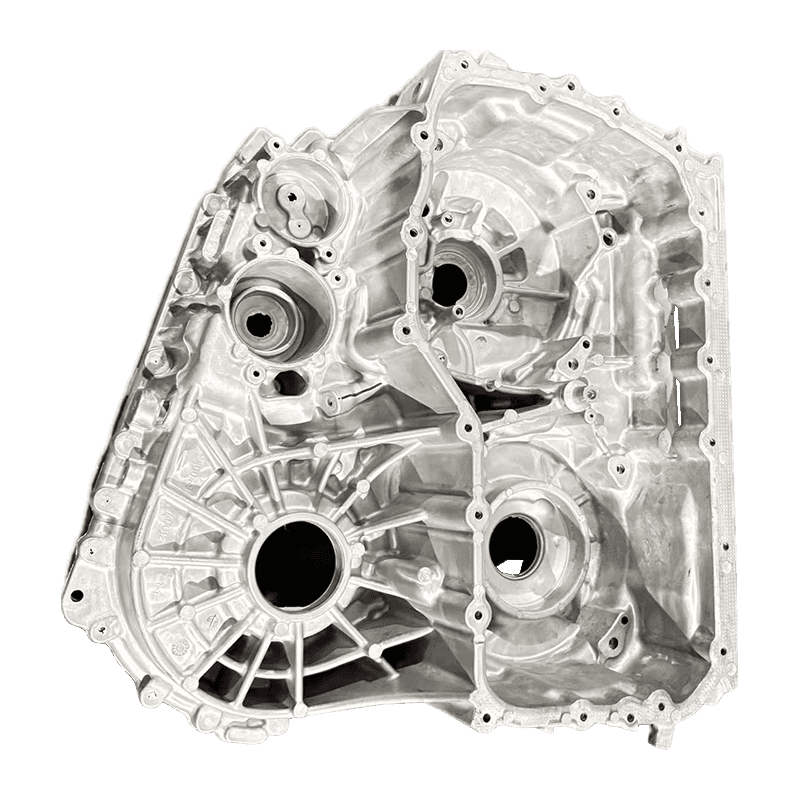
Die casting 160S Super Hybrid Housing
One of the most important advantages of the 160S housing is its high level of functional integration. A conventional approach may require several separate castings, covers, brackets, channels, and connection components. Each additional part creates another assembly interface, another potential source of dimensional variation, and another sealing or fastening requirement.
An integrated housing can reduce these risks by incorporating multiple functions into a coordinated structural design. Motor support, gear support, hydraulic interfaces, and thermal-management passages can be designed around the same datum structure. This helps ensure that critical components are positioned relative to one another with greater consistency.
High integration also contributes to compactness. Hybrid transmission systems must fit within limited engine-bay and underbody spaces. A housing with integrated channels and mounting structures can reduce the need for external pipes, separate brackets, or additional support components. The result is a more organized powertrain package with improved space utilization.
Integration can also support production efficiency. When multiple functions are created in one casting, the number of secondary assembly operations may be reduced. Fewer independent parts can simplify material handling, improve production consistency, and reduce the possibility of incorrect assembly. These benefits are particularly relevant for high-volume automotive programs where stable cycle times and repeatable quality are essential.
Compared with less integrated housing designs, the 160S solution offers a clearer path toward coordinated structural, thermal, and sealing performance. The housing is not only a protective enclosure; it is a functional platform designed around the operating requirements of a complete three-speed hybrid transmission.
Transmission housing rigidity has a direct influence on gear meshing, bearing alignment, noise, vibration, and durability. Under high torque, internal gears and shafts generate reaction forces that are transferred through the housing. At the same time, the housing experiences vibration, temperature changes, and assembly loads. If deformation is not properly controlled, internal alignment may change during operation.
The 160S Super Hybrid Housing is designed with high rigidity to minimize deformation under demanding operating conditions. Its structural design supports the accurate positioning of motors, planetary gears, bearings, and other transmission elements. Maintaining these relationships is essential for smooth power transfer and consistent transmission performance.
High rigidity also contributes to long-term fatigue durability. Hybrid vehicles can subject the transmission to frequent changes between electric drive, engine drive, regenerative braking, and combined power delivery. These repeated load changes can produce cyclic stress in the housing. A robust aluminum alloy die-cast structure helps the component withstand such repeated loading while supporting stable operation over an extended service life.
The housing’s structural performance is particularly valuable in a three-speed DHT application. Multiple transmission ratios create additional requirements for accurate gear engagement and control. The housing must maintain its geometry while internal components respond to changing torque, speed, and hydraulic conditions. By providing a stable support structure, it helps preserve gear meshing accuracy and reduce the risk of abnormal wear.
Compared with a lower-rigidity housing, a precision structural casting can help reduce alignment variation and unwanted vibration. It also offers a more consistent foundation for production assembly because critical features are created within a coordinated casting rather than being assembled from numerous separately positioned parts.
Vehicle manufacturers continue to pursue weight reduction because lower vehicle mass can support improved energy efficiency, acceleration response, handling, and overall range. In hybrid vehicles, lightweight construction can also help offset the additional mass associated with motors, battery systems, power electronics, and thermal-management equipment.
The 160S housing uses high-strength aluminum alloy to provide a lightweight alternative to heavier housing materials. Aluminum alloy offers a favorable combination of low density, strength, castability, and thermal conductivity. These characteristics make it suitable for complex automotive housings that require both structural performance and integrated internal features.
Reducing the mass of the transmission housing can contribute to improved powertrain packaging and vehicle weight distribution. A smaller and lighter housing may also make installation and service operations more manageable. The benefit is not limited to the weight of the casting itself. An integrated design can reduce the need for separate brackets, support pieces, and external channels, producing additional system-level weight savings.
Lightweight construction must not compromise rigidity. The product therefore combines aluminum alloy material selection with a structural design intended to maintain stiffness and resist deformation. This balance is one of the key advantages of a precision die-cast housing: complex ribs, mounting structures, channels, and reinforced areas can be incorporated into a near-net-shape component while maintaining efficient material distribution.
Compared with heavier or less integrated alternatives, the 160S housing supports a more efficient approach to powertrain design. It helps improve the overall lightweight level of the vehicle while retaining the mechanical support required by high-torque hybrid operation.
Thermal management is essential for hybrid transmission reliability. Motors, gears, bearings, hydraulic components, and electronic control systems generate heat during operation. If this heat is not removed effectively, component temperatures may rise beyond their preferred operating range. Excessive heat can accelerate material degradation, affect lubrication, influence sealing performance, and reduce system efficiency.
The 160S housing incorporates built-in oil and water channels as part of its integrated design. Oil passages support lubrication and thermal transfer around relevant transmission components, while water channels contribute to coolant circulation and heat removal. Integrating these passages into the housing reduces reliance on additional external routing and creates a more compact thermal-management arrangement.
Internal channels can also improve the consistency of thermal control. When passages are designed close to heat-generating areas, heat can be transferred more efficiently to the circulating oil or coolant. This helps control temperature fluctuations during high-load operation, rapid acceleration, high-speed driving, and prolonged hybrid operation.
Good thermal performance also supports stable powertrain behavior. Maintaining suitable temperatures helps preserve lubricant properties, protect electronic systems, and reduce the likelihood of thermal decay under continuous loads. For a three-speed hybrid transmission, reliable thermal control is important because the system may repeatedly change operating modes and transmit high levels of torque through different gear ratios.
Compared with housing designs that depend heavily on separate external lines or less optimized passages, the integrated oil and water channel arrangement can reduce packaging complexity and improve heat dissipation efficiency. It also reduces the number of external connections that must be installed, sealed, and inspected.
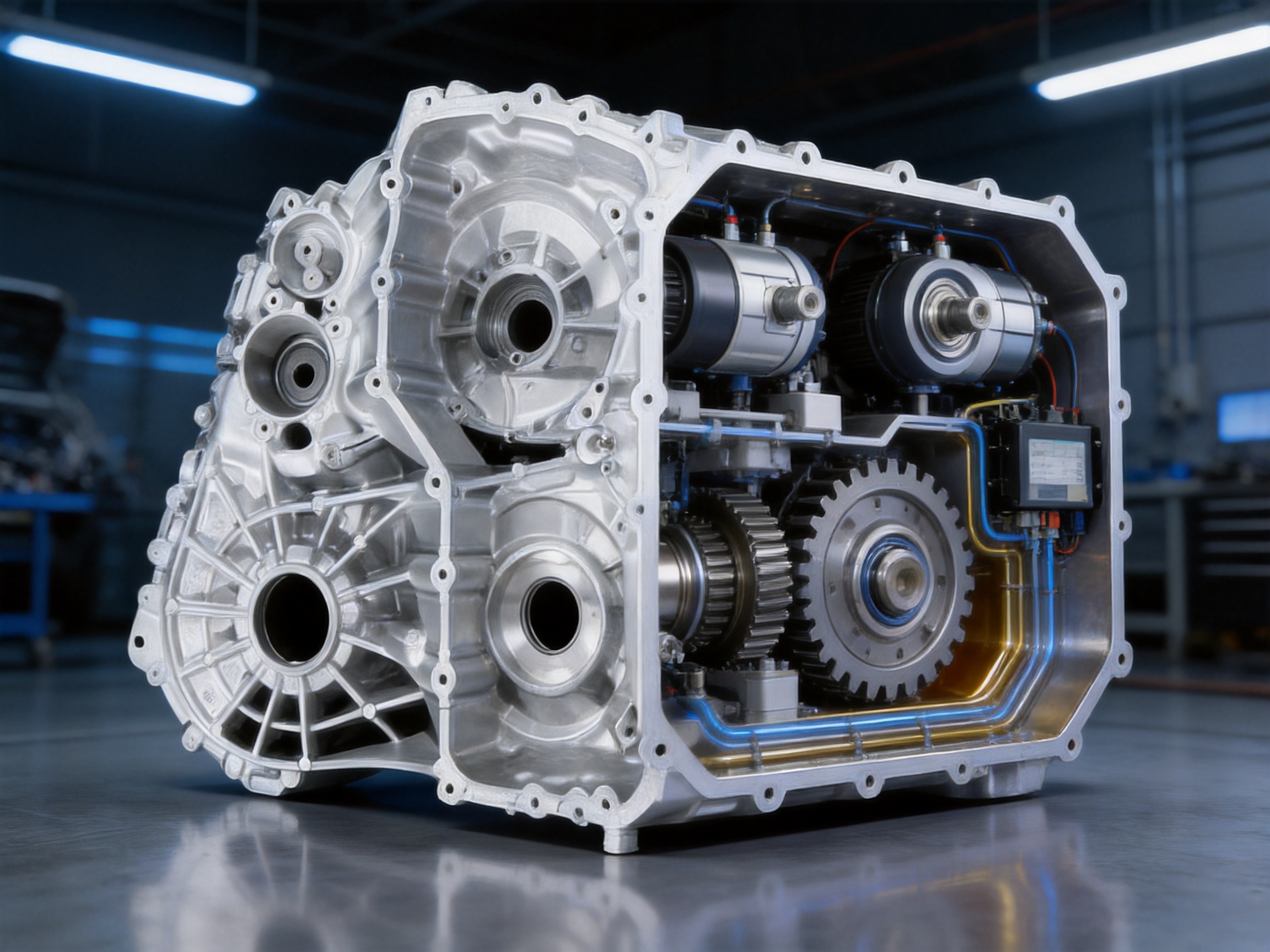
Hybrid transmission housings operate in an environment where oil, coolant, dust, water, vibration, and temperature changes may all be present. Reliable sealing is therefore a basic requirement for maintaining performance and service life. The housing must help keep lubricating fluids inside the correct passages while preventing external contaminants from entering sensitive areas.
The 160S housing is designed with reliable sealing structures and accurately formed interfaces. Precision die casting provides a stable foundation for sealing surfaces, bolt locations, connection areas, and cover interfaces. When these features are manufactured consistently, the final assembly can achieve more dependable contact and compression at critical sealing points.
Effective sealing helps prevent oil leakage and coolant leakage. It also helps protect internal gears, bearings, hydraulic components, and electronic systems from dust and moisture. In addition to protecting the transmission, reliable sealing reduces the risk of contamination-related wear and helps maintain the correct pressure and fluid conditions within the system.
Sealing performance is closely connected to dimensional control. Warpage, surface irregularity, casting defects, or inaccurate machining can reduce the effectiveness of a gasket or seal. For this reason, the housing must be produced through a controlled combination of mold design, die-casting process management, trimming, machining, inspection, and assembly verification.
The integrated design of the 160S housing can also reduce the number of separate sealing interfaces compared with a multi-part structure. Every eliminated interface can simplify assembly and reduce a potential leakage path. This is an important competitive advantage for high-reliability automotive applications.
Hybrid transmissions are exposed to changing and sometimes severe loads. Electric motors can deliver high torque from low speed, while the engine and transmission contribute additional power at higher speeds. Regenerative braking can reverse torque direction, and gear changes can create transient loads. The housing must accommodate these conditions without excessive deformation or fatigue damage.
The 160S housing is designed to withstand high-torque and high-speed impacts. Its high-rigidity aluminum alloy structure supports internal components as they respond to rapid changes in torque and rotational speed. This capability is essential for a three-speed DHT system, where the transmission must provide efficient power transfer across different driving conditions.
High-load capability is not limited to ultimate strength. A production housing must also resist repeated fatigue. Hybrid vehicles may experience many operating cycles during normal use, including starting, stopping, electric launch, engine engagement, acceleration, deceleration, and regenerative braking. Each cycle can create changes in stress and temperature. The product’s structural design is intended to provide excellent fatigue durability under these repeated conditions.
Stable structural support can also contribute to improved NVH performance. If housing deformation or vibration is excessive, it may increase gear noise, resonance, or transmitted vibration. By maintaining a rigid and accurately aligned structure, the housing helps support lower vibration and noise during operation.
These characteristics give the product an advantage over basic housings designed primarily for enclosure or protection. The 160S housing is developed as a performance-oriented structural component that must actively support the transmission’s mechanical accuracy, thermal control, and acoustic behavior.
Noise, vibration, and harshness, commonly referred to as NVH, are important factors in modern vehicle development. Hybrid vehicles are often expected to provide quiet operation, particularly when running in electric mode. Any abnormal gear noise, housing resonance, or vibration transmitted through the powertrain can therefore be noticeable to occupants.
The housing influences NVH through its rigidity, mass distribution, geometry, connection points, and ability to maintain gear alignment. A stable housing can reduce unwanted movement between internal components and help keep gear meshing consistent. Integrated design can also reduce the number of separate brackets and interfaces that may transmit vibration.
The 160S Super Hybrid Housing is designed to support excellent NVH performance with low vibration and noise. Its high-rigidity structure helps maintain the relative position of gears, bearings, and motors under changing loads. The coordinated housing design also provides a stable platform for the transmission assembly and vehicle mounting system.
Low NVH performance benefits more than occupant comfort. Reduced vibration can help lower stress on fasteners, seals, bearings, electrical connections, and other surrounding components. It may also contribute to a more durable powertrain by limiting repeated vibration exposure.
For hybrid applications, NVH performance must be maintained during transitions between different operating modes. The housing must support smooth operation when the vehicle starts electrically, when the engine is engaged, when the transmission changes ratios, and when regenerative braking is activated. A precisely manufactured housing is an important part of achieving this consistency.
The performance of a die-cast housing depends not only on its design but also on the manufacturing process used to produce it. Complex automotive housings contain multiple structural features, thin-wall regions, mounting interfaces, internal passages, sealing surfaces, and areas requiring post-casting machining. Achieving stable quality requires coordinated engineering from initial design through final inspection.
Ningbo Dinghong Mould Co., Ltd. specializes in mold design, mold manufacturing, die casting, finishing, and trade. The company’s experience includes automotive parts, household appliance components, telecommunication parts, and other aluminum alloy products. This range of applications supports a broad understanding of casting behavior, mold construction, dimensional control, and production management.
The company was established in 2013, following the establishment of Yuejin Mould in 1998. It operates in Daqi Street, Beilun District, Ningbo, Zhejiang Province, near Beilun Port. Its manufacturing facility covers approximately 15,000 square meters and includes high-precision CNC machining centers, EDM equipment, die-casting machines, automated trimming lines, and testing equipment.
This combination of equipment allows the company to manage key stages of production in a coordinated manner. Mold design and fabrication establish the foundation for casting accuracy. Die casting forms the main aluminum alloy structure. Automated trimming removes excess material and supports repeatable finishing. CNC machining provides accurate control of critical holes, interfaces, sealing surfaces, and mounting features. Inspection equipment verifies whether the finished part meets defined requirements.
For a product such as the 160S housing, this integrated manufacturing capability is valuable because the casting cannot be evaluated as an isolated shape. Its quality depends on the relationship between the mold, alloy filling behavior, cooling conditions, trimming process, machining references, and inspection standards. Coordinated control of these processes helps reduce variation and supports stable production.
Complex die-cast housings require careful mold engineering. The mold must support the product geometry, control metal flow, manage filling and solidification, provide appropriate cooling, and permit efficient removal of the casting. Poor mold design can result in incomplete filling, porosity, distortion, excessive flash, dimensional variation, or difficult trimming.
Dinghong has an experienced design team and uses advanced software, equipment, and systems for mold development. Mold-flow analysis enables the visualization and optimization of mold designs before production. This allows engineers to study how molten aluminum is expected to fill the cavity, identify potential problem areas, and improve the arrangement of gates, runners, overflows, vents, and cooling features.
For an integrated hybrid housing, mold-flow analysis is especially important. The casting may include varying wall thicknesses, deep structural areas, ribs, bosses, channels, and complex external contours. Simulation can support the evaluation of filling balance and solidification behavior across these regions. It can also help engineers plan solutions for areas that may otherwise be vulnerable to air entrapment, shrinkage, or uneven cooling.
Optimizing the mold before machining and production can reduce development risk and shorten the path from design approval to stable manufacturing. It also supports more predictable casting quality and can help improve the service life of the mold by addressing high-stress or high-wear areas during the design stage.
The use of mold-flow analysis represents a competitive advantage over suppliers that rely mainly on trial-and-error mold modification. A simulation-supported process provides a more systematic basis for design decisions and helps customers receive reliable die-casting mold solutions for demanding automotive applications.
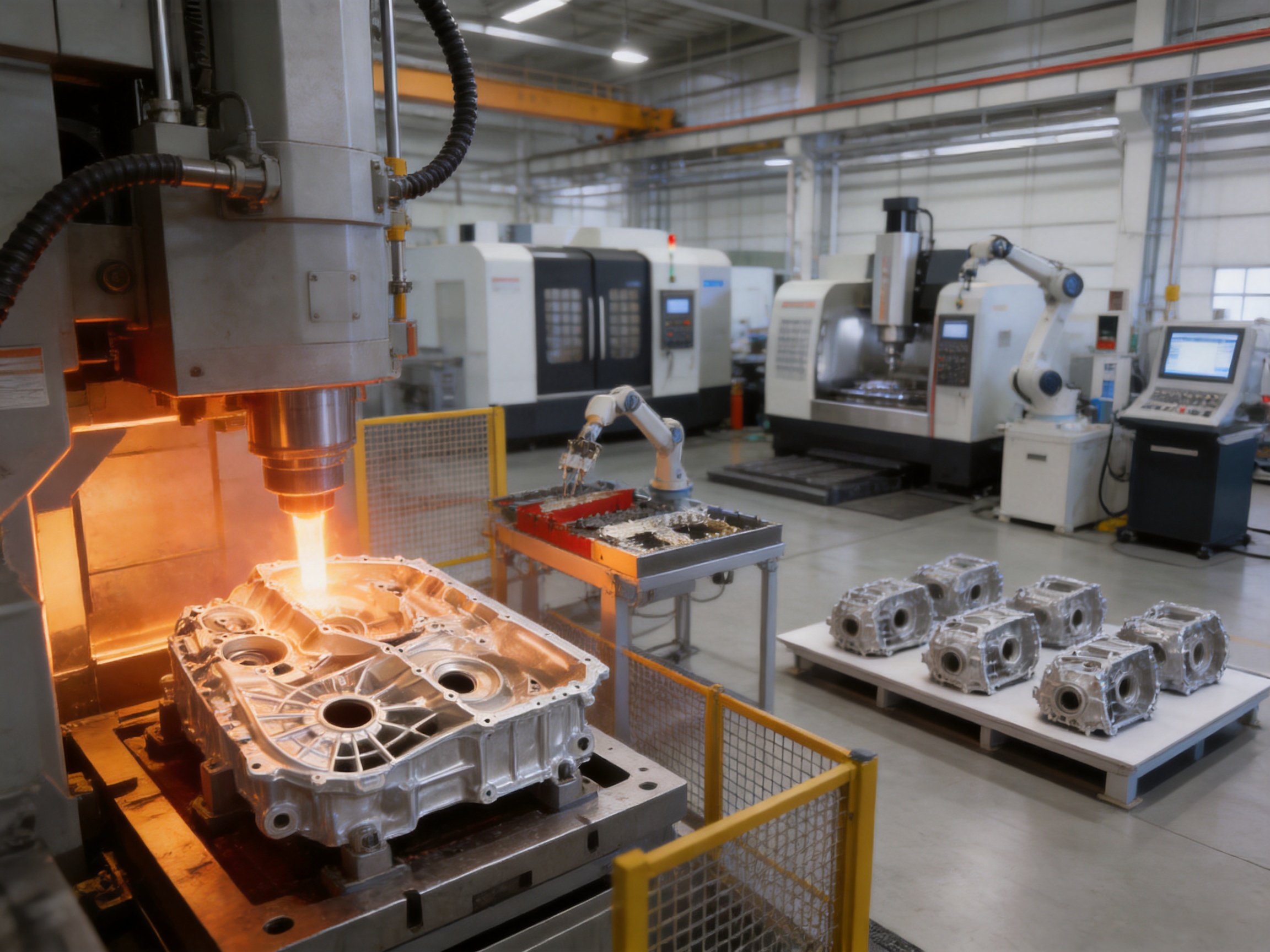
After mold development, the die-casting process must be controlled to produce a sound and dimensionally consistent aluminum alloy body. Process parameters such as metal temperature, mold temperature, injection speed, pressure, holding conditions, and cooling behavior influence the final casting. Stable production requires appropriate equipment, trained operators, process documentation, and inspection procedures.
The main casting operation forms the integrated housing geometry, including its structural walls, ribs, bosses, mounting areas, and other features. Automated trimming lines then remove gates, runners, flash, and excess material. Automation can improve repeatability and reduce variation between parts, particularly in high-volume automotive production.
Precision machining is used for areas where die casting alone cannot provide the required dimensional accuracy or surface condition. These areas may include bearing seats, bolt holes, sealing interfaces, mounting faces, alignment features, and other critical connection points. High-precision CNC machining centers enable controlled processing of these features based on established datums.
Machining accuracy is essential for the 160S housing because the finished component must align with motors, gears, bearings, hydraulic parts, electronic control elements, covers, and vehicle mounting structures. Accurate interfaces help ensure proper assembly and contribute to reliable sealing and gear positioning.
The combination of near-net-shape die casting and selective precision machining offers an efficient manufacturing balance. Die casting produces complex geometry in a single primary operation, reducing the need for extensive material removal. CNC machining then provides the accuracy required at functional interfaces. This approach supports lightweight construction, high integration, and repeatable automotive production.
Automotive components require consistent quality because a single dimensional, material, or sealing issue can affect an entire vehicle system. Ningbo Dinghong Mould Co., Ltd. has obtained ISO 9001 and IATF 16949 quality management system certifications. These certifications reflect the company’s commitment to standardized management and controlled production processes.
Quality control for a precision die-cast housing may include incoming material verification, mold condition checks, casting-process monitoring, visual inspection, dimensional inspection, machining verification, leak testing, and final product review. The exact inspection plan can be adapted to the customer’s specifications and the functional risks associated with the part.
Testing equipment and inspection procedures help confirm that critical features remain within the required tolerances. Dimensional checks can verify mounting faces, hole positions, sealing areas, and alignment references. Surface and casting inspections can identify visible defects or process abnormalities. Leak-related checks can support confidence in the integrity of oil and water passages.
Quality management is also important for traceability and continuous improvement. Production records, inspection results, corrective actions, and process data can provide a basis for identifying trends and preventing recurring issues. For long-term automotive programs, this systematic approach supports stable supply and consistent product performance.
The combination of IATF 16949 management practices, specialized production equipment, mold-flow analysis, and comprehensive inspection gives Dinghong a strong foundation for supplying automotive die-casting components. It also differentiates the company from suppliers that may offer casting capacity without the same level of mold, machining, and quality-system integration.
The 160S housing offers several advantages when compared with conventional or less integrated housing solutions. These advantages arise from its combination of material selection, structural design, thermal-management features, and manufacturing capability.
| Performance area | 160S Super Hybrid Housing approach | Potential limitation of less integrated designs |
|---|---|---|
| Structural support | High-rigidity aluminum alloy structure supports motors, gears, bearings, and transmission components. | Lower rigidity may increase deformation and alignment variation under load. |
| System integration | Motor, electronic control, planetary gear, hydraulic, oil, and water-related functions are coordinated within one housing. | Multiple separate components can increase assembly steps and interface variation. |
| Thermal management | Built-in oil and water channels support efficient heat dissipation. | External routing may require more space, connections, and sealing points. |
| Vehicle weight | High-strength aluminum alloy supports lightweight construction. | Heavier materials may increase powertrain mass and reduce packaging efficiency. |
| Sealing | Integrated interfaces and controlled machining support reliable sealing. | More joints may create additional opportunities for leakage or contamination. |
| NVH performance | Rigid and accurately aligned structure supports low vibration and noise. | Flexible or poorly aligned structures may transmit more vibration and gear noise. |
| Manufacturing support | Mold-flow analysis, die casting, automated trimming, CNC machining, and inspection are coordinated. | Limited process integration may result in longer development cycles and greater variation. |
These advantages do not depend on one feature alone. The product’s value comes from the interaction between design and manufacturing. A lightweight structure is useful only when it maintains sufficient rigidity. Integrated channels are valuable only when they can be cast and inspected reliably. Sealing surfaces perform effectively only when mold design, machining, and quality control are properly coordinated.
The housing is compatible with P1+P2 dual-motor and three-speed transmission architectures. In this type of hybrid arrangement, different motor positions and power paths can support electric propulsion, engine assistance, regenerative braking, and operating-mode transitions. The housing must provide accurate support for these elements while maintaining compact packaging.
The P1+P2 configuration places particular demands on the relationship between motor supports, transmission gears, control systems, and cooling circuits. The 160S design addresses these demands through a coordinated structure that supports the main functional components within one housing. This helps reduce the need for separate structural adapters and can improve the consistency of assembly.
A compact dual-motor transmission can contribute to better vehicle space utilization. The reduced external complexity may create more flexibility for engine-bay layout, underbody packaging, and adjacent thermal-management components. Lightweight construction further supports the overall efficiency of the vehicle system.
The housing also helps provide a stable foundation for high transmission efficiency. Accurate component positioning reduces unnecessary friction, supports effective gear engagement, and helps maintain the designed relationship between the mechanical and electrical power paths. These characteristics can contribute to improved power response and reduced fuel consumption when integrated into a complete hybrid powertrain.
Thermal stability is one of the product’s key performance characteristics. Hybrid transmission housings may experience rapid temperature changes during startup, electric driving, engine operation, high-load acceleration, regenerative braking, and extended high-speed travel. Repeated thermal expansion and contraction can place stress on the casting, seals, fasteners, and internal components.
The 160S housing combines aluminum alloy construction with integrated oil and water channels to support thermal control. Effective heat dissipation helps reduce the risk of excessive temperature rise and supports stable operation under continuous loads. The design is intended to avoid thermal decay during demanding service conditions.
Stable temperature control can support longer component life in several ways. It helps maintain lubricant performance, limits thermal stress, protects electronic control areas, and reduces the impact of temperature-related dimensional changes. It may also help preserve sealing performance by reducing extreme thermal cycling at interfaces.
Long service life is especially important for hybrid systems because their components are expected to operate reliably over many years and across a wide range of driving conditions. A robust housing provides the structural and thermal foundation needed for the rest of the transmission to achieve its intended durability.
Ningbo Dinghong Mould Co., Ltd. provides a combination of design, tooling, die casting, finishing, machining, testing, and trade capabilities. This integrated model allows the company to support customers from initial mold development through finished aluminum alloy components.
The company’s product range includes automotive parts, household appliance parts, telecommunication parts, photovoltaic-related products, electrical components, motorcycle parts, pump and valve components, fitness equipment parts, robotic products, and other industrial products. This broad experience demonstrates familiarity with different functional requirements, materials, production volumes, and quality expectations.
Its location in Beilun District, Ningbo, provides access to an established manufacturing environment and nearby port logistics. The company serves customers in China, South America, Southeast Asia, and other international markets, with plans to expand into additional regions. This international orientation supports communication with customers that require export packaging, consistent documentation, and reliable delivery coordination.
Dinghong’s technical team uses advanced software and mold-flow analysis to improve mold design before manufacturing. Its facility includes CNC machining centers, EDM equipment, die-casting machines, automated trimming lines, and testing equipment. These resources support the production of complex components such as the 160S Super Hybrid Housing.
The company also emphasizes standardized management, quality control, long-term customer relationships, technological innovation, and sincere cooperation. These principles are relevant to automotive customers that require more than a single prototype or isolated casting. They need a manufacturing partner capable of supporting design changes, process optimization, quality documentation, stable mass production, and continuous improvement.
Automotive housing projects often require customer-specific adjustments. These may involve mounting points, sealing interfaces, internal passages, material requirements, machining tolerances, inspection standards, packaging, and production volume. A supplier’s ability to collaborate during the development stage is therefore essential.
Dinghong’s mold design and manufacturing capabilities provide a foundation for customized solutions. The company can work with customer drawings, three-dimensional data, technical specifications, and quality requirements to develop appropriate tooling and production processes. Mold-flow analysis can help evaluate proposed design changes before they are implemented physically.
Early collaboration is especially valuable for large or complex die-cast housings. Design-for-manufacturing reviews can identify areas that may be difficult to fill, trim, machine, inspect, or seal. Engineers can then consider adjustments to wall thickness, draft angles, ribs, bosses, channels, parting lines, machining allowances, and reference datums.
This cooperative process can reduce development risk and help control total project cost. It also supports a more efficient transition from prototype or trial production to stable mass manufacturing. For customers developing next-generation hybrid or new-energy vehicles, this type of technical cooperation can accelerate product development while improving manufacturability.
Lightweight aluminum alloy die casting supports vehicle efficiency by reducing powertrain mass. The integrated design of the 160S housing can also reduce the number of separate components and simplify assembly. Fewer components may reduce material usage, processing steps, and logistics requirements at the system level.
Near-net-shape die casting is another important efficiency factor. By forming complex geometry directly in the mold, the process can reduce the amount of material removed during machining. CNC machining remains necessary for critical features, but the overall production route can be more efficient than manufacturing the entire housing from a large solid block.
Automated trimming lines and standardized production systems further support repeatable manufacturing. Stable processes can reduce rework, scrap, and inconsistent product quality. Mold-flow analysis may also reduce the need for repeated physical mold modifications, helping shorten development time and improve resource utilization.
For customers pursuing lower-weight, higher-efficiency, and more sustainable vehicle platforms, these manufacturing characteristics support broader product-development goals. The environmental impact of a component depends on the full lifecycle, but efficient material use, durable construction, long service life, and reduced vehicle mass are all relevant considerations.
When selecting a supplier for a hybrid transmission housing, customers should evaluate more than casting price. The supplier should be assessed according to design capability, tooling expertise, material knowledge, dimensional control, machining capacity, testing resources, quality systems, production scalability, and technical communication.
The 160S housing demonstrates why these factors are connected. Its performance depends on the interaction between high-strength aluminum alloy, rigid structural design, integrated channels, accurate interfaces, reliable seals, and controlled manufacturing. A supplier that can manage the full process is better positioned to maintain consistent quality than one that provides only a basic casting operation.
Customers should also consider whether the supplier can support the entire product lifecycle. This includes early feasibility review, mold-flow simulation, prototype development, trial casting, dimensional validation, process approval, mass production, corrective action, and engineering change management.
Dinghong’s combination of mold and die-casting expertise, CNC machining resources, automated trimming, testing equipment, ISO 9001 and IATF 16949 certifications, and international customer experience provides a strong basis for such collaboration. These strengths make the company suitable for customers seeking precision aluminum alloy components for hybrid, new-energy, and other demanding applications.
The housing is designed for three-speed DHT hybrid systems and supports applications associated with the Thor super hybrid platform. It is compatible with P1+P2 dual-motor architectures and integrates support for motors, planetary gears, electronic controls, cooling systems, and hydraulic systems.
The housing is precision die-cast from high-strength aluminum alloy. This material provides a combination of low weight, structural strength, castability, and heat-transfer capability.
It combines multiple support and functional features into one coordinated structure. Motor supports, gear support regions, hydraulic interfaces, oil passages, water channels, and sealing areas are integrated to reduce assembly complexity and improve packaging efficiency.
High rigidity helps limit deformation under torque, speed, vibration, and thermal loads. This supports accurate gear meshing, bearing alignment, lower vibration, improved NVH performance, and long-term fatigue durability.
The built-in channels support lubrication and thermal management. Oil passages assist with lubrication and heat transfer, while water channels help circulate coolant and remove heat from high-load areas of the hybrid transmission.
Its integrated structure includes accurately formed sealing interfaces and connection areas. Precision die casting, controlled machining, and quality inspection help maintain the dimensional consistency needed for reliable oil and coolant sealing.
The product is designed to withstand high torque and high-speed impacts while providing strong fatigue durability. Its rigid aluminum alloy structure supports the internal transmission components under repeated operating loads.
The high-strength aluminum alloy reduces housing mass compared with heavier material options. Integrated features can also reduce the need for separate brackets, channels, and support components, contributing to system-level weight and space savings.
The manufacturing process is supported by mold design, mold-flow analysis, mold manufacturing, die casting, automated trimming, CNC machining, EDM equipment, and testing resources. These capabilities allow the company to manage tooling and finished components in a coordinated manner.
Ningbo Dinghong Mould Co., Ltd. has obtained ISO 9001 and IATF 16949 quality management system certifications. These systems support standardized production management and automotive quality requirements.
Customer-specific requirements can be reviewed during the mold and product-development process. Potential areas include mounting structures, sealing interfaces, internal passages, machining features, inspection requirements, and production specifications.
The company serves automotive, new-energy, photovoltaic, telecommunications, electrical, household appliance, motorcycle, pump and valve, robotic, fitness equipment, and other industrial sectors.
The 160S Super Hybrid Housing is a high-integration aluminum alloy die-cast component developed for the demanding requirements of three-speed DHT hybrid systems. Its main advantages include high rigidity, low weight, reliable sealing, integrated oil and water channels, compact structure, effective heat dissipation, high-torque durability, low vibration and noise, and compatibility with P1+P2 dual-motor architectures.
Its competitive value comes from the way these features work together. The housing provides a rigid and accurate foundation for motors, gears, bearings, hydraulic components, electronic controls, and thermal-management systems. Its integrated design helps reduce assembly complexity, improve packaging, limit interface variation, and support efficient powertrain operation.
The product is also supported by Dinghong’s advanced manufacturing capabilities. Mold-flow analysis, precision mold manufacturing, aluminum alloy die casting, automated trimming, CNC machining, EDM processing, and comprehensive inspection provide a controlled route from design to finished component. ISO 9001 and IATF 16949 certifications further support the company’s automotive quality-management capabilities.
As hybrid vehicles continue to demand greater efficiency, higher power density, improved thermal control, and more compact packaging, precision die-cast housings will remain essential components. The 160S housing provides a practical combination of structural performance, lightweight construction, thermal stability, sealing reliability, and manufacturing efficiency for next-generation hybrid powertrain applications.
1. Ningbo Dinghong Mould Co., Ltd. Product information for the Die Casting 160S Super Hybrid Housing.
2. Ningbo Dinghong Mould Co., Ltd. Corporate information, manufacturing capabilities, and quality-management overview.
3. International Organization for Standardization. ISO 9001: Quality Management Systems — Requirements.
4. International Automotive Task Force. IATF 16949: Quality Management System Requirements for Automotive Production and Relevant Service Parts Organizations.
5. General technical principles of aluminum alloy high-pressure die casting for automotive structural and powertrain components.
6. General engineering principles of hybrid transmission housing design, thermal management, sealing, NVH control, and fatigue durability.

Die casting automotive parts are made by forcing molten metal into a steel mold under high pressure, where it fills t...
READ MOREBefore a part ever reaches production, every buyer eventually asks the same question: should this component be injectio...
READ MORETwo quotations for the same aluminum controller housing can differ by 20% or more, even when both suppliers list the sa...
READ MOREMetal Injection Molding vs Die Casting: Start With the Part A buyer often arrives at this comparison with two very diff...
READ MORE

Sun Yuejun: +86-13806631860
Wang Shiyong: +86-15958891460 / 15058297768
Dove Yao: +86-18625086675


Copyright © Ningbo Dinghong Mould Co., Ltd. Rights Reserved. Custom Precision Die Casting Aluminum Alloy Parts Manufacturers
